
11 Best Parking Diesel Heater of 2026 For Vans And High Altitudes

Sizing a diesel heater too large is the most common reason burners choke on carbon. When a unit delivers too much heat for a small cabin, it idles continuously on its lowest setting, creating an incomplete burn that quickly coats the combustion chamber in heavy carbon soot. Thin mountain air makes the imbalance worse by starving the flame of oxygen, eventually triggering a midnight flameout just when temperatures drop hardest. Dealing with a failed burner means waking up shivering in a cabin that smells of raw exhaust, while repeated restart attempts quietly drain the vehicle battery.
Waking up warm and dry in a quiet rig requires balanced heating capacity and clean combustion. Smaller interiors run far cleaner on modest kilowatt ratings that cycle at higher temperatures, burning off residue naturally instead of fouling the glow pin. Drivers heading over mountain passes need automatic altitude compensation to lean out the fuel delivery when atmospheric pressure drops. Pairing those combustion controls with a quiet fuel pump and reliable 12-volt wiring protects both your sleep and your house battery. The comparison below organizes the best parking diesel heater options by cabin volume, elevation capability, and electrical hookups.
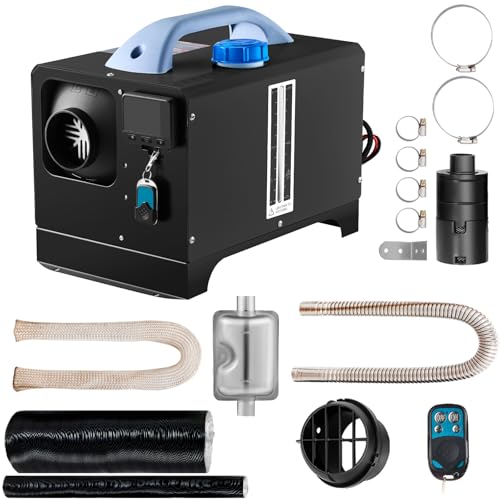
- BWP Score9.7
BWP Score is a ranking system developed by Bestwinterproducts.com. BWP score has no relationship or impact from any manufacturers or sales agent websites. Learn more
- BrandVEVOR

- BWP Score9.3
BWP Score is a ranking system developed by Bestwinterproducts.com. BWP score has no relationship or impact from any manufacturers or sales agent websites. Learn more
- BrandVEVOR

- BWP Score9.2
BWP Score is a ranking system developed by Bestwinterproducts.com. BWP score has no relationship or impact from any manufacturers or sales agent websites. Learn more
- BrandLF Bros

- BWP Score8.9
BWP Score is a ranking system developed by Bestwinterproducts.com. BWP score has no relationship or impact from any manufacturers or sales agent websites. Learn more
- BrandLF Bros

- BWP Score8.6
BWP Score is a ranking system developed by Bestwinterproducts.com. BWP score has no relationship or impact from any manufacturers or sales agent websites. Learn more
- BrandVEVOR
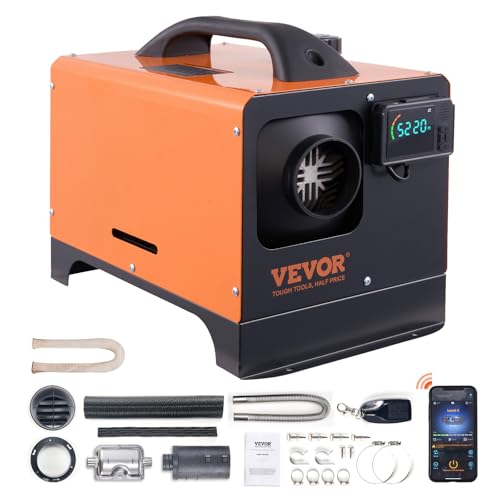
- BWP Score8.3
BWP Score is a ranking system developed by Bestwinterproducts.com. BWP score has no relationship or impact from any manufacturers or sales agent websites. Learn more
- BrandVEVOR

- BWP Score8.1
BWP Score is a ranking system developed by Bestwinterproducts.com. BWP score has no relationship or impact from any manufacturers or sales agent websites. Learn more
- BrandVEVOR

- BWP Score8.0
BWP Score is a ranking system developed by Bestwinterproducts.com. BWP score has no relationship or impact from any manufacturers or sales agent websites. Learn more
- BrandWAYSKA

- BWP Score7.9
BWP Score is a ranking system developed by Bestwinterproducts.com. BWP score has no relationship or impact from any manufacturers or sales agent websites. Learn more
- BrandLF Bros
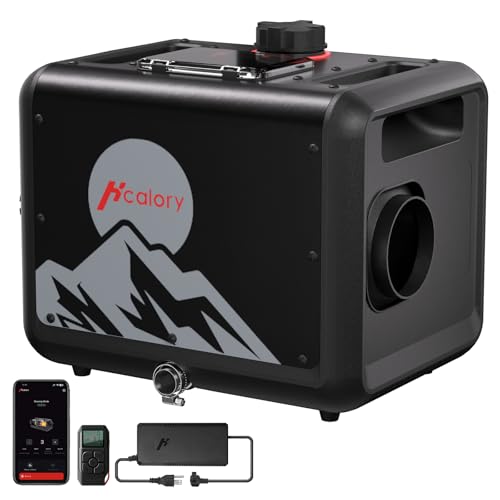
- BWP Score7.9
BWP Score is a ranking system developed by Bestwinterproducts.com. BWP score has no relationship or impact from any manufacturers or sales agent websites. Learn more
- BrandHCALORY

- BWP Score7.6
BWP Score is a ranking system developed by Bestwinterproducts.com. BWP score has no relationship or impact from any manufacturers or sales agent websites. Learn more
- BrandBougeRV
Last update on 2026-10-31 / Affiliate links / Images, Product Titles, and Product Highlights from Amazon Product Advertising API
Should you choose a 2KW, 5KW, or 8KW diesel heater?
Match the heater output directly to the square footage of your vehicle or cabin to avoid soot buildup from frequent short-cycling. A 2KW heater delivers 3700 to 6800 BTU and is rated for spaces between 108 and 161 square feet, making it suitable for compact vans and small truck campers. A 5KW unit provides 4700 to 17000 BTU, capable of warming a 307 cubic foot tent from 32 degrees Fahrenheit to 68 degrees Fahrenheit in 8 minutes. For large rigs and converted buses, an 8KW heater is rated for 215 to 269 square feet. While some travelers consider an energy efficient space heater for large room heating when parked near grid power, selecting the right diesel heater output ensures clean combustion off-grid without choking the burner.
Will a parking diesel heater clog with soot at high elevations?
Standard diesel heaters can suffer from incomplete combustion and soot buildup in thin mountain air unless equipped with altitude compensation. Units with automatic altitude adjustment or a dedicated plateau mode adjust fuel delivery to operate cleanly at elevations up to 17000 feet or 18045 feet. Without this capability, the fuel-to-air ratio becomes excessively rich, leading to carbon fouling on the glow pin and burner chamber. If you plan to camp in mountain passes, verify that your model lists an altitude mode, automatic adjustment, or Bluetooth app control to manage higher elevations.
Is an all-in-one diesel heater better than a split installation?
An all-in-one unit is better for flexibility and portable setups, while a split system suits permanent, space-saving vehicle installations. All-in-one units house the fuel tank, combustion core, and pump inside a single metal casing, measuring around 15 by 9.6 by 11.6 inches or 15.7 by 9.8 by 12.2 inches with fuel capacities of 5L or 7.5L. They can sit outside a tent or vehicle with hot air ducted inside. In contrast, split units feature compact heater bodies measuring 13.2 by 4.57 by 4.68 inches for 2KW models, allowing installation under passenger seats or inside cabinetry with separate fuel lines routed to an exterior tank.
Can you plug a diesel parking heater directly into a 110V wall outlet?
You can plug a diesel parking heater into a standard 110V wall socket only if the kit includes an integrated 110V transformer. While native heater hardware operates on 12V or 24V direct current, select all-in-one units include a 110V adapter designed for home shops, garages, and campground shore power. If a heater only lists 12V power, connecting it directly to a wall outlet requires an external power supply to convert alternating current to 12V direct current. Unlike a stationary propane tankless water heater for radiant heat that stays tied to utility infrastructure, a dual-voltage diesel unit transitions between vehicle battery wiring and household outlets.
How much fuel does a diesel parking heater consume overnight?
Fuel consumption varies with heat settings, ranging between 0.18 and 0.53 liters per hour on typical 5KW units, or 0.2 to 0.5 liters per hour on comparable models. A built-in 5L fuel tank provides continuous heat through cold nights, while 7.5L and 15L tanks extend runtime for multi-day trips without refueling. Running the heater on low maintains cabin temperatures with minimal fuel draw, but periodically running the unit on high clears carbon deposits from the aluminum combustion chamber.
How quickly does a diesel heater warm a frozen cabin in sub-zero weather?
Heater cores constructed with sandblasted aluminum heat exchangers deliver warm air within 3 minutes of ignition, even in sub-zero environments. Rated working temperatures span from -40 degrees Celsius up to +50 degrees Celsius, with select models engineered to operate in temperatures ranging down to -104 degrees Fahrenheit. Fast-acting ceramic glow plugs vaporize diesel fuel quickly to ignite cold air, allowing a 5KW heater to raise interior temperatures by 36 degrees Fahrenheit in just 8 minutes.


Top 12 best white electric fireplace 2026

Best Clear Ski Goggles Men 2026 For Sharp Vision On Slopes

Top Best Cordless Electric Snowblower 2026 - (Latest)

Best Warm Winter Scarves 2026 For Cozy Comfort

Best Green Ski Goggles 2026 For Clear Vision On Slopes

12 Best Corner Electric Fireplace 2026: My Ultimate Guide To Pick One

Best Battery Powered Snow Blower 2026 For Effortless Snow Clearing

Best Ski Goggles Under 30 Inches For Crisp Vision And Comfort





