
3 Best Portable Rocket Heater of 2026 For Clean Off-Grid Warmth

Why does a fire that burns white-hot inside its chamber still leave the campsite freezing? Rocket combustion focuses intense heat straight upward, which boils water in minutes but does very little for your shivering body if the stove lacks radiant surface area. Grabbing a compact cooking stove when the goal is staying warm creates an exhausting chore of shoving sticks down an intake chute every four minutes, yielding barely any ambient heat. At the other extreme, hauling a thirty-pound patio tower into the backcountry leaves campers burdened with heavy, awkward steel that cannot safely vent inside a tent.
True off-grid comfort means settling into steady radiant warmth without babysitting fuel or fighting drifting smoke. Narrowing down the right build comes down to three practical checks: matching an integrated chimney pipe and spark arrestor to enclosed shelters, picking a gravity-fed hopper over manual stick feeding for hands-off burns, and confirming the packed weight fits your transport space. Here is how the leading designs for 2026 compare so you can heat your space safely and sleep warm.
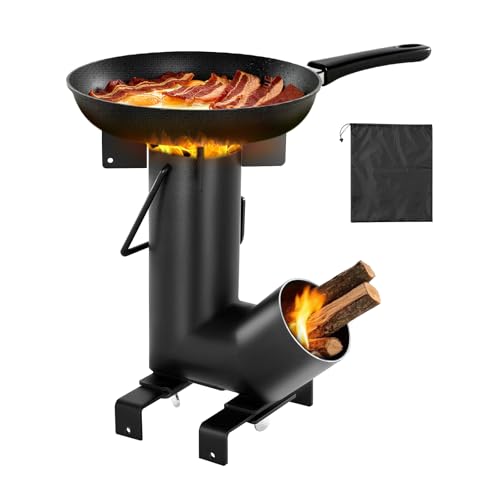
- BWP Score9.4
BWP Score is a ranking system developed by Bestwinterproducts.com. BWP score has no relationship or impact from any manufacturers or sales agent websites. Learn more
- BrandVEVOR

- BWP Score8.7
BWP Score is a ranking system developed by Bestwinterproducts.com. BWP score has no relationship or impact from any manufacturers or sales agent websites. Learn more
- BrandRayzi

- BWP Score8.4
BWP Score is a ranking system developed by Bestwinterproducts.com. BWP score has no relationship or impact from any manufacturers or sales agent websites. Learn more
- BrandH&ZT
Last update on 2026-11-06 / Affiliate links / Images, Product Titles, and Product Highlights from Amazon Product Advertising API
Can you safely run a portable rocket heater inside a canvas tent?
You need a dedicated tent stove setup equipped with sealed chimney pipes that route exhaust completely outside your shelter. For instance, an outdoor rocket tent stove measures 18.9 x 24.4 x 99.6 inches and utilizes 9 chimney pipes to safely lift smoke through a tent stove jack, while also supporting a removable stone box for dry sauna heat. In contrast, open patio towers and compact cooking stoves do not have enclosed flue connections and must remain outdoors in well-ventilated spaces. Always verify your tent fabric rating, clearance distances, and pipe assembly before lighting any fire.
Do portable rocket heaters burn gathered twigs or commercial wood pellets?
The correct fuel depends on the combustion system built into your specific model. Compact camp stoves made from carbon steel feature manual feed chutes built to burn natural firewood, branches, or gathered twigs. Upright patio rocket heaters, on the other hand, are engineered around commercial wood pellets and rely on a gravity hopper, such as a model featuring a 4.4-pound hopper capacity. Never pour pellets into a basic stick chute or jam heavy logs into a pellet hopper, as mismatched fuel can choke off the natural draft or cause feeding clogs.
How long does fuel last before needing a reload?
Burn duration between reloads depends on your fuel type, air damper settings, and combustion chamber size. Gravity-fed pellet designs store fuel in a hopper holding 4.4 pounds of pellets, allowing you to regulate the burn rate and flame size using an adjustable air vent damper. Stick-fed rocket stoves require active feeding, meaning you push branches or firewood forward into the heat-resistant carbon steel lining as the fire burns down. Check the manufacturer listing for exact runtimes under different damper adjustments, because environmental temperatures and wood density affect fuel consumption.
How do you control heat output on a rocket heater?
You control heat output by managing the incoming airflow and fuel feed volume. Standing pellet heaters include an adjustable damper air vent design, which lets you dial in the airflow to control spiral flame height and radiant heat intensity on your patio. On manual wood-burning stoves, you manage heat output by varying the diameter and amount of firewood you slide into the feed opening. Knowing what specific elements require special attention during heater maintenance helps keep these dampers, air intakes, and internal linings free of soot so your draft control stays responsive.
How portable are different rocket heater designs for camping?
Portability varies widely based on whether the heater is built for backcountry transport, base camp shelter, or patio heating. A compact carbon steel rocket stove weighs 13.58 pounds with dimensions of 10.71 x 8.03 x 14.96 inches and includes a carrying bag, making it easy to store in a vehicle trunk. An upright patio heater stands 58 inches tall with dimensions of 17.5 x 9 x 58 inches and weighs 33 pounds, requiring a fixed patio footprint. Hot tent stoves can reach 99.6 inches in total height when all 9 chimney sections are stacked, so confirm packed dimensions and total weight before planning your trip.
What maintenance keeps a portable rocket heater operating properly?
Clearing out cold ash, inspecting the inner firebox lining, and wiping down carbon steel surfaces are the primary maintenance tasks. Removing residual ash after each fire ensures the air vent and combustion chamber maintain proper draft velocity. Applying best practices to ensure optimal maintenance of your heater prevents rust on high-temperature steel bodies and keeps flue connections fitting snugly. Inspect chimney sections regularly for soot accumulation before assembling them on your next outing.


Top 12 best white electric fireplace 2026

Best Clear Ski Goggles Men 2026 For Sharp Vision On Slopes

Top Best Cordless Electric Snowblower 2026 - (Latest)

Best Warm Winter Scarves 2026 For Cozy Comfort

Best Green Ski Goggles 2026 For Clear Vision On Slopes

12 Best Corner Electric Fireplace 2026: My Ultimate Guide To Pick One

Best Battery Powered Snow Blower 2026 For Effortless Snow Clearing

Best Ski Goggles Under 30 Inches For Crisp Vision And Comfort





