
How Do Slalom Skiers Know Which Gates to Pass?

Start by watching the pairs of poles, not just the next pole ahead. A racer follows the gates from top to bottom, passing between each pair in order; the red and blue colors help show the pattern, but don’t reveal the whole route by themselves.
The layout can change from one course to another, and some gates sit close together in groups, so racers inspect the route before the run and learn where each turn leads. That helps explain why they often turn before reaching a pole: they’re aiming to pass through the next pair, not ski straight at it. Here’s how they prepare, and what happens if they take a gate the wrong way.
What does each gate mark?
A gate is a pair of poles that marks a place the skier must pass through. The skier follows the gates from the top of the course to the bottom, going through them in order rather than choosing whichever pole looks closest.
Red and blue gates often alternate, which helps racers and spectators follow the route. But color alone does not show the whole path. A skier still needs to know which gate comes next and which side of its poles to pass.
Think of the gates as a winding path marked by doorways. Each doorway has an opening between its poles, and the skier has to cross that opening correctly before moving on. From the side of the hill, a sharp turn can make it look as though a racer is skipping a gate, even when they are setting up to pass it.
The route can bend left, then right, then change direction again. Some gates are close together, while others leave more room for a wider turn. That layout is why watching only the next pair of poles can be confusing: the correct line depends on the gates that follow, too.
Why do racers turn before a gate?
Slalom racers often begin turning before they reach the gate because they are aiming to pass through the opening while keeping their speed and balance. They do not need to ski straight at a pole. Instead, they shape a turn around it and cross the gate in the required direction.
Picture a skier approaching a gate from above. If the skier waits until they are beside the poles to start turning, it may be too late to get through the opening cleanly. Starting the turn earlier lets them guide their skis across the correct line, then change direction for the next gate.
That can make the racer seem to point away from the gate for a moment. Look at where the skier crosses the line between the two poles, not just where their skis point during the turn. Their body may lean one way while the skis curve through the opening.
Gates close together can make this movement look especially sudden. A racer may link several quick turns, using the space between gates to prepare for the next one. The goal is still to pass each gate in order, not to cut across the course toward a more distant opening.
How do racers learn the route?
Before a race, skiers inspect the course by walking or skiing along it. This gives them a chance to see how the gates are arranged, where the turns change direction, and where a group of gates sits close together. That group is called a combination.
Inspection helps a racer build a mental picture of the route. They can notice, for example, that one gate is followed quickly by a turn the other way. Remembering that change matters because the skier may be moving too fast to stop and study the next set of poles during the run.
Racers do not simply memorize a string of colors. They learn how the gates connect and where the course asks them to change direction. Two courses can use the same colors but lead through very different patterns, so the layout matters as much as the colors.
A skier may pay special attention to a tight turn or a combination because those spots can be harder to read at speed. They can use fixed points on the hill, such as a change in slope or a visible landmark, to help remember where that section begins. The exact route still comes from the gates, not from a landmark alone.
Inspection does not make the course impossible to misread. Snow, light, speed, and the skier’s view can all affect what they see during the run. But learning the sequence beforehand means the racer is not trying to work out the entire route one gate at a time.
What happens after a missed gate?
A racer must pass each gate correctly and in order to complete the course. If they miss a gate or pass it on the wrong side, they have not followed the marked route. That can mean disqualification, which means the skier is removed from the results.
In some situations, a racer may be able to go back uphill and pass the missed gate correctly before continuing. Whether that is allowed depends on the race rules and what happened next. A racer who has already continued past later gates may not be able to correct the mistake.
For a spectator, it can be hard to tell from one angle whether a skier crossed the gate correctly. The poles may hide the skier’s skis, or a turn may carry them out of view for a moment. Officials judge whether the required route was completed; a racer’s fast finish alone does not show that every gate was cleared.
A missed gate is different from a close-looking turn. Skiers can pass very near a pole while still going through the opening in the right order. Watch the skier’s path across the gate, rather than assuming a mistake because they appear to turn early or brush past a pole.
Can racers see every gate clearly?
Racers need to read the course while moving quickly, but visibility can change from one part of the hill to another. Bright sun can make snow look glaring, while cloud, snowfall, or flat light can make bumps and changes in the slope harder to distinguish. The gates may still be visible, but the ground around them can be less clear.
Goggles can help protect a skier’s eyes and make the view more comfortable in changing conditions. They do not point out the next gate, explain the course pattern, or replace inspection. A racer still has to learn the route and keep track of each gate.
If you are choosing goggles for skiing, check the lens information for the light conditions you expect. VLT means the percentage of light the lens lets through. A lens for bright sun may not give the clearest view in flat light, so the right choice depends on the weather and the lens details provided by the maker.
- Check the light: Think about whether you usually ski in strong sun, cloudy weather, or changing conditions.
- Check the lens information: Confirm what conditions the maker says the lens suits rather than relying on the lens color alone.
- Check the fit: The goggles should sit comfortably with your helmet and leave a clear view without pressing painfully on your face.
- Keep the lens clear: Fog or snow on the lens can interfere with your view. Follow the care directions from the maker, and do not rub a wet inner lens with a glove or sleeve.
If you want to compare lens options for different light, see these pages on green ski goggles for slope visibility and yellow ski goggles for changing light. A lens tint may affect how the snow looks, but it cannot tell you which gate to take.
What goggles can help you see the course?
Goggles suited to the day’s light can make it more comfortable to keep looking across the slope, especially when sunlight or cloudy conditions change how the snow appears. Before buying, check the maker’s guidance for the lens and the conditions it is meant for. Also confirm that the frame fits your face and helmet without blocking your view.
Fog can make any lens harder to see through, so consider how the goggles manage airflow and what care the maker recommends. If you wear prescription glasses, check whether the goggles are designed to fit over them and leave enough room. Goggles can support a clear view, but racers still rely on course inspection and the gate sequence to know where to ski.

- BWP Score9.5
BWP Score is a ranking system developed by Bestwinterproducts.com. BWP score has no relationship or impact from any manufacturers or sales agent websites. Learn more
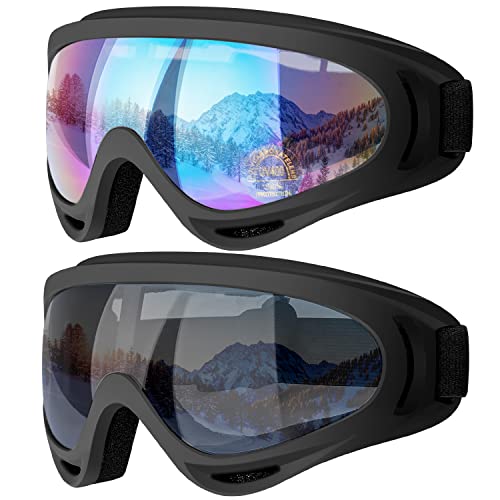
- BrandOutdoorMaster
- BWP Score8.2
BWP Score is a ranking system developed by Bestwinterproducts.com. BWP score has no relationship or impact from any manufacturers or sales agent websites. Learn more
- BrandCOOLOO

- BWP Score7.8
BWP Score is a ranking system developed by Bestwinterproducts.com. BWP score has no relationship or impact from any manufacturers or sales agent websites. Learn more
- Brandfindway

- BWP Score7.4
BWP Score is a ranking system developed by Bestwinterproducts.com. BWP score has no relationship or impact from any manufacturers or sales agent websites. Learn more
- Brandfindway

- BWP Score7.3
BWP Score is a ranking system developed by Bestwinterproducts.com. BWP score has no relationship or impact from any manufacturers or sales agent websites. Learn more
- Brandfindway
Last update on 2026-11-08 / Affiliate links / Images, Product Titles, and Product Highlights from Amazon Product Advertising API
FAQs
Do racers pass between every red and blue gate?
They pass through each gate in the course sequence, but the colors do not by themselves explain the route. The skier must read the layout and pass each opening correctly. The course may turn sharply between gates.
Do racers memorize the whole course?
Course inspection helps racers learn the route before the run. They remember how the gates connect, including quick turns and combinations. They still have to follow the poles as they ski.
Can a skier use the wrong gate and keep racing?
A skier who misses a gate has not completed the course correctly, and that can lead to disqualification. Race rules determine whether the skier can go back and correct the mistake. The result depends on the gate sequence and what the skier did afterward.
Do goggle lens colors show racers which gate comes next?
No. Lens color can change how light reaches the eye, but it does not identify the route. Racers learn the course during inspection and use the gates to follow it.
Related guides: how to ski slalom gates.


Best Clear Ski Goggles Men 2026 For Sharp Vision On Slopes

Best Green Ski Goggles 2026 For Clear Vision On Slopes

Best Ski Goggles Under 30 Inches For Crisp Vision And Comfort

Best Backcountry Ski Goggles 2026 For Crystal Clear Vision

Best Frameless Ski Goggles Men for Clear Vision and All-Day Comfort

best yellow ski goggles Snow Clarity

Best EXP Vision Ski Goggles 2026 Ultimate Clarity Picks

Discover the Best Mens Ski Goggles of 2026





