
How Much Do Infrared Heaters Cost to Run?

Most people assume that plugging in any space heater will instantly send an electric bill through the roof. In reality, a standard 1500-watt infrared model on high usually costs between 20 and 35 cents per hour to run. Keeping one on for eight hours during a chilly day comes out to roughly $1.60 to $2.80 a day, making personal warmth far more affordable than many folks dread.
A few everyday factors will shift that range on your own statement. The biggest difference comes from your local electric rate for each kilowatt-hour (the billing unit on your power bill). Choosing a lower power mode also cuts electric draw dramatically, while a built-in thermostat lowers your total by automatically turning the heat on and off once the area feels comfortable. Here is how those numbers break down across a typical day, along with an easy way to check your exact cost.
The Short Version
- Hourly cost: Running a standard 1,500-watt infrared heater on its high setting usually costs between 20 and 35 cents per hour, depending on your local electric rate.
- Daily and monthly cost: Running that same heater for 8 hours a day adds roughly $1.60 to $2.80 per day to your power bill, which works out to about $50 to $85 per month.
- How to cut that number in half: Dropping to a 750-watt low setting or letting a built-in thermostat cycle the unit on and off can immediately cut your electric power use by 30 to 50 percent.
- Why it saves money: Infrared produces gentle heat that warms people and furniture directly like sunlight, allowing you to practice zone heating (warming only the room you are in) while turning down the central furnace for the rest of the house.
Hourly, Daily, and Monthly Running Costs
The total cost to run any portable electric heater comes down to two numbers: the amount of electricity the unit pulls from the wall and the price your utility company charges for that power. In the United States, electricity is sold by the kilowatt-hour (the billing unit on your power bill, abbreviated as kWh). One kilowatt-hour equals 1,000 watts of electrical power used continuously for 60 minutes.
Most portable infrared heaters sold for home use operate at 1,500 watts on their high heat setting. That means running the heater on high pulls 1.5 kilowatt-hours of electricity for every full hour it runs. If your electric company charges an average residential rate of 16 cents per kilowatt-hour, running a 1,500-watt unit on high costs about 24 cents per hour. If you live in an area with higher energy rates closer to 25 cents per kilowatt-hour, that same hour of heat costs about 38 cents.
Here is what those numbers look like across typical daily heating routines:
- Evening spot heating (4 hours per day): At 20 cents per kilowatt-hour, running a 1,500-watt heater for 4 hours costs roughly $1.20 per day. Over a 30-day billing cycle, that adds about $36 to your electric bill.
- Workday or overnight heating (8 hours per day): Running the unit for a full 8-hour stretch at that same 20-cent rate comes out to $2.40 per day, or about $72 across a month.
- Continuous weekend heating (12 hours per day): Keeping the unit on throughout the day and evening uses 18 kilowatt-hours of power daily. At 20 cents per kilowatt-hour, that totals $3.60 per day, or roughly $108 per month.
Switching your heater to its low power level (usually 750 watts or 1,000 watts) changes the math completely. A 750-watt setting draws exactly half the electricity of the maximum setting, cutting your hourly operating cost to roughly 10 to 18 cents per hour. If you are heating a particularly drafty room or sunroom, you can learn more about matching heater power to loose spaces in our guide to choosing a heater for an enclosed porch.
A 3-Step Formula to Calculate Your Exact Cost
You do not need an engineering background to figure out what an infrared heater will cost in your home. You can calculate your exact hourly and monthly numbers in less than two minutes using a recent electric bill and three simple steps.
- Find the heater wattage. Look at the manufacturer label on the back or underside of your heater. Find the rated electric power use listed in watts (W). A standard plug-in heater will usually show 1,500W on high and 750W or 900W on low. Divide that wattage number by 1,000 to convert it into kilowatts. For example, 1,500 watts divided by 1,000 equals 1.5 kilowatts.
- Find your electric rate per kilowatt-hour. Grab your most recent electric bill. Look at the total amount charged per kilowatt-hour. Make sure to combine both the supply charge (the electricity generated) and the delivery charge (the cost to deliver power to your home), as well as any mandatory distribution fees. In the United States, utility rates generally range from about 12 cents per kilowatt-hour in lower-cost regions to over 30 cents per kilowatt-hour in higher-cost areas.
- Multiply the kilowatts by your rate and hours of use. Multiply your heater kilowatt figure by your electric rate to get your hourly cost. Then, multiply that hourly cost by how many hours you plan to run the heater each day, and multiply that result by 30 days for a monthly estimate.
To see how this works in real life, imagine your electric bill shows a combined rate of 18 cents ($0.18) per kilowatt-hour. You run a 1,500-watt infrared heater in your home office during your workday for 7 hours each day:
- 1,500 watts divided by 1,000 = 1.5 kilowatts.
- 1.5 kilowatts multiplied by $0.18 = $0.27 per hour.
- $0.27 per hour multiplied by 7 hours per day = $1.89 per day.
- $1.89 per day multiplied by 30 days = $56.70 per month.
If you only run the heater on its 750-watt setting, your power draw drops to 0.75 kilowatts. At the same $0.18 rate, your hourly cost drops to about $0.14, and your monthly total drops to $28.35.
Why Infrared Feels Warmer on Fewer Watts Than Central Heat
A common question among homeowners is why an infrared heater can lower their monthly heating expenses if electricity is typically more expensive per unit of energy than natural gas. The answer lies in how infrared warmth works compared to traditional convection heating.
A standard furnace or fan-forced convection heater warms the air inside a room. Hot air naturally rises toward the ceiling, leaving the living zone near the floor cooler. If your room has high ceilings, uninsulated exterior walls, or leaky window frames, that warm air quickly escapes before you ever feel warm. You end up cranking your central thermostat higher and higher just to feel comfortable on the couch.
An infrared heater works differently. It creates gentle heat that warms people and furniture directly like sunlight. Instead of spending energy trying to heat thousands of cubic feet of empty air, the infrared rays travel through the room until they strike your skin, clothes, chair, and rug. Those objects absorb the thermal energy and slowly radiate it back into the space. You feel warm within seconds of turning the unit on, even if the surrounding room air remains somewhat cool.
This direct transfer enables zone heating (warming only the room you are in). If your household spends the evening gathered in the living room or den, you can turn your main house thermostat down from 70°F to 64°F. That 6-degree drop reduces the workload on your central furnace significantly. Running a single 1,500-watt infrared heater to keep your immediate seating area cozy costs around $1.50 to $2.00 for the entire evening. In many homes, the money saved on gas or central heating oil far outweighs the small rise in your electric bill.
How Power Settings and Thermostats Slash Your Bill
The cost calculations above assume a heater runs continuously at maximum power without stopping. In practice, a properly sized infrared heater rarely pulls full power every single minute it is plugged into the wall.
Most modern units include a digital temperature dial that clicks on and off to hold your set warmth. This process is called thermostat cycling (switching on and off automatically). When you set the target temperature to 68°F, the heater runs until the surrounding area reaches that target, then temporarily shuts its heating elements off. It stays in standby mode until the room temperature dips a degree or two, then fires back up to replenish the heat.
In a reasonably well-insulated space, an infrared heater might only run for 30 to 40 minutes out of every hour once the room stabilizes. That means a 1,500-watt heater running over an 8-hour stretch might only pull electricity for 4 to 5 hours total. This cycle reduces your real-world operating cost by 30 to 50 percent compared to theoretical continuous-use estimates.
You can also use manual heat settings to control your power draw directly. If you are sitting close to the heater at a desk or reading chair, switching from high (1,500 watts) to low (750 or 900 watts) cuts your electricity demand in half instantly. The heating element still directs focused warmth directly toward you, but the unit draws roughly 6.25 amps from your home electrical circuit instead of 12.5 amps. For spaces like workshops that need consistent, regulated heat without constant adjustments, exploring an electric heater for a garage with a thermostat can help you see how automated controls keep energy use under control.
Everyday Habits to Keep Operating Costs Low
Small adjustments in how you place and operate an infrared heater can make a noticeable difference on your monthly utility statement. Use this simple checklist to keep your space warm without wasting power:
- Keep a direct line of sight: Because infrared warms people directly, position the heater so its front face points toward where you spend the most time. If a table, sofa, or door blocks the front panel, the heater will warm the back of the furniture rather than you.
- Close doors to unused rooms: Close the doors to hallways, laundry rooms, and guest bedrooms. Containing the warmth in your immediate living space allows the heater thermostat to reach its target temperature much faster and cycle off sooner.
- Maintain the 3-foot safety buffer: Always keep all space heaters at least 3 feet (36 inches) away from bedding, drapes, upholstered furniture, paper, and pets. Proper clearance protects your home from fire risks and ensures cool air can circulate freely into the heater intake vents.
- Plug straight into a dedicated wall outlet: Standard electric space heaters pull up to 1,500 watts, which is about 12.5 amps on a standard 120-volt household circuit. Always plug the heater directly into a wall outlet. Never plug it into an extension cord, power strip, or surge protector, as these accessories can overheat, melt, and trigger electrical fires.
- Lower the central thermostat: An infrared heater only saves money if you lower your central heating system. If your central furnace continues running at full blast while your space heater runs simultaneously, your total energy bill will go up, not down. Drop your main thermostat by 3 to 5 degrees whenever you use zone heating.
- Turn the heater off when leaving the room: Infrared heat does not linger in the air like steam or baseboard heat once the power is cut. Leaving an infrared heater running in an empty bedroom or living room simply wastes electricity.
What to Look for in an Energy-Conscious Infrared Heater
If you want to keep your winter heating bills predictable, picking the right style of heater matters just as much as how you use it. Look for models designed to give you precise control over your energy consumption.
First, look for a unit with multiple heat settings, such as a low mode (750 to 900 watts) and a high mode (1,500 watts). Having that lower power option allows you to maintain personal warmth during milder days without pulling maximum wattage from your wall outlet. Dual-element models that pair an infrared quartz tube with a ceramic heating element that warms up in seconds can also help spread heat quickly across a room without requiring extended runtimes.
Second, choose a heater with an accurate digital temperature dial that clicks on and off to hold your set warmth, paired with an integrated programmable timer. A reliable thermostat prevents the heater from running continuously when the room is already warm, while an auto-off timer ensures the unit shuts down automatically if you fall asleep or head out to work.
Finally, always confirm basic safety hardware before buying. Look for a tip-over safety switch that cuts power instantly if the unit is knocked over or tilted, along with an automatic overheat sensor that shuts the unit off if internal parts get dangerously hot. Always check the product label to verify recognized safety certification marks, such as UL, ETL, or CSA. If your wall outlet ever feels warm to the touch or your breaker trips repeatedly, turn the heater off immediately, unplug it, and have a licensed electrician inspect your wiring.

- BWP Score9.0
BWP Score is a ranking system developed by Bestwinterproducts.com. BWP score has no relationship or impact from any manufacturers or sales agent websites. Learn more
- BrandDR. INFRARED HEATER

- BWP Score8.8
BWP Score is a ranking system developed by Bestwinterproducts.com. BWP score has no relationship or impact from any manufacturers or sales agent websites. Learn more
- BrandDR. INFRARED HEATER

- BWP Score8.3
BWP Score is a ranking system developed by Bestwinterproducts.com. BWP score has no relationship or impact from any manufacturers or sales agent websites. Learn more
- BrandHeat Storm

- BWP Score8.2
BWP Score is a ranking system developed by Bestwinterproducts.com. BWP score has no relationship or impact from any manufacturers or sales agent websites. Learn more
- BrandDR. INFRARED HEATER

- BWP Score8.2
BWP Score is a ranking system developed by Bestwinterproducts.com. BWP score has no relationship or impact from any manufacturers or sales agent websites. Learn more
- BrandDR. INFRARED HEATER
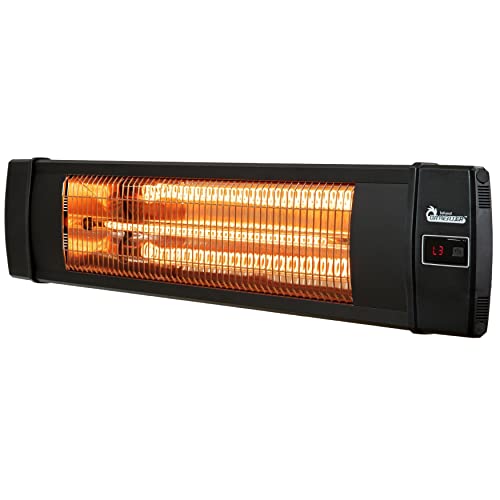
- BWP Score8.0
BWP Score is a ranking system developed by Bestwinterproducts.com. BWP score has no relationship or impact from any manufacturers or sales agent websites. Learn more
- BrandDR. INFRARED HEATER
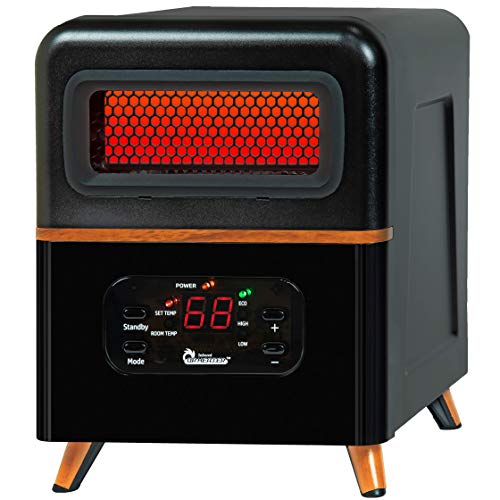
- BWP Score7.9
BWP Score is a ranking system developed by Bestwinterproducts.com. BWP score has no relationship or impact from any manufacturers or sales agent websites. Learn more
- BrandDR. INFRARED HEATER

- BWP Score7.5
BWP Score is a ranking system developed by Bestwinterproducts.com. BWP score has no relationship or impact from any manufacturers or sales agent websites. Learn more
- BrandHeat Storm
Last update on 2026-10-29 / Affiliate links / Images, Product Titles, and Product Highlights from Amazon Product Advertising API
FAQs
Are infrared heaters cheaper to run than regular space heaters?
All electric space heaters turn 100 percent of their electrical power into heat, meaning a 1,500-watt infrared heater uses the exact same amount of electricity as a 1,500-watt ceramic or oil-filled heater. However, infrared heaters often cost less in practice because they warm your body and furniture directly within seconds. Because you feel warm faster without having to heat every cubic foot of room air, you can run the heater for shorter periods or at lower heat settings.
How much does it cost to run an infrared heater all night?
Running a standard 1,500-watt heater continuously for an 8-hour night costs between $1.60 and $2.80, assuming average residential power rates between 13 and 23 cents per kilowatt-hour. If the unit features a built-in thermostat that cycles the power off once your bedroom reaches your set warmth, your actual overnight cost will usually drop to between $0.80 and $1.50 per night.
What heat setting should I use to save the most money?
Use the low setting (typically 750 or 900 watts) whenever you are sitting close to the heater, such as at a desk or next to a reading chair. Running on low cuts your electric power use in half compared to the high 1,500-watt setting, which immediately slashes your hourly running cost. Reserve the high setting for warming up a cold room quickly, then drop down to low or rely on the digital thermostat to maintain comfort.
Can running an infrared heater trip my household circuit breaker?
Yes, running a 1,500-watt heater on its high setting draws about 12.5 amps of electrical current. Most standard residential rooms share a 15-amp circuit breaker across multiple outlets and overhead lights. If you run your heater on the same circuit as another power-hungry device, like a vacuum cleaner, hair dryer, or microwave, the combined power draw will exceed 15 amps and trip the breaker.
Related guides: infrared space heaters efficiency and cost savings.


Top 12 best white electric fireplace 2026

Best Clear Ski Goggles Men 2026 For Sharp Vision On Slopes

Top Best Cordless Electric Snowblower 2026 - (Latest)

Best Warm Winter Scarves 2026 For Cozy Comfort

Best Green Ski Goggles 2026 For Clear Vision On Slopes

12 Best Corner Electric Fireplace 2026: My Ultimate Guide To Pick One

Best Battery Powered Snow Blower 2026 For Effortless Snow Clearing

Best Ski Goggles Under 30 Inches For Crisp Vision And Comfort





