
How Often Should You Use an Infrared Heater?

Most people treat an infrared space heater like a central furnace, assuming it should run all day to keep a room warm. That habit actually wastes electricity because these units do not heat the air: run an infrared heater only when you are in the room to enjoy the direct radiant warmth. Keeping it on for several hours across a workday is perfectly safe, provided you shut it off whenever you step away.
How much you can run your heater also depends on its controls and your home's wiring. Models with a built-in thermostat (a sensor that shuts the heat off once the space reaches your target temperature) cycle power automatically instead of pulling continuous wattage. You also need to keep other heavy appliances off that same wall circuit so the breaker never trips. Here is how to set up a comfortable daily routine without driving up your power bill.
The Short Version
- Use it only when you are in the room: Infrared heat warms people and surfaces directly rather than the air. Leaving the unit running in an empty room wastes electricity.
- Daily multi-hour use is safe: Running your heater for an 8 to 10 hour workday is safe as long as the unit plugs directly into a wall outlet and has proper clearance.
- Thermostats prevent wasted power: Automatic temperature dials cycle the heating elements on and off, which manages electricity draw and protects internal components.
- Never run the unit overnight or unattended: Always shut the heater off before going to sleep or leaving your home to prevent fire hazards.
When and How Often to Turn On an Infrared Heater
How often you should use an infrared heater depends entirely on room occupancy. Infrared heat operates like sunshine on a crisp autumn day. It produces gentle heat that warms people and furniture directly like sunlight, without relying on blowing hot air around the ceiling. Because these radiant waves travel in straight lines until they hit a solid object, the warmth feels instant the moment you sit in front of the unit.
Running an infrared heater in an empty room does very little to change the overall air temperature. Convection heaters slowly warm circulating air throughout an entire room, but radiant heat focuses only on the surfaces directly facing it. If you leave the unit on while you step away for hours, you warm an empty chair and a patch of floor. As soon as you step back in, you will not feel warm unless you sit right in the path of the beam. To keep your utility bill low, turn the unit on when you enter the room, and switch it off when you leave.
Treat your infrared heater like a personal desk lamp. You flip on the lamp when you sit down to work, and you switch it off when you walk away. Running the unit for an eight-hour shift in a drafty home office makes complete sense because you are there to receive the heat. The same logic applies if you use a heater for an enclosed porch while relaxing on chilly mornings. As long as you are physically present to absorb the warmth, regular daily use is safe and practical.
How Many Hours at a Time Can You Safely Run It?
Many homeowners worry that running a space heater for hours will wear out the heating rods, melt wires, or trigger a fire. Modern infrared space heaters are designed for continuous daytime use. You can safely run an infrared unit throughout an entire workday, provided it sits in an attended space and has room to breathe.
Built-in safety sensors protect the machine during extended heating sessions. Inside the cabinet, a digital temperature dial that clicks on and off to hold your set warmth monitors the surrounding area. When the room reaches your target temperature, this control temporarily cuts power to the quartz tube (a glass heating rod that glows to produce warmth). This cycling gives the heating elements regular rest intervals and keeps the machine from running continuously at maximum capacity.
At the same time, an automatic overheat sensor shuts the unit off if internal parts get dangerously hot. If an intake vent gathers dust or household clutter blocks the airflow, this sensor kills power before any internal component can overheat. To verify safe operation during long sessions, follow these simple checks:
- Place the heater on a flat, level hard floor where it cannot wobble or tip over.
- Keep the air intake grilles clear of dust and pet hair so the internal cooling fan works smoothly.
- Set the dial to a comfortable temperature (around 68°F to 72°F) rather than running maximum heat non-stop.
- Check the power cord near the wall outlet occasionally with the back of your hand. It should feel slightly warm, never hot to the touch.
Will Daily Use Skyrocket Your Electric Bill?
Worrying about an expensive power bill is common when using a space heater daily. Standard portable electric space heaters in the United States draw up to 1,500 watts on their high heat setting. On a standard 120-volt household circuit, that draws about 12.5 amps of electricity. If a heater ran at that maximum load without stopping for eight hours every day, it would consume 12 kilowatt-hours of power daily, which could noticeably raise your monthly bill.
However, an infrared heater with an active thermostat rarely runs at full blast every minute. Once your body, clothes, and surrounding furniture absorb the radiant energy, they retain that warmth. The internal temperature sensor notices this warmth and shuts the heating rods off, running only a low-power fan to clear residual heat. Many heaters also feature energy-saving modes that automatically switch between a 750-watt low heat setting and the 1,500-watt high heat setting to maintain balance.
Using zone heating strategically can actually reduce your heating costs. By lowering your whole-house central thermostat by a few degrees and using an infrared heater only in your occupied office or den, you avoid heating empty bedrooms and hallways. If you spend time in unheated outbuildings, choosing an electric heater for garage with thermostat control lets you maintain comfort in your immediate work area without wasting electricity on uninsulated open rafters.
Habits and Hazards to Avoid During Everyday Use
Using a space heater every day requires clear safety habits. Most space heater accidents result from improper placement or dangerous electrical setups rather than equipment failure. Keep these critical safety rules in mind during daily use:
- Skip extension cords and surge protectors: A 1,500-watt heater pulls 12.5 amps continuously. Standard household extension cords and multi-outlet power strips are not built for that continuous electrical load. They can overheat, melt their plastic casings, and cause an electrical fire. Always plug the heater directly into an existing wall outlet.
- Maintain the 3-foot safety buffer: Keep all space heaters at least 3 feet (36 inches) away from bedding, drapes, papers, upholstered furniture, clothing, and pets. Even gentle radiant warmth can scorch combustible fabrics if they rest too close to the front grille for hours.
- Avoid overloading the electrical circuit: Standard home circuits are generally rated for 15 amps total. Because your space heater uses 12.5 amps on High, running another high-draw device on that same circuit, like a microwave, hair dryer, or coffee maker, can trip the breaker. If the breaker trips, turn the heater off and move it to an outlet on a different circuit.
- Never run the heater while sleeping or away: You cannot react to an unexpected odor, a tripped unit, or an electrical issue if you are asleep or out of the house. Turn the unit off and unplug it whenever you go to bed or leave your home.
What to Look for in a Daily-Use Infrared Heater
If you plan to use an infrared space heater for hours each day, specific hardware features make daily operation safer, quieter, and more economical. Basic manual heaters lack the internal regulation needed for worry-free daily use, so looking for the right safety features is essential.
Look for an adjustable digital thermostat and multiple heat settings. A responsive temperature control allows the unit to cycle smoothly between high output, low output, and standby mode, keeping you comfortable without pulling 1,500 watts all day. Models that combine radiant quartz tubes with a ceramic heating element that warms up in seconds deliver fast heat alongside steady comfort.
Check the product label for recognized safety marks like UL, ETL, CSA, or TUV certification. Essential safety features include a tip-over safety switch that cuts power instantly if the unit is knocked over or tilted, alongside a cool-touch exterior housing that prevents burns if you brush against the cabinet.
Programmable shut-off timers also make daily use easier. A 12-hour timer ensures the heater shuts off automatically at the end of your workday if you forget to switch it off manually. Smooth caster wheels are also helpful, letting you roll the heater between rooms without heavy lifting.
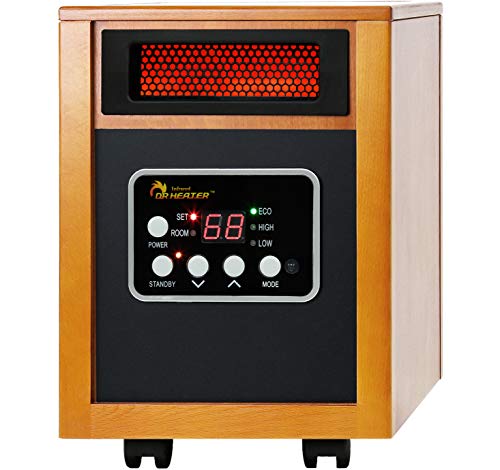
- BWP Score9.1
BWP Score is a ranking system developed by Bestwinterproducts.com. BWP score has no relationship or impact from any manufacturers or sales agent websites. Learn more
- BrandDR. INFRARED HEATER

- BWP Score8.2
BWP Score is a ranking system developed by Bestwinterproducts.com. BWP score has no relationship or impact from any manufacturers or sales agent websites. Learn more
- BrandDR. INFRARED HEATER

- BWP Score7.8
BWP Score is a ranking system developed by Bestwinterproducts.com. BWP score has no relationship or impact from any manufacturers or sales agent websites. Learn more
- BrandWEWARM
Last update on 2026-11-01 / Affiliate links / Images, Product Titles, and Product Highlights from Amazon Product Advertising API
Frequently Asked Questions
Can I leave an infrared heater running overnight while I sleep?
No, you should never leave any space heater running while sleeping. Even heaters equipped with automatic overheat sensors carry risks if blankets shift within the 3-foot safety buffer while you are asleep. Turn the heater off before heading to bed and rely on blankets or your central heating system overnight.
Does it hurt the heating elements to turn the heater on and off frequently?
No, modern quartz tubes and ceramic heating elements are designed to handle frequent cycling. The built-in thermostat naturally switches the elements on and off multiple times an hour to maintain your desired temperature. Turning the unit off whenever you leave the room saves electricity and will not damage the heating rods.
Why does my room feel cold shortly after turning the heater off?
Infrared heaters warm solid objects and people directly rather than heating the air. While your desk, chair, and floor retain warmth for a short time, the surrounding air stays relatively cool. Once the radiant heat stops, natural drafts make the space feel cold again because the air itself was not overheated like it is with a furnace.
What should I do if the wall plug feels hot during use?
A power cord may feel slightly warm during prolonged operation, but a plug or outlet that feels hot to the touch indicates an electrical problem. Immediately turn the heater off and unplug it from the wall. A hot plug usually points to a worn, loose wall receptacle that creates high resistance, which requires inspection and replacement by a licensed electrician.


Top 12 best white electric fireplace 2026

Best Clear Ski Goggles Men 2026 For Sharp Vision On Slopes

Top Best Cordless Electric Snowblower 2026 - (Latest)

Best Warm Winter Scarves 2026 For Cozy Comfort

Best Green Ski Goggles 2026 For Clear Vision On Slopes

12 Best Corner Electric Fireplace 2026: My Ultimate Guide To Pick One

Best Battery Powered Snow Blower 2026 For Effortless Snow Clearing

Best Ski Goggles Under 30 Inches For Crisp Vision And Comfort





