
How to Choose the Right Gas Heater for Your Space

The right gas heater always matches your exact fuel supply and includes built-in safety shutoffs to keep indoor air clean. Where you place the heater changes that choice immediately, because tight spaces like bedrooms should never use pipe-free units that release combustion fumes into the living area.
A good setup also depends on whether you burn piped natural gas or bottled propane, alongside the ceiling height and square footage of the room. Staying warm during winter power outages matters too, since heaters with manual push-button spark starters work without electricity while electric blower fans cut out. Here is how to weigh heat ratings, exhaust options, and vital safety switches before bringing a unit home.
Match your heater to your exact fuel supply
Natural gas and liquid propane are completely different fuels that burn under different pressures. A heater designed for piped natural gas cannot burn propane straight out of the box, and a propane heater cannot run safely on natural gas. Natural gas flows into your home through underground utility pipes at low pressure, while propane is stored under high pressure inside exterior tanks. If you feed high-pressure propane into an unadjusted natural gas heater, you risk creating large uncontrolled flames, heavy black soot, and high levels of poisonous carbon monoxide. Feeding low-pressure natural gas into a propane heater results in weak ignition, sputtering flames, and unburned gas entering your room.
Check the factory rating plate on the back or bottom of the heater cabinet before buying. That metal tag will clearly state whether the unit burns natural gas (marked as NG) or liquid propane (marked as LP). Some models include a factory conversion kit or dual-fuel internal valves, but many compact wall heaters are strictly built for one fuel type. If you have natural gas, confirm that you have an existing iron pipe or flexible line near the installation spot with its own dedicated manual shutoff valve. If you plan to use propane, check that you have an outdoor tank location ready with a proper two-stage pressure regulator attached to the line.
- Look at your fuel source: verify whether your home uses utility gas pipes or exterior propane cylinders.
- Check the fuel label on the unit: confirm the metal tag matches your gas type exactly.
- Inspect the gas shutoff: make sure a brass or steel shutoff valve sits within arm's reach of where the heater will mount.
- Verify outdoor tank safety: keep 20-pound and 100-pound propane tanks outside your home or garage, never indoors.
Vented heaters exhaust outside while unvented warmers stay inside
Every gas flame consumes oxygen and releases combustion byproducts, mainly water vapor, carbon dioxide, and small traces of nitrogen dioxide. The biggest operational difference between gas heaters is where those exhaust fumes go. A vented gas heater pulls in air, burns the fuel inside a sealed or shielded chamber, and expels all exhaust fumes directly outside your home through a dedicated metal pipe that runs through an exterior wall or through the roof. A pipe-free room heater (also called a vent-free heater) does not connect to an exhaust pipe at all, releasing all of its heat and combustion byproducts directly into the room air.
Vented units protect your indoor air quality completely. Because every trace of exhaust and moisture vents outside, you can run a vented heater for hours without fogging your windows or introducing dampness into your living space. Vented units are the only safe gas choice for tightly sealed modern homes, bedrooms, and rooms without fresh outdoor airflow. The trade-off is installation effort and heat loss. You must cut a hole through an exterior wall or ceiling to run the exhaust chimney, and roughly 15 to 30 percent of the generated heat escapes outside through the pipe along with the exhaust gases.
Vent-free warmers offer almost 100 percent fuel efficiency because every ounce of warmth stays inside the room. They mount quickly to an interior or exterior wall since you do not have to cut an exhaust vent through your siding or roof. But burning gas creates roughly one ounce of water vapor for every minute of continuous operation. In an enclosed room, that moisture settles on cold windowpanes, condenses behind drywall, and creates an environment where mold can grow. When you are heating an enclosed porch or an uninsulated outbuilding with regular air exchange, a vent-free warmer works smoothly, but it is not built to serve as the sole primary heat source for an airtight house.
Power outages also affect these two systems differently. Many vent-free wall warmers rely on a push-button spark starter (a piezo ignition switch that clicks to light the burner without electricity) and a simple mechanical thermostat dial. That means they produce steady heat even when an ice storm knocks down your neighborhood electric lines. Many vented garage units, on the other hand, require standard household electricity to spin an exhaust blower and blow warm air across a heat exchanger.
Pick radiant heat for spot warmth or blue flame for rooms
Gas heaters warm your living space using two distinct heating styles: radiant heat and blue flame convection heat. Choosing the wrong style leaves you feeling chilly even when the burner is firing at full capacity. The right choice depends entirely on whether your space is drafty or well insulated, and whether you want to warm your body directly or warm the air filling the room.
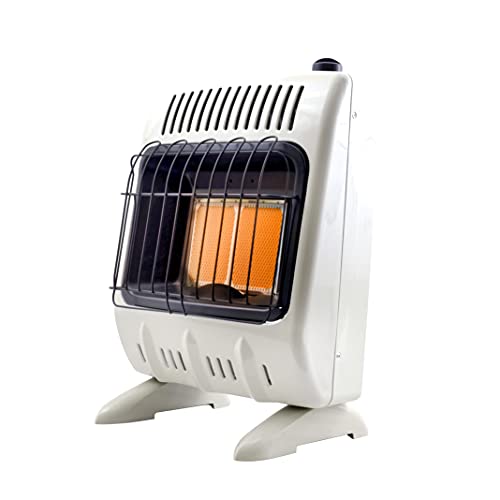
Radiant gas heaters use ceramic heating tiles that glow bright orange-red when the gas burns across their surface. This produces gentle heat that warms people and furniture directly like sunlight, traveling straight through the cold air without waiting to warm the ambient room atmosphere first. Radiant heat is ideal for uninsulated workshops, drafty basements, high-ceiling pole barns, or workbenches where overhead bay doors open and close. The air in the garage might stay cold, but your body absorbs the direct infrared warmth instantly.
Blue flame heaters feature quiet, open burners that produce steady blue flames inside a louvered metal housing. This burner warms the air directly inside the cabinet. The hot air rises naturally out of the top louvers, travels across the ceiling, cools slightly, falls along the outer walls, and circulates back across the floor in a continuous loop. Blue flame convection works best in finished, insulated rooms with standard 8-foot ceilings, such as home offices, living rooms, and finished basements. It provides even, balanced room warmth from corner to corner rather than cooking whatever sits right in front of the unit.
Match your room square footage to the heat output rating
Heater output is measured in British Thermal Units per hour (often abbreviated as BTU/hr), which tells you the total amount of heat the burner produces. Sizing your gas heater accurately is critical for safety and comfort. An undersized heater will run constantly on its highest setting without making the room comfortable. An oversized vent-free heater will rapidly overheat the space, shut off after five minutes, and dump heavy bursts of moisture and combustion odors into the air before the room ever achieves balanced warmth.
For standard insulated rooms with average 8-foot ceilings, match the manufacturer square footage rating to your room dimensions. A 10,000 BTU/hr burner is sized to warm small spaces up to 300 square feet, making it suitable for a home office or small enclosed room. A 20,000 BTU/hr burner handles up to 700 square feet, which fits standard open-concept family rooms or studio apartments. Larger 30,000 BTU/hr units produce enough warmth for spaces up to 1,000 square feet, such as finished basements or large open living areas.
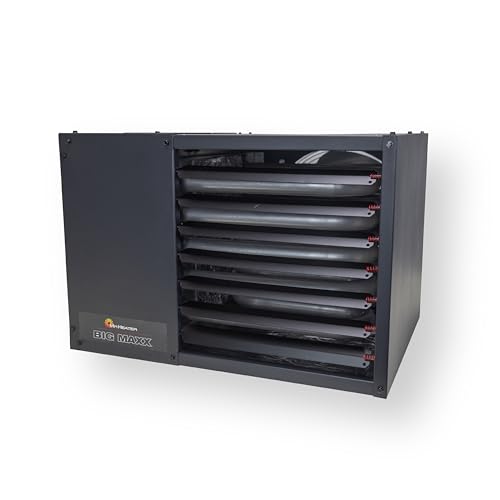
Large workspaces, detached garages, and barns require significantly higher heat ratings to overcome cold concrete floors, thin wall insulation, and high ceilings. For these spaces, overhead forced-air heaters push heat throughout the building using an internal fan. A 50,000 BTU unit warms up to 1,667 square feet, roughly the floor plan of an insulated 3-car garage. A powerful 80,000 BTU unit heats up to 2,667 square feet, supplying the intense thermal capacity needed for large workshops and pole barns. Radiant overhead shop heaters rated to warm 500 to 600 square feet provide an alternative for 2-1/2 car garages where you want ceiling-mounted warmth without blowing air around. If your workspace lacks an existing gas supply line, comparing fuel installation costs against an electric garage heater with a built-in thermostat will help you decide if running new gas piping makes financial sense.
Always adjust your heat requirements upward if your room has unusual structural conditions. Add 20 to 30 percent more capacity if your ceilings rise above 10 feet, if the room sits directly over an unheated crawlspace, or if the space features large single-pane glass windows. In extreme northern winter climates with poorly insulated outer walls, higher heat output ensures the unit can hold room temperature during sub-zero overnight freezes.
Check for essential safety shutoffs before you install
Gas heaters handle combustible fuel inside your living areas, so certified safety devices are mandatory. Modern indoor units include built-in safety controls designed to stop the flow of gas instantly if operating conditions become dangerous. Before bringing any gas heater home, verify that the unit includes these core safety mechanisms on its technical label and user manual.
- Low-oxygen safety shutoff (ODS): this device monitors the oxygen level in the room. If oxygen levels drop below a safe threshold (typically around 18 percent), the pilot flame naturally changes shape and pulls away from the thermocouple sensor, instantly shutting off the main gas valve before carbon monoxide can accumulate.
- Automatic overheat sensor: an internal thermal switch that cuts off gas delivery if the cabinet interior reaches unsafe temperatures due to blocked grilles or a failed blower motor.
- Tip-over safety switch: a weighted mechanical switch found on floor-mounted and portable units that cuts fuel or pilot flow instantly if the cabinet gets bumped, kicked, or tilted.
- Push-button spark starter: a piezo ignition switch that generates an electric spark mechanically when pressed, lighting the pilot flame safely without requiring an open match or an electrical cord.
- Listing mark: confirm that the heater features a recognized safety certification mark, such as CSA or UL, permanently stamped on the rating plate.
Even with advanced internal shutoffs, your home must have working carbon monoxide alarms installed on every level and outside all sleeping areas. Mount a carbon monoxide alarm on the wall in the same room as any unvented gas warmer. Maintain a strict 3-foot safety buffer around the entire heater cabinet: keep drapes, blankets, sofas, area rugs, paper, and pets at least 36 inches away from the front heating grilles and burner openings at all times. Never use a space heater if you smell rotten eggs or suspect a gas leak; turn off the gas valve at the wall, open windows, leave the home, and call your gas utility company or a licensed plumber from outside.
Confirm local building codes and room restrictions first
Before purchasing any gas heating equipment, check your local municipal building codes. Local city and county ordinances often enforce stricter rules than national manufacturer guidelines, particularly regarding vent-free appliances. Several states and numerous municipalities prohibit unvented gas heaters in all residential spaces, requiring outside exhaust pipes for every gas burner installed indoors.
Bedrooms and bathrooms face strict safety limitations nationwide due to their small air volumes and closed doors during normal use. Under standard model fuel gas codes, unvented heaters installed in bedrooms are strictly capped at a maximum of 10,000 BTU/hr and must feature a certified low-oxygen shutoff. Bathrooms are typically restricted to units producing no more than 5,000 to 6,000 BTU/hr or require dedicated outdoor venting, because moisture from showers combined with combustion water vapor quickly saturates the room. If you are heating manufactured housing, ensure the unit carries a specific certification label for that use, or look into dedicated heaters designed for a mobile home that draw combustion air directly from the outdoors through a sealed pipe.
Elevation also plays a major role in how gas heaters operate. At elevations above 4,500 feet, the outdoor atmosphere contains less dense air. Because unvented heaters rely on precise air-to-fuel ratios to maintain a clean pilot flame, high altitude can cause nuisance shutoffs where the low-oxygen sensor cuts the gas even in a well-ventilated room. Check the manufacturer's altitude rating on the packaging. If you live in a mountainous area, verify that the burner can be calibrated or re-jetted for your specific elevation.
Choose the right style of gas heater for your space
Selecting the right gas heater comes down to pairing your room's physical layout with your heating needs. Compact, wall-mounted vent-free warmers work best for supplemental heat in open living areas, basements, and cabins where you need dependable warmth that functions during winter grid outages. Choose a radiant model if you want direct, sun-like warmth focused on a specific seating area or drafty zone, and pick a blue flame convection model if you want even, circulating warmth across an entire insulated room.
For expansive garages, workshops, and pole barns, ceiling-mounted forced-air unit heaters keep your floor space completely clear while circulating substantial heat across concrete surfaces. Before completing your purchase, measure your room dimensions, verify your wall and ceiling clearance distances, confirm that your local building department permits your chosen venting style, and arrange for a licensed gas professional to handle the gas line hookup and safety pressure checks.
- BWP Score8.8
BWP Score is a ranking system developed by Bestwinterproducts.com. BWP score has no relationship or impact from any manufacturers or sales agent websites. Learn more
- BrandMr. Heater

- BWP Score8.0
BWP Score is a ranking system developed by Bestwinterproducts.com. BWP score has no relationship or impact from any manufacturers or sales agent websites. Learn more
- BrandMr. Heater
- BWP Score8.5
BWP Score is a ranking system developed by Bestwinterproducts.com. BWP score has no relationship or impact from any manufacturers or sales agent websites. Learn more
- BrandMr. Heater

- BWP Score8.0
BWP Score is a ranking system developed by Bestwinterproducts.com. BWP score has no relationship or impact from any manufacturers or sales agent websites. Learn more
- BrandMr. Heater

- BWP Score7.9
BWP Score is a ranking system developed by Bestwinterproducts.com. BWP score has no relationship or impact from any manufacturers or sales agent websites. Learn more
- BrandMr. Heater

- BWP Score7.8
BWP Score is a ranking system developed by Bestwinterproducts.com. BWP score has no relationship or impact from any manufacturers or sales agent websites. Learn more
- BrandHeatstar

- BWP Score7.7
BWP Score is a ranking system developed by Bestwinterproducts.com. BWP score has no relationship or impact from any manufacturers or sales agent websites. Learn more
- BrandMr. Heater
Last update on 2026-11-01 / Affiliate links / Images, Product Titles, and Product Highlights from Amazon Product Advertising API


Top 12 best white electric fireplace 2026

Best Clear Ski Goggles Men 2026 For Sharp Vision On Slopes

Top Best Cordless Electric Snowblower 2026 - (Latest)

Best Warm Winter Scarves 2026 For Cozy Comfort

Best Green Ski Goggles 2026 For Clear Vision On Slopes

12 Best Corner Electric Fireplace 2026: My Ultimate Guide To Pick One

Best Battery Powered Snow Blower 2026 For Effortless Snow Clearing

Best Ski Goggles Under 30 Inches For Crisp Vision And Comfort





