
Are Convection Heaters Adjustable?

Most convection heaters are completely adjustable, so they do not have to blast heat at full power all the time. How much control you actually have depends on the features built into your unit. Basic heaters use a simple turning dial that clicks on and off to maintain a general comfort zone. Nicer models give you precise temperature controls and switches to lower the electrical draw so your circuit breaker stays happy.
What changes between models usually comes down to three things: a digital screen versus a plain knob, multiple power settings to help manage energy use, and whether the unit uses silent natural airflow or an added fan. Choosing the right combination keeps a room comfortable without wasting power or waking up in a sweat. Here is what every setting does and how to adjust them for steady warmth.
Convection heaters let you adjust heat, temperature, and runtimes
Many people worry that buying a space heater means locking a room into an unbearable sweatbox. Convection heaters do not work on a simple all-or-nothing switch. Most modern designs provide multiple layers of control that let you dial in the exact comfort level of your room.
You can adjust three primary settings on almost every modern unit. First is the power level, which dictates how much electricity the internal heating element draws. Second is the thermostat (a heat sensor that turns the unit on and off to hold your set temperature). Third is the operating timer, which allows you to program when the unit powers down automatically.
Depending on the specific style of your heater, you may also find controls for display screens, child safety locks, and handheld remotes. Some units even offer multi-day or weekly programming schedules. These features give you the freedom to customize warmth for chilly mornings, sunny afternoons, or cold nights.
The underlying process behind these controls is natural convection (warm air rising on its own without a blower). Cool room air enters through vents at the base, glides over the internal heating elements, warms up, and rises out through the top or sides. By changing the heat settings, you control how quickly and intensely that air cycle happens.
Digital thermostats offer exact degree control over mechanical dials
The thermostat is your primary tool for avoiding an overheated room. It constantly monitors the temperature of the air around the heater. When the air reaches your target level, the switch clicks off the heating element. Once the room cools by a degree or two, it turns the heat back on.
Convection heaters generally use one of two thermostat styles: mechanical dials or digital displays. A mechanical dial is a basic turning knob that typically has no numbers. It usually shows a gradient line or basic numbers from 1 to 5.
Setting a mechanical dial requires a simple kitchen-table trick. Turn the knob all the way to maximum to warm the room quickly. Once the room reaches your ideal comfort level, slowly rotate the knob backward until you hear a soft mechanical click. Leave the knob right at that mark, and the heater will cycle on and off to hold that exact room warmth.
Digital thermostats take away the guesswork entirely. An LED or LCD screen displays the current room temperature alongside your target setting. You can adjust the heat degree by degree, typically across a range between 50°F and 95°F.
Keep in mind that the built-in sensor sits close to the floor inside the heater cabinet. If you place the heater directly against a drafty exterior wall or near a cold window, the sensor may think the room is colder than it really is. Finding steady electric heat with built-in thermostats comes down to giving the unit a few feet of open space so its temperature sensor samples normal room air.
Lower wattage settings cut electric draw and prevent tripped breakers
Wattage is the plain measure of electrical power draw. Most portable electric convection heaters in the United States operate at a maximum of 1,500 watts on high power. In electrical terms, 1,500 watts draws about 12.5 amps of power on a standard 120-volt home circuit. Since standard bedroom and living room circuits are protected by 15-amp circuit breakers, running a 1,500-watt heater on high leaves very little leftover electrical capacity.
Adjustable heat modes solve this problem by letting you step down the wattage. Most units feature two or three selectable power levels. A high setting uses 1,500 watts to warm a room quickly, while a low setting dials the power down to 750 watts or 1,000 watts.
Switching to a lower wattage allows you to run the heater alongside a television, computer, or lamp without tripping the breaker. It also prevents the heater from pulling maximum power continuously, which helps manage household electricity costs over a long winter.
As a general rule of thumb, US living spaces require roughly 10 watts of heating power per square foot of living area. A 1,500-watt setting is ideal for warming a closed 150 square foot bedroom or providing supplemental warmth in a larger living space. A 1,000-watt setting can comfortably maintain temperatures in rooms between 100 and 160 square feet.
Many modern units also include an ECO mode (an automatic power saver that dials down heat as the room warms). Instead of running flat-out, the heater starts on high power and automatically drops down to low wattage as room temperatures approach your target, eventually shutting off once the room is warm.
Lower wattage settings are especially valuable in tight electrical environments like campers, travel trailers, and mobile living setups. When managing shore power limits or battery inverters, choosing a low power setting avoids tripping shared breakers, as you can see when selecting a heater for off-grid travel.
No matter which power level you pick, always plug your space heater directly into a dedicated wall outlet. Never use power strips, surge protectors, or extension cords. Those accessories cannot handle continuous high-amperage heat and pose severe melting and fire risks.
Most convection heaters circulate air silently without blower fans
Unlike ceramic blower heaters that push out a concentrated stream of forced air, traditional convection heaters are designed to be completely silent. They do not have motorized fans humming in the background or blowing dry air directly across your face.
Because there is no fan motor, natural convection heaters have no fan speed dials to adjust. You adjust the airflow indirectly by raising or lowering the heat setting. When the internal elements get hotter, the air inside heats faster, creating stronger upward air currents that pull cool floor air into the unit more quickly.
However, some hybrid convection panel heaters include an optional internal boost fan. These hybrid units give you the choice between two operating styles. You can run the boost fan mode when you first enter a chilly room to spread warm air rapidly, and then switch back to purely silent, fan-less heating for the rest of the day.
If you choose a hybrid model with a fan, the control panel typically lets you toggle the fan on or off independently from the heating element. Some models provide multiple fan speeds alongside their fan-less modes.
Fanless natural convection remains the top choice for bedrooms, nurseries, and home offices. With zero fan noise and no bright glowing coils, the unit warms the entire room evenly in the background while you sleep, study, or work.
Nighttime heating works best with timers and lower target temperatures
Adjusting a convection heater for safe overnight warmth requires balancing comfortable air with electrical safety. Running any heater while you sleep means setting boundaries so the room does not become stuffy or dangerous. Follow these safe steps when setting up your heater for bedtime:
- Maintain the 3-foot safety buffer: Position the heater at least 3 feet (36 inches) away from blankets, sheets, curtains, rugs, upholstered chairs, and pet bedding. Never drape clothing over the heater vents to dry.
- Dial the thermostat back for sleeping: Set your digital thermostat between 65°F and 68°F. Cooler room temperatures promote restful sleep, prevent dry nasal passages, and keep the unit from running non-stop all night.
- Select a low or medium wattage setting: Switch the heater to 750W or 1000W rather than 1500W. Lower power draw maintains steady warmth while easing continuous electrical strain on your home wiring overnight.
- Engage the auto-off timer: Program the built-in countdown timer for 6 to 8 hours. The timer shuts the unit off automatically before morning so you never forget to turn it off when rushing out the door.
- Confirm safety cutoffs are clear: Verify that the tip-over safety switch (which cuts power instantly if the unit is knocked over or tilted) and the automatic overheat sensor (which shuts the unit off if internal parts get dangerously hot) are clean and unblocked.
Before turning off the lights, touch the wall outlet and the plug with your hand. If either feels hot to the touch, turn the heater off, unplug it immediately, and consult a licensed electrician to inspect the outlet wiring.
Choose a model with digital controls and multiple heat settings
Finding the right convection heater comes down to matching its control layout with your daily routines. If you want exact room comfort, look for a model featuring a digital display where you can set specific degree targets rather than guessing with a blank dial.
Select a heater that offers at least two manual wattage levels alongside an automatic energy-saving mode. Having the option to switch between low and high power allows you to balance room warmth with electrical safety across different rooms in your house.
Look for practical convenience features like programmable shutoff timers and handheld remote controls. These tools make small temperature adjustments effortless without having to climb out of bed or step away from your desk.
Check the product label for recognized safety marks such as UL, ETL, or CSA certification. These marks confirm that the heater includes reliable tip-over shutoffs and overheat protection designed to keep your home safe.
Finally, consider how the unit fits into your living space. Portable models with smooth caster wheels let you roll warmth between rooms easily, while wall-mountable panel units save valuable floor space in bedrooms and home offices.

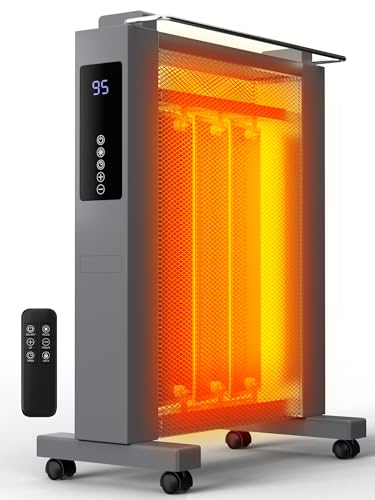
Vilobos Electric Space Heater,1500W Convection Heater with Adjustable Thermostat Freestanding/Wall
View on Amazon- BWP Score9.3
BWP Score is a ranking system developed by Bestwinterproducts.com. BWP score has no relationship or impact from any manufacturers or sales agent websites. Learn more
- BrandVilobos
- BWP Score7.4
BWP Score is a ranking system developed by Bestwinterproducts.com. BWP score has no relationship or impact from any manufacturers or sales agent websites. Learn more
- BrandUthfy

- BWP Score8.8
BWP Score is a ranking system developed by Bestwinterproducts.com. BWP score has no relationship or impact from any manufacturers or sales agent websites. Learn more
- BrandUthfy

- BWP Score8.6
BWP Score is a ranking system developed by Bestwinterproducts.com. BWP score has no relationship or impact from any manufacturers or sales agent websites. Learn more
- BrandClarfey

- BWP Score8.0
BWP Score is a ranking system developed by Bestwinterproducts.com. BWP score has no relationship or impact from any manufacturers or sales agent websites. Learn more
- BrandBREEZEHEAT

- BWP Score7.6
BWP Score is a ranking system developed by Bestwinterproducts.com. BWP score has no relationship or impact from any manufacturers or sales agent websites. Learn more
- BrandUthfy
Last update on 2026-10-08 / Affiliate links / Images, Product Titles, and Product Highlights from Amazon Product Advertising API


Best Warm Winter Scarves 2026 For Cozy Comfort

Best Green Ski Goggles 2026 For Clear Vision On Slopes

12 Best Corner Electric Fireplace 2026: My Ultimate Guide To Pick One

Best Battery Powered Snow Blower 2026 For Effortless Snow Clearing

Best Ski Goggles Under 30 Inches For Crisp Vision And Comfort

Best Cooling Scarf 2026 For Instant Relief And Comfort

Fake Snow for Grass: Create a Realistic Winter Lawn Display

Dimplex Prism Wall Mount Fireplace: Sleek Heat With Modern Flame Style





