
Are Immersion Heaters Expensive to Buy and Run?

Immersion heaters are very cheap to purchase, but they can become surprisingly expensive to run if they stay plugged in for hours. The real cost comes down to how much water needs warming and how often the coil heats up. Warming cold water takes serious electrical power, which means even a compact heating element can pull as much electricity as a large kitchen appliance while it works.
A few basic details change the final total on your utility statement. The power draw of the heater makes a big difference, ranging from gentle travel coils to heavy-duty bucket warmers. Heating an open metal basin on a cold morning also takes much longer, and burns far more power, than warming a covered plastic pail indoors. Here is how those daily costs add up and what to do to keep your electric bill under control.
Upfront Purchase Price Versus Daily Electricity Demand
Portable immersion heaters are budget-friendly when you buy them at the store. The basic design has very few moving parts. It consists of an immersion element, which is simply a metal heating loop placed directly into water, attached to a handle and a heavy-duty cord. Because the design is straightforward and needs no internal pumps or plumbing, the purchase price remains low. You can pick up a reliable bucket heater without straining your wallet.
The real question begins after you plug it in. While the tool costs very little to buy, heating water takes a massive amount of electrical energy. When you submerge an electric element into water, it pulls steady power every second it runs. If you only warm a five-gallon bucket once a week to wash a vehicle or clean outdoor tools, the change on your electric bill will be barely noticeable. You get fast warmth on site for a tiny operating cost.
The math changes if you use the heater daily or leave it submerged in a large container for hours. Warming an outdoor soaking tub or a workshop basin every afternoon can noticeably increase your utility charges. The element draws raw current without the thick insulation found in standard home water heaters. Deciding whether an immersion heater is expensive comes down to separating that small purchase price from your daily run time.
How to Figure Out Hourly Electricity Costs
Calculating the running cost of an immersion heater is simple once you know how utilities bill power. You only need two details: the heater wattage (its electrical power draw) and your local electric rate. Wattage tells you how fast the appliance consumes energy, while your power bill shows what you pay for that energy over time.
Electric companies bill in kilowatt-hours. A kilowatt-hour is the unit of power billed on your electric statement, representing one thousand watts of electricity running for one full hour. Check the label on the handle or cord tag to find your heater wattage. Small travel elements for cups often draw 300 watts. Standard immersion heaters for utility buckets draw 1000 watts to 1500 watts, while larger units draw 1800 watts or 2000 watts.
To convert wattage into billing units, divide the rated watts by one thousand. A 1500-watt immersion heater uses 1.5 kilowatt-hours for every hour it runs. If you run that heater for two hours to warm a utility tub, it consumes 3.0 kilowatt-hours. Multiply that number by the rate per kilowatt-hour on your electric bill. Because rates vary by region and season, checking your actual bill gives you the true cost.
Consider your electrical circuit capacity as well. Standard US household outlets supply 120 volts on a 15-amp circuit breaker. A 1500-watt immersion heater draws about 12.5 amps, taking up most of that circuit's safe continuous capacity. A 1800-watt model draws 15 amps, pushing the circuit to its limit. Plugging another appliance into that circuit will trip the breaker. Always plug the heater directly into a dedicated wall outlet, and avoid light extension cords or power strips that can overheat.
When an Immersion Heater Saves Money Versus When It Wastes Money
An immersion heater is a specialized tool, not a whole-house heating replacement. Whether it saves money or wastes money depends on how much water you need and where you need it.
An immersion heater saves money when you need a small amount of hot water in an out-of-the-way spot. Suppose you need warm water in a cold barn or shed to clean muddy gear. If you draw from a central water heater in the house, that 40-gallon or 50-gallon tank constantly uses energy all day to keep dozens of gallons hot. Hauling buckets or running a long hose lets heat escape into cold air along the way. Submerging a 1500-watt element into a five-gallon bucket heats only what you use, taking less energy than reheating an entire residential tank. Similarly, travelers who want a compact portable heater for van life can warm washing water without draining their battery bank.
An immersion heater wastes money when tasked with heating uninsulated bulk containers. Trying to warm an open stock tank or an inflatable pool in cool weather turns the unit into an energy sink. As the element adds heat, the wide surface and uninsulated walls radiate that warmth into the air just as quickly. The heater runs for hours without reaching your target temperature. In cold spaces, warming the room with an electric heater for a garage or workshop or using a dedicated insulated tank is far more efficient than leaving an exposed coil running continuously.
Compared to a kitchen kettle, an immersion coil has clear limits. A 300-watt travel coil works well for a mug on the road, but a kitchen kettle is better at home. Electric kettles are enclosed and feature automatic steam shutoffs that turn off the moment water boils, while open mugs lose heat and risk wasted power if left unattended.
How Container Size and Water Volume Change Run Time
Water has high thermal mass, meaning it requires considerable heat energy to change temperature. Your total run time depends directly on the gallons in your container and how cold that water was when you started.
Starting temperature plays a major role in your electric cost. Water from an outdoor spigot in winter can sit near 40 degrees Fahrenheit. Bringing that water to a comfortable 105 degrees Fahrenheit requires a 65-degree rise. Summer tap water at 70 degrees Fahrenheit needs only a 35-degree rise. That cold winter water needs nearly twice the heating time, doubling the electricity billed for that chore.
Volume changes the heating speed just as dramatically. A 1000-watt element warms a pitcher in minutes and heats a five-gallon bucket in twenty to thirty minutes under mild conditions. Higher-power 1500-watt or 2000-watt models warm five gallons even faster. But scaling up to twenty or thirty gallons causes problems. Heating thirty gallons takes several hours with a portable element. As the water warms, heat loss into the room speeds up. Without insulation, the heater reaches a point where heat escapes as fast as the coil generates it, drawing power constantly without getting any warmer.
Six Practical Steps to Keep Water Heating Costs Down
Heating water with a portable element does not have to cause an electric bill surprise. Following a few simple steps ensures that your electricity goes into warming water rather than escaping into the room.
- Cover the container with a tight lid or heavy foil. A solid cover stops surface evaporation, which is the fastest way warm water loses heat to the air.
- Set the container on wood or foam instead of bare concrete. Cold garage and basement floors pull warmth out through the bottom of plastic buckets, forcing the element to run longer.
- Use indoor room-temperature water when possible. Water that starts at indoor temperatures needs less heating time than near-freezing water drawn from an outdoor hose.
- Choose a heater with an automatic thermostat controller. An automatic thermostat controller shuts power off when water reaches your target heat, preventing extra power draw after the job is done.
- Heat only the exact amount of water you need. Every extra gallon left in the bucket consumes extra kilowatt-hours to warm up and then cools down unused.
- Wipe chalky mineral scale off the metal loop regularly. Mineral crust acts like an insulator over the heating element, slowing heat transfer into the water and dragging out heating times.
Taking these precautions keeps heating times short and saves power. Make sure the heating loop is fully submerged before plugging the unit into the wall. Never put your hands in the water while the heater is plugged in, and always unplug the unit and let the metal cool before removing it. If your wall outlet feels hot or the breaker trips repeatedly, stop using the heater and have a licensed electrician inspect your wiring.
Choosing an Efficient Immersion Heater for Your Setup
Finding an immersion heater that keeps operating costs down starts with matching the design to your container. The right safety features protect your budget, your container, and your home.
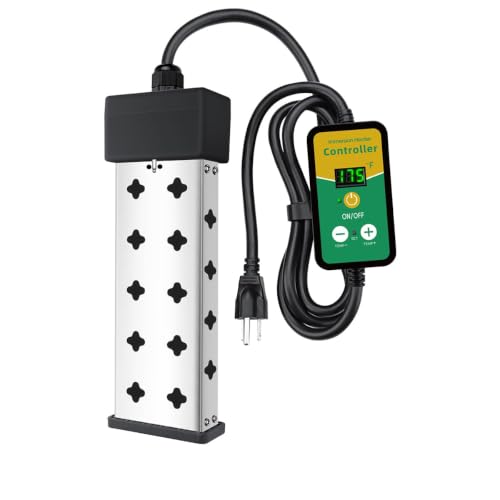
Look for a model with an integrated thermostat controller and a clear digital display. A built-in thermostat lets you dial in the warmth you need and cuts power as soon as the water reaches that temperature. This automatic cutoff prevents unnecessary boiling and stops runaway electricity use. Built-in anti-dry burn protection is also critical, cutting power instantly if the water level drops too low to protect the element from burning out.
Check the outer protective guard and cord construction. A stainless steel guard around the heating loop keeps hot metal from touching container walls, preventing melted plastic in buckets or tubs. Make sure the unit has a heavy-duty grounded power cord and carries an official safety listing mark like UL or ETL on the label. A well-built heater with automatic shutoff helps you heat water quickly without paying for wasted power.

- BWP Score9.7
BWP Score is a ranking system developed by Bestwinterproducts.com. BWP score has no relationship or impact from any manufacturers or sales agent websites. Learn more
- BrandTitikula

- BWP Score9.1
BWP Score is a ranking system developed by Bestwinterproducts.com. BWP score has no relationship or impact from any manufacturers or sales agent websites. Learn more
- BrandMQHJKAB
- BWP Score8.9
BWP Score is a ranking system developed by Bestwinterproducts.com. BWP score has no relationship or impact from any manufacturers or sales agent websites. Learn more
- Brandyoisie

- BWP Score8.9
BWP Score is a ranking system developed by Bestwinterproducts.com. BWP score has no relationship or impact from any manufacturers or sales agent websites. Learn more
- BrandHenSinTc

- BWP Score8.1
BWP Score is a ranking system developed by Bestwinterproducts.com. BWP score has no relationship or impact from any manufacturers or sales agent websites. Learn more
- BrandHDView

- BWP Score7.8
BWP Score is a ranking system developed by Bestwinterproducts.com. BWP score has no relationship or impact from any manufacturers or sales agent websites. Learn more
- BrandLumiHol
Last update on 2026-10-11 / Affiliate links / Images, Product Titles, and Product Highlights from Amazon Product Advertising API
FAQs
Can an immersion heater bring water to a rolling boil?
Many immersion heaters can bring modest amounts of water to a rolling boil if left running in a covered container. However, models with preset safety shutoffs often cut power once water reaches a set threshold, such as 167 degrees Fahrenheit, to prevent scalding and steam damage. Check your model label or manual to see if it includes an automatic temperature cutoff before attempting to boil water.
Is it safe to leave an immersion heater running unattended?
Leaving an immersion heater running unattended is dangerous and should be avoided. Water can evaporate over time, exposing the heating loop and creating a fire hazard or melting your container. Even heaters with anti-dry burn safety switches require monitoring so you can unplug the unit as soon as heating finishes.
Can an immersion heater melt a plastic utility bucket?
An immersion heater can melt plastic if the bare heating coil directly touches the container bottom or sides. Quality immersion heaters include an outer stainless steel guard that keeps the hot element away from the container walls. Always verify that the guard is installed and ensure the element stays surrounded by water rather than resting against plastic.
Can I use an extension cord with a high-power immersion heater?
Using a standard household extension cord with a high-power immersion heater is unsafe. Light cords and basic power strips cannot handle continuous draws of 1000 to 2000 watts, causing them to overheat and create serious fire hazards. Always plug your immersion heater directly into a dedicated, grounded wall outlet.


Best Warm Winter Scarves 2026 For Cozy Comfort

Best Green Ski Goggles 2026 For Clear Vision On Slopes

12 Best Corner Electric Fireplace 2026: My Ultimate Guide To Pick One

Best Battery Powered Snow Blower 2026 For Effortless Snow Clearing

Best Ski Goggles Under 30 Inches For Crisp Vision And Comfort

Best Cooling Scarf 2026 For Instant Relief And Comfort

Fake Snow for Grass: Create a Realistic Winter Lawn Display

Dimplex Prism Wall Mount Fireplace: Sleek Heat With Modern Flame Style





