
Are Infrared Heaters Safe Indoors?

Electric infrared heaters are completely safe indoors because they produce clean radiant warmth without burning fuel, leaking fumes, or drying out the room. That safety changes only if you mistakenly bring an outdoor gas or propane model inside, where toxic fumes can quickly build up.
For electric units, staying safe comes down to sensible everyday habits. The heating element needs at least three feet of open space away from blankets, drapes, and couches to eliminate fire risks. Always plug the cord directly into a wall outlet instead of a power strip or extension cord, which can easily overheat. In busy homes with small children or pets, picking a unit with an exterior that stays cool and shuts off if bumped makes daily use worry-free. Here is a clear look at how radiant warmth works and how to run your unit with complete peace of mind.
The Short Version
- Electric infrared heaters are completely safe indoors when you plug them directly into a wall outlet and place them on a flat, bare floor.
- They produce harmless radiant warmth, similar to sunshine on your face, without creating toxic exhaust, carbon monoxide, or drying out indoor air.
- Real indoor fire risks come from poor habits, such as running the heater through thin extension cords or placing it within three feet of bedding, curtains, or furniture.
- Choosing an indoor model with a cool-touch cabinet, a tip-over switch, and internal overheat sensors protects your household if you have curious children or active pets.
How Infrared Heat Actually Works Inside Your Home
The word radiation sounds scary to many people. It often brings to mind images of nuclear power plants, medical X-rays, or dangerous sunburns from ultraviolet light. But infrared heat is completely different and entirely safe for everyday indoor living.
Infrared radiation is simply harmless radiant warmth. It belongs to the same natural spectrum of light that warms the earth every morning. When you step into a bright patch of sunlight coming through your living room window on a cold morning, that soothing heat you feel on your sweater is infrared warmth. Infrared heaters create that exact same feeling indoors without emitting any harmful ultraviolet rays.
Traditional space heaters work by convection. A fan or a red-hot metal coil warms up the air in the room, and that hot air rises to the ceiling while cold air sinks to the floor. Infrared heaters do not heat the air directly. Instead, they send out invisible beams of warmth that travel in straight lines until they hit a solid object, such as your body, your sofa, or your floor.
This direct approach makes infrared warmth noticeably healthier for your indoor air quality. Because convection heaters constantly churn air across scorching elements, they often bake household dust and dry out your sinuses, eyes, and skin. Infrared units do not burn away natural humidity. They leave the moisture balance in your room intact, and they do not blast pet dander or dust into your breathing space.
Electric Indoor Heaters vs. Fuel-Burning Outdoor Models
Much of the worry surrounding infrared heating comes from confusing indoor plug-in models with outdoor patio heaters. Both use radiant heat, but how they generate that warmth makes all the difference for your health and safety.
Outdoor patio heaters run on fossil fuels like propane or natural gas. When fuel burns inside an enclosed room, it consumes oxygen and produces carbon monoxide. Carbon monoxide is a deadly, odorless, and colorless gas that can poison people and pets in a matter of minutes without proper ventilation. For this reason, fuel-burning outdoor patio heaters should never be brought inside a house, garage, or enclosed living area under any circumstances.
Indoor electric infrared heaters rely strictly on electricity. They warm up quartz glass tubes or ceramic heating elements without burning any fuel. Because there is no open flame and no fuel combustion, an electric infrared heater produces zero carbon monoxide, zero soot, and zero toxic emissions. You can safely run an electric model in a closed bedroom or living room without worrying about fumes.
If you need supplemental warmth in a drafty three-season room or covered patio, always use an appliance certified for that environment. Choosing an appropriate heater for an enclosed porch gives you targeted warmth without the deadly fumes that fuel-fired patio mushrooms produce.
The Three-Foot Safety Rule and Safe Floor Placement
When an electric infrared heater causes an accident, the heating technology is almost never to blame. Fire hazards almost always happen because someone placed the unit too close to items that catch fire easily. Heating professionals call these items combustible materials.
Combustible materials include everyday household objects like blankets, bed skirts, curtains, throw pillows, upholstered chairs, clothing, and stacks of mail or cardboard boxes. Because infrared heaters warm objects directly, an object placed right against the front grille absorbs concentrated heat over several hours. Eventually, that concentrated heat can cause fabric or paper to smolder and ignite.
To keep your home completely safe, follow this placement checklist every time you set up your heater:
- Keep a three-foot safety buffer: Measure at least three feet (36 inches) of clear space on all sides of the heater. Pay special attention to the front grille where the strongest radiant heat leaves the cabinet.
- Choose a hard, flat floor: Always place your heater on flat hardwood, tile, vinyl, or short commercial carpeting. Never place a space heater on a thick shag rug, a soft dog bed, or an uneven surface. Soft rugs can block air intake vents underneath the cabinet or prevent the safety shut-off switch on the bottom from sitting flush.
- Stay out of walking paths: Set the heater in a quiet corner where people will not trip over the electrical cord or kick the housing. Keeping it out of high-traffic hallways also prevents running dogs or active children from crashing into it.
- Avoid damp spaces: Standard indoor infrared heaters should never be used in bathrooms, laundry rooms, or near kitchen sinks. Unless a heater carries a specific splash-proof rating, moisture and splashes can short out internal wiring and create a severe shock hazard.
Wall Outlets, Extension Cords, and Overnight Bedroom Use
Electrical safety is the other critical factor when running an infrared heater indoors. Most portable electric space heaters draw up to 1,500 watts of power on their high heat setting. In a standard US home running on 120-volt electricity, a 1,500-watt appliance draws roughly 12.5 amps of continuous electrical current.
Standard household circuits in bedrooms and living rooms are typically protected by a 15-amp circuit breaker. Because 12.5 amps uses most of that circuit capacity, you should always plug your heater directly into a dedicated wall outlet. If you plug a television, a computer, or a lamp into the same wall circuit, you might trip the breaker. More importantly, never plug a space heater into an extension cord, power strip, or surge protector.
Light-duty extension cords and cheap power strips have thin copper wires inside that cannot handle 12.5 amps of continuous heat. Over several hours, the resistance inside a thin cord builds up intense heat. The plastic insulation can melt, scorch your baseboards, and start a fire behind furniture where you cannot see it. Heavy-duty appliances require the heavy copper wiring built directly into your home walls.
Many homeowners wonder if they can safely leave an infrared heater running in a bedroom while they sleep. You can run an infrared heater overnight, but only if you meet strict conditions. The heater must sit on a bare floor at least three feet away from your bed, sheets, and curtains. It must feature an automatic shut-off if knocked over and an automatic sensor that cuts power if internal parts get too hot. It should also have a digital thermostat that cycles off once the room reaches your set temperature.
If you are a heavy sleeper, have restless pets that wander in the dark, or feel nervous about running an appliance unattended, turn the unit off before climbing into bed. Alternatively, choose a model with a built-in programmable timer that turns the heat off two or three hours after you fall asleep.
If you ever touch the heater plug, power cord, or wall outlet cover and notice it feels hot to the touch, turn the unit off immediately. Unplug the heater from the wall, allow it to cool completely, and do not use that outlet again until a licensed electrician inspects the wall receptacle and wiring for loose connections.
For detached workshops or garages where drafts make steady heating difficult, you need equipment designed for those demands. In those larger, uninsulated spaces, installing a dedicated electric heater for a garage with a thermostat keeps the space warm safely on an appropriately rated electrical line.
What Kind of Infrared Heater Keeps Your Home Safest
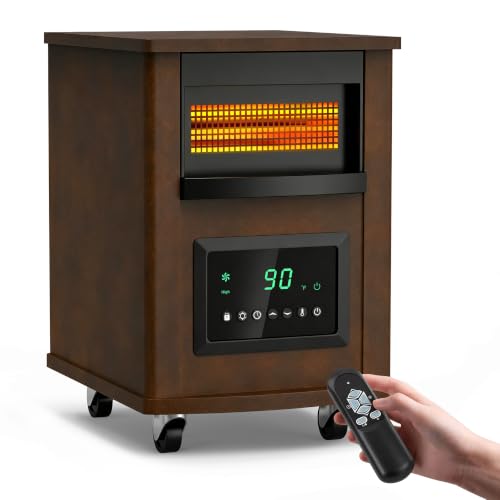
If you want gentle supplemental warmth without worrying about fire hazards or burned fingers, look for an indoor cabinet-style infrared heater. These models house the heating elements inside an insulated exterior case made of finished wood or durable molded plastic. This cool-touch housing ensures that curious toddlers or wagging dog tails can brush against the sides or top of the heater without getting burned.
Before purchasing an indoor heater, check the product packaging and the manufacturer label for essential protective hardware. First, look for a tip-over safety switch that cuts power instantly if the unit is knocked over or tilted. This switch is often a small spring-loaded pin on the base of the machine that shuts the element down the second the heater leaves a flat surface.
Second, verify that the model has an automatic overheat sensor that shuts the unit off if internal parts get dangerously hot. This sensor protects your home if an errant blanket, pillow, or curtain accidentally falls over the intake grille and traps heat inside the unit.
Third, look for a digital temperature dial that clicks on and off to hold your set warmth, along with a programmable auto-off timer. These controls keep the heater from running continuously on high power all day, lowering energy use and reducing strain on your wall outlet.
Finally, always check the back or bottom label for a recognized safety certification mark, such as UL, ETL, CSA, or TUV. These marks prove that an independent safety organization verified the electrical design against rigorous fire and shock standards.

- BWP Score9.2
BWP Score is a ranking system developed by Bestwinterproducts.com. BWP score has no relationship or impact from any manufacturers or sales agent websites. Learn more
- BrandROVSUN

- BWP Score9.1
BWP Score is a ranking system developed by Bestwinterproducts.com. BWP score has no relationship or impact from any manufacturers or sales agent websites. Learn more
- BrandDR. INFRARED HEATER

- BWP Score8.5
BWP Score is a ranking system developed by Bestwinterproducts.com. BWP score has no relationship or impact from any manufacturers or sales agent websites. Learn more
- BrandWEWARM

- BWP Score8.2
BWP Score is a ranking system developed by Bestwinterproducts.com. BWP score has no relationship or impact from any manufacturers or sales agent websites. Learn more
- BrandDR. INFRARED HEATER

- BWP Score7.9
BWP Score is a ranking system developed by Bestwinterproducts.com. BWP score has no relationship or impact from any manufacturers or sales agent websites. Learn more
- BrandEdenPURE

- BWP Score7.8
BWP Score is a ranking system developed by Bestwinterproducts.com. BWP score has no relationship or impact from any manufacturers or sales agent websites. Learn more
- BrandWEWARM

- BWP Score7.8
BWP Score is a ranking system developed by Bestwinterproducts.com. BWP score has no relationship or impact from any manufacturers or sales agent websites. Learn more
- BrandHeat Storm
- BWP Score7.3
BWP Score is a ranking system developed by Bestwinterproducts.com. BWP score has no relationship or impact from any manufacturers or sales agent websites. Learn more
- BrandRealSmart
Last update on 2026-10-08 / Affiliate links / Images, Product Titles, and Product Highlights from Amazon Product Advertising API
FAQs
Can an infrared heater burn your skin or paws if touched?
The front metal grille where heat exits will get hot during operation and can burn skin if touched directly. However, quality indoor infrared heaters feature cool-touch exterior cabinets made of wood or heat-resistant plastic that stay safe to brush against. If you have curious toddlers or pets, place the heater out of their immediate play path and supervise them whenever the unit is running.
Do indoor electric infrared heaters emit carbon monoxide?
Electric infrared heaters do not emit carbon monoxide or any other harmful fumes. Carbon monoxide is only produced when a fuel like propane, natural gas, kerosene, or wood burns without enough ventilation. Because electric models use quartz tubes or ceramic elements powered entirely by electricity, there is no combustion and zero risk of toxic gas emissions.
Why does my wall outlet feel warm when running a space heater?
A slight warmth is normal because a 1,500-watt space heater pulls a continuous 12.5 amps of electrical current through the wall receptacle. However, if the outlet cover, plug, or cord feels hot to the touch or smells like burning plastic, turn the heater off immediately. Unplug the unit, let it cool completely, and call a licensed electrician to inspect the outlet for worn contacts or loose wiring.
Will leaving an infrared heater on dry out my skin and eyes?
No, infrared heaters are much gentler on your skin, eyes, and sinuses than standard fan-forced convection heaters. Convection heaters pull air across red-hot coils, which burns away ambient humidity and stirs up dust. Infrared heat warms people and furniture directly through light waves, leaving natural moisture in the air so your room stays comfortable without dry throat or itchy eyes.


Best Warm Winter Scarves 2026 For Cozy Comfort

Best Green Ski Goggles 2026 For Clear Vision On Slopes

12 Best Corner Electric Fireplace 2026: My Ultimate Guide To Pick One

Best Battery Powered Snow Blower 2026 For Effortless Snow Clearing

Best Ski Goggles Under 30 Inches For Crisp Vision And Comfort

Best Cooling Scarf 2026 For Instant Relief And Comfort

Fake Snow for Grass: Create a Realistic Winter Lawn Display

Dimplex Prism Wall Mount Fireplace: Sleek Heat With Modern Flame Style





