
Are Infrared Space Heaters Safe for Your Home?

Check the floor around the heater to ensure blankets, curtains, and furniture stay at least three feet back. Giving the unit that clear path ensures that infrared space heaters are completely safe indoors without creating a fire hazard. Instead of burning fuel or blowing scorching air, these heaters cast gentle, invisible heat waves that warm people and furniture directly, much like sunshine through a clean windowpane.
Day-to-day safety still depends on a few basic household habits. Always plug the power cord directly into a wall outlet instead of an extension cord, and make sure the unit includes built-in sensors that cut power if it ever tips over. Homes with curious toddlers or pets also need an enclosed cabinet that stays cool to the touch. Understanding how these safeguards work will help you keep the room warm without any lingering worry.
How Infrared Heat Warms Your Room and Why It Is Naturally Safe
Imagine sitting by a window on a cold winter afternoon. The glass might feel frosty, and the room air might feel chilly, but the moment direct sunlight touches your face, you feel instant warmth. That is exactly how an infrared space heater operates. Instead of blowing hot air across the ceiling, it creates gentle heat that warms people and furniture directly like sunlight.
Standard convection heaters rely on heating internal coils and using a fan that pushes warm air across the room. Because warm air is light, it rises immediately to the ceiling, leaving the floor and your feet cold until the entire volume of room air heats up. This circulating air also stirs up household dust, pet dander, and allergens while stripping moisture from the room. Infrared units work differently. They emit invisible heat waves that travel quietly through the room until they strike solid objects, such as your couch, your rug, or your body. Those objects absorb the energy and radiate comfortable warmth back into the living space.
From a safety perspective, electric infrared heaters offer distinct advantages over combustion appliances. There is no open flame, no fuel line to leak, and zero risk of carbon monoxide emissions inside your home. The heating elements sit safely inside protective casings, making them far less prone to causing sudden accidents. Because they warm solid items directly rather than superheating the air, they do not dry out your eyes, throat, or skin. When operated correctly, infrared heaters provide clean, natural warmth that keeps your family comfortable without introducing dangerous fumes or airborne irritants.
The Radiation Question: Why Invisible Infrared Rays Are Harmless
The word radiation causes understandable anxiety for many homeowners. Seeing the phrase infrared radiation on a product box or manual can make people worry about cellular damage, cancer, or toxic rays similar to nuclear fallout. Fortunately, this fear comes from a simple misunderstanding of scientific terminology.
In everyday physics, radiation simply describes energy traveling outward from a central source. The glow from a bedside reading lamp is radiation. The warmth radiating off a hot cup of coffee is radiation. Your own body constantly radiates heat into the room around you. What truly matters for your health is the distinction between ionizing and non-ionizing radiation.
Ionizing radiation carries enough raw energy to strip electrons from atoms, which can alter human cells and damage DNA. Examples of ionizing radiation include medical X-rays, gamma rays, and high-energy ultraviolet rays from the sun. This is why technicians place a heavy lead apron over your body during X-rays and why doctors recommend wearing sunscreen outside to block UV damage.
Infrared radiation is completely non-ionizing. It sits on the gentle side of the electromagnetic spectrum, right beside visible light, and lacks the energy required to damage human tissue or alter DNA. It simply causes molecules to vibrate gently, producing comfortable thermal heat. Heating your home with an infrared unit will not give you sunburn, will not emit dangerous UV light, and will not harm your long-term health. It is identical to the soothing warmth you feel when sitting near a crackling campfire or stepping into a patch of morning sunshine.
Preventing Fire Hazards: Electrical Loads and the Three-Foot Rule
Space heater fires are almost never caused by the infrared heating technology itself. Instead, fires occur when heaters are plugged into unsafe electrical setups or placed too close to combustible household fabrics. Following basic electrical and placement rules completely neutralizes these risks.
In standard US homes, portable electric heaters draw up to 1,500 watts on their high heat setting. Running at full power, a 1,500-watt heater pulls roughly 12.5 amps of electrical current from a standard 120-volt household circuit. Most residential bedrooms and living rooms operate on 15-amp circuit breakers, leaving only about 2.5 amps of buffer on that entire circuit.
If you plug a 1,500-watt heater into an outlet on a circuit that already powers a computer, television, or floor lamps, you will quickly reach circuit capacity. If someone switches on a vacuum cleaner or hair dryer on that same line, the breaker will trip immediately. This is not a heater malfunction; the breaker cuts power before the electrical wires inside your walls can overheat. Always plug your heater into a circuit that is not heavily burdened by other high-draw appliances.
The single biggest hazard in home heating is using an extension cord, power strip, or surge protector. Most household extension cords feature light-gauge wiring built for low-draw devices like phone chargers or lamps. Drawing a continuous 12.5-amp load through an undersized cord causes it to heat up rapidly. Over several hours, the plastic insulation can melt, easily igniting carpeting, baseboards, or nearby drapery. Always plug the heavy-duty power cord directly into a grounded wall outlet.
Placement clearance is equally vital. Every heating manufacturer requires a strict 3-foot safety buffer. Keep all space heaters at least 3 feet (36 inches) away from bedding, drapes, upholstered furniture, paper, and clothing. This clearance rule is just as critical if you are setting up a heater to warm drafty spaces like a three-season porch or an uninsulated back room. Radiant warmth steadily heats solid objects over time, and if a blanket or curtain rests against the front grille for several hours, that fabric can dry out, overheat, and catch fire.
- Plug the heavy-duty cord directly into a dedicated 120-volt wall outlet, never into an extension cord, surge protector, or power strip.
- Maintain a clear 3-foot safety buffer around the front, sides, and rear of the unit.
- Set the heater on a flat, level, bare floor rather than on thick rugs, tables, or unstable shelves.
- Avoid running other high-draw appliances, such as microwaves or irons, on the same household electrical circuit.
- Touch the wall outlet faceplate after thirty minutes of use; if it feels hot or smells like warm plastic, unplug the heater and contact a licensed electrician.
Protecting Children and Pets from Burn and Tip-Over Risks
If you have toddlers playing on the floor or pets running through the house, contact burns and tipped units are natural worries. Modern infrared heaters address these everyday household hazards through smart structural design and automatic internal safety switches.
The primary safety difference between models lies in the exterior casing. Older or budget personal heaters often leave quartz heating tubes exposed behind a thin wire mesh grille. While these units warm up fast, the metal grille can reach temperatures that cause contact burns. A curious child who touches the screen or a pet whose tail brushes against the metal can suffer a painful burn in an instant.
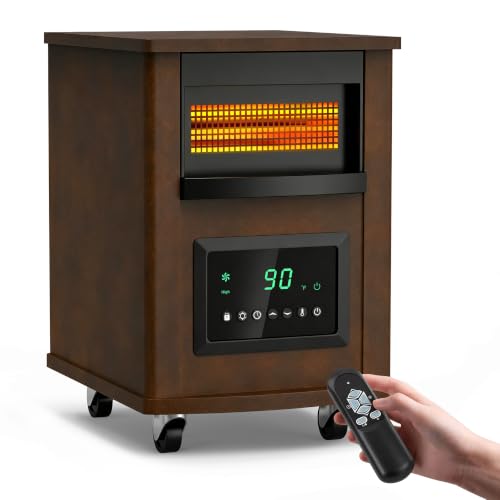
For family spaces, fully enclosed cabinet heaters offer vastly superior protection. These units enclose the quartz tubes or a ceramic heating element that warms up in seconds inside an insulated wooden or heavy-duty plastic housing. Internal heat exchangers transfer the thermal energy while a quiet fan pushes the warm air into the room. The exterior surfaces and outer grilles remain cool to the touch, meaning a toddler or dog can brush against the cabinet without any burn risk.
Internal shut-off sensors provide another critical layer of home safety. Always confirm that your heater includes a tip-over safety switch that cuts power instantly if the unit is knocked over or tilted. Inside the base, a weighted sensor detects when the unit loses contact with a flat floor and cuts electricity before hot components can ignite carpet fibers. You also need an automatic overheat sensor that shuts the unit off if internal parts get dangerously hot, which guards against fires if a blanket or pet bed accidentally blocks the intake vents.
Many homeowners also wonder if it is safe to run an infrared heater overnight in a bedroom. As long as your unit features verified tip-over and overheat sensors, maintains the 3-foot clearance, and plugs straight into the wall, overnight use is safe. Using a programmable auto-off timer or a digital temperature dial that clicks on and off to hold your set warmth keeps the room comfortable without overheating. Maintaining strict clearance and steady thermostat control is just as important when warming smaller living areas, such as choosing heating for downflow ducts or compact rooms where floor space is limited.
What to Look for in a Family-Safe Infrared Heater
Choosing a family-safe infrared heater comes down to picking the right cabinet design and confirming essential safety switches. If you have children, pets, or high foot traffic, avoid open radiant dishes with exposed glowing elements. Instead, choose a fully enclosed cabinet heater with a cool-touch exterior that stays safe to touch throughout hours of operation.
Look closely at the control features before making a choice. A mechanical or electronic tip-over safety switch is mandatory for any portable floor heater. You should also verify that the heater includes an automatic overheat sensor to prevent internal components from reaching dangerous temperatures if airflow is blocked. Programmable auto-off timers and digital thermostats add valuable convenience, allowing the unit to shut down automatically after you fall asleep or cycle off when the room reaches your preferred temperature.
Finally, inspect the product label or packaging for recognized US safety certification marks. Look for marks from independent safety organizations such as UL, ETL, CSA, or TUV. These certifications confirm that the heater has been certified to meet strict electrical and fire safety standards, giving you confidence that its safety shut-offs will perform reliably when your household needs them.

- BWP Score9.1
BWP Score is a ranking system developed by Bestwinterproducts.com. BWP score has no relationship or impact from any manufacturers or sales agent websites. Learn more
- BrandDR. INFRARED HEATER

- BWP Score9.0
BWP Score is a ranking system developed by Bestwinterproducts.com. BWP score has no relationship or impact from any manufacturers or sales agent websites. Learn more
- BrandDR. INFRARED HEATER

- BWP Score8.3
BWP Score is a ranking system developed by Bestwinterproducts.com. BWP score has no relationship or impact from any manufacturers or sales agent websites. Learn more
- BrandHeat Storm

- BWP Score8.2
BWP Score is a ranking system developed by Bestwinterproducts.com. BWP score has no relationship or impact from any manufacturers or sales agent websites. Learn more
- BrandDR. INFRARED HEATER

- BWP Score8.2
BWP Score is a ranking system developed by Bestwinterproducts.com. BWP score has no relationship or impact from any manufacturers or sales agent websites. Learn more
- BrandDR. INFRARED HEATER

- BWP Score7.8
BWP Score is a ranking system developed by Bestwinterproducts.com. BWP score has no relationship or impact from any manufacturers or sales agent websites. Learn more
- BrandWEWARM

- BWP Score8.2
BWP Score is a ranking system developed by Bestwinterproducts.com. BWP score has no relationship or impact from any manufacturers or sales agent websites. Learn more
- BrandBLACK+DECKER

- BWP Score7.9
BWP Score is a ranking system developed by Bestwinterproducts.com. BWP score has no relationship or impact from any manufacturers or sales agent websites. Learn more
- BrandEdenPURE
- BWP Score7.3
BWP Score is a ranking system developed by Bestwinterproducts.com. BWP score has no relationship or impact from any manufacturers or sales agent websites. Learn more
- BrandRealSmart
Last update on 2026-10-07 / Affiliate links / Images, Product Titles, and Product Highlights from Amazon Product Advertising API
FAQs
Can I safely leave an infrared space heater running overnight?
Yes, you can safely run an infrared heater overnight if the unit includes working tip-over and automatic overheat sensors. Ensure the heater sits on a flat, bare floor at least 3 feet away from blankets, pillows, and curtains, and plug it directly into a wall outlet. Using a digital thermostat or setting a programmable timer prevents the room from becoming uncomfortably hot while you sleep.
Why does my heater cord or wall outlet feel warm?
It is normal for the cord and outlet cover to feel slightly warm because the heater draws a heavy continuous load of roughly 12.5 amps. However, if the outlet faceplate feels hot to the touch, shows brown discoloration, or smells like melting plastic, switch off and unplug the unit immediately. These symptoms indicate worn outlet contacts or loose wiring, which require inspection by a licensed electrician.
Do infrared heaters dry out indoor air like traditional blowers?
No, infrared heaters do not dry out room air as aggressively as conventional fan-forced convection heaters. Standard convection blowers constantly circulate and superheat indoor air, which rapidly lowers relative humidity and causes dry skin or irritated sinuses. Infrared heaters warm furniture, walls, and people directly through gentle radiant waves, leaving natural indoor humidity levels intact.


Best Warm Winter Scarves 2026 For Cozy Comfort

Best Green Ski Goggles 2026 For Clear Vision On Slopes

12 Best Corner Electric Fireplace 2026: My Ultimate Guide To Pick One

Best Battery Powered Snow Blower 2026 For Effortless Snow Clearing

Best Ski Goggles Under 30 Inches For Crisp Vision And Comfort

Best Cooling Scarf 2026 For Instant Relief And Comfort

Fake Snow for Grass: Create a Realistic Winter Lawn Display

Dimplex Prism Wall Mount Fireplace: Sleek Heat With Modern Flame Style





