
Are Mr. Heaters Safe to Use in a Tent?

Check the safety label on the unit to confirm it carries an indoor rating. These portable heaters are safe to use in a tent, but only because indoor models include built-in safety valves that stop fuel flow if oxygen levels drop. Without that specific feature, burning fuel inside an enclosed shelter can quickly lead to carbon monoxide poisoning or fire.
Staying protected still depends on three basic habits. Keep a window vent or door zipper cracked open a few inches so fresh air circulates continuously. Set the heater on a firm, flat surface far away from sleeping bags, clothes, and flammable tent walls. Most importantly, turn the unit off before going to sleep so you never leave an open heat source unattended. A few simple precautions keep your campsite comfortable and completely safe.
What are the essential rules for tent safety?
Using a portable propane heater inside a tent can turn a freezing outdoor trip into a comfortable getaway. But bringing an open flame into a shelter made of synthetic fabric requires caution. You face two primary hazards: tent fabric catching fire and the silent danger of carbon monoxide poisoning.
You can run an indoor-safe heater in a tent safely by following three non-negotiable rules. First, maintain continuous fresh air ventilation by cracking your vents. Second, keep a three-foot open buffer around the heater. Third, turn the unit completely off before falling asleep.
Indoor-rated heaters burn propane cleanly, producing minimal carbon monoxide. But the flame consumes oxygen. If you seal your tent tight, the burner depletes the air. When oxygen drops, the flame produces carbon monoxide, an invisible, odorless poisonous gas. Continuous fresh air circulation prevents this danger entirely.
Fire is the other threat. Most camping tents are made from polyester or nylon that melts or burns quickly. If a sleeping bag or sagging tent wall brushes against the hot metal face of the heater, it can ignite in seconds. Clear physical boundaries keep everyone safe.
How do the built-in safety shutoffs protect you?
Indoor-safe portable propane heaters feature two vital protective systems: an Oxygen Depletion Sensor and a mechanical tip-over switch. Understanding how these parts function helps you understand how they protect you, as well as their limits.
The Oxygen Depletion Sensor, or ODS, is a low-oxygen safety shutoff that cuts gas before air gets dangerous. A small pilot flame rests against a heat sensor. If oxygen drops below a safe threshold, the pilot flame weakens and pulls away from the sensor. Once the sensor cools, an internal valve snaps the gas supply shut, extinguishing the burner.
The tip-over safety switch prevents fires if the unit gets knocked over. Inside the heater, a weighted component rests in a balanced position. If someone bumps the unit or it tilts on uneven ground, the weight shifts instantly. This movement trips the internal safety valve and shuts off the propane flow right away.
While these systems provide crucial protection, never treat them as an excuse to ignore safe habits. Dust and rough travel can cause parts to stick. Also, elevations above 7,000 feet have thinner air with less oxygen. The sensor may read this thin mountain air as a hazard and shut the heater down repeatedly, even in a vented tent.
Can you leave the heater running while you sleep?
The safest rule for cold-weather camping is simple: never leave a propane heater running while everyone is asleep. Shutting the heater off at bedtime removes fire and gas risks while you are unconscious.
When awake, you can spot a falling blanket or notice if gear shifts near the heater. While sleeping, you cannot react. People toss and turn through the night. A restless sleeper can push bedding against the hot burner. Synthetic fabrics ignite quickly, and escaping a burning tent in the dark is extremely dangerous.
Carbon monoxide is equally dangerous at night. Because this gas has no color and no odor, it will not wake you up. Breathing carbon monoxide causes you to slip into deeper unconsciousness without warning. Sleeping through an unexpected vent blockage or part failure puts your life at risk.
Instead of running the heater all night, use a simple routine. Turn the heater on 15 to 20 minutes before climbing into bed. This dries damp tent air and warms the shelter. Once your sleeping bag is warm, turn the heater off, confirm the pilot light is out, and zip up your bag. In the morning, reach out, turn the heater on, and warm the space before dressing.
How do you ventilate your tent properly?
Fresh air ventilation is required whenever you burn propane inside a shelter. Proper airflow supplies oxygen to the burner and vents moisture. Follow these four steps to set up reliable airflow:
- Open a low air intake: Unzip the bottom corner of your tent door zipper two to four inches. If your tent has ground vents, prop them open. This draws cool, fresh air into the lower part of the tent where the heater sits.
- Crack an upper exhaust vent: Open a roof vent or lower a top window zipper two to four inches on the opposite side. Warm air naturally rises. Opening an upper vent lets hot, humid air and combustion gases escape smoothly, creating steady cross-ventilation.
- Inspect your vents from the outside: Check that the rainfly is not pressed flat against the mesh. Confirm that leaves, flaps, or snow have not blocked the gaps. If snow falls, clear accumulation around the tent base so low vents stay clear.
- Set up a carbon monoxide detector: Never rely solely on the heater's shutoff valve. Bring a battery-operated carbon monoxide alarm. Place or hang it at head height near your sleeping pad. Confirm the batteries are fresh, and verify that the alarm sounds loudly.
Where should you place the heater inside your tent?
Where you set up your heater inside the tent is just as critical as how you ventilate the space. Follow this practical checklist every time you set up camp:
- Set the heater on a solid board: Never place a heater directly on a thin nylon floor. Bring a smooth piece of plywood, a cutting board, or a metal tray. A hard, level base keeps the unit stable and prevents the tip-over switch from clicking shut on soft ground.
- Maintain the three-foot safety buffer: Keep at least 36 inches of clear space around the heater. Verify that sleeping bags, duffel bags, boots, extra blankets, and pets stay completely outside this perimeter.
- Angle heat toward open floor space: These units deliver radiant heat, which is gentle heat that warms people and objects directly like sunlight rather than blowing hot air. Point the front grille toward your seating area, never directly at a tent wall or slanted fabric.
- Keep clear of the doorway: Position the heater off to the side, away from the path people walk when entering or exiting. This stops anyone from tripping over the unit in the dark.
- Store spare propane cylinders outside: Keep extra one-pound propane bottles outside the tent in a sheltered spot until you need to screw a fresh one into the heater.
Which heater size matches your tent floor?
Choosing the right size heater prevents you from freezing or overheating a small shelter. Heat output is measured in BTU, which is a standard heat output measurement. Here is how common portable propane heater sizes match up with different tent footprints:
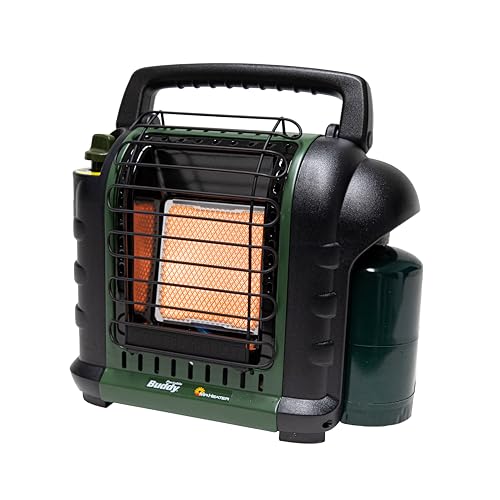
Small personal heaters, like the Little Buddy, produce 3,800 BTU per hour. With dimensions of 12 by 9.75 by 10.2 inches and a weight of 5.6 pounds, this size heats areas up to 95 square feet. It is built for compact two-person tents or small hunting blinds where floor space is limited.
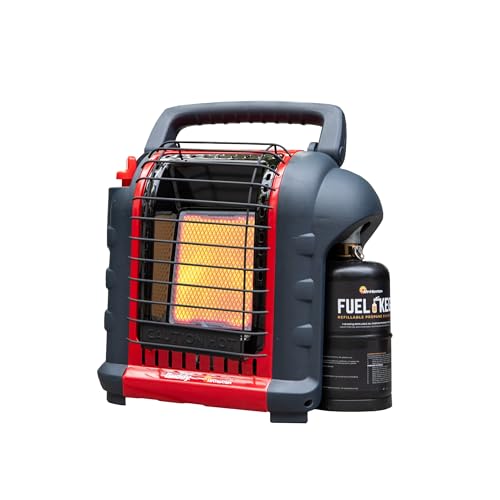
Standard portable models, like the Portable Buddy, emit 4,000 or 9,000 BTU per hour of radiant heat. Weighing 7.1 pounds with dimensions of 8.39 by 13.39 by 15.16 inches (or 7.7 by 13.4 by 15 inches), these units suit four-person to six-person tents spanning 100 to 180 square feet. You can start on high, then switch to 4,000 BTU to save fuel. Note that indoor use for styles like the Midnight Series is not approved in Canada or Massachusetts, so check local rules before packing.
Midsize high-output units, like the Buddy FLEX, provide 8,000 to 11,000 BTU per hour. With dimensions of 13.5 by 9 by 14.25 inches and a weight of 11.73 pounds, this heater suits six-person to eight-person family dome tents that need stronger heat against brisk winds.
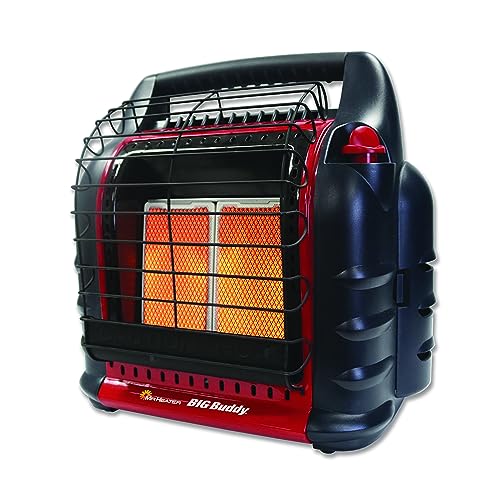
Large heaters, like the Big Buddy NF, Big Buddy PRO, and Big Buddy Midnight Series, offer 4,000, 9,000, and 18,000 BTU settings. Weighing between 13.01 and 14.11 pounds and measuring up to 18.5 by 18 by 11.4 inches, these heaters warm spaces up to 450 square feet. They are too large for standard nylon tents, but suit heavy canvas wall tents. Similar rules apply when choosing heaters to stay warm off-grid or finding a heater for an enclosed porch.
What features should you check before buying?
When selecting a portable heater for cold-weather camping, several features ensure safe warmth. Always inspect the packaging and manual to confirm the manufacturer approved the unit for indoor recreational use. Never bring a general outdoor patio burner or construction heater into a tent.
Check that the unit includes an integrated low-oxygen safety shutoff and an automatic tip-over switch built directly into the fuel valve. These features are mandatory for heating an enclosed shelter. Look for adjustable heat settings, which let you dial back fuel consumption once your tent warms up, saving propane and reducing condensation.
Examine the physical design and footprint before buying. A wide base helps the heater sit securely without wobbling on outdoor surfaces. Solid carry handles let you move the unit easily once it cools down. Radiant heat models warm your body directly, keeping you comfortable even as cool air circulates through your ventilation flaps.
- BWP Score8.4
BWP Score is a ranking system developed by Bestwinterproducts.com. BWP score has no relationship or impact from any manufacturers or sales agent websites. Learn more
- BrandMr. Heater

- BWP Score9.4
BWP Score is a ranking system developed by Bestwinterproducts.com. BWP score has no relationship or impact from any manufacturers or sales agent websites. Learn more
- BrandMr. Heater

- BWP Score9.4
BWP Score is a ranking system developed by Bestwinterproducts.com. BWP score has no relationship or impact from any manufacturers or sales agent websites. Learn more
- BrandMr. Heater
- BWP Score9.3
BWP Score is a ranking system developed by Bestwinterproducts.com. BWP score has no relationship or impact from any manufacturers or sales agent websites. Learn more
- BrandMr. Heater

- BWP Score9.3
BWP Score is a ranking system developed by Bestwinterproducts.com. BWP score has no relationship or impact from any manufacturers or sales agent websites. Learn more
- BrandMr. Heater

- BWP Score7.9
BWP Score is a ranking system developed by Bestwinterproducts.com. BWP score has no relationship or impact from any manufacturers or sales agent websites. Learn more
- BrandMr. Heater
- BWP Score7.4
BWP Score is a ranking system developed by Bestwinterproducts.com. BWP score has no relationship or impact from any manufacturers or sales agent websites. Learn more
- BrandMr. Heater

- BWP Score7.1
BWP Score is a ranking system developed by Bestwinterproducts.com. BWP score has no relationship or impact from any manufacturers or sales agent websites. Learn more
- BrandMr. Heater
Last update on 2026-10-08 / Affiliate links / Images, Product Titles, and Product Highlights from Amazon Product Advertising API
FAQs
Why does condensation form inside the tent when running a propane heater?
Water vapor is a natural byproduct of burning propane fuel. When warm, humid air meets cold tent fabric, the moisture condenses into liquid droplets. You can minimize this condensation by keeping both upper and lower vents open so humid air escapes continuously.
Can you use a camping stove to warm up a tent?
No, never use a camping stove or open burner to warm a tent. Cooking stoves are designed strictly for outdoor food preparation and lack low-oxygen sensors or tip-over switches. They release higher amounts of carbon monoxide and create a severe fire hazard inside enclosed spaces.
What should you do if your carbon monoxide detector sounds?
Turn the heater off immediately, exit the tent, and move into fresh air. Unzip all tent doors and window flaps from the outside to let clean air sweep through the shelter. Do not re-enter the tent until the alarm stops sounding and the space has completely aired out.
Will a portable propane heater work at high mountain altitudes?
Most indoor-safe propane heaters operate reliably up to roughly 7,000 feet above sea level. At higher elevations, the thinner atmosphere naturally contains less oxygen per cubic foot. This thin air often causes the built-in oxygen sensor to shut the heater off repeatedly, even when your tent is vented.


Best Warm Winter Scarves 2026 For Cozy Comfort

Best Green Ski Goggles 2026 For Clear Vision On Slopes

12 Best Corner Electric Fireplace 2026: My Ultimate Guide To Pick One

Best Battery Powered Snow Blower 2026 For Effortless Snow Clearing

Best Ski Goggles Under 30 Inches For Crisp Vision And Comfort

Best Cooling Scarf 2026 For Instant Relief And Comfort

Fake Snow for Grass: Create a Realistic Winter Lawn Display

Dimplex Prism Wall Mount Fireplace: Sleek Heat With Modern Flame Style





