
Are Natural Gas Tankless Water Heaters Worth It for Your Home?

Switching to a natural gas tankless water heater is worth the investment for busy families who constantly drain their old storage tank. That answer flips if a home requires extensive utility upgrades just to get the equipment running. While heating water on demand slashes wasted energy, a difficult setup can quickly erase those monthly gas savings.
The real value comes down to how many showers run at once, the temperature of winter tap water, and the size of the existing gas pipe. Homes that need wider fuel lines or new exhaust vents cut through the roof rarely see a fast return. Staying in the house for at least a decade makes all the difference. Here is how to tell if the swap makes sense for your daily routine and budget.
The Short Version
- Worth it if: You have a busy household that frequently runs out of hot water, your home already has an adequate gas line, and you plan to live in the house for at least ten years to recoup the upfront setup cost.
- Skip it if: You live alone or with just one other person, use hot water sparingly, plan to move within a few years, or face expensive gas line and wall modifications to install new exhaust pipes.
- The reality check: Tankless units deliver endless hot water, but they do not make water reach your faucet instantly, and freezing winter groundwater can reduce the water pressure at your showerhead.
- Maintenance requirement: You must flush the heating coils with vinegar once a year to clear mineral scale, or the heat exchanger can overheat and fail prematurely.
When Natural Gas Tankless Is Worth It (and When to Skip It)
Natural gas tankless water heaters heat water directly as it flows through the machine rather than storing fifty gallons in a metal barrel. This fundamental difference makes them fantastic for some households and a poor financial choice for others.
A tankless unit makes sense if your family regularly runs out of hot water. If the second or third person in the morning shower lineup constantly ends up with a lukewarm rinse, on-demand heating solves that frustration permanently. It also fits homes where physical space is tight. Because the equipment mounts directly to a wall stud, it frees up valuable floor space in small utility closets, basements, or laundry areas.
Staying in your home for a long time is the other major factor. A traditional storage tank usually lasts ten to twelve years before the inner steel lining rusts out. A natural gas tankless system often lasts twenty years or longer when properly maintained. If you plan to stay put for the next decade or two, the extended lifespan helps justify the higher upfront investment.
On the other hand, you should skip a tankless system if you live in a one- or two-person household with modest hot water needs. If you take one short shower a day and run the dishwasher at night, your standard gas tank is already quite affordable to run. Upgrading will save only a tiny amount on your monthly gas bill, meaning you will never make back the purchase and installation expenses.
You should also reconsider if your house requires extensive structural remodeling to accommodate the unit. If your current mechanical room sits deep inside the center of your basement, running a brand-new exhaust pipe all the way to an exterior wall can cost thousands of dollars in labor alone. In that situation, replacing your aging tank with a modern, high-efficiency standard tank is almost always the smarter financial move.
Upfront Installation Costs Versus Monthly Savings: The Real Payback Timeline
The biggest hurdle for most homeowners is the installation bill. A basic tank replacement is straightforward: a plumber disconnects the old tank, slides the new one into the exact same footprint, reconnects the water and gas lines, and attaches the existing vent pipe. The entire job usually takes half a day.
Installing a natural gas tankless heater is a much larger renovation project. The technician must mount the unit, reroute existing cold and hot water copper pipes, install new shutoff valves, route a dedicated condensation drain line for high-efficiency models, and drill new holes through your home's exterior rim joist for specialized venting. Because of this extra labor and material, the total installation cost is often two to three times higher than swapping in another standard tank.
In exchange for that steep upfront bill, a natural gas tankless heater cuts your monthly energy use. Traditional tanks suffer from standby heat loss, which means they constantly fire their burners day and night just to keep fifty gallons of water warm while you sleep or work. Tankless systems only ignite their burners when you open a hot water tap. They carry a higher energy efficiency score (UEF, a standardized rating of how efficiently the appliance turns gas into usable hot water), which typically lowers water heating gas consumption by twenty to thirty percent.
However, that monthly saving is relatively small in real dollars because natural gas remains an affordable fuel across most parts of the United States. Trimming five to fifteen dollars off your monthly gas bill will not pay back a large installation bill quickly. For most homeowners, the true payback timeline stretches anywhere from twelve to twenty years. You should view natural gas tankless as a luxury lifestyle upgrade that provides unlimited hot water and lasts twice as long as a tank, rather than a quick money-saving investment.
Home Compatibility Checklist: Gas Pipe Size, Exhaust Venting, and Electrical Outlets
Before purchasing a unit, you must confirm that your utility infrastructure can support it. Tankless heaters draw an immense amount of energy in a short burst to heat cold water in seconds. Here are the three critical structural requirements you must inspect:
- Gas supply line diameter: A standard storage tank uses a modest burner, typically needing only a half-inch natural gas pipe. A whole-house tankless unit requires massive heating power (measured in BTU, which indicates heating power per hour). Many tankless units demand between 100,000 and 160,000 BTU, requiring a three-quarter-inch or even a one-inch gas supply line. If your main gas manifold is far away, your plumber must run a wider pipe across the house, which adds substantial labor cost.
- Dedicated exhaust venting: You cannot vent a tankless heater into an old metal chimney or a shared atmospheric water heater pipe. Tankless units use internal electric blowers that push exhaust gases out under positive pressure. They require dedicated venting (exhaust pipes carrying fumes outside), made of specialized double-wall stainless steel or sealed, heavy-duty plastic pipes. These pipes must exit directly through an outside wall or straight up through the roof, keeping safe clearances away from windows and doors. Similar venting rules apply when managing enclosed heating systems or reviewing the best heater for mobile home setups, where tight quarters require strict exhaust separation.
- Nearby 120-volt electrical outlet: While the burner runs on natural gas, the internal computer board, water flow sensors, digital controls, and spark igniters all run on electricity. Your utility closet must have a standard 120-volt grounded wall outlet within a few feet of the mounting location. If your old tank used a mechanical pilot light with zero wiring nearby, you will need a licensed electrician to install a new circuit.
Everyday Reality: Endless Showers, Winter Flow Drops, and Startup Delays
Living with a natural gas tankless heater changes how hot water behaves in your home. The biggest benefit is truly endless hot water. If you have teenagers who take twenty-minute showers, or if you like to fill a giant garden soaking tub, the water stays hot until you shut off the valve. The machine will not run out of hot water halfway through your routine.
The trade-off comes down to water volume during cold weather. Tankless capacity is measured in GPM (gallons of water flowing each minute). How many gallons the heater can produce depends entirely on the incoming water temperature. In the summer, groundwater entering your home might be 65 degrees Fahrenheit. Raising that water to a comfortable 120 degrees requires a modest temperature jump, allowing the heater to deliver four to five gallons per minute with ease.
In deep winter, incoming city or well water can drop to 35 or 40 degrees Fahrenheit. The heater must double its heating effort to warm that frigid water. When the burner reaches its maximum heating power per hour (BTU limit), the unit automatically slows down the water flow to prevent delivering lukewarm water. During freezing months, you might notice that running the dishwasher while someone is showering noticeably reduces the shower's water pressure.
Homeowners also notice two common quirks in daily operation: wait times and the cold water sandwich effect. A tankless unit does not produce instant hot water at your faucet. When you turn on the tap, the heater takes a few seconds to sense water movement, ignite the gas burner, and warm the heat exchanger coils. That hot water then has to travel through your cold plumbing pipes to reach your sink. The wait time at the faucet is identical to, or slightly longer than, an old storage tank.
The cold water sandwich effect happens when you turn off the tap briefly and switch it back on, such as when lathering soap in the shower. The warm water already in the pipe flows out first. Then comes a small pocket of cold water that passed through the heater while the burner was turning off and reigniting, followed by continuous hot water. You might feel a two-second burst of cool water in the middle of your shower.
Routine Upkeep: Why Regular Descaling Protects the Heat Exchanger
Unlike a traditional tank that you can largely ignore for a decade, a natural gas tankless heater requires ongoing maintenance. The heart of the unit is a compact heat exchanger made of copper or stainless steel. When cold water passes through narrow metal tubes exposed to intense gas flames, dissolved minerals like calcium and magnesium naturally bake onto the metal surfaces.
This mineral crust is called scale. If you do not perform regular descaling (flushing out mineral buildup), the scale creates an insulating barrier inside the narrow water channels. The burner will have to burn hotter to heat the water, driving up your gas bills. Left unchecked, the trapped heat will cause the metal coils to overheat, warp, and crack, leading to internal water leaks that ruin the appliance and void the manufacturer warranty.
You must flush the unit once every twelve to twenty-four months, depending on the hardness of your local municipal or well water. Descaling is a straightforward job you can do yourself with basic supplies:
- Turn off the gas supply valve and unplug the water heater from the electrical wall outlet.
- Close the main cold water inlet and hot water outlet isolation valves to disconnect the heater from the rest of your home plumbing.
- Connect standard rubber washing machine hoses to the two service drain ports on the isolation valve kit.
- Place a small submersible pump into a clean five-gallon bucket filled with three to four gallons of plain, undiluted white household vinegar.
- Attach the pump hose to the cold water service port, and drop the open end of the hot water hose back into the bucket to create a closed loop.
- Turn on the pump and let the vinegar circulate through the heater for forty-five to sixty minutes. The mild acid in the vinegar safely breaks down and dissolves the rock-hard calcium scale without corroding the metal pipes.
- Turn off the pump, discard the vinegar, and flush the heater with fresh cold tap water for five minutes before opening the main valves and reconnecting power.
What to Look for Before Choosing a Tankless Unit
If your home fits the profile for an upgrade, selecting the right type of natural gas tankless heater comes down to matching its performance to your climate and daily usage habits. You need an appliance that handles your household peak demand without constantly throttling flow.
Start by calculating your peak flow rate in gallons of water flowing each minute (GPM). Add up the fixtures you realistically expect to run at the exact same moment. A standard water-saving showerhead uses around two gallons per minute, while a kitchen sink faucet uses about one to one-and-a-half gallons per minute. If you want to run two showers and a sink simultaneously, look for a unit rated for at least five gallons per minute under realistic winter conditions.
Next, check the heating power rating (BTU). If you live in a northern state where winter ground temperatures dip into the thirties, choose a higher-output model rated between 120,000 and 160,000 BTU. This extra power ensures your showers retain strong water pressure when the incoming water is freezing. If you live in a warm southern climate, a smaller burner near 100,000 BTU is generally sufficient for a two-bathroom home.
Pay attention to temperature management and freeze protection. Look for models equipped with precision sensors that hold water temperature within one degree Fahrenheit of your setting to minimize annoying temperature spikes. If your heater will hang in an unheated basement, crawlspace, or garage, verify that it includes built-in electric freeze protection heating elements. In cold garages, pairing your plumbing safety checks with space warming gear like the best electric heater for garage with thermostat can keep surrounding pipes and utility equipment from freezing during bitter winter storms.
Finally, always verify that the unit carries recognized safety marks such as CSA or ETL certification on its data plate. Because natural gas appliances combine high fuel volumes with pressurized venting, hire a licensed plumbing and heating contractor who specializes in tankless retrofits to handle the sizing calculations, gas line pressure verification, and combustion exhaust installation.
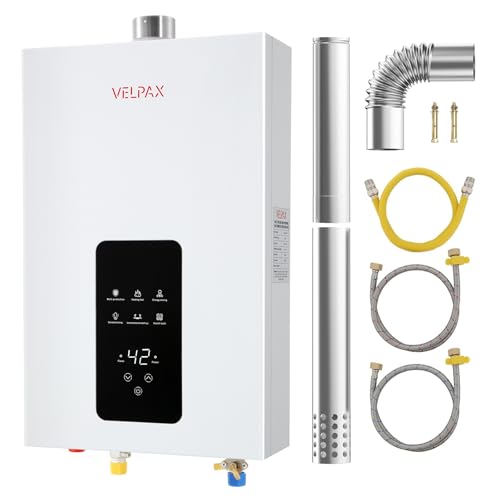
- BWP Score9.7
BWP Score is a ranking system developed by Bestwinterproducts.com. BWP score has no relationship or impact from any manufacturers or sales agent websites. Learn more
- BrandVELPAX

- BWP Score9.3
BWP Score is a ranking system developed by Bestwinterproducts.com. BWP score has no relationship or impact from any manufacturers or sales agent websites. Learn more
- BrandNOVIEEX
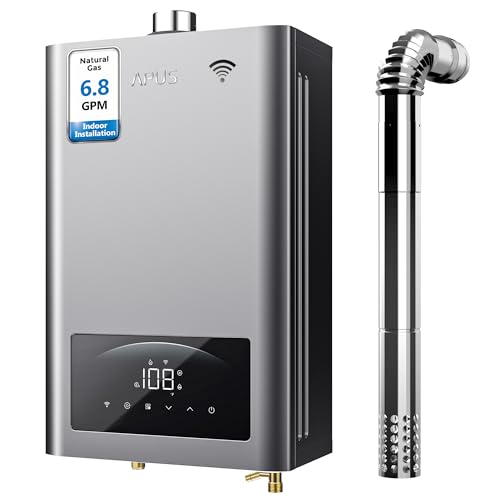
- BWP Score9.1
BWP Score is a ranking system developed by Bestwinterproducts.com. BWP score has no relationship or impact from any manufacturers or sales agent websites. Learn more
- BrandAPUS

- BWP Score8.9
BWP Score is a ranking system developed by Bestwinterproducts.com. BWP score has no relationship or impact from any manufacturers or sales agent websites. Learn more
- BrandRheem

- BWP Score8.7
BWP Score is a ranking system developed by Bestwinterproducts.com. BWP score has no relationship or impact from any manufacturers or sales agent websites. Learn more
- BrandVEVOR
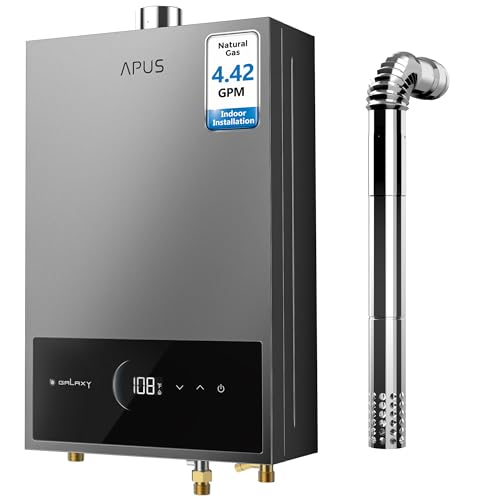
- BWP Score8.6
BWP Score is a ranking system developed by Bestwinterproducts.com. BWP score has no relationship or impact from any manufacturers or sales agent websites. Learn more
- BrandAPUS

- BWP Score8.3
BWP Score is a ranking system developed by Bestwinterproducts.com. BWP score has no relationship or impact from any manufacturers or sales agent websites. Learn more
- Brandthermomate
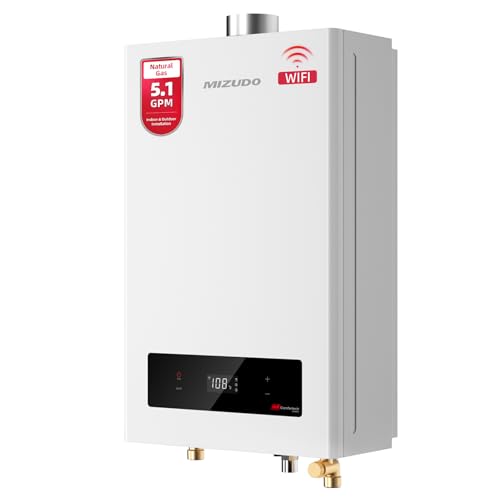
MIZUDO MIZUDO Natural Gas Tankless Water Heater Indoor&Outdoor Convertible Installation
View on Amazon- BWP Score7.2
BWP Score is a ranking system developed by Bestwinterproducts.com. BWP score has no relationship or impact from any manufacturers or sales agent websites. Learn more
- BrandMIZUDO
Last update on 2026-10-09 / Affiliate links / Images, Product Titles, and Product Highlights from Amazon Product Advertising API
FAQs
Can a natural gas tankless water heater work during a power outage?
No, standard natural gas tankless units will not work during an electrical blackout. Even though natural gas supplies the heat, the machine relies on an internal computer board, electric ignition switches, and an exhaust fan to operate safely. If you live in an area prone to severe storms, you can keep the heater running by plugging it into a small portable battery backup power station or a home standby generator.
Will a tankless heater run two showers at the same time in the middle of winter?
It can, provided you choose a unit with adequate heating power per hour (BTU) and a sufficient winter flow rating. When incoming groundwater drops below 40 degrees Fahrenheit, the heater must slow down the water flow to keep the water hot. If your heater is undersized for a cold climate, running two showers at once may cause the water pressure at the showerheads to drop significantly.
Can I install a natural gas tankless water heater myself?
Installing a tankless unit is not recommended as a weekend do-it-yourself project. The process involves high-volume natural gas connections, custom high-pressure exhaust venting through exterior walls, and electrical wiring. A mistake with gas pressures or venting clearances can cause dangerous carbon monoxide leaks or fire hazards. Most manufacturers also require licensed installation to keep the equipment warranty valid.
How do I know if my existing gas line is wide enough?
Look at the black iron pipe connected to your current water heater. If it measures half an inch in diameter, it is likely too narrow for a high-capacity whole-house tankless unit, which usually requires a three-quarter-inch or one-inch pipe. Have a licensed gas technician calculate the total fuel demand of all your home gas appliances to confirm if your gas meter and piping can support the new burner.


Best Warm Winter Scarves 2026 For Cozy Comfort

Best Green Ski Goggles 2026 For Clear Vision On Slopes

12 Best Corner Electric Fireplace 2026: My Ultimate Guide To Pick One

Best Battery Powered Snow Blower 2026 For Effortless Snow Clearing

Best Ski Goggles Under 30 Inches For Crisp Vision And Comfort

Best Cooling Scarf 2026 For Instant Relief And Comfort

Fake Snow for Grass: Create a Realistic Winter Lawn Display

Dimplex Prism Wall Mount Fireplace: Sleek Heat With Modern Flame Style





