
Are Space Heaters Safe for Cats?

Space heaters can be safe around cats, but standard models are often dangerous. Everything changes when a unit has the right built-in safeguards to handle curious paws and sudden bumps. Cats love heat and will sleep right next to a warm grill, but their fur can prevent them from noticing surface heat until skin burns happen. An active cat can also dash across the room and knock a tall heater onto a rug in seconds.
Safe operation depends on picking a heater with a cool-touch outer casing that stays safe to brush against, paired with an automatic switch that kills power if the unit tilts. Keeping cords covered and placing the heater far from high jumps completes the setup. Here is how to create a warm, cozy room without putting your pet or your home at risk.
Cats Face Burn Risks Because They Tolerate High Heat
Cats are notorious heat seekers. Their natural body temperature runs between 101 and 102.5 degrees Fahrenheit, which is higher than a human baseline. Because of this biology, cats naturally seek out sunny patches, warm vents, and glowing space heaters to conserve their own body warmth.
However, a cat's dense fur coat creates a serious blind spot. Fur insulates the skin, which slows down how fast heat registers on nerve endings. When a cat curls up beside a running heater, its outer fur absorbs the dry heat long before the skin underneath feels hot. Because this warmth builds gradually, cats lack a fast retreat reflex against dry heat. By the time your cat feels pain and moves away, its fur may already be singed or its skin blistered.
Vets regularly treat contact burns caused by cats sleeping inches away from hot grilles. These injuries range from scorched guard hairs and curled whiskers to painful burns on tender paw pads and ears. Older cats with arthritis face even greater danger because stiff joints make them slow to stand and walk away from rising heat.
Active cats also create an immediate tipping hazard. A sudden case of the zoomies or a leap from a couch can send a tall, top-heavy heater tumbling onto rugs or cat bedding. If the heating element hits fabric, it can start a fire in seconds. Cats also chew cords out of boredom or curiosity, risking severe electrical shocks and mouth burns from high-voltage household wires.
Key Safety Switches Prevent Tipping Accidents and House Fires
If you run a portable heater around cats, standard heating controls are not enough. You need specific automatic protections that cut power the second something goes wrong. Always look for these core features before using any heater around pets:
- Tip-over safety switch: This tilt sensor cuts power instantly if the unit is knocked over or tilted off balance. If a sprinting cat bumps the unit, the switch kills electrical power before hot parts touch your floor.
- Automatic overheat sensor: This safety sensor shuts down the heater if internal parts get dangerously hot. It protects your home if a curious cat knocks a blanket over the grille or if shedding fur blocks the air intake.
- Cool-touch housing: An outer casing that stays safe to brush against prevents skin blisters if your cat brushes its flank or tail against the unit while walking past.
- Recognized safety certification mark: Check the label for independent US marks like UL, ETL, or CSA. These verify that the heater meets strict national standards for fire prevention and electrical stability.
- Low center of gravity: A wide, weighted base keeps the heater stable and prevents energetic cats from knocking it flat during daily play.
- Tight grille spacing: Narrow mesh or tight slats prevent curious paws from slipping inside and keep loose cat hair away from internal heating parts.
Check the tilt switch yourself before seasonal use. Turn the unit on while placed on a flat, bare floor, then tilt it forward gently. The heater should switch off immediately. If it keeps running while tipped, stop using it right away.
Enclosed Ceramic Heaters Are Far Safer Than Exposed Coils
Different heater styles present very different risk levels for pet owners. Choosing the right heating technology keeps your home warm without exposing curious paws to red-hot hazards.
A ceramic heating element that warms up in seconds, enclosed inside a durable plastic case, is one of the safest options for cats. Ceramic units use self-regulating internal plates and a quiet fan that pushes warm air across the room. Because the heating core is sealed behind cool-touch plastic, there are no exposed glowing wires for curious noses to touch. They also follow the standard sizing rule of thumb of roughly 10 watts per square foot of living space. A standard 1,500-watt ceramic model can warm a 150 square foot bedroom effectively without dangerous surface temperatures.
A silent radiator heater that circulates steady, lasting warmth through sealed oil channels is another sturdy choice, but it requires caution. These heavy radiators are hard for cats to knock over, and they produce gentle, even warmth. However, the outer metal fins become very hot during long runs. While they do not ignite fur instantly like open coils, prolonged contact can burn a sleeping cat. If you run one, place a sturdy pet gate around it to keep cats away. If you need a reliable heater to warm drafty spaces like a sunroom where cats lounge, an enclosed ceramic model provides fast warmth while keeping external housing cooler than hot metal radiator fins.
Never use radiant heaters with exposed quartz tubes or glowing wire coils around cats. These units reach blistering surface temperatures and glow bright orange, which attracts playful pets. A brushing tail can catch fire instantly on an open coil. Avoid fuel-burning propane or kerosene heaters as well, since open flames and carbon monoxide have no place in a home with pets.
Guard Cords and Clear Floor Space in Simple Steps
Safe operation depends heavily on where you put the heater and how you route electrical wires. Follow these practical steps to arrange your room safely for curious cats:
- Maintain a 3-foot safety buffer: Keep the heater at least 3 feet (36 inches) away from cat trees, scratching posts, litter boxes, beds, and low furniture. Never place a heater directly below a shelf or windowsill where a cat might jump down onto it.
- Plug straight into a dedicated wall outlet: Portable electric heaters draw up to 1,500 watts (about 12.5 amps on a standard 120-volt circuit). Always plug directly into a wall receptacle. Never use extension cords, power strips, or surge protectors. Multi-plug adapters can overheat and melt under heavy loads, and trailing cords tempt cats to chew.
- Armor the power cord: Wrap cords in rigid plastic split tubing, cable raceways, or spiral wire sleeves. You can also wipe cords with pet-safe bitter apple spray to deter chewing. Never run cords under rugs or pet beds to hide them. Tucking cords under carpets traps heat, conceals wire damage from claws, and creates a hidden fire danger.
- Place the heater on a flat, bare floor: Set the appliance on hard tile, wood, or laminate. Thick carpets can prevent the tip-over safety switch on the base from engaging and make the unit wobble. If your room is fully carpeted, place a wide ceramic tile under the heater to create a firm, level surface.
- Vacuum cat hair and lint weekly: Turn off the heater, unplug it from the wall, and let it cool completely. Use a vacuum hose with a brush tool to clear accumulated cat hair and dander from the air intake vents. Keeping vents clear prevents internal clogs that trigger overheat cut-offs or generate burning odors.
Touch the wall outlet plate occasionally while the heater runs. If the outlet feels hot or the circuit breaker trips repeatedly, turn the unit off, unplug it, and call a licensed electrician to inspect your wiring.
Never Leave Space Heaters Running When Cats Stay Alone
Never run a portable space heater in an empty home or leave a cat alone in a room with an operating unit. Even a certified heater with automatic cut-offs carries needless risk when no human is around to supervise.
Cats are energetic and unpredictable. A cat chasing a toy can fling blankets onto the heater grille or knock lightweight furniture against it. While safety sensors are built to cut power when vents are blocked, mechanical components can fail. Also, a cat left unattended might chew through an active power cord without anyone nearby to pull the plug.
Whenever you leave the house or head to bed, turn the heater off and unplug it from the wall. You can keep your cats warm during freezing days with safer, low-power alternatives:
- Low-wattage heated pet pads: Certified pet pads draw only 10 to 30 watts, rather than the heavy 1,500 watts of a room heater. They feature chew-resistant steel-wrapped cords, water-resistant liners, and internal thermostats that cap warmth at roughly 102 degrees Fahrenheit to match a cat's body temperature safely.
- Self-warming thermal cat beds: These beds use zero electricity. An internal layer of reflective insulation reflects your cat's own body heat back into the fleece lining, creating a cozy nest without plugs, cords, or fire hazards.
- Enclosed fleece caves and boxes: Cats naturally stay warm in small spaces. Lining cardboard boxes or igloo-style felt caves with thick wool blankets gives your cat an insulated retreat away from chilly drafts.
- Central heating baseline settings: Keep your main home thermostat set to a steady temperature around 68 degrees Fahrenheit. Close doors to drafty, unused rooms to keep cats comfortable in your home's central living spaces.
Just as you would select a specialized heater to maintain safe warmth for delicate terrarium pets without blasting them with dry heat, cats do best with steady, low-temperature heating solutions when left alone.
Choose Stable Pet Warmers with Certified Low Surface Heat
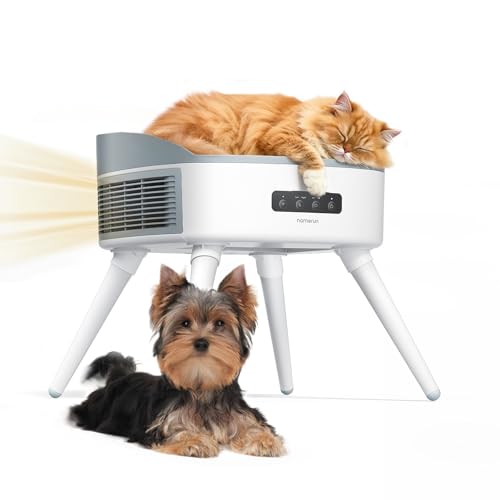
When you want a heater that works safely in a cat household, look for appliances designed specifically with pet habits in mind. Standard room heaters focus purely on blowing high heat into a room, but pet-friendly units prioritize cool outer surfaces, broad tipping-resistant bases, and lower electrical draws.
The best units for cat owners often feature dual heating modes. These models let you use a standard high-power setting to quickly warm the room when you are sitting right there, or switch over to an energy-saving pet mode that produces gentle, low-wattage warmth. A dedicated pet setting maintains steady comfort in an attached resting bed without scorching fur, drying out skin, or racking up large power bills.
Before bringing a new heater home, check three physical details on the product box. Verify that the outer housing stays cool to the touch during operation so accidental brushes cause no harm. Inspect the base to ensure it has a wide, low profile that active cats cannot easily knock over. Finally, check that the unit carries recognized ETL or UL safety certifications for automatic overheat protection and tip-over shut-offs.

- BWP Score8.9
BWP Score is a ranking system developed by Bestwinterproducts.com. BWP score has no relationship or impact from any manufacturers or sales agent websites. Learn more
- BrandHomeRunPet
- BWP Score9.2
BWP Score is a ranking system developed by Bestwinterproducts.com. BWP score has no relationship or impact from any manufacturers or sales agent websites. Learn more
- BrandHomeRunPet
Last update on 2026-10-07 / Affiliate links / Images, Product Titles, and Product Highlights from Amazon Product Advertising API


Best Warm Winter Scarves 2026 For Cozy Comfort

Best Green Ski Goggles 2026 For Clear Vision On Slopes

12 Best Corner Electric Fireplace 2026: My Ultimate Guide To Pick One

Best Battery Powered Snow Blower 2026 For Effortless Snow Clearing

Best Ski Goggles Under 30 Inches For Crisp Vision And Comfort

Best Cooling Scarf 2026 For Instant Relief And Comfort

Fake Snow for Grass: Create a Realistic Winter Lawn Display

Dimplex Prism Wall Mount Fireplace: Sleek Heat With Modern Flame Style





