
9 Best Temp For Pool Heater of 2026 To Lower Energy Costs

A digital thermostat dial promises resort-level luxury at the touch of a button, but dialing in the wrong number turns an afternoon swim into either an icy shock or a massive utility bill. Pushing the setpoint just a few degrees too high accelerates chlorine burnoff and spikes operating costs, while dropping it too low leaves the pool shivering cold. To make matters worse, worn thermistors and failing stack flue sensors often report ghost temperatures or trip error codes, forcing the system into sudden shutdowns. Clouded analog dials and constant trips out to the equipment pad only add to the frustration.
Reaching a comfortable balance starts with matching target temperatures to actual pool use, then confirming those numbers with a reliable dedicated monitor instead of guessing by feel. Pairing accurate indoor tracking with fresh sensors keeps the heating cycle efficient, protecting both the mechanical components and the family budget. Once water temperatures remain steady without unexpected burner cutoffs, swimming stays warm and predictable throughout 2026. The options below help maintain comfortable, inviting water while keeping energy expenses firmly under control.

- BWP Score9.4
BWP Score is a ranking system developed by Bestwinterproducts.com. BWP score has no relationship or impact from any manufacturers or sales agent websites. Learn more
- BrandATEEfaee

- BWP Score9.2
BWP Score is a ranking system developed by Bestwinterproducts.com. BWP score has no relationship or impact from any manufacturers or sales agent websites. Learn more
- BrandThermoPro

- BWP Score9.2
BWP Score is a ranking system developed by Bestwinterproducts.com. BWP score has no relationship or impact from any manufacturers or sales agent websites. Learn more
- BrandRomalon

- BWP Score8.6
BWP Score is a ranking system developed by Bestwinterproducts.com. BWP score has no relationship or impact from any manufacturers or sales agent websites. Learn more
- BrandBaldrTherm

- BWP Score8.2
BWP Score is a ranking system developed by Bestwinterproducts.com. BWP score has no relationship or impact from any manufacturers or sales agent websites. Learn more
- BrandWEBEST

- BWP Score8.2
BWP Score is a ranking system developed by Bestwinterproducts.com. BWP score has no relationship or impact from any manufacturers or sales agent websites. Learn more
- BrandDastminear

- BWP Score8.0
BWP Score is a ranking system developed by Bestwinterproducts.com. BWP score has no relationship or impact from any manufacturers or sales agent websites. Learn more
- BrandTitikula
- BWP Score7.8
BWP Score is a ranking system developed by Bestwinterproducts.com. BWP score has no relationship or impact from any manufacturers or sales agent websites. Learn more
- BrandDommsinon

- BWP Score7.6
BWP Score is a ranking system developed by Bestwinterproducts.com. BWP score has no relationship or impact from any manufacturers or sales agent websites. Learn more
- Brandyoisie
Last update on 2026-09-26 / Affiliate links / Images, Product Titles, and Product Highlights from Amazon Product Advertising API
What temperature setting provides the best balance between comfort and heating costs?
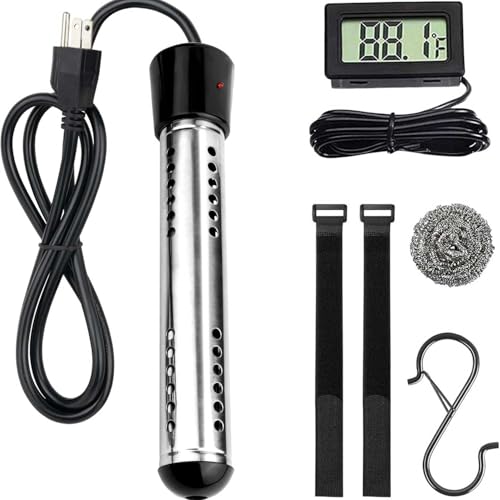
Aim for the lowest temperature setting that keeps your water comfortable for swimming, since higher thermostat targets force the heater to run longer cycles and consume significantly more fuel or power. Because optimal operating settings depend on your specific equipment and pool design, verify the operational guidelines in the manual for your setup, such as when managing a pool heater for an inground pool. If you use a compact immersion heater with an adjustable thermostat, account for how the sensor measures heat. On an 1800W immersion unit where the probe sits close to the heating tube, setting 120°F yields about 110°F water, so factoring in that difference prevents overheating and wasted electricity.
Why is my pool heater showing an error code or reading the wrong temperature?
Inaccurate water readings and abrupt system shutdowns usually point to corroded thermistors or compromised exhaust sensors. On Pentair MasterTemp and Sta-Rite Max-E-Therm units, a failing stack flue sensor on the exhaust elbow operating outside its standard range of -20°C to 105°C can trip error codes and stop operation. For Zodiac Jandy Legacy, LRZE, LRZM, LXI, and JXI heaters, mineral buildup and corrosion on the water sensor often distort temperature readings. Installing an upgraded R0456500 temperature sensor assembly, complete with a fresh mounting sleeve and gasket, restores accurate thermal communication and stops premature heating shutoffs.
How can I verify water temperature accurately without relying on the heater display?
Floating digital thermometers with IPX8 or IPX-8 waterproof ratings provide direct water temperature measurements right at the surface, bypassing inaccurate onboard heater gauges. The ThermoPro TP211B uses durable ABS materials built for swimming pools, hot tubs, and spas to monitor water conditions directly. For continuous tracking without frequent battery swaps, solar-powered floating monitors use solar cells to charge under sunlight. Units designed with dual-screen angled displays prevent screen fogging and allow you to check water conditions clearly from the pool deck.
What causes a portable immersion pool heater to shut off automatically?
Immersion heaters automatically turn off when low water levels trigger built-in dry-burn protection and anti-dry burning safeguards. High-output 1800W and 2000W heating rods feature smart temperature controls and automatic shut-off systems that cut electrical current instantly if the element is exposed to air. To keep these heaters running smoothly without sudden power cuts, ensure the stainless steel heating rod and protective guard stay fully submerged below the water line during operation.
Where is the stack flue sensor located, and when should it be replaced?
The stack flue sensor is installed directly on the exhaust elbow of the pool heater. Part 42002-0024S serves Pentair MasterTemp and Sta-Rite Max-E-Therm electrical systems, monitoring exhaust pathway temperatures across an operating range of -20°C to 105°C. When thermal fatigue or corrosion causes the sensor to fail, the control board halts the heating cycle to protect the unit from overheating. Replacing the worn sensor on the exhaust elbow restores proper electrical safety signals so your heater can run reliably.
Can an immersion water heater safely warm a small swimming pool?
An immersion heater can heat small bodies of water if you operate it strictly in non-conductive containers and follow all submersion safety measures. Portable models running at 110-125V with a 2000W heating element can warm water in mini inflatable swimming pools, tubs, or basins when secured with an S hook and straps to keep the 304 stainless steel guard off the pool liner. For permanent installations or standard pools, however, selecting an electric pool heater for an above ground pool provides integrated plumbing, continuous flow, and safer automated heating.


Best Warm Winter Scarves 2026 For Cozy Comfort

Best Green Ski Goggles 2026 For Clear Vision On Slopes

12 Best Corner Electric Fireplace 2026: My Ultimate Guide To Pick One

Best Battery Powered Snow Blower 2026 For Effortless Snow Clearing

Best Ski Goggles Under 30 Inches For Crisp Vision And Comfort

Best Cooling Scarf 2026 For Instant Relief And Comfort

Fake Snow for Grass: Create a Realistic Winter Lawn Display

Dimplex Prism Wall Mount Fireplace: Sleek Heat With Modern Flame Style





