Best Womens Ski Boots For Large Calves 2026 Picks

Best womens ski boots for large calves need to solve a problem that regular ski boot talk often ignores. A boot can have solid flex, strong buckles, and a fancy liner, but if the cuff bites into the lower leg before the first lift ride, the whole day goes sideways. Comfort starts around the calf, not just the footbed. Tight pressure at the top of the boot can mess with balance, circulation, and confidence before the skis even hit a real slope.
Wide calf ski boots usually make the biggest difference through cuff shape, buckle adjustment, liner design, and shell volume. A more forgiving upper cuff gives the leg room to settle without that pinched, locked-in feeling. Still, roomier doesn’t mean sloppy. The sweet spot is a boot that holds the heel, supports the ankle, and leaves the calf enough space to flex naturally.
Beginner-friendly flex can also matter because stiff boots often push harder against fuller calves. A softer or medium flex gives more forgiveness while turning, standing, and walking through icy parking lots. That extra give can feel like a breath of fresh air, especially after years of wrestling with rentals that clamp down like a vise. Skiing should feel controlled, not like a calf-pressure endurance test.
Adjustable buckles deserve close attention. Micro-adjustments, movable catches, and heat-moldable liners help fine-tune the fit without over-tightening. Too many skiers crank buckles tighter to fix heel lift, then end up with calf pain and numb toes. A better boot solves fit from the shell and liner first, then uses buckles for support instead of punishment.
Warmth and circulation go hand in hand. A boot that squeezes the calf too hard can reduce blood flow, which makes feet colder even with thick socks. Funny enough, thinner ski socks often work better because they reduce bulk and help the liner wrap smoothly. Thick socks inside tight cuffs can turn a promising boot into a pressure cooker.
Realistic expectations matter too. Even the roomiest ski boot may need professional boot fitting, especially for high insteps, wide feet, or sensitive shins. Heat molding, calf spoilers removal, and buckle repositioning can change the whole feel. So, the best pick isn’t always the flashiest model. It’s the one that gives enough adjustability to make the day feel easier from first run to last chair.

- BWP Score9.8
BWP Score is a ranking system developed by Bestwinterproducts.com. BWP score has no relationship or impact from any manufacturers or sales agent websites. Learn more
- BrandDalbello

- BWP Score9.2
BWP Score is a ranking system developed by Bestwinterproducts.com. BWP score has no relationship or impact from any manufacturers or sales agent websites. Learn more
- BrandSalomon

- BWP Score7.4
BWP Score is a ranking system developed by Bestwinterproducts.com. BWP score has no relationship or impact from any manufacturers or sales agent websites. Learn more
- BrandApex Ski Boot System
- BWP Score9.8
BWP Score is a ranking system developed by Bestwinterproducts.com. BWP score has no relationship or impact from any manufacturers or sales agent websites. Learn more
- BrandRossignol

- BWP Score9.8
BWP Score is a ranking system developed by Bestwinterproducts.com. BWP score has no relationship or impact from any manufacturers or sales agent websites. Learn more
- BrandNordica
Last update on 2023-05-05 / Affiliate links / Images, Product Titles, and Product Highlights from Amazon Product Advertising API
Best Womens Ski Boots For Large Calves
Cold feet can ruin a ski day, sure, but calf pressure usually ruins it faster. Tight upper cuffs, stiff shells, and awkward buckle positions can turn a few beginner runs into a full-on battle with circulation and shin pain. That’s where the Dalbello 2022 MX 65 LS Women’s Ski Boots step into the best womens ski boots for large calves conversation with a softer flex pattern, roomier fit, and a comfort-focused shell that doesn’t feel like it’s trying to punish every chairlift ride.
Dalbello MX 65 LS
The Dalbello MX 65 LS doesn’t pretend to be a race-inspired boot for aggressive downhill charging. Instead, it leans heavily into comfort, forgiveness, and easier movement, which honestly makes a lot of sense for skiers dealing with calf squeeze and lower-leg fatigue. The fit feels more welcoming right away compared to narrower performance boots that clamp down before the buckles are even tightened properly. A ski day should start with excitement, not negotiations with plastic shells.
The 105 mm forefoot width plays a major role in the overall feel. Wider forefoot dimensions help reduce that boxed-in sensation that often spreads from the toes all the way up the calf. A cramped front half can force people to over-tighten the upper cuff for stability, which creates pressure points higher on the leg. This wider platform gives the foot more breathing room from the beginning.
The softer flex profile also changes the tone of the boot dramatically. Some stiff ski boots push the shin and calf so aggressively that balance starts feeling unnatural, especially on uneven terrain or slower turns. The MX 65 LS takes a calmer approach. It allows movement instead of demanding brute force from every ankle flex.
The overall shape feels less intimidating than many alpine boots aimed at advanced skiers. That matters because calf discomfort often gets worse when the shell shape already feels overly aggressive. A more approachable fit encourages longer sessions without that constant urge to loosen buckles halfway down the mountain.
Comfort Matters More Than Flash
The Super Comfort Liner is probably the biggest reason these boots attract attention from skiers frustrated by pressure-heavy fits. Liners can make or break a boot, especially around the calf and ankle area. A stiff liner paired with a narrow shell can feel downright miserable after a few runs. This one focuses more on cushioning and reducing harsh contact points.
Warmth retention also improves when circulation isn’t constantly restricted. Tight cuffs can make feet colder even with expensive ski socks because blood flow gets limited around the lower leg. The MX 65 LS avoids that vice-grip feeling better than many narrow performance boots. Warmer feet usually lead to better focus and fewer mid-day lodge breaks.
The forgiving interior feel helps reduce fatigue during slower, longer ski days. Not every skier wants an ultra-stiff setup that reacts like a race machine. Plenty of people simply want smooth control, manageable turns, and a boot that doesn’t leave deep pressure marks on the calf after lunch. This boot clearly leans toward that comfort-first category.
The easier step-in experience deserves mention too. Wrestling with ski boots in a freezing parking lot gets old quickly, especially when bulky winter layers enter the equation. Softer-flex recreational boots often open more naturally, which reduces the awkward balancing act before the first run even starts.
Flex Rating Changes The Experience
The 65 flex rating gives this boot a noticeably softer feel than stiffer all-mountain options. That softer flex can help absorb some of the harsh pressure skiers feel against the calf while turning or standing upright on flatter sections. It’s less demanding physically, which can make long ski days feel more manageable. Nobody enjoys feeling beaten up after two hours on groomed runs.
Beginner and intermediate terrain suits this kind of flex especially well. Aggressive expert skiers chasing maximum power transfer may eventually want something firmer. But for smoother cruising, lessons, family trips, and recreational skiing, the softer flex creates a more relaxed rhythm. There’s less fighting against the boot and more focusing on the actual skiing.
The flex forgiveness also helps with uneven snow conditions. Softer boots tend to feel less punishing on choppy afternoon snow or beginner terrain where balance shifts constantly. A rigid shell can amplify every little mistake into calf pressure and shin fatigue. The MX 65 LS smooths some of that out instead of exaggerating it.
The tradeoff is reduced high-speed precision compared to stiffer advanced boots. Hard chargers looking for ultra-responsive carving performance may feel limited eventually. That doesn’t make the boot weak. It simply means the design priorities lean toward comfort, mobility, and confidence instead of razor-sharp aggression.
Fit Shape Helps Large Calves More Than Expected
Calf comfort depends on more than cuff circumference alone. Shell angle, liner softness, flex pattern, and buckle placement all influence how the upper section wraps around the leg. The MX 65 LS benefits from combining a wider fit with a softer shell response. That combination creates less upward pressure against fuller calves during forward movement.
The wider forefoot indirectly helps calf comfort too, which surprises some people. A cramped forefoot can shift posture awkwardly and force extra tension higher up the leg. Once the foot relaxes inside the shell, the entire lower-leg position often feels more natural. Skiing starts feeling smoother instead of mechanically stiff.
The shell shape doesn’t scream race boot, and honestly, that’s part of the appeal here. Some performance-oriented designs narrow aggressively from ankle to cuff, which creates problems for fuller lower legs. The Dalbello design stays friendlier and less restrictive overall. A relaxed fit can still provide support without acting like a cast.
Real-world ski days usually involve standing around too. Lift lines, parking lots, lodge breaks, and slow traverses matter just as much as downhill runs. Boots that feel tolerable only while actively skiing often become exhausting elsewhere. This one handles those in-between moments better than many stiff alpine setups.
Weight And Shell Feel On Snow
The DB Hyperlite Shell keeps the boot from feeling unnecessarily bulky. Heavy ski boots can make tired legs feel even worse by the afternoon, especially after repeated lift rides and walking across icy resort paths. A lighter shell won’t magically fix technique, but it absolutely affects overall comfort and energy levels throughout the day.
The lighter construction also helps during travel and carrying gear around the resort. Ski equipment piles up fast between skis, poles, helmets, gloves, and winter layers. Reducing unnecessary boot weight makes the whole process less annoying. Little things matter more after several cold mornings.
The shell response feels predictable rather than twitchy. Softer-flex boots paired with lighter shells can sometimes feel sloppy, but the MX 65 LS still maintains enough structure for controlled recreational skiing. It avoids feeling dead underfoot while still keeping movement approachable.
The comfort-focused personality remains obvious throughout the design. Every detail points toward reducing intimidation and pressure instead of maximizing raw performance metrics. That’s not glamorous marketing language, but it’s realistic for people tired of fighting their boots more than the terrain.
Limitations Worth Knowing Early
The softer flex won’t satisfy every skier forever. Faster, more aggressive skiers often outgrow 65-flex boots once technique sharpens and speed increases. Strong edge control at higher speeds usually benefits from a firmer shell. This boot prioritizes comfort over aggressive downhill authority.
The 105 mm fit may feel too roomy for narrow-footed skiers seeking ultra-precise response. Extra space can reduce that locked-in sensation some advanced skiers prefer. Thick socks usually won’t solve the issue either. Proper fit still matters more than trying to pad away empty space.
The comfort liner favors softness over highly technical foot retention. That’s great for reducing calf pressure and improving warmth, but it may feel less performance-focused during harder carving sessions. The tradeoff is intentional. Softer interiors generally feel better over long recreational days.
The relaxed shape also means expert-level terrain may expose some limitations. Steep icy runs and aggressive carving put different demands on a ski boot. The MX 65 LS feels more at home on controlled cruising runs, mixed resort conditions, and all-day comfort-focused skiing.
Who Benefits Most From This Design
Comfort-first skiing is where the MX 65 LS shines brightest. Ski trips become a lot more enjoyable when the boots stop dominating every thought. Calf pressure, shin pain, and circulation problems can suck the joy right out of winter sports. A roomier, softer-fitting boot changes that whole equation.
Long resort days also suit this boot well because the softer shell reduces constant lower-leg fatigue. Chairlift rides feel easier. Standing around during lessons or breaks feels less irritating. By late afternoon, the boot still feels manageable instead of unbearable.
The approachable flex creates a confidence boost too. Skiers fighting painful boots often ski more cautiously because every movement feels tense. A smoother, less punishing fit allows more natural movement and steadier progression on the mountain. That shift can quietly improve technique over time.
In some cold-weather setups, a related comfort reference appears in best casual winter boots mens, where warmth, flexibility, and reduced pressure points matter just as much during long hours outdoors.
Best Womens Ski Boots For Large Calves
Pressure around the calf can turn a fun ski trip into a countdown clock for lodge breaks. A lot of ski boots feel decent standing still in the shop, then suddenly become stiff torture chambers halfway through the second run. The Salomon QST Access 70 Ski Boot approaches the best womens ski boots for large calves category from a comfort-first angle, blending easier entry, softer flex, and calf-friendly adjustability into something that feels noticeably less stubborn than aggressive alpine boots.
Salomon QST Access 70
The Salomon QST Access 70 skips the race-boot attitude and focuses more on reducing fatigue and making skiing feel approachable again. That matters because fuller calves often struggle with narrow cuffs and unforgiving upper shells that create pressure points fast. This boot leans toward comfort without feeling sloppy. A relaxed fit can make a huge difference after several hours in cold mountain conditions.
The softer 2/5 stiffness rating immediately changes how the boot behaves on snow. Stiffer ski boots can drive shin pressure upward into the calf area, especially during slower turns or uneven terrain. The QST Access 70 flexes more naturally, so movements feel smoother instead of rigid. That softer response helps reduce the “locked in concrete” sensation many recreational skiers hate.
The lightweight construction also plays a bigger role than many people expect. Heavy ski boots can drain energy surprisingly fast during long lift days, crowded parking lots, and slow walks through icy resort villages. At 1560g, this model avoids that clunky feeling that sometimes comes with roomier comfort boots. Less weight around the foot and lower leg usually means less end-of-day fatigue too.
The overall personality feels practical instead of flashy. Some ski boots try too hard to look aggressive while quietly punishing anyone who prioritizes comfort. Salomon clearly aimed this design toward smoother all-day wearability. That approach works especially well for skiers who care more about enjoyable runs than impressing people in the lift line.
Calf Comfort Feels More Thoughtful
The ratchet buckle system deserves a lot of credit here because calf fit can vary wildly depending on layering, sock thickness, and body shape. Traditional buckles sometimes force awkward tightening adjustments that either cut circulation or leave the boot feeling unstable. The ratchet design gives more flexible adjustment options without demanding excessive force. Small tweaks matter when lower-leg pressure builds throughout the day.
The calf accommodation feels noticeably less restrictive than many narrow all-mountain boots. Fuller calves often push aggressively against the upper cuff, especially while sitting on chairlifts or flexing forward during turns. The QST Access 70 allows more natural positioning without instantly creating hot spots. A boot that stops fighting the lower leg can completely shift the skiing experience.
The women-specific liner adds another layer of comfort-focused design. Warmth and cushioning work together here rather than feeling like separate features tossed into a spec sheet. Cold feet often start with circulation issues caused by overly tight boots. Softer liner materials help reduce those harsh contact points around the ankle and calf area.
The softer upper feel also improves comfort during non-ski moments. Standing around in lift lines, carrying skis through parking lots, and walking inside lodges can feel awkward in overly rigid boots. This one handles those slower moments with less stiffness and less calf strain. Frankly, that alone can improve an entire ski weekend.
Easy Entry Changes Everything
The slide-in liner sounds like a small detail until you’re trying to force frozen feet into stiff ski boots before sunrise. Entry frustration becomes even worse with wider calves because tighter cuffs resist opening properly. Salomon designed this liner system to simplify the process instead of turning it into a wrestling match. That’s a blessing on cold mornings when patience disappears fast.
The easier step-in feel also helps after lunch breaks or mid-day adjustments. Some boots become progressively harder to put back on once liners warm up and shift around slightly. The QST Access 70 keeps things simpler and less exhausting. Nobody wants to spend fifteen minutes stomping into ski boots beside a crowded bench.
The Hike and Ride system improves movement while walking around the resort too. Ski boots usually trade mobility for downhill control, but recreational skiers often spend plenty of time off the slopes as well. Better walkability helps reduce calf tightness and shin fatigue during those transitions. Small comfort upgrades add up surprisingly fast across a full day.
The more forgiving movement creates a less intimidating experience overall. Aggressive boots sometimes feel demanding before the first run even begins. This model behaves more like a supportive companion rather than a strict coach barking at every movement mistake. That softer personality makes skiing feel more relaxed and natural.
Warmth And Fatigue Reduction
The women-specific liner focuses heavily on warmth retention, which becomes especially important in boots designed for wider calf comfort. Over-tightened boots often reduce circulation and create colder feet no matter how expensive the socks are. Better blood flow paired with softer liner materials creates a noticeably warmer feel during long chairlift rides. Cold mountain air hits differently after several hours outdoors.
The lightweight shell also helps reduce lower-body exhaustion. Skiing already puts constant pressure on ankles, calves, knees, and hips. Heavy boots add extra strain with every turn and every step. The lighter feel here keeps movement less tiring, particularly during casual resort skiing or full-day family trips.
The softer flex pattern contributes to comfort in rough snow too. Choppy afternoon runs and beginner terrain can feel harsh inside ultra-stiff boots because every movement transfers directly into the shin and calf. The QST Access 70 smooths some of those impacts naturally. A little forgiveness goes a long way late in the afternoon.
The reduced fatigue factor becomes more obvious after multiple consecutive ski days. Recreational skiers don’t always need maximum edge power. Sometimes the real win is waking up the next morning without aching calves and bruised shins. This boot clearly prioritizes that side of the experience.
Tradeoffs Worth Knowing
The softer stiffness rating won’t satisfy aggressive advanced skiers chasing ultra-precise carving performance. Hard chargers who ski steep terrain aggressively usually prefer firmer shells with more direct power transfer. The QST Access 70 aims at comfort and accessibility first. That softer response is intentional, not a flaw.
The relaxed fit may feel less responsive for narrow-footed skiers wanting race-inspired control. Roomier comfort boots naturally sacrifice a bit of that ultra-locked-in sensation. Some people love that balance. Others may eventually want something tighter and stiffer as skills progress.
The walkability features also shift the overall feel toward versatility rather than pure downhill aggression. Skiers focused entirely on technical carving performance may prefer more rigid alpine designs. This boot feels happier handling mixed resort use, easier terrain, and long comfortable ski days instead.
The comfort-focused shell can sometimes feel less reactive at higher speeds. Fast directional changes and icy conditions often expose the limits of softer recreational boots. That said, many skiers gladly accept that tradeoff in exchange for warmer feet and reduced calf pain.
Real Mountain Feel Through The Day
The biggest strength of the QST Access 70 is consistency. Some ski boots feel decent during the first hour, then become unbearable after lunch once swelling and fatigue kick in. This model stays more manageable throughout the day because the shell, liner, and buckle system work together instead of fighting each other. Comfort stays more stable instead of collapsing halfway through the afternoon.
The calf-friendly fit changes posture and confidence too. Skiers distracted by pressure points often ski defensively because every movement feels tense. A smoother fit encourages more relaxed turns and steadier balance. Funny enough, comfort sometimes improves technique more than stiffness ever could.
The easier walking feel deserves another nod because ski resorts involve more walking than people expect. Parking lots, stairs, lift lines, lodge floors, and icy sidewalks become exhausting in rigid boots. The Hike and Ride system softens that burden enough to notice. Little conveniences feel huge after several cold days on the mountain.
In real-world winter gear discussions, a related cold-weather reference appears in best wall mount electric fireplace, where warmth, comfort, and reducing harsh seasonal discomfort matter just as much indoors as they do outside on the slopes.
Apex Blanca All Mountain Ski Boots
Calf pressure has a way of turning a ski day into a quiet argument with your own gear. The first buckle feels fine, the second one starts pinching, and by the time the lift line moves, the boot already feels like it’s making all the decisions. The Apex Ski Boots Blanca All Mountain steps into the best womens ski boots for large calves category with a very different idea: ski-boot performance outside, winter-boot comfort inside. That mix makes it feel less like a traditional hard-shell trap and more like a thoughtful answer to lower-leg pressure, cold feet, and awkward resort walking.
Apex Blanca All Mountain
The Apex Blanca doesn’t follow the usual ski boot formula, and that’s the first thing worth noticing. Instead of relying only on a rigid plastic shell squeezing the foot and calf into position, it uses an inner walkable boot paired with an external Open-Chassis frame. That setup gives the boot a more forgiving entry feel while still keeping the support needed for real downhill skiing. It’s a clever split between comfort and control, not just a softer boot with pretty wording around it.
The inner boot design is the comfort story here. It’s built to feel closer to a winter boot than a typical alpine shell, which matters for skiers who dread that trapped, clamped-in sensation. A fuller calf can make regular boots feel tight before the foot even settles properly. This design gives the lower leg more room to exist without sacrificing the need for structure.
The all-mountain focus also gives the Blanca a wider comfort window. Resort days aren’t only about carving turns. They include walking from the car, standing in lift lines, climbing stairs, adjusting layers, and carrying gear across icy patches. A boot that feels bearable during those in-between moments can make the entire day feel less like a chore.
The Blanca’s personality feels practical, maybe even a little rebellious. It doesn’t ask anyone to suffer through calf bite just because “that’s how ski boots are.” Instead, it tries to separate warmth, walkability, support, and edge response into a system that makes more sense for real bodies and real mountain days. That’s refreshing, honestly.
Comfort That Starts Before The First Run
The walkable inner boot is the feature that changes the morning routine most. Traditional ski boots can feel brutal before skiing even starts, especially in cold parking lots where plastic shells stiffen up. The Apex setup makes getting ready feel less like wrestling frozen gear. Slip-in comfort matters when fingers are cold, socks are bunching, and patience is already wearing thin.
The full-traction outsole also matters more than flashy specs. Ski resorts involve slick walkways, stairs, shuttle stops, and lodge floors that seem designed to test balance. A walkable boot with better traction makes those moments calmer. The mountain shouldn’t feel dangerous before the skis even touch snow.
Warmth is another strong point in this design. The supplied details describe comfort and warmth similar to favorite winter boots, and that makes sense with the inner-boot approach. Tight ski boots often create cold feet by restricting circulation around the lower leg. A less punishing fit can help keep blood flowing better through long chairlift rides.
The comfort-first build doesn’t mean the boot is casual or lazy. Apex positions the Blanca for intermediate to advanced skiing, so the boot still needs to support confident turns. The difference is that comfort isn’t treated like an afterthought. For many skiers, that’s the whole ballgame.
BOA Fit Helps Reduce Pressure Points
The BOA Lacing System gives the Blanca a more precise fit than standard lace-and-buckle setups. The design uses a reel and stainless steel cable system with 14 points of closure, which helps spread tension more evenly. Instead of crushing one area to secure another, the boot wraps around the foot in a more balanced way. That can be a big deal for anyone sensitive to pressure on the instep, ankle, or calf.
The Serpentine Lacing pattern is especially interesting because it tightens through the tongue and side panels. Conventional lacing often pulls pressure downward onto the top of the foot, which can create numbness or hot spots. Apex’s approach is built to wrap around the foot instead. That wrap-style hold feels more natural and less like a clamp.
Custom comfort matters because large calves rarely exist as the only fit issue. High insteps, wider feet, sensitive ankles, and different calf shapes often show up together. A more adjustable closure system gives more room to fine-tune the fit instead of accepting one harsh buckle position. Small adjustments can rescue a whole ski day.
The fit system also helps during the day as feet settle, swell, or warm up. Traditional buckles can jump from too loose to too tight with one notch. BOA adjustment feels more gradual, which makes mid-day tweaks less annoying. That’s a nice little luxury when the snow is good and nobody wants a long gear break.
Open-Chassis Frame Adds Real Support
The Open-Chassis external frame is the performance backbone of the Blanca. Apex describes it as offering triple the lateral stiffness of conventional boots, which points directly at side-to-side support. That matters because modern shaped skis respond strongly to lateral energy transfer. A comfortable boot still needs to hold an edge, or comfort quickly turns into vague control.
Lateral stiffness helps the boot feel responsive without forcing the inner boot to become painfully rigid. That separation is the key idea behind the Apex system. The soft, walkable boot handles warmth and comfort, while the external frame handles ski connection. It’s a smart division of labor.
Adjustable forward flex adds another layer of usability. Skiers who want a more forgiving feel can benefit from a less aggressive setup, while stronger skiers may appreciate more support. Calf comfort often depends on how forcefully the boot drives the shin forward. Flex adjustability gives more control over that pressure.
The frame-based design may feel unusual at first for skiers used to traditional alpine boots. It has a different look, a different entry routine, and a different feel underfoot. That learning curve is worth acknowledging. Not everyone wants a non-traditional setup, even when the comfort benefits are obvious.
Pros For Larger Calf Comfort
The biggest strength is the way the Blanca reduces that hard-shell squeeze many ski boots create around the lower leg. The inner boot has a more forgiving feel, while the BOA system helps distribute pressure more evenly. Large calves often need space, but they also need support. This design gives both ideas room to work together.
Walking comfort is another major plus. The inner boot and full-traction outsole make resort movement less awkward than clomping around in stiff plastic shells. That matters on icy sidewalks, in rental-area chaos, and during coffee breaks where stairs suddenly feel like a fitness test. Less strain before and after skiing keeps energy focused where it belongs.
The warmth factor also stands out. A boot that fits more like a winter boot can feel less hostile during cold mornings and long lift rides. Better comfort around the calf can also help reduce circulation problems that make toes go numb. Warm feet usually mean a better mood, and yeah, that counts.
The performance side hasn’t been ignored either. The external frame is built for stability and edge responsiveness, giving the boot more credibility than a purely comfort-driven design. Intermediate and advanced skiers who hate painful boots but still want confident ski control may appreciate that balance. Comfort without control would be a short honeymoon.
Cons And Fit Tradeoffs
The unconventional design won’t appeal to everyone. Traditionalists may need time to trust the external frame and inner boot system. It looks and feels different from standard alpine boots, and that alone can create hesitation. Ski gear habits die hard.
The sizing process also asks for attention. Apex emphasizes using its sizing chart or measuring the longest foot length, and that step shouldn’t be skipped. A boot that fits more like a shoe still needs ski-level accuracy. Loose fit inside a ski boot can cause control issues, heel lift, and fatigue.
The comfort-first feel may not satisfy skiers who prefer a very locked-down race-boot sensation. The Blanca aims for warmth, walkability, support, and all-day comfort rather than the harsh precision of stiff alpine shells. That’s not a weakness for the right setup. It is a mismatch for skiers chasing maximum shell stiffness above all else.
The multi-part system can also feel more involved than a simple four-buckle boot. Inner boot, BOA adjustment, chassis fit, and flex setup all need to work together. Once dialed in, the system makes sense. During the first few sessions, though, patience helps.
Mountain Use And Everyday Practicality
The Blanca’s best moments show up during long ski days where comfort usually starts falling apart. Walking to the lift feels less punishing, standing around feels less stiff, and calf pressure doesn’t dominate every thought. That matters because skiing is supposed to feel active and free, not like managing sore spots hour by hour. The boot’s comfort story feels grounded in real resort annoyances.
The edge-control promise comes from the external frame, not from crushing the foot inside a narrow shell. That difference is the heart of the Apex design. The lateral stiffness helps transfer energy to modern sidecut skis, while the inner boot keeps the foot wrapped in a warmer, softer environment. It’s a different road to ski control.
The women-focused fit also helps the Blanca feel more intentional. Warmth, calf room, and walkability aren’t minor perks here. They shape the entire experience from car to chairlift to last run. For fuller calves, that can mean fewer pressure battles and more actual skiing.
In real-world winter gear talk, a related comfort reference appears in best ski goggles for big heads, where fit pressure, secure hold, and long-day comfort matter just as much as technical specs.
Where This Boot Makes Sense
The Apex Blanca makes the most sense for skiers who want comfort without abandoning performance completely. The boot supports intermediate to advanced skiing while giving the lower leg a less restrictive environment. That combination is harder to find than it should be. Plenty of boots lean comfortable or powerful, but few try to split the difference this boldly.
Large calves benefit from the overall design philosophy rather than one isolated feature. The BOA closure, walkable inner boot, adjustable forward flex, and external chassis all contribute to a more forgiving feel. A single roomy cuff can help, sure. A full system built around pressure management goes further.
All-day warmth is another reason this boot stands out. Cold feet often come from poor circulation, not just thin liners or bad socks. A boot that reduces squeeze around the foot and lower leg may help keep comfort more stable through changing weather and long lift rides. That’s not flashy, but it’s real.
The main caution is expectation. This isn’t a basic rental-style boot, and it isn’t a stripped-down race shell either. It’s a more complex comfort-performance system that rewards careful fitting and thoughtful adjustment. Skipping that setup would leave a lot of its benefits on the table.
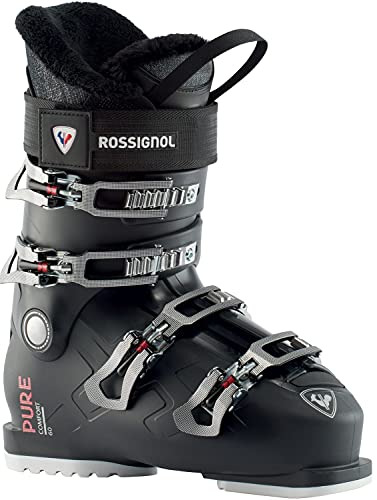
Rossignol Pure Comfort 60 Womens Ski Boots
Calf squeeze can make a ski boot feel wrong before the skis even touch snow. A boot might look clean, buckle smoothly, and still create that nagging pressure around the lower leg that turns every lift ride into a little test of patience. The Rossignol Pure Comfort 60 Womens Ski Boots belong in the best womens ski boots for large calves discussion because they focus on easier entry, a roomier recreational fit, and softer comfort without pretending to be an aggressive race boot. That honesty gives them a useful lane for relaxed resort days, lessons, and steady cruising.
Rossignol Pure Comfort 60
The Rossignol Pure Comfort 60 takes a calmer approach than stiff performance boots that demand strong legs and near-perfect technique. Its design centers around comfort, a softer feel, and less fuss during entry and exit. That matters on cold mornings when stiff plastic can make ski boots feel like a locked door. A boot that opens more easily saves energy before the first run even starts.
The women-specific relaxed fit is the main reason this model stands out for wider feet and fuller calves. The listed 104mm last gives more room across the forefoot than narrow ski boots, and that extra space can reduce pressure that travels up through the ankle and calf. A cramped foot often leads to over-tightening the cuff for stability. This boot gives the foot a bit more breathing room from the start.
The soft black style keeps the look simple and understated. It doesn’t scream for attention in the lift line, and honestly, that suits the boot’s personality. The focus sits more on fit and comfort than flashy styling. For a recreational ski boot, that feels right.
The Pure range is built around different lasts and flex levels, based on the supplied details. That matters because ski boots aren’t one-shape-fits-all gear. A softer comfort boot like this one serves a different purpose than a stiff technical boot. The Pure Comfort 60 clearly leans toward easier skiing and less lower-leg punishment.
Relaxed Fit And Calf Comfort
The 104mm last is the feature most people will feel first. Wider-footed skiers often struggle in narrow shells because pressure starts at the forefoot, then creeps into the ankle and calf as the day goes on. A roomier last helps reduce that chain reaction. Less squeezing around the foot can mean less tension higher up the boot.
Large calf comfort depends on more than just cuff width. Shell shape, liner softness, instep height, and buckle tension all play a part. The relaxed fit gives the boot a friendlier foundation, especially for recreational skiing where comfort carries more weight than ultra-sharp response. Nobody needs a boot that wins the parking lot and loses the afternoon.
The softer construction also helps reduce that harsh shin-and-calf pressure common in stiffer models. A rigid boot can push the lower leg forward aggressively, especially during slow turns or flatter terrain. The Pure Comfort 60 feels more forgiving by design. That makes it easier to stay relaxed instead of bracing against the shell all day.
The main tradeoff is precision. A roomier, softer boot usually won’t feel as locked-in as a narrow performance shell. Skiers who want strong edge pressure at higher speeds may eventually crave more stiffness. For casual resort skiing, though, comfort can matter far more than razor-sharp feedback.
Easy Entry Makes Mornings Less Annoying
Easy entry is one of those features that sounds boring until the temperature drops and the boot plastic stiffens up. Rossignol uses softer plastic around the instep to help the overlap open more smoothly. That means less yanking, less stomping, and fewer awkward moments trying to jam a cold foot into a stubborn shell. Small mercy, big difference.
Smoother exit matters too. After a long ski day, calves can feel tired, feet may swell slightly, and patience usually runs thin. A boot that releases more easily makes the end of the day less irritating. That’s especially helpful after beginner lessons, family ski days, or long resort afternoons with lots of walking.
The instep area often causes trouble for wider feet and fuller lower legs. If the boot opening is too stiff, the foot has to fight its way in before the liner can even settle correctly. A more forgiving overlap helps reduce that first pressure battle. Getting into the boot should not feel harder than skiing in it.
The practical benefit shows up in daily use, not in dramatic marketing language. Easier entry saves time, reduces frustration, and makes ski mornings feel less chaotic. That’s the kind of feature people appreciate more after a few real trips, especially with cold fingers and crowded lodge benches.
Soft Flex For Recreational Control
The 60 flex feel keeps the Pure Comfort 60 approachable. Softer flex supports slower speeds, gentle turns, and relaxed cruising without forcing aggressive forward pressure. Stiff boots can make skiers feel trapped if technique or strength doesn’t match the shell. This boot gives more room to move naturally.
Recreational skiers usually benefit from that forgiving flex because it reduces fatigue through the lower leg. A softer boot allows easier ankle movement, which can help turns feel smoother and less forced. It won’t deliver the same energy as a stiff advanced boot, but that isn’t the point here. Comfort leads the conversation.
Confidence often improves when the boot stops fighting every movement. Calf pain and shin pressure can make people ski defensively, even on easy terrain. A softer boot helps create a calmer rhythm. Turns feel less like a test and more like skiing should feel.
The weakness appears at higher speeds or on firmer, steeper terrain. Softer boots can feel less powerful when the ski needs strong edge input. That limitation is worth knowing early. The Pure Comfort 60 works best for relaxed resort days rather than hard-charging technical skiing.
Weight And Power Transfer
The Sensor Matrix shell design is meant to reduce boot weight while still delivering direct-to-ski energy transfer. That balance matters because comfort boots can sometimes feel bulky or dull underfoot. A lighter shell reduces the clunky feeling during walking and lift transitions. Less weight also helps during long days when legs start feeling tired.
Reduced weight helps more than many skiers expect. Ski boots are carried, walked in, lifted onto footrests, and worn through crowded resort areas. A heavy boot can drain energy before the final runs of the day. The Pure Comfort 60 tries to keep things easier without turning completely soft and lifeless.
Direct energy transfer still matters, even in a comfort-focused boot. The shell needs to communicate movement to the ski with enough clarity for safe, steady control. This model won’t feel like a race boot, and it shouldn’t. It aims for a usable blend of support and forgiveness.
The difference is easiest to understand on groomed runs. The boot should feel comfortable enough for repeated laps while still giving enough structure for basic edge changes. That makes it a sensible match for skiers who want less leg fatigue and more predictable control. Not fancy. Useful.
Custom Liner Comfort
The custom liner adds another comfort layer by offering internal customization for improved support. Liners matter because the shell only tells half the story. A good liner can soften pressure points, stabilize the foot, and help the boot feel less harsh around sensitive areas. For wider calves, softer internal shaping can make the upper boot feel less aggressive.
Support inside the boot helps prevent the foot from sliding around in the extra space. A relaxed fit should not mean a loose, sloppy fit. The liner needs to hold the foot securely enough for control while still reducing pressure. That balance is where comfort boots either shine or fall flat.
Warmth often improves when the boot isn’t clamping down too hard. Restricted circulation can make toes feel cold even with decent socks. A comfort liner paired with a roomier shell can help reduce that problem. Thick socks aren’t always the answer, especially inside ski boots.
The liner’s limitation is that it can’t fix every fit issue. Very high insteps, sensitive ankles, or unusual calf shapes may still need professional boot fitting. That’s normal with ski boots. Even comfort-focused models benefit from careful adjustment.
Pros And Cons In Real Use
The main pros are comfort, easy entry, softer flex, and a wider 104mm last. These features work together instead of feeling like isolated details. The boot gives more room where recreational skiers often need it most. That makes it easier to stay out longer without constantly loosening buckles.
The biggest comfort win is reduced lower-leg stress. Large calves often suffer from tight cuffs, but foot width and instep pressure can make the problem worse. This boot’s relaxed fit helps calm the whole chain. Better comfort often means warmer feet, steadier balance, and fewer lodge breaks.
The cons come from the same comfort-first design. Softer flex and a wider shell may feel less precise for fast or aggressive skiing. Narrow-footed skiers may also feel too much volume unless the liner and buckles dial in well. A roomier boot is only helpful when the foot still feels supported.
Realistic expectations keep this boot in the right lane. It’s not built to satisfy expert skiers chasing maximum response on icy steeps. It’s better suited to relaxed resort days, learning progression, and comfort-focused skiing. That lane is valuable, and Rossignol doesn’t overcomplicate it.
Cold-Day Comfort And Gear Pairing
Sock choice can make or break the experience with this boot. Thicker socks may seem warmer, but they can add bulk and create pressure around the calf and instep. A thinner ski sock often works better because it lets the liner wrap evenly. Better circulation usually beats extra padding.
Large calf fit also depends on how the cuff is buckled. Cranking the upper buckle too tight can undo the comfort benefits of a relaxed shell. Light, secure tension usually works better than forcing the boot closed as far as it will go. Ski boots need support, not a wrestling match.
The Pure Comfort 60 pairs well with slower-paced ski days where warmth, stability, and lower-leg relief matter. It feels practical for groomers, lessons, casual trips, and skiers who value comfort over aggressive stiffness. On long chairlift rides, reduced calf pressure can feel like a quiet luxury. Funny how the best gear sometimes just stops bothering you.
From a practical cold-weather angle, a related fit reference appears in best ski socks for large calves, where calf pressure, warmth, and circulation all play a major role in staying comfortable outdoors.
Nordica Women Cruise 75 W Boots
Calf pressure can sneak up fast, especially with ski boots that feel fine for five minutes indoors and then start barking halfway through the first run. A boot built too narrow or too stiff can make the whole day feel like a tug-of-war between comfort and control. The Nordica Women Cruise 75 W Boots land in the best womens ski boots for large calves discussion because they sit in that friendlier comfort-performance lane, with a flex rating that feels more supportive than ultra-soft beginner boots but still less punishing than aggressive alpine shells. The supplied product details are limited, so the smartest review here sticks to the known model name, stated sport category, size listing, and realistic fit expectations.
Nordica Women Cruise 75 W
The Nordica Women Cruise 75 W has a practical, no-drama personality. It isn’t presented here with a long list of flashy features, and honestly, that makes fit priorities even more important. Ski boots live or die by how they feel on the foot, ankle, shin, and calf. A clean spec sheet means nothing if the cuff starts biting before lunch.
The 75 flex profile suggests a boot that can offer more support than very soft comfort boots while still staying approachable for recreational resort skiing. That middle-ground feel can be helpful for skiers who want stability without the harsh forward pressure of stiffer shells. Large calves often struggle when boots demand an aggressive stance all day. A more forgiving flex can keep the lower leg from feeling trapped.
The women-specific Cruise design points toward comfort-oriented skiing rather than race-style precision. That matters for long days built around groomed runs, lift rides, lessons, family trips, and steady improvement. Nobody wants to spend good snow hours loosening buckles every ten minutes. The better fit is the one that fades into the background.
The black, white, and bronze colorway keeps the look simple with a little polish. Style won’t fix calf pressure, of course, but ski gear still feels better when it doesn’t look like rental leftovers. The boot has a clean mountain-ready look without trying too hard. That fits the Cruise name pretty well.
Comfort Expectations For Larger Calves
Large calf fit depends on more than one visible measurement. Cuff shape, shell height, liner softness, buckle range, and forward lean all change how a boot feels after several hours. Since the provided details don’t list calf circumference or last width, expectations should stay realistic. This boot may help comfort-focused skiing, but proper fitting still matters.
The 75 flex can be a nice compromise for calf-sensitive skiers. Very stiff boots often push hard into the shin and upper cuff area, making fuller calves feel squeezed from the first run. Softer boots reduce that pressure but can sometimes feel vague underfoot. A moderate flex tries to split the difference.
Fit around the instep also affects calf comfort more than people expect. If the foot feels cramped or lifted inside the boot, the upper cuff often gets tightened too much to compensate. That extra buckle tension can create numbness, cold toes, and sore calves. A good boot fit starts lower than the calf and works upward.
The best setup will likely involve careful buckle adjustment rather than cranking everything down. Ski boots need a secure hold, not a circulation cutoff. Loosening the top buckle slightly during lift rides can sometimes ease pressure too. Little habits can save a whole day.
On-Snow Feel And Support
The Cruise 75 W should make the most sense for controlled resort skiing rather than hard-charging technical terrain. That’s not a knock. Plenty of ski days are about smooth turns, confidence, and comfort instead of fighting icy steeps at full speed. A boot in this range can support progression without overwhelming the skier.
The support level should feel steadier than ultra-soft entry boots. That can help with edging, balance, and staying centered over the skis. Large calves sometimes force skiers into awkward posture if the cuff angle feels too aggressive. A boot that balances support and forgiveness can reduce that stiff, defensive stance.
The multi-sport listing in the supplied details doesn’t add much technical clarity, so it’s best not to overread it. The product name clearly positions it as a ski boot, and that’s the useful part for review purposes. Without extra verified specs, the fairest read is simple: this is a women’s ski boot with a comfort-minded Cruise identity and moderate flex. That’s enough to understand its likely lane.
Responsive skiing still depends on fit quality. A boot that’s too roomy may feel comfortable at first and sloppy once speed picks up. A boot that’s too tight may feel secure but ruin circulation. The sweet spot is snug through the foot and heel while leaving the calf enough room to move naturally.
Pros That Stand Out
The main strength is the likely balance between comfort and usable support. A 75-flex women’s boot can work well for skiers who want more structure than soft beginner models without stepping into overly demanding territory. That balance matters for large calves because extreme stiffness often makes pressure worse. A more moderate boot can feel easier to live with.
The Cruise series personality also suggests a more relaxed fit philosophy. Recreational boots are usually built with comfort and accessibility in mind, which can be useful for fuller calves and wider lower-leg shapes. A boot that doesn’t feel like a race shell can reduce anxiety before the first chairlift. Skiing gets better when the gear stops picking a fight.
The size 23.5 listing is worth noting because ski boot sizing needs precision. A half-size mismatch in regular shoes might be tolerable, but ski boots are less forgiving. The right Mondo size affects heel hold, toe space, calf pressure, and control. Guessing on size is where many comfort problems begin.
The simple design may appeal to skiers who don’t want complicated features or fiddly systems. Straightforward boots can be easier to understand, adjust, and maintain. Less complexity doesn’t mean less usefulness. Sometimes simple gear is exactly what makes a ski day run smoothly.
Cons And Fit Tradeoffs
The limited listed specifications are the biggest drawback from a review standpoint. Without supplied details like last width, liner type, buckle design, or cuff adjustment range, it’s hard to judge exactly how calf-friendly this boot will be. That doesn’t make the boot bad. It just means fit should be checked carefully instead of assumed.
The 75 flex may still feel too firm for skiers who want the softest possible calf relief. Some calves respond better to lower-flex boots that bend more easily with the leg. Others need the extra support to avoid over-tightening. Fit preference can be personal, and ski boots don’t forgive broad assumptions.
The boot may not satisfy aggressive skiers who need strong energy transfer at higher speeds. Moderate-flex comfort boots usually give up some precision compared with advanced alpine models. That tradeoff is normal. Better comfort often means slightly less sharp response.
The calf area still needs real-world checking because large calves vary in shape, height, and muscle placement. Two people can wear the same shoe size and feel completely different pressure at the cuff. Professional boot fitting can help with shell checks, buckle tension, liner shaping, and stance tweaks. Skipping that step can make even a good boot feel wrong.
Daily Comfort Around The Resort
Resort comfort includes more than downhill performance. Parking lots, lodge stairs, lift lines, icy sidewalks, and long chair rides all expose fit problems quickly. A boot with manageable flex can reduce fatigue during those non-skiing moments. That matters more than most glossy product pages admit.
Calf pressure often gets worse while standing still. During skiing, the leg flexes and moves, but lift lines keep the cuff pressing in one place. A moderate-flex boot may feel more forgiving in those moments than a rigid performance shell. A little give can feel like a lifesaver after lunch.
Warmth also ties directly to fit. Tight cuffs can reduce circulation, making toes cold even with decent socks. Large calves and thick socks can create a squeeze stack that gets uncomfortable fast. Thin ski socks, smart buckle tension, and proper sizing usually beat piling on extra fabric.
From a practical winter gear angle, a related reference appears in best mens waterproof winter boots, where cold-weather comfort also depends on fit, support, traction, and protection rather than loud product promises.
Best Use Cases And Realistic Expectations
The Nordica Women Cruise 75 W seems best suited to recreational resort skiing where comfort, confidence, and steady support matter most. It should feel more appropriate for groomers, casual trips, and progression days than high-speed expert terrain. That makes sense for a boot with this comfort-oriented identity. Not every ski boot needs to act like a race tool.
Large calves may appreciate the moderate-flex approach, especially if stiffer boots have caused pain in the past. Still, the lack of detailed cuff specifications means careful fitting is non-negotiable. The boot could be a strong match for some lower-leg shapes and less ideal for others. That’s just the honest side of ski boot shopping.
The biggest benefit is the possibility of easier all-day wear without giving up too much support. Recreational skiers often need a boot that helps them relax, turn smoothly, and stay warm. A boot that reduces calf stress can improve confidence quietly. No fireworks, just fewer distractions.
The smartest expectation is comfort with boundaries. The Cruise 75 W should not be treated as a universal fix for every large-calf fit problem, especially with limited specs provided. But for a skier seeking a softer, more forgiving women’s ski boot with enough structure for casual mountain days, it belongs in the conversation. The final fit still comes down to foot shape, calf shape, and careful adjustment.


The Best Boots For Walking On Ice 2026 - Top Picks

9 Best Insulated Rubber Boots 2026 - Best Selling
Top Best Men's Winter Boots For Work 2026 - (Latest)

Best Thermal Boots for Fishing 2026 That Keep Feet Warm

Best Boots For Fat Biking 2026: Grip, Warmth, and Comfort

Best Warm Muck Boots 2026 For Ultimate Outdoor Comfort

Best Warm Rubber Hunting Boots 2026 For Cold Comfort

Best Boots For Arctic Weather 2026 That Keep Feet Toasty