
Can a Homeowner Install a Tankless Water Heater?

Homeowners can install a tankless water heater themselves in many areas, but the practical reality depends entirely on the size of the project. Swapping in a small electric unit under a single bathroom sink is often a straightforward DIY job. Replacing an old tank with a whole-house system is a completely different story that usually demands licensed help.
The dividing line comes down to fuel supply, power capacity, and local building rules. Whole-house electric models pull huge amounts of electricity that can easily overload a standard main electrical box. Gas units bring their own challenges, often requiring wider fuel lines and dedicated exhaust pipes to vent fumes outside safely. Local codes and warranty policies can also require a licensed professional to sign off on the work. Here is how to tell what your home can handle and when it makes sense to hand off the job.
The Short Version
- Legal freedom does not mean an easy job: Most local building departments allow you to pull an owner-builder permit for your own home, but your work must pass strict inspections to keep your home insurance valid.
- Small electric units are very DIY-friendly: Compact, under-sink point-of-use heaters running on standard 110-volt or 120-volt outlets are simple weekend projects that require only basic plumbing connections.
- Whole-house units usually demand professionals: Whole-home gas or electric systems require heavy upgrades to your main electrical service box, larger gas supply lines, or specialized exhaust pipes that carry fumes outdoors.
- Check your warranty before turning a wrench: Many major manufacturers will void your equipment warranty unless you provide proof that a licensed plumber or electrician completed the installation.
Legal Rules, Permits, and Realistic DIY Limits
In most cities and towns across the United States, you legally own the right to work on your own home. Local building departments usually let homeowners pull owner-builder permits for plumbing and electrical work. But pulling the permit is only the first step. Once the job is done, a city inspector will visit your home to examine every pipe fitting, wire connection, and exhaust joint. If your work does not meet the local building code down to the millimeter, the inspector will fail the installation. You will have to tear out parts of your work and do it again.
Skipping the permit entirely creates dangerous legal and financial traps. If an unpermitted water heater leaks and floods your finished basement, your homeowner insurance company can deny the claim because the plumbing was not inspected. If an improperly wired heating element causes a fire, you could face the entire repair bill on your own. Also, when you decide to sell your home down the road, home inspectors will look for permit stickers on major mechanical appliances. An unpermitted tankless unit can stall your sale or force you to hire a contractor to reinstall it under a retroactive permit.
Manufacturer warranties create another hurdle for ambitious homeowners. Tankless water heaters contain sensitive circuit boards, flow sensors, and precision burners or heating elements. Many equipment brands state in their user manuals that the warranty covers parts only if a licensed contractor installed the system. If you mount the heater yourself and a control board fails three months later, the manufacturer may ask for the license number of the installer before shipping a replacement part. Always read the warranty terms on the product box or manual before deciding to tackle the installation yourself.
Electric vs. Gas: How Fuel Type Changes Project Difficulty
The difficulty of a tankless installation changes dramatically based on whether you choose an electric or a gas model. Many homeowners assume electric models are simple because there are no flames or gas smells to worry about. But electric models present serious electrical challenges. Heating cold water instantly as it rushes through a pipe requires a tremendous surge of power. While an old storage tank can slowly warm 50 gallons of water using a modest 30-amp circuit, a whole-house electric tankless unit needs three or four separate 40-amp circuits. Unless your home has modern, heavy-duty electrical service, an electric model can quickly outpace your DIY skills.
Gas tankless water heaters present a completely different set of challenges. Instead of drawing huge amounts of electricity, gas units burn natural gas or propane to generate intense heat. A standard tank water heater burns around 30,000 to 40,000 British Thermal Units (BTU) of gas per hour. A whole-house gas tankless heater requires between 150,000 and 199,000 BTU per hour to heat water on demand. Your existing gas supply pipe is almost certainly too small to supply that volume of fuel. Running new, wider gas pipe through a basement or crawlspace requires cutting, threading, and pressure-testing black steel pipe, which is work best left to licensed tradespeople.
Plumbing connections also change when switching from a tank to a tankless unit. A standard tank heater has water connections right on top of the cylinder. A tankless heater mounts flat against a wall, with water pipes connecting at the bottom. You must cut your existing hot and cold copper or PEX pipes, reroute them cleanly to the new wall location, and solder or crimp new fittings. You also need to install a dedicated service valve kit. These specialized shutoff valves let you flush vinegar through the heat exchanger once a year to clean out mineral scale, which is essential maintenance for every tankless owner.
The Three Major Hurdles of Tankless Installation
When a homeowner runs into trouble installing a tankless water heater, the problem almost always traces back to three specific mechanical requirements: your home electrical capacity, your gas pipe diameter, or your exhaust venting path.
1. Main Electrical Service Box Capacity
Your main electrical service box, also called a breaker panel, acts as the central gateway for all electricity entering your house. Electrical current capacity is measured in amperage. Many homes built before the year 2000 feature 100-amp or 150-amp electrical service boxes. That provides plenty of power for everyday lights, a refrigerator, and a television. But a whole-house electric tankless heater can easily draw 120 amps all by itself when two showers run at the same time.
If you connect a large electric unit to an undersized service box, turning on a hot faucet while your clothes dryer or oven is running will instantly trip the main breaker, plunging your entire house into darkness. Upgrading your service box to 200 amps or 300 amps is not a simple DIY task. It requires pulling permits, coordinating with your local electric utility company to shut off street power, and mounting a completely new breaker panel. That upgrade alone often costs more than the water heater itself.
2. Gas Pipe Sizing and Fuel Volume
A gas tankless heater cannot operate properly without a massive, steady flow of fuel. Think of your gas supply like a garden hose compared to a fire hose. Your old storage tank used a thin, half-inch gas pipe because it had hours to warm up the water. When a tankless heater senses a faucet opening, it ignites high-powered burners in a split second. A half-inch pipe cannot deliver enough gas volume to feed those burners.
When a gas tankless unit is starved for fuel, it will vibrate, produce foul odors, or shut down with an error code on its digital screen. In worst-case scenarios, a starved tankless unit will pull gas away from your home furnace or kitchen stove, blowing out their pilot lights. Upsizing your gas line to three-quarter-inch or one-inch pipe all the way back to your gas meter requires careful math based on pipe length, elbows, and total household gas demand.
3. Exhaust Venting and Air Flow
Traditional gas tank water heaters use metal chimneys that rely on natural draft, meaning hot air naturally floats up and out through your roof. Tankless units do not work this way. Because they extract almost all heat from the flame to warm your water, the exhaust gases leaving the unit are relatively cool and moist. These cool fumes cannot float up a standard chimney on their own. Instead, tankless units use electric fans to blow exhaust outdoors.
These exhaust pipes that carry fumes outdoors, known as venting, must be completely airtight. The exhaust moisture contains mild acids that will corrode standard metal chimney pipes within a few months, sending deadly carbon monoxide gas into your living space. Tankless systems require specialized, double-walled stainless steel or solid-core plastic pipes that run through an exterior wall or roof. You must also supply dedicated outdoor intake air so the heater has enough fresh oxygen to burn cleanly without pulling conditioned air out of your house.
Safe DIY Territory: Where Point-of-Use Units Make Sense
While whole-house systems usually demand professional trade skills, compact point-of-use tankless heaters fall squarely into safe DIY territory. These small units mount directly under a sink or inside a nearby cabinet, providing instant hot water to a single faucet without waiting for water to travel across the entire house.
A DIY-friendly point-of-use project usually shares these characteristics:
- Low water flow rate per minute: Point-of-use heaters are built for modest water flow rate per minute, often delivering between 0.5 and 1.5 gallons per minute. That is plenty of warmth for washing hands or rinsing dishes at a single basin, though not enough for a shower.
- Standard electrical requirements: Many small under-sink heaters run on 110-volt or 120-volt household electricity. Some models come with a standard 3-prong wall plug that fits directly into an existing outlet beneath your kitchen or bathroom counter.
- Simple braided plumbing lines: Instead of cutting into your main copper water lines, you can usually attach an under-sink heater using standard flexible braided hoses that screw directly onto your existing shutoff valves with a basic adjustable wrench.
- No combustion or venting: Because small point-of-use units run on electricity, they produce zero fumes. You do not have to drill large holes through your exterior walls or worry about exhaust leaks.
These compact setups solve real household frustrations without touching high-voltage panels or natural gas lines. For example, if you spend time working in an outbuilding or detached shop, you can install a small under-sink heater alongside the best electric heater for garage with thermostat to create a comfortable, fully functional workspace. Small point-of-use units are also widely used in recreational vehicles and camper conversions. If you are outfitting a mobile setup, exploring the best heater for van life will give you a clear sense of how to manage compact power sources and plumbing lines safely.
When to Stop and Call a Licensed Plumber or Electrician
Knowing your limits is the most important skill in home improvement. Tankless water heaters mix two elements that never forgive mistakes: water and high-output energy. If you run into any of the following situations, stop working, close your shutoff valves, and call a licensed professional.
Call an electrician or plumber immediately if:
- Your main electrical service box has no empty spaces: If your breaker panel is completely full, or if the main breaker is rated for only 100 amps, you cannot safely connect a whole-house electric tankless system without a service upgrade.
- The heater requires hard-wired connections you do not understand: Whole-house electric models are hard-wired, meaning connected directly to house wiring without a standard wall plug. Working inside a live service box with thick, high-amp wire carries serious electrocution and fire hazards.
- You need to upsize or extend natural gas lines: Working with black iron gas pipe requires special pipe threaders, gas-rated pipe sealant, and precision pressure testing to confirm there are zero leaks before lighting the unit.
- You must cut new vent holes through exterior masonry or roofs: Drilling through brick, stone, or roof shingles requires proper flashing and sealing to prevent rainwater leaks and keep carbon monoxide from blowing back into open windows.
- Local building laws require licensed trade sign-offs: Some jurisdictions strictly forbid unlicensed homeowners from working on gas lines or high-voltage circuits. Always check with your local permit office before buying equipment.
Always practice safe action steps before inspecting your existing water setup. Turn off the cold water shutoff valve at the top of your current tank, and switch off the dedicated circuit breaker in your service box. If you work near gas lines and smell a scent like rotten eggs, stop immediately. Do not touch light switches or phones inside the house. Walk outside into fresh air and call your local gas utility company right away.
Choosing the Right Compact Tankless Heater for DIY Setup
If you decide to handle a DIY installation yourself, stick to compact point-of-use electric water heaters designed for single sinks. These units offer the easiest path to endless hot water without forcing you into dangerous home renovations.
Before purchasing a unit, confirm five key specifications on the product box:
- Voltage compatibility: Verify whether the unit uses standard 110-volt or 120-volt power, or if it requires a 240-volt line. Plug-in models are the easiest to manage, provided the wall outlet sits on a circuit that is not overloaded with other appliances.
- Physical cabinet clearance: Measure the space beneath your sink carefully. Leave at least three inches of clear room around the heater so you can turn the water shutoff valves and inspect the pipe fittings easily.
- Water flow rate per minute: Check your faucet aerator. Most under-sink models are built for low-flow faucets delivering around one gallon per minute. Using a high-flow commercial faucet with a small heater will result in lukewarm water.
- Internal safety certifications: Look for recognized safety marks on the product label, such as UL, ETL, or CSA listings. These verify that the heater includes automatic overheat sensors and water-electricity isolation to keep you safe.
- Inlet water temperature: Remember that groundwater is much colder in northern states during the winter. A compact heater that warms water perfectly in Florida may deliver cooler water in Maine because it has to work much harder to lift the temperature.

- BWP Score9.6
BWP Score is a ranking system developed by Bestwinterproducts.com. BWP score has no relationship or impact from any manufacturers or sales agent websites. Learn more
- Brandxwdzswgs

- BWP Score9.0
BWP Score is a ranking system developed by Bestwinterproducts.com. BWP score has no relationship or impact from any manufacturers or sales agent websites. Learn more
- BrandLECLOC

- BWP Score9.1
BWP Score is a ranking system developed by Bestwinterproducts.com. BWP score has no relationship or impact from any manufacturers or sales agent websites. Learn more
- BrandTOTTE

- BWP Score8.1
BWP Score is a ranking system developed by Bestwinterproducts.com. BWP score has no relationship or impact from any manufacturers or sales agent websites. Learn more
- BrandDOYXC

- BWP Score7.7
BWP Score is a ranking system developed by Bestwinterproducts.com. BWP score has no relationship or impact from any manufacturers or sales agent websites. Learn more
- BrandHNK
- BWP Score7.8
BWP Score is a ranking system developed by Bestwinterproducts.com. BWP score has no relationship or impact from any manufacturers or sales agent websites. Learn more
- BrandLFEVTZ
- BWP Score7.5
BWP Score is a ranking system developed by Bestwinterproducts.com. BWP score has no relationship or impact from any manufacturers or sales agent websites. Learn more
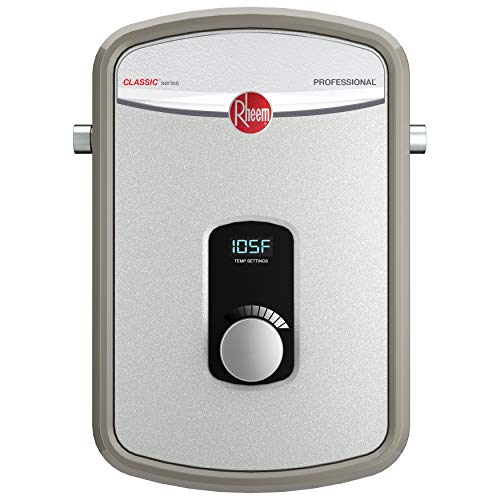
- BrandRheem

- BWP Score7.3
BWP Score is a ranking system developed by Bestwinterproducts.com. BWP score has no relationship or impact from any manufacturers or sales agent websites. Learn more
- BrandLFEVTZ
Last update on 2026-10-16 / Affiliate links / Images, Product Titles, and Product Highlights from Amazon Product Advertising API
FAQs
Will installing a tankless water heater myself void the manufacturer warranty?
In many cases, yes. Major water heater manufacturers often include warranty clauses requiring installation by a licensed plumbing or electrical contractor. If an uncertified homeowner installs the unit and a component fails, the manufacturer can refuse to honor the parts warranty. Always read the fine print in the warranty booklet before starting work.
Can I replace a standard tank water heater with an electric tankless unit using the same wires?
No, you almost certainly cannot use the existing wires. A traditional 50-gallon electric tank heater runs on a single 30-amp, 240-volt circuit. A whole-house electric tankless heater typically requires three or four separate 40-amp circuits to heat water instantly. Connecting a tankless unit to your old water heater wiring will immediately overload the circuit and trip the breaker.
How do I know if my gas line is big enough for a tankless water heater?
Most standard tank water heaters use a half-inch gas supply line, which provides roughly 40,000 BTU of fuel. Whole-house gas tankless units require between 150,000 and 199,000 BTU, which usually demands a three-quarter-inch or one-inch pipe. You can check the diameter of your current gas line using a tape measure, but a licensed plumber must calculate your total gas pipe run to ensure adequate pressure.
Does a small under-sink tankless water heater need a dedicated circuit?
Yes, a dedicated electrical circuit is strongly recommended. Even a compact 110-volt or 120-volt point-of-use heater draws between 3,000 and 3,500 watts of power when active. If you plug the heater into an outlet shared with a garbage disposal, dishwasher, or microwave, running both appliances at the same time will trip the circuit breaker.


Best Warm Winter Scarves 2026 For Cozy Comfort

Best Green Ski Goggles 2026 For Clear Vision On Slopes

12 Best Corner Electric Fireplace 2026: My Ultimate Guide To Pick One

Best Battery Powered Snow Blower 2026 For Effortless Snow Clearing

Best Ski Goggles Under 30 Inches For Crisp Vision And Comfort

Best Cooling Scarf 2026 For Instant Relief And Comfort

Fake Snow for Grass: Create a Realistic Winter Lawn Display

Dimplex Prism Wall Mount Fireplace: Sleek Heat With Modern Flame Style





