
Can a Tankless Water Heater Be Installed in a Closet?

Many homeowners assume tucking a water heater into a small closet creates an automatic fire hazard or breaks local building codes. In reality, you can safely install a tankless unit in a closet, provided the space meets basic safety standards. Electric models fit into tight spaces with minimal fuss, while gas units need dedicated pipes to send exhaust outdoors and pull in fresh air.
Whether your closet qualifies depends on fuel type, empty wall clearances, and the room next door. Gas burners require proper ventilation and combustion air (fresh air the flame needs to burn safely), which often means using a door with open slats. Electric models skip venting pipes entirely, but piling clothes or boxes around either type creates a real fire risk. Local rules also restrict fuel-burning units in closets connected to bedrooms. Here is how to verify your space meets the legal safety standards.
Gas and electric units follow completely different closet rules
You can mount a tankless water heater inside a closet, but the fuel type changes every single rule. Homeowners often assume that because tankless units are small boxes hanging on a wall, they all behave like simple electronic appliances. In reality, an electric unit and a gas unit work under completely different physical laws inside an enclosed space.
An electric tankless water heater uses submerged heating elements inside a sealed copper or stainless steel chamber. It creates zero flame, burns no fuel, and produces no exhaust fumes or carbon monoxide. Because it does not pull air from the room to burn fuel, an electric model can sit safely inside a small, tightly sealed closet with a solid door. Your only major concerns with electric units are keeping proper clearance (empty safety space around the unit) and having enough electrical service from your main breaker panel.
A gas tankless water heater is an entirely different machine. Whether it runs on natural gas or propane, it uses a high-powered burner to create intense heat on demand. That burner requires a steady stream of fresh air to support the flame. As the gas burns, it produces hot exhaust gases containing moisture and poisonous carbon monoxide. If you place a gas unit inside a standard sealed closet without proper ventilation, the flame will quickly starve for oxygen, produce dangerous soot, and leak carbon monoxide into your living area.
The space requirements reflect these differences. Electric units can fit inside very narrow utility closets or under-stair spaces. Gas units require dedicated exhaust pipes through your roof or exterior wall, a steady supply of fresh air, and strict safety clearances from combustible wall framing.
Gas heaters must breathe through dedicated outdoor vents
When you place a gas unit in a closet, combustion air (the fresh air a gas flame needs to burn safely) becomes your primary concern. A typical gas tankless heater burns fuel at a much higher burst rate than an old storage tank. If the closet door stays shut, the burner can consume all the available oxygen inside that small room in just a few minutes.
The safest way to install a gas tankless unit in a closet is with a direct vent system. A direct vent uses twin pipes carrying exhaust out and fresh air in, connecting the heater directly to the outside air. One pipe pulls outdoor air straight into the sealed combustion chamber of the heater. The second pipe blows the toxic exhaust gases directly outdoors using a built-in motorized fan. Because the combustion loop is completely sealed off from the closet, the heater never steals air from your home, and no exhaust fumes can escape into your living space.
Some older setups attempt to use indoor air by installing a louvered door (a door with horizontal slats that let air pass through). The idea is that air from an adjoining hallway or utility room flows through the slats into the closet to feed the burner. In modern building practice, this setup causes serious problems. If you run a powerful kitchen range hood, a bathroom exhaust fan, or a clothes dryer in the same house, those fans pull air out of the building. That creates negative air pressure, which can pull toxic exhaust gases backward down the heater vent pipe and directly into your rooms.
If you must use indoor combustion air through a louvered door, local building codes require strict calculations. Most codes demand at least 50 cubic feet of open room volume for every 1,000 BTU of heater burner capacity. A compact closet on its own never meets this requirement. That means you must install large upper and lower slatted vents in the door or walls, opening into an adjacent large room that has adequate volume. For almost every closet project, choosing a direct vent unit that vents directly through an exterior wall is much simpler and far safer.
Keep closets clear of coats, boxes, and clutter
Many homeowners dream of mounting a tankless water heater in a closet to reclaim floor space for household storage. You might imagine hanging winter jackets or stacking storage bins beneath the wall-hung box. Doing that creates an immediate fire hazard and makes routine maintenance nearly impossible.
Every manufacturer provides a clearance chart in the user manual showing the mandatory empty safety space around the unit. Clearances protect your home framing from heat buildup and ensure that technicians can reach internal parts when something goes wrong. While the outer metal casing of a modern tankless heater stays relatively cool, the water pipes, pressure relief valves, and vent pipes can become extremely hot during extended showers.
Here is what you must check around the unit to keep the installation safe and functional:
- Front clearance: Leave at least 12 to 24 inches of totally clear space in front of the heater casing. A technician must be able to remove the front service panel, inspect circuit boards, and clean internal filters without fighting through hanging clothes.
- Top clearance: Keep 12 inches of open space above the unit. This leaves room for water supply connections, electrical conduit, and rigid vent pipe collars that direct exhaust through the ceiling.
- Bottom clearance: Maintain at least 12 inches of clear space below the unit. This area houses your cold water shutoff, hot water outlet, gas valve, and pressure relief valve discharge pipe. You also need open space here to place a bucket during annual cleaning.
- Side clearances: Maintain between 2 and 6 inches of empty space on both sides. This keeps the heater away from drywall, framing studs, and nearby door frames.
- Floor clearance: Keep the floor beneath the unit completely open. Never stack cardboard boxes, plastic storage totes, or laundry baskets on the floor beneath a water heater.
Chemical storage inside a water heater closet presents a hidden danger that ruins equipment. Never store household cleaners, bleach, pool chemicals, paint, or aerosol cans in the same closet as a water heater. When a gas heater pulls air, or when an electric unit circulates air past its components, corrosive chemical vapors enter the casing. Chlorine and ammonia vapors chemically react with moisture to form acids that eat through copper pipe joints and aluminum heat exchangers within a few years, causing sudden leaks and expensive failures.
Bedroom and bathroom closets face strict safety codes
Tucking a tankless water heater into a bedroom closet or a bathroom linen closet sounds convenient, but national and local plumbing codes place heavy restrictions on these locations. The International Residential Code and the Uniform Plumbing Code treat sleeping areas and wet spaces with extra caution to protect residents from asphyxiation and electrical hazards.
Installing a fuel-burning gas heater inside a closet that opens directly into a bedroom or a bathroom is generally forbidden unless the appliance meets one specific rule. The unit must be a sealed combustion, direct-vent model that pulls all fresh air directly from outdoors and expels all exhaust directly outdoors. The combustion chamber must remain entirely isolated from the bedroom air. Furthermore, many city building codes require the closet door to be a solid-core, fully gasketed, weather-stripped door equipped with a self-closing hinge so that bedroom air never mixes with the utility compartment.
These strict rules exist because people sleep in bedrooms. If a gas vent pipe cracks, comes loose, or develops a leak behind a standard bedroom closet door, odorless carbon monoxide can silently fill the room while occupants sleep. If your layout only permits a gas heater inside a bedroom closet, you must hire a licensed plumber to pull official permits and verify that the specific model and direct-vent run meet local municipal safety rules.
Electric tankless water heaters are much easier to install in bedroom or bathroom closets because they carry zero carbon monoxide risk. You can legally install an approved electric model inside these spaces in most jurisdictions. But bathroom closets introduce a different challenge: high humidity. Steam from long showers can seep into a bathroom closet, condensing on cold surfaces. Over time, that damp air can corrode sensitive electrical circuit boards, wiring terminals, and ground connections inside the heater. If you mount an electric unit inside a bathroom closet, ensure your bathroom has an effective exhaust fan, and keep the closet door closed during showers.
Check your closet space before mounting any equipment
Before buying a unit or cutting holes in your walls, take practical measurements and check your home infrastructure. A successful closet installation requires adequate physical room, the right utility lines, and a clean exit path for piping. Follow these sequential steps to inspect your space:
- Measure the interior dimensions: Use a tape measure to record the closet height, width, and depth. Compare these numbers against the heater dimensions plus the required manufacturer clearance distances on all four sides. Measure the door opening width to confirm a technician can stand comfortably in front of the unit.
- Evaluate your electrical panel: If you plan to install an electric tankless unit, open your main breaker panel. Electric tankless heaters draw massive amounts of power on demand. A whole-house electric unit often requires multiple 240-volt double-pole circuit breakers and a 150-amp or 200-amp main home electrical service. If your home has a compact or limited electrical panel, similar to the restrictions found when setting up the best heater for mobile home systems, an electric tankless model may require a panel upgrade before installation.
- Map the venting route: For a gas unit, trace the shortest path from the closet to an outside wall or the roof. Direct-vent pipes must maintain minimum clearances from outdoor obstacles. Building codes require vent pipe exits to stay away from operable windows, exterior doors, fresh air intakes, and inside building corners. Check that you can run rigid vent pipes without cutting through main structural support beams.
- Locate water supply and drainage lines: Verify that you can bring three-quarter-inch cold water supply pipes into the closet and tie into your hot water distribution plumbing. You also need a dedicated drainage path for the temperature and pressure relief valve discharge pipe. If you choose a high-efficiency condensing gas unit, it produces acidic condensate water that requires a dedicated plastic drain line routed to an approved drain or neutralizer.
- Check wall framing support: A tankless water heater filled with water is heavy. The unit must mount securely to solid wood wall studs. If the studs inside your closet do not line up with the mounting brackets on the back of the heater, install a three-quarter-inch piece of exterior-grade plywood securely anchored across two wall studs to act as a solid backing board.
- Plan for isolation service valves: Every closet installation should include service isolation valves on the cold and hot water lines directly beneath the heater. These valve sets feature side ports that allow you to isolate the heater from your home plumbing. Once a year, you must connect two garden hoses and a small submersible pump to circulate plain white vinegar through the heat exchanger to dissolve hard water mineral scale. If your closet is too cramped to attach those hoses, routine descaling becomes a major headache.
Electric tankless units fit small utility spaces best
If your goal is to tuck a water heater into a standard household closet without cutting large vent penetrations through your siding or roof, an electric tankless water heater is usually the most straightforward choice. Because an electric model produces no combustion byproducts, it does not require a fresh air intake, an exhaust chimney, or a louvered closet door. You can enclose it behind a clean, solid interior door that blends seamlessly into your hallway or laundry space.
Before choosing an electric heater for a closet, verify that your home electrical system can handle the sudden power demand. Unlike a traditional storage tank that warms water slowly using a modest 4,500-watt element, an electric tankless unit must heat ice-cold groundwater to a comfortable bathing temperature in the three seconds it takes water to flow through the casing. That instant process demands immense electrical current. A licensed electrician can inspect your main panel and confirm whether you have the physical breaker slots and amperage capacity to support the unit safely.
Next, consider your regional groundwater temperature and your daily hot water demand. In northern climates where winter tap water enters the house at 40 degrees Fahrenheit, an electric unit produces fewer gallons per minute than it would in the south where groundwater enters at 70 degrees. Matching the heating capacity to your climate ensures that running a shower and a sink at the same time does not result in lukewarm water.
Finally, measure the interior closet depth to guarantee you keep the full manufacturer clearance buffer around the casing. Look for a unit with a sturdy mounting bracket, clear digital temperature controls on the front panel, and easy access to the internal cold water inlet filter screen. Pairing an electric tankless unit with dedicated service isolation valves turns a cramped, neglected closet into an efficient, safe utility hub that delivers endless hot water for years.
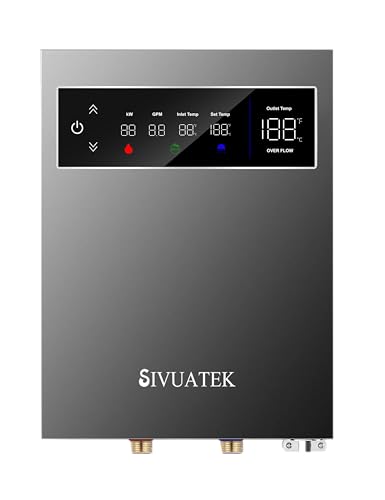
- BWP Score9.2
BWP Score is a ranking system developed by Bestwinterproducts.com. BWP score has no relationship or impact from any manufacturers or sales agent websites. Learn more
- BrandSIVUATEK

- BWP Score8.8
BWP Score is a ranking system developed by Bestwinterproducts.com. BWP score has no relationship or impact from any manufacturers or sales agent websites. Learn more
- BrandNOLITOY
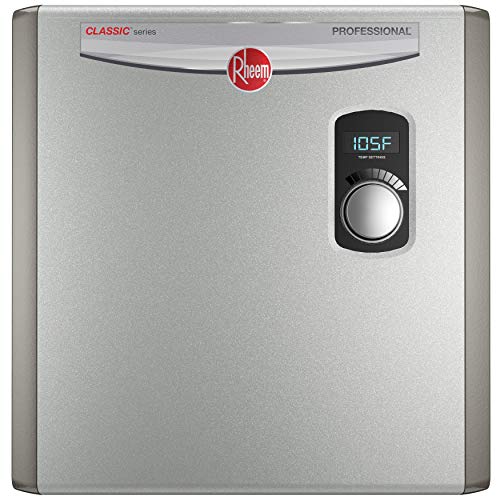
- BWP Score8.1
BWP Score is a ranking system developed by Bestwinterproducts.com. BWP score has no relationship or impact from any manufacturers or sales agent websites. Learn more
- BrandRheem

- BWP Score8.1
BWP Score is a ranking system developed by Bestwinterproducts.com. BWP score has no relationship or impact from any manufacturers or sales agent websites. Learn more
- BrandDOYXC

- BWP Score7.7
BWP Score is a ranking system developed by Bestwinterproducts.com. BWP score has no relationship or impact from any manufacturers or sales agent websites. Learn more
- BrandHNK

- BWP Score7.5
BWP Score is a ranking system developed by Bestwinterproducts.com. BWP score has no relationship or impact from any manufacturers or sales agent websites. Learn more
- BrandWestinghouse
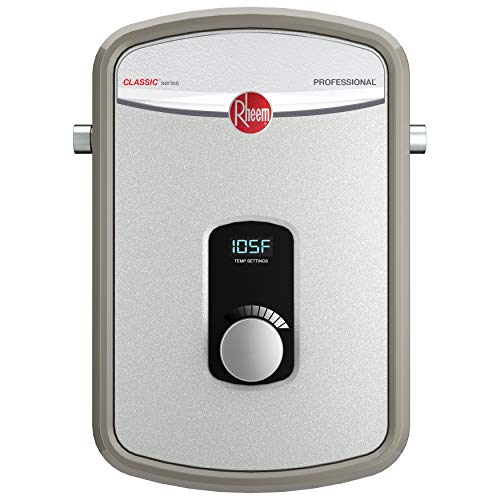
- BWP Score7.5
BWP Score is a ranking system developed by Bestwinterproducts.com. BWP score has no relationship or impact from any manufacturers or sales agent websites. Learn more
- BrandRheem

- BWP Score7.3
BWP Score is a ranking system developed by Bestwinterproducts.com. BWP score has no relationship or impact from any manufacturers or sales agent websites. Learn more
- BrandLFEVTZ
Last update on 2026-10-16 / Affiliate links / Images, Product Titles, and Product Highlights from Amazon Product Advertising API
.jpg)

Best Warm Winter Scarves 2026 For Cozy Comfort

Best Green Ski Goggles 2026 For Clear Vision On Slopes

12 Best Corner Electric Fireplace 2026: My Ultimate Guide To Pick One

Best Battery Powered Snow Blower 2026 For Effortless Snow Clearing

Best Ski Goggles Under 30 Inches For Crisp Vision And Comfort

Best Cooling Scarf 2026 For Instant Relief And Comfort

Fake Snow for Grass: Create a Realistic Winter Lawn Display

Dimplex Prism Wall Mount Fireplace: Sleek Heat With Modern Flame Style





