
Can You Run a Space Heater Off a Car Battery?

Plugging a standard space heater into a car battery is technically possible, but practically a bad idea. That setup only works with a power inverter (a box that turns vehicle power into a wall outlet), and household heaters pull far too much electricity. A standard starter battery will drain flat in fifteen to thirty minutes, leaving you stranded in the cold.
A few details change this math, especially the wattage of the heater and the type of battery under the hood. A compact twelve-volt heater made for cars draws a fraction of the power of a home unit. Specialized deep-cycle batteries in campers also handle continuous power much better than an engine starter battery. Keeping the engine running can help top off the charge, but idling for hours creates fresh risks. Here is why high-wattage heaters overwhelm car systems and how to stay warm safely.
Why Household Heaters Overwhelm Car Batteries
Plugging a regular household space heater into a car battery sounds like an easy fix during a winter storm, but the electrical math works heavily against you. A standard plug-in heater for a bedroom or living room draws 1,500 watts of power. Wattage is simply the measure of how much electricity a heater draws to make heat. In a house, your wall outlet supplies electricity at 120 volts, meaning a 1,500-watt heater pulls about 12.5 amps of current through your home wiring.
Your vehicle does not run on 120-volt household power. It runs on a 12-volt direct current system. To run a home appliance in your car, you have to route battery power through a power inverter, which is a box that turns car power into a wall plug. But when an inverter steps 12-volt battery power up to 120 volts, the electrical current has to multiply by ten to supply the exact same wattage. That means pulling 1,500 watts of heat out of a 12-volt battery requires an immense draw of 125 to 135 amps of continuous current.
A standard vehicle battery cannot handle that kind of punishment. Car batteries are starter batteries, built to deliver a violent burst of several hundred amps for three seconds to crank the engine, and then immediately rest. They are completely unsuited for steady, continuous energy drains. Squeezing 130 amps out of thin lead plates generates extreme internal heat, causing the voltage to drop almost instantly.
This is totally different from a deep-cycle battery, which is a battery made for steady, continuous power over many hours. Deep-cycle batteries are common in boats, RVs, and solar cabins, but regular passenger vehicles do not have them under the hood. If you are building out a mobile camper rather than trying to survive an unexpected freeze, choosing a dedicated heater for van life paired with an auxiliary house battery bank is the proper route.
Battery Run Time: How Fast a 1,500-Watt Draw Empties a Battery
On paper, a healthy mid-size car battery holds around 45 to 60 amp-hours of total energy. If you do simple division on paper, you might assume that a 130-amp draw would give you twenty to twenty-five minutes of steady warmth. In the real world, the battery will give out much faster than that.
Lead-acid vehicle batteries suffer from a severe chemical slowdown when you drain them at high speeds. When you yank power out ten times faster than normal, the battery chemistry cannot keep up, effectively cutting its usable storage capacity in half. Instead of having 50 amp-hours of energy, the battery acts like a tiny 20 amp-hour pack.
Winter weather makes this drop even steeper. Freezing temperatures slow the internal chemical reactions, reducing an ordinary car battery's starting capacity by 30 to 50 percent before you even turn a heater on. When you combine freezing temperatures with a massive 1,500-watt load, the battery voltage plunges past the critical 10.5-volt mark in roughly 10 to 15 minutes.
As soon as the voltage drops that low, the power inverter will sound a shrill warning alarm and shut off to protect itself. At that point, the space heater dies, and your car battery is completely flat. It will not have enough remaining juice to click the starter or turn over the engine, leaving you completely stranded in freezing weather.
Idling the Car: Why Running the Engine Does Not Solve the Problem
Many drivers assume that keeping the car engine running solves the power problem. The logic seems sound: if the engine is on, the alternator, which is the engine part that charges the battery while running, should supply all the electricity your heater needs. Unfortunately, car charging systems do not produce that much power when parked.
A typical passenger car alternator puts out 70 to 120 amps when you are driving at highway speeds. But when the car is parked and idling at low engine RPM, the alternator only produces about 30 to 45 amps. The car itself needs 15 to 20 of those amps just to power the fuel pump, engine computer, dashboard dials, and ignition coils. That leaves only a tiny trickle of spare power for accessories.
If your 1,500-watt space heater is demanding 130 amps, and your idling alternator can only spare 25 amps, the car battery has to make up the missing 105 amps. Even with the engine humming, your battery empties backwards at high speed. You can easily stall the engine, overheat the alternator, or melt the internal voltage regulator from prolonged strain.
Idling a stationary car for warmth also brings serious life-safety risks. If snow piles up around your car or ice blocks the tailpipe, deadly carbon monoxide gas can back up beneath the vehicle. Carbon monoxide is completely invisible and odorless, and it can seep into the cabin through small body seams and ventilation passages in minutes. Running a car engine for long stretches while parked in a snowbank is never a safe heating method.
Essential Checks to Prevent Melted Plugs, Dead Cells, and Blown Fuses
Before you plug any heating device into a vehicle or attempt an emergency wiring setup, go through these five checks in order. They will keep you from destroying your car's electrical system or ending up stranded in the cold.
- Check the wattage label on your heating device. Reason: A standard household unit marked 1,500 watts demands ten times more current than a vehicle socket can provide, so verifying the wattage tells you immediately if the device will overload your car.
- Check the amp rating stamped on your dashboard 12-volt fuse. Reason: Most vehicle accessory sockets connect to a 10-amp or 15-amp fuse, meaning any plug-in device drawing more than 120 to 180 watts will instantly pop the fuse and shut down the circuit.
- Check the wire thickness on your power inverter clamps. Reason: Running heavy electrical current through thin household extension cords or lightweight alligator clips generates severe heat, which melts the plastic coating and creates an immediate vehicle fire risk.
- Check the battery voltage with a handheld meter before and during use. Reason: Starter batteries suffer irreversible chemical damage when drained below 12.0 volts, so monitoring resting voltage ensures you never drop below the threshold needed to restart your car.
- Check the vehicle tailpipe and exhaust path for snow or debris. Reason: If you run your engine to power small auxiliary accessories, a clogged tailpipe directs lethal carbon monoxide into the passenger seats within minutes.
Skipping these checks usually leads to fast, costly damage. The most common failure is a melted cigarette lighter socket, where high heat softens the plastic housing before the fuse can even react. If you clamp an oversized inverter directly to the battery posts, the intense heat can warp the internal lead plates, causing shorted cells that permanently ruin the battery.
Safe Alternatives for Warmth in a Vehicle
If a household heater is out of the question, what actually works when you need warmth inside a car? You have several practical options that heat your body safely without killing your starter battery.
The first option is a dedicated 12-volt vehicle defroster or mini heater. These compact units plug directly into the cigarette lighter socket and pull between 100 and 170 watts of power. While they do not produce enough heat to warm an entire cabin like a home radiator, they blow hot air directly onto your hands or windshield to clear frost without blowing vehicle fuses.
A 12-volt heated fleece blanket is even more effective for personal comfort. Heated car blankets draw only 40 to 50 watts, which is a fraction of what an air heater consumes. Because the blanket traps heat directly against your body rather than trying to warm cubic feet of cold cabin air, it keeps you comfortable for hours without overtaxing the battery.
Pocket-sized rechargeable hand warmers are another reliable choice during a winter emergency. These standalone battery warmers charge via USB and run on internal lithium batteries, meaning they produce zero drain on your car while in use. You can tuck them into your jacket pockets, gloves, or boots for steady personal warmth.
If you are trying to keep a detached workshop or garage warm rather than surviving a roadside freeze, do not try to patch together car batteries and inverters. Installing a dedicated electric heater for a garage workshop plugged into utility power gives you steady, thermostatically controlled heat safely.
What to Look for in a Safe Vehicle Heater
When selecting a portable heater designed for vehicle use, focus on low electrical demand, solid stability, and reliable safety controls. Never look for high wattage; instead, look for units specifically rated under 180 watts to stay within the safe limits of standard 12-volt car accessory sockets.
Always inspect the safety shutoffs before buying. The unit should feature a tip-over safety switch that cuts power instantly if the unit is knocked over or tilted, preventing hot elements from contacting upholstery or floor mats. It should also include an automatic overheat sensor that shuts the unit off if internal parts get dangerously hot due to a blocked air grille.
Look for sturdy mounting options, such as non-slip rubber bases or 360-degree swivel mounts with adhesive pads. A heater rolling loose on a dashboard or floorboard is a major fire hazard. Finally, confirm that any 12-volt plug includes a built-in glass or blade fuse to protect your vehicle wiring from unexpected voltage spikes.
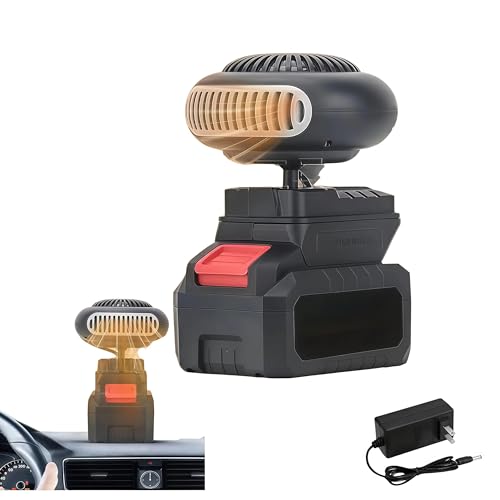
- BWP Score7.9
BWP Score is a ranking system developed by Bestwinterproducts.com. BWP score has no relationship or impact from any manufacturers or sales agent websites. Learn more
- BrandAopukidor

- BWP Score9.0
BWP Score is a ranking system developed by Bestwinterproducts.com. BWP score has no relationship or impact from any manufacturers or sales agent websites. Learn more
- BrandBAFOVY

- BWP Score7.2
BWP Score is a ranking system developed by Bestwinterproducts.com. BWP score has no relationship or impact from any manufacturers or sales agent websites. Learn more
- BrandCuifati

- BWP Score8.5
BWP Score is a ranking system developed by Bestwinterproducts.com. BWP score has no relationship or impact from any manufacturers or sales agent websites. Learn more
- BrandBuachois

- BWP Score8.3
BWP Score is a ranking system developed by Bestwinterproducts.com. BWP score has no relationship or impact from any manufacturers or sales agent websites. Learn more
- BrandRcniso
- BWP Score8.2
BWP Score is a ranking system developed by Bestwinterproducts.com. BWP score has no relationship or impact from any manufacturers or sales agent websites. Learn more
- BrandEVGATSAUTO
- BWP Score7.4
BWP Score is a ranking system developed by Bestwinterproducts.com. BWP score has no relationship or impact from any manufacturers or sales agent websites. Learn more
- BrandZAICOLER

- BWP Score7.2
BWP Score is a ranking system developed by Bestwinterproducts.com. BWP score has no relationship or impact from any manufacturers or sales agent websites. Learn more
- BrandShowvigor
Last update on 2026-10-05 / Affiliate links / Images, Product Titles, and Product Highlights from Amazon Product Advertising API
FAQs
Can a cigarette lighter outlet run a household space heater on its lowest setting?
No, standard cigarette lighter sockets cannot handle even the low setting of a household space heater. The low setting on a home heater is usually 750 watts, which pulls roughly 65 amps through a 12-volt connection. Vehicle accessory sockets are protected by 10-amp or 15-amp fuses, so plugging in a 750-watt heater will blow the fuse instantly or melt the plastic dash socket.
Will a portable lithium jump starter pack run a space heater?
No, small portable jump starter packs cannot power a household space heater. These battery packs are designed to deliver brief, high-energy pulses to crank an engine, not continuous high-wattage power. A 1,500-watt space heater would drain a typical pocket jump pack in less than two minutes, and the massive electrical draw will likely trigger the pack's internal thermal protection.
Can an RV or dual-battery setup handle an electric space heater?
An RV or dual-battery setup can run an electric heater only if it uses a large auxiliary bank of deep-cycle batteries and a heavy-duty inverter. Deep-cycle batteries are designed for continuous output, but even an RV bank needs hundreds of amp-hours of storage to run a 1,500-watt heater for more than an hour or two. Most experienced campers use built-in propane or diesel heaters instead because electric space heating drains off-grid batteries too quickly.
What should you do if your car battery dies while trying to stay warm?
If your battery dies in freezing weather, immediately turn off all switches, unplug all accessories, and stay inside the vehicle cabin. Put on extra clothing layers, wrap yourself in blankets, and use passive hand warmers if you have them. Call for roadside assistance or emergency services on your phone right away, and do not wander away from the vehicle in poor visibility or severe cold.


Best Warm Winter Scarves 2026 For Cozy Comfort

Best Green Ski Goggles 2026 For Clear Vision On Slopes

12 Best Corner Electric Fireplace 2026: My Ultimate Guide To Pick One

Best Battery Powered Snow Blower 2026 For Effortless Snow Clearing

Best Ski Goggles Under 30 Inches For Crisp Vision And Comfort

Best Cooling Scarf 2026 For Instant Relief And Comfort

Fake Snow for Grass: Create a Realistic Winter Lawn Display

Dimplex Prism Wall Mount Fireplace: Sleek Heat With Modern Flame Style





