
Can You Use a Portable Heater With Solar Energy?

Yes, running a portable heater on solar energy is possible, but not by plugging directly into a solar panel. The catch is that electric heat takes an immense amount of power, which completely changes the kind of setup you need. Solar panels cannot feed a heater on their own, so you must have a dedicated battery bank and a power converter box to collect sunlight and deliver steady warmth.
Success comes down to three practical details. First is the heater size, because a tiny 30-watt pet pad needs very little power, while a full 1,500-watt room heater drains energy fast. Second is your battery storage capacity, which has to carry the heating load through dark, freezing nights. Third is having enough sunny hours and panel power to recharge that battery the next day. Here is what it really takes to heat an off-grid space without draining your power dry.
How Solar Heating Works and the Direct Connection Myth
Can you plug a portable space heater straight into a solar panel sitting in your yard? The short answer is no. A solar panel produces raw battery power (DC power) that flows only when direct sunlight strikes its glass surface. If a cloud passes overhead or tree branches shade the panel, that power drops immediately. Portable electric heaters need a constant, steady electrical flow to keep their heating coils hot and their fans running safely.
Plugging an ordinary heater straight into a solar panel will fail to power the unit and can burn out its fan motor. Running an electric heater with solar energy requires a complete power chain. Solar panels collect the sunlight, a charge controller safely routes power into a battery bank, and a power converter box (an inverter) turns raw battery power into standard household wall-plug power (AC power). Your battery bank acts as the fuel tank. Without that stored energy, your heat vanishes whenever the sun hides.
Why Electric Space Heaters Drain Solar Batteries So Fast
Creating heat with electricity is one of the heaviest electrical loads you can place on any battery setup. While mobile phones, camp lights, and laptops sip tiny amounts of electricity, an electric space heater uses electrical resistance. It forces massive amounts of current through metal coils or ceramic elements until they glow red-hot, demanding as much sustained electricity as a kitchen toaster or clothes iron running non-stop.
In American homes, standard portable space heaters draw 1,500 watts on their high setting, pulling about 12.5 amps on a standard 120-volt circuit. That means running a 1,500-watt heater for just one hour burns through 1,500 watt-hours of stored battery power. Most popular mid-sized portable power stations carry battery tanks holding only 500 to 1,000 watt-hours. A standard heater will completely drain a power station of that size in 35 to 40 minutes, shutting off long before a cold room feels comfortable.
What It Takes to Power a 1,500-Watt Heater on Solar
Running a regular household space heater entirely on solar power is technically possible, but the gear required surprises most people. To power a standard 1,500-watt heater through an eight-hour winter night, you need roughly 12,000 watt-hours of usable battery storage. That requires multiple heavy lithium batteries wired together, taking up substantial floor space and costing thousands of dollars.
Recharging that battery bank presents an even bigger hurdle. During late autumn and winter, the sun sits lower in the sky, often giving you only three to four good charging hours per day. To replenish 12,000 watt-hours in that narrow sunlight window, you need over 3,500 watts of solar panels spread across a roof or yard. For travelers, campers, and cabin owners, dedicating that much space and money to electric resistance heat rarely makes sense. If you are outfitting a mobile setup, choosing a dedicated heater to stay warm off-grid that burns fuel instead of battery reserves is far more practical.
What Low-Wattage 30-Watt Solar Kits Can and Cannot Heat
Because full-sized electric heaters demand giant battery banks, many off-grid setups turn to low-wattage solar heating kits. These setups typically pair a small solar panel with a 30-watt heating fan or warming pad. These mini units run directly on raw DC power or a compact auxiliary battery, avoiding the power losses that come with large converter boxes.
It is vital to have realistic expectations about what 30 watts of heat can do. A 30-watt unit produces gentle, localized warmth. It cannot heat a bedroom, an off-grid cabin, or a workshop. If you want to warm a drafty living area for people, an electric heater to warm drafty spaces plugged into household power is necessary.
A 30-watt solar heater is built for small, enclosed animal shelters and utility spaces. It takes the frost off a small chicken coop, prevents animal water bowls from freezing, warms a dog house, or shields greenhouse seedlings from overnight freezes. In an enclosed box of a few cubic feet, 30 watts of steady warmth makes a big difference without draining your power bank.
Six Checks Before Connecting Any Portable Heater to Solar Power
Before connecting any heating device to a solar battery or portable power station, follow these six checks in order:
- Check the heater power draw label on the casing. Find the small metal or foil sticker on the back or bottom showing its rated wattage. If it lists 1,500 watts, verify whether the heater has a lower power level (such as 750W Low) to cut your battery drain in half immediately.
- Confirm your power converter box handles the continuous load. Check the continuous wattage rating on your inverter box, not just its temporary surge limit. A 1,500-watt heater needs a converter box rated for at least 1,800 to 2,000 watts of continuous output so it does not overheat and shut down under sustained use.
- Calculate your usable battery tank size in watt-hours. Look at your battery's watt-hour rating to see how many hours of heat you can realistically draw. Draining lead-acid batteries past 50 percent or lithium batteries past 80 to 90 percent damages the cells and permanently shortens their lifespan.
- Assess the realistic winter sunlight hours in your area. Measure the actual unshaded sunlight hours your panels get during the coldest months rather than relying on summer estimates. If your panels receive only three hours of direct sun per day, they cannot recharge a battery drained overnight.
- Inspect safety sensors on the heater body. Verify that the unit features a physical tip-over safety switch that cuts power instantly if tilted, plus an automatic overheat sensor that shuts the unit off if internal parts get dangerously hot. In tight camper vans, tents, or coops, shifting gear or animals can easily bump the heater.
- Plug directly into your power bank without extension cords. Connect the heater plug straight into the AC outlet on your power box. Thin extension cords or multi-plug strips can overheat, melt, and spark fires under the heavy electrical load of a space heater.
Smarter Ways to Stay Warm Off-Grid Without Draining Your Solar Bank
To stay warm off-grid without investing thousands in solar panels and heavy batteries, shifting your heating method is the best path forward. The smartest approach is warming your body directly rather than trying to heat the ambient air inside an uninsulated room.
A 12-volt heated blanket or mattress pad is far more efficient than any space heater. While a space heater consumes 750 to 1,500 watts constantly, a 12-volt heated pad draws only 40 to 60 watts. It traps warmth right against your blankets where it does the most good. A solar battery pack that dies in 40 minutes running a space heater can easily power a heated blanket through two full nights of sleep.
For heating the actual room air in an off-grid cabin or camper, fuel-based heaters work best. Vented diesel heaters and indoor-safe portable propane heaters produce thousands of British Thermal Units of warmth while sipping minimal power. A diesel air heater uses roughly 20 to 30 watts of electricity simply to spin a small fan and fuel pump, delivering dry warmth throughout the space. If you are heating an outbuilding with regular grid access, using an electric heater to maintain steady warmth provides consistent heat without battery worries.
Always seal drafts before spending money on larger solar gear. Hanging heavy thermal curtains over windows, installing rigid foam insulation, and placing draft stoppers under doors keeps whatever warmth you generate inside the room.
What to Look for in a Dedicated Solar Warming Kit
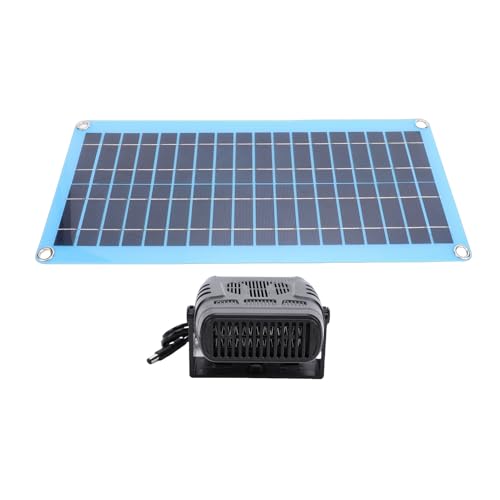
When your goal is keeping a chicken coop, pet shelter, or greenhouse frost-free, a low-wattage solar heating kit is a practical, budget-friendly solution. These systems work within the power output of small solar panels, delivering gentle heat without needing an expensive battery setup.
Check the weather resistance and build quality of both the solar panel and heater body before buying. Ensure the solar panel features a sturdy, weather-resistant frame that handles rain and snow. The heating unit must have an automatic overheat sensor that shuts the unit off if internal parts get dangerously hot, keeping outdoor animals safe from fire risks if feathers or dust settle near the grille.
Check cord lengths and connection ports as well. The kit should include a power cable at least 3 to 4 feet long so you can mount the solar panel in full sun while placing the heater securely inside the shelter. Having both DC and USB ports also allows you to plug into a small backup battery pack on overcast days.

- BWP Score9.6
BWP Score is a ranking system developed by Bestwinterproducts.com. BWP score has no relationship or impact from any manufacturers or sales agent websites. Learn more
- BrandKIMISS

- BWP Score8.7
BWP Score is a ranking system developed by Bestwinterproducts.com. BWP score has no relationship or impact from any manufacturers or sales agent websites. Learn more
- BrandHyuduo
- BWP Score8.9
BWP Score is a ranking system developed by Bestwinterproducts.com. BWP score has no relationship or impact from any manufacturers or sales agent websites. Learn more
- BrandAoresac
- BWP Score8.0
BWP Score is a ranking system developed by Bestwinterproducts.com. BWP score has no relationship or impact from any manufacturers or sales agent websites. Learn more
- BrandFabater

- BWP Score8.8
BWP Score is a ranking system developed by Bestwinterproducts.com. BWP score has no relationship or impact from any manufacturers or sales agent websites. Learn more
- BrandHyuduo
- BWP Score7.5
BWP Score is a ranking system developed by Bestwinterproducts.com. BWP score has no relationship or impact from any manufacturers or sales agent websites. Learn more
- BrandGlaeptio
- BWP Score7.2
BWP Score is a ranking system developed by Bestwinterproducts.com. BWP score has no relationship or impact from any manufacturers or sales agent websites. Learn more
- BrandEujgoov

- BWP Score7.1
BWP Score is a ranking system developed by Bestwinterproducts.com. BWP score has no relationship or impact from any manufacturers or sales agent websites. Learn more
- BrandGeneric
Last update on 2026-10-17 / Affiliate links / Images, Product Titles, and Product Highlights from Amazon Product Advertising API
Frequently Asked Questions
Can a 100-watt solar panel run a portable space heater?
No, a 100-watt solar panel cannot run a standard household space heater. Household space heaters draw between 750 and 1,500 watts of electricity, far exceeding the output of a 100-watt panel even under full midday sun. A 100-watt panel is best used for trickle-charging storage batteries or running tiny 30-watt animal shelter warmers.
Can you run a space heater on a portable solar power station?
Yes, but only for a very short window. A common portable power station with a 1,000-watt-hour battery will run a 1,500-watt space heater for roughly 35 to 40 minutes before cutting out. Switching your heater to a low 750-watt power level extends that runtime to about an hour and fifteen minutes.
Why does my power inverter trip as soon as I turn on my space heater?
Your power converter box trips because the heater's electrical draw exceeds the inverter's continuous wattage rating. Space heaters draw high continuous current the moment their heating elements engage. Make sure your converter box is rated for at least 1,800 to 2,000 watts of continuous output before plugging in a standard 1,500-watt heater.
How long will a 1,000-watt-hour solar battery run a portable heater?
A 1,000-watt-hour solar battery running a 1,500-watt space heater lasts roughly 35 to 40 minutes after factoring in normal power converter efficiency losses. On a lower 750-watt setting, it will run for just over an hour. By comparison, that same battery can power a 50-watt heated blanket for fifteen to eighteen hours.


Best Warm Winter Scarves 2026 For Cozy Comfort

Best Green Ski Goggles 2026 For Clear Vision On Slopes

12 Best Corner Electric Fireplace 2026: My Ultimate Guide To Pick One

Best Battery Powered Snow Blower 2026 For Effortless Snow Clearing

Best Ski Goggles Under 30 Inches For Crisp Vision And Comfort

Best Cooling Scarf 2026 For Instant Relief And Comfort

Fake Snow for Grass: Create a Realistic Winter Lawn Display

Dimplex Prism Wall Mount Fireplace: Sleek Heat With Modern Flame Style





