
Do Space Heaters Use Less Energy Than Central Heating?

High winter utility bills can feel alarming, but keeping your home warm without overspending is entirely manageable. Running a single space heater uses less energy than central heating, as long as you lower your main thermostat and only warm the room you are using. Trying to warm several rooms at once with portable units quickly backfires, because running multiple heaters draws massive amounts of electricity and costs far more than a central system.
A few basic factors determine whether this strategy saves money or inflates your power bill. The fuel your furnace uses makes a huge difference, since natural gas is usually far cheaper per unit of heat than electric resistance coils. The overall outcome also depends on how many spaces you occupy at the same time and how low you set your central thermostat. Here is how to decide what works best for your home without freezing or wasting cash.
When does using one space heater save money?
Using a single portable heater cuts utility costs only under specific conditions. The strategy relies on zone heating, which means warming only the room you are currently using while letting the rest of your home stay cooler. Central heating forces hot air into empty guest rooms, hallways, and unoccupied bathrooms. You pay to heat every cubic foot of air in the building, even when spending the evening in one spot.
Turning down your central thermostat and running one heater nearby stops you from paying to warm empty space. Lowering the main thermostat from 70°F down to 62°F allows your central furnace or heat pump to cycle on far less often. A portable heater in a 150-square-foot room uses electric resistance, which means turning power directly into heat like a toaster wire. While electric resistance draws steady power, warming a single compact room uses less total energy than heating an entire 2,000-square-foot house.
The savings depend entirely on lowering the central system. If you leave the central thermostat at 70°F and turn on a portable heater, your bill will increase because you added extra electrical load on top of your standard heating costs. Closing doors to seal the room keeps warmth where you need it. If you spend time in drafty uninsulated spaces, a dedicated heater for drafty enclosed spaces can help without forcing you to overheat the main house.
Why does running several space heaters spike electric bills?
The math changes completely when you run a second or third portable heater. Many homeowners believe that if one heater saves money, placing one in every bedroom will multiply those savings. In reality, running multiple space heaters at once is one of the fastest ways to spike an electric bill.
Most portable electric space heaters draw 1,500 watts on their high heat setting. Running three heaters at the same time pulls 4,500 watts of continuous electrical power. Running those three heaters for eight hours daily consumes 36 kilowatt-hours of power every day. Over a monthly billing cycle, that adds over 1,000 kilowatt-hours to your electric bill, which can add hundreds of dollars depending on local power rates.
Portable heaters also lack the airflow needed to heat large areas efficiently. Central systems use large blowers and ductwork to distribute air evenly. Small portable units rely on compact fans or gentle radiant heat. When placed in separate rooms with open doors, small heaters struggle against cold drafts from hallways. They run constantly on high without making the rooms comfortable, driving your electric meter up while leaving cold spots throughout the house.
Is central gas heat cheaper than an electric heater?
Your central heating fuel type determines whether a portable heater can save you money. In most parts of the United States, natural gas is significantly cheaper per unit of delivered heat than electricity. A natural gas furnace burns fuel to produce heat at a fraction of the cost per British Thermal Unit (BTU) compared to electric resistance heat.
Electric resistance heaters turn 100% of their electricity into heat, but electricity costs much more per unit of energy than pipeline natural gas. Because of this rate gap, running two 1,500-watt electric space heaters in separate rooms often costs more per hour than running a central gas furnace to heat the entire house.
Heat pumps alter the equation as well. Central heat pumps do not create heat through electric resistance during standard operation. Instead, they absorb warmth from outside air and move it indoors. Moving heat takes much less electricity than creating it, allowing a heat pump to operate with high efficiency in moderate winter temperatures. A central heat pump heats living spaces for far less money than portable plug-in heaters can manage.
An electric space heater beats a gas furnace or heat pump only when you heat a small area and let the rest of the home cool down significantly. Homes with airflow challenges, such as manufactured homes with downflow ducts, might benefit from a specialized heater for downflow ducts. Otherwise, heating multiple rooms with plug-in heaters costs far more than your central heating equipment.
How do you set up zone heating safely?
To lower your bills without risking frozen plumbing or fire hazards, follow this zone-heating routine:
- Dial down your central thermostat: Lower your central thermostat to between 60°F and 64°F. Never shut the central system off completely in freezing weather. A steady baseline temperature keeps water pipes inside exterior walls from freezing and bursting.
- Isolate the room: Shut doors to unused guest rooms, dining areas, and closets. Closing doors traps warm air inside your immediate space and blocks chilly drafts from empty areas.
- Keep a 3-foot safety buffer: Place the unit on a flat, level hard floor. Keep all blankets, curtains, clothing, rugs, and furniture at least 3 feet away from the front, sides, and rear of the heater.
- Plug directly into the wall: Always plug the power cord directly into a wall outlet. Never use power strips, surge protectors, or extension cords. These cords cannot handle high continuous electrical loads and can overheat or melt.
- Use the thermostat dial: Run the unit on high until the room reaches a comfortable temperature, then dial the thermostat back until the element clicks off. A digital or manual thermostat allows the heater to cycle on and off automatically, drawing power only when needed.
- Turn it off when leaving: Shut off and unplug the heater whenever you leave the room or go to sleep. Portable heaters need active monitoring to run safely.
Can your home wiring handle multiple space heaters?
Running multiple space heaters creates serious electrical hazards. Residential wiring is not built to support multiple high-draw heating appliances on the same branch circuit. Understanding your electrical limits prevents melted outlets and tripped breakers.
Amperage measures the electrical flow an outlet can handle before tripping safety mechanisms. Most US living areas use 15-amp circuits wired with 14-gauge copper wire. A standard 1,500-watt space heater draws roughly 12.5 amps at 120 volts. That single heater uses more than 80% of the safe continuous capacity of a 15-amp breaker.
Plugging two 1,500-watt heaters into the same circuit demands 25 amps, causing the circuit breaker to trip immediately to prevent wall wires from overheating. Follow this electrical safety checklist:
- Identify circuit paths: Check which outlets share a breaker. Outlets in adjoining rooms frequently share a single circuit, meaning two heaters in separate bedrooms can still overload the same wire.
- Check wall plate temperatures: After 30 minutes of heating, touch the outlet faceplate and power plug. If the plate feels hot to the touch or smells like burning plastic, turn off the heater immediately and unplug it.
- Ensure a snug outlet fit: Plugs must seat firmly in the wall. A loose plug creates high electrical resistance, generating dangerous heat at the wall connection.
- Avoid sharing circuit loads: Do not run a space heater on a circuit that is currently powering other high-wattage equipment like vacuum cleaners or microwaves. For unheated areas like workshops, choose a dedicated electric heater with a thermostat matched to that circuit.
- Consult a professional: If a circuit breaker trips repeatedly or you notice scorch marks on an outlet, stop using the outlet and call a licensed electrician.
What should you look for in a room heater?
If zone heating suits your household, picking the right portable heater keeps your power use low and your space comfortable. An unmanaged heater draws excess power, while a mismatched unit will leave your space chilly.
Choose a unit with an adjustable digital temperature dial or a responsive thermostat that clicks on and off to maintain warmth. Thermostat control prevents the heating element from drawing electricity continuously once your space reaches your chosen temperature. Having multiple heat settings, such as a 750-watt low mode and a 1,500-watt high mode, lets you maintain room temperature using half the power after an initial warm-up.
Select heating technology that matches your room size. A ceramic heating element that warms up in seconds uses a fan to push warm air across bedrooms and offices. In contrast, radiant or infrared models provide gentle heat that warms people and furniture directly like sunlight, making them ideal for staying warm at a desk or couch without heating the entire room air.
Safety controls are essential. Ensure the heater features a tip-over safety switch that cuts power instantly if the unit is knocked over or tilted, alongside an automatic overheat sensor that shuts the unit off if internal parts get dangerously hot. Look for a safety certification mark such as UL, ETL, or CSA on the product label.
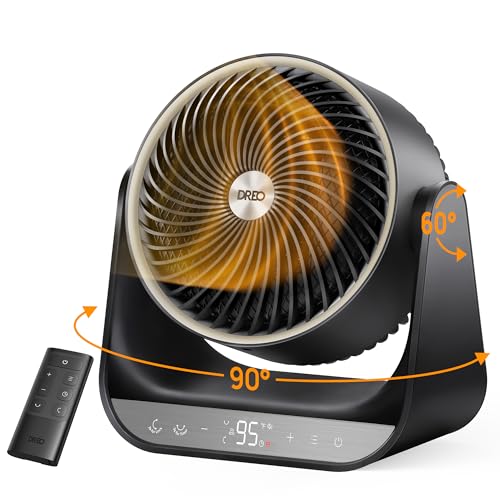
- BWP Score9.6
BWP Score is a ranking system developed by Bestwinterproducts.com. BWP score has no relationship or impact from any manufacturers or sales agent websites. Learn more
- BrandDREO

- BWP Score9.6
BWP Score is a ranking system developed by Bestwinterproducts.com. BWP score has no relationship or impact from any manufacturers or sales agent websites. Learn more
- BrandLYNBKLS

- BWP Score9.1
BWP Score is a ranking system developed by Bestwinterproducts.com. BWP score has no relationship or impact from any manufacturers or sales agent websites. Learn more
- BrandDR. INFRARED HEATER

- BWP Score8.8
BWP Score is a ranking system developed by Bestwinterproducts.com. BWP score has no relationship or impact from any manufacturers or sales agent websites. Learn more
- BrandDR. INFRARED HEATER

- BWP Score8.3
BWP Score is a ranking system developed by Bestwinterproducts.com. BWP score has no relationship or impact from any manufacturers or sales agent websites. Learn more
- BrandBEYOND HEAT

- BWP Score7.6
BWP Score is a ranking system developed by Bestwinterproducts.com. BWP score has no relationship or impact from any manufacturers or sales agent websites. Learn more
- Brand5 SUNDAY LIVING
Last update on 2026-10-09 / Affiliate links / Images, Product Titles, and Product Highlights from Amazon Product Advertising API
FAQs
How low can I set my central thermostat in winter?
You can set your central thermostat between 60°F and 64°F while using a space heater in your occupied room. This creates enough temperature difference to reduce your heating bills while keeping the rest of your home warm enough to prevent damage. Avoid setting your central thermostat below 55°F, as exterior wall pipes can freeze during cold snaps.
Is it cheaper to leave a space heater running all day?
No, running a space heater in an empty room always wastes money. Even at a low 750-watt setting, continuous operation over eight hours consumes six kilowatt-hours of unnecessary electricity. You only save money by running the heater while you are inside the room and turning it off when you leave.
Can a space heater heat two connected rooms?
Portable space heaters lack the fan strength and wattage to warm multiple rooms. Standard 1,500-watt models are sized for roughly 150 square feet of enclosed space. When interior doors stay open between rooms, warm air escapes, forcing the heater to run on high continuously without warming either room effectively.
Why does my space heater plug feel warm to the touch?
A plug drawing 12.5 amps will feel slightly warm during normal operation because of high electrical current flow. But if the plug or wall plate feels hot to the touch, shows brown discoloration, or smells like melted plastic, shut the unit off immediately. A hot plug indicates worn receptacle contacts or loose wiring that requires inspection by a licensed electrician.


Best Warm Winter Scarves 2026 For Cozy Comfort

Best Green Ski Goggles 2026 For Clear Vision On Slopes

12 Best Corner Electric Fireplace 2026: My Ultimate Guide To Pick One

Best Battery Powered Snow Blower 2026 For Effortless Snow Clearing

Best Ski Goggles Under 30 Inches For Crisp Vision And Comfort

Best Cooling Scarf 2026 For Instant Relief And Comfort

Fake Snow for Grass: Create a Realistic Winter Lawn Display

Dimplex Prism Wall Mount Fireplace: Sleek Heat With Modern Flame Style





