
Do Water Heater Blankets Work and Do You Need One?

A quick trip into a drafty garage often ends with a hand resting against the water heater tank after noticing the room feels warmer than it should. Water heater blankets genuinely work, but they only save money if heat is actually leaking through the tank wall. Adding an insulated wrap keeps that warmth inside the water rather than letting it drift away into cold room air.
A few practical details change the payoff completely. Modern tanks already have thick foam packed inside the steel shell, meaning an extra outer layer saves very little. Units sitting in frigid crawl spaces or open garages benefit the most, while tanks tucked into heated indoor closets barely notice a difference. Gas models also require extra care to avoid blocking the burner or the exhaust vent up top. Here is how to tell if your setup truly needs one before you spend a dime.
When Water Heater Blankets Save Money and When They Do Not
A standard storage water heater holds dozens of gallons of hot water at all hours of the day and night. When nobody in your home is running a faucet or appliance, that stored heat gradually escapes through the metal walls of the tank into the surrounding air. In plain terms, this steady loss is called standby loss (heat leaking while the tank sits idle). Because the water inside continuously cools down, your heater must turn on repeatedly just to maintain your set temperature, burning fuel or drawing electricity even while you sleep.
An insulation blanket works by wrapping around the outer jacket to slow down that heat escape. But wrapping your tank only makes financial sense if your heater is actually leaking warmth. Tank age is the biggest determining factor. In the United States, manufacturing rules changed significantly in 2015 to require much higher energy efficiency on all residential water heaters. Tanks built after that time come with dense foam insulation injected between the inner water tank and the outer steel shell. If your heater was installed within the last several years, it already retains heat well, so adding a blanket will save very little money on your utility bills.
Older water heaters tell a different story. Units built before modern standards often have thin fiberglass insulation that settles and degrades over time. As that internal padding breaks down, heat escapes freely through the outer sheet metal. If you have a tank that is ten to twelve years old, adding an outer insulating blanket acts like putting a warm coat over an older jacket, noticeably cutting down standby loss and reducing the number of times your burner or heating elements fire up.
Location also dictates how much money you can save. A water heater placed in a heated utility closet inside your living space loses heat slowly because the room air stays warm. Tanks installed in unheated basements, crawlspaces, or drafty garages face severe temperature drops during the winter. When sub-freezing air surrounds a tank holding 120-degree water, the heat escapes much faster. While running an electric heater for a garage with a thermostat can help keep your workshop or car storage area comfortable, an uninsulated water tank sitting in that space still bleeds warmth into cold drafts. Similarly, in manufactured homes where utility cabinets often sit against exterior walls, a dedicated heater for a mobile home keeps indoor living rooms cozy, but the water heater compartment can remain chilly. Older tanks in these cold spaces gain the greatest benefit from an insulating blanket.
You can easily confirm whether your water heater is losing heat with a quick touch check:
- Leave the water heater alone for at least one hour without running hot water from any faucet or shower.
- Place the flat palm of your hand firmly against the middle section of the outer metal tank jacket.
- Notice how the metal feels against your skin compared to the surrounding air.
- If the metal shell feels noticeably warm or hot, your factory insulation is thin, and the tank is steadily losing heat.
- If the metal shell feels cool to the touch, your tank already holds heat effectively, and adding a blanket will not save enough money to justify the cost.
- Check the metal manufacturer rating plate on the side of the tank to verify its installation age.
Gas Versus Electric Tanks: Vital Safety Clearances
Electric and gas water heaters operate under completely different physical conditions. Wrapping an electric unit is relatively straightforward, but wrapping a gas unit without knowing proper safety rules creates an immediate fire hazard and a deadly carbon monoxide risk. Before you buy or cut any material, you need to understand how your specific tank type functions.
Electric water heaters use electric heating elements submerged inside the tank, wired through the side wall. There is no open flame, no combustion exhaust, and no fuel supply line. Because the exterior surfaces stay cooler, wrapping an electric model is much simpler. However, you must never wrap over an access panel (a metal door covering controls and electrical wiring). Electric tanks feature two access panels, one for the upper thermostat and element, and one for the lower unit. Covering these panels prevents you from adjusting the temperature, makes servicing the unit impossible, and can trap heat around the wiring terminals. You must also leave the temperature and pressure relief valve (a safety valve that releases water if pressure climbs too high) completely clear and accessible.
Gas water heaters require extreme care because they burn natural gas or propane. At the bottom of the tank sits a combustion chamber with an active burner or pilot flame. At the top of the tank sits the flue pipe (a metal exhaust pipe venting fumes outside) along with a draft hood. Both of these areas require unrestricted airflow to operate safely.
The burner at the base needs a steady supply of fresh oxygen to burn clean. If you wrap an insulation blanket all the way down to the floor, you choke the combustion air intake. Smothering the burner causes incomplete combustion, creating heavy black soot and dangerous levels of carbon monoxide, a toxic gas that you cannot see or smell. Always keep the bottom six to eight inches of a gas tank completely uncovered. Never cover the gas control thermostat knob, the burner access door, or the pilot viewing glass.
The top of a gas water heater must also remain completely bare. The flue pipe becomes scorching hot whenever the burner runs. If you drape an insulation blanket over the top of the tank, the material can melt, catch fire, or obstruct the draft hood, forcing poisonous exhaust fumes back into your home. Maintain at least twelve inches of open clearance below the draft hood and around the exhaust pipe. If you ever smell gas or see soot stains around your water heater, do not install a blanket. Turn off the fuel supply if safe to do so, leave the room, and call your local gas utility or a qualified plumber immediately.
How to Install a Water Heater Blanket Step by Step
Installing an insulation blanket is a manageable weekend project that takes about one to two hours. Taking the time to measure accurately and cut clean openings ensures the blanket works efficiently without creating safety hazards or blocking important maintenance points.
Before you begin, gather your supplies. You will need a tape measure, a utility knife or heavy household scissors, a marker, and high-temperature aluminum foil tape. If your blanket contains fiberglass, put on work gloves, long sleeves, safety glasses, and a dust mask so loose glass fibers do not irritate your skin, eyes, or throat. Blankets made from pre-oxidized fiber or closed-cell foam do not shed loose glass particles and are much easier to handle in confined spaces.
- Shut off the power or lower the heat setting. For an electric water heater, go to your main electrical panel and switch off the dedicated circuit breaker. For a gas water heater, turn the gas control dial on the front of the tank to the pilot position so the main burner does not fire while you work near the tank.
- Wipe down the tank exterior. Use a clean, dry cloth to remove dust, lint, and cobwebs from the sheet metal jacket. High-temperature tape needs a clean, dry surface to bond properly.
- Measure the tank dimensions. Measure the circumference of the tank with your tape measure. Then measure the height of the cylindrical body. On an electric tank, measure from the top edge down to about two inches above the floor. On a gas tank, measure from the top edge down to roughly eight inches above the floor, stopping well above the burner chamber and air intake.
- Cut the blanket to size. Lay the insulation flat on a clean floor. Using your straight edge and utility knife, cut the blanket to match your measured height and circumference, leaving about two inches of extra width so the ends can overlap. If your kit includes a round top lid, set it aside. You can use it on an electric tank, but you must never place an insulation cap on top of a gas water heater.
- Wrap the blanket around the tank. Wrap the insulation snugly around the cylinder. Do not pull the material so tight that you compress it, because squashing insulation reduces its ability to trap heat. Have a helper hold the wrap in place, or apply small pieces of foil tape along the seam temporarily.
- Cut openings for controls and safety valves. Locate every component on the tank through the blanket. Feel for each access panel, the temperature and pressure relief valve, the drain valve near the bottom, and any pipe connections. Use your marker to outline each item on the outside of the blanket. Carefully cut out rectangular sections around the access panels so the metal doors can open freely. Cut clean openings around the pressure relief valve and its downward drain pipe.
- Tape the seams and cutouts. Remove the temporary tape tabs and apply a continuous strip of high-temperature aluminum foil tape along the entire vertical seam where the blanket ends meet. Next, run foil tape along the cut edges around every panel opening and valve cutout. Sealing these edges keeps the blanket neat, locks in internal fibers, and stops cold room air from circulating behind the wrap.
- Restore power and verify proper operation. Turn the electric breaker back on, or turn your gas control valve back to your normal setting (typically 120 degrees Fahrenheit). Check the area to confirm that all valves, pipes, and panels remain easily accessible, and verify that the flue pipe on a gas model has completely clear airflow.
What to Look for in a Tank Blanket and When to Replace the Unit
When you shop for a water heater blanket, choosing the right material makes the job easier and delivers better energy savings. Pre-cut blankets designed specifically for water heaters simplify the process because they arrive sized for standard residential tanks, eliminating the frustration of piecing together loose insulation scraps.
The first specification to check is the R-value (a rating of how well insulation stops heat). For water heater jackets, an R-value between R-8 and R-10 provides the ideal balance. This thickness blocks heat leakage into cold garages and basements without adding so much bulk that the tank crowds against nearby walls. You should also confirm the tank capacity listed on the packaging. Standard blankets cover 40 to 60 gallon tanks, while heavy-duty wraps fit tanks up to 80 gallons. Measure your tank diameter beforehand to ensure the wrap will fit completely around the circumference.
Pay close attention to the core insulation material. Traditional models use fiberglass wrapped in a thin vinyl sheet. These jackets are affordable and work well, but handling fiberglass requires full protective gear to avoid skin irritation. Newer blankets made from pre-oxidized fiber or multi-layer reflective panels offer high heat resistance, thinner profiles, and zero skin itch, making them significantly easier to cut and tape in tight utility closets. Always make sure you use proper aluminum foil tape rather than standard duct tape, which quickly dries out, curls, and fails when exposed to continuous heat.
While an insulation blanket solves surface heat loss, it cannot fix internal mechanical wear. If your water heater is nearing the end of its lifespan, spending money on a blanket is a waste. Look for these clear warning signs that tell you to replace the heater rather than wrapping it:
- The water heater is more than ten to twelve years old and approaching the end of its typical lifespan.
- Hot water flowing from your household faucets looks rusty, murky, or smells metallic, signaling corrosion inside the steel tank.
- You hear loud popping, cracking, or rumbling noises from the bottom of the tank, caused by heavy mineral sediment baking into hard scale.
- Moisture, damp corrosion, or standing water pools around the base of the tank, which indicates an internal leak that cannot be repaired.
- The heater runs out of hot water noticeably faster than it used to, even though your family has not changed its daily water habits.

- BWP Score9.6
BWP Score is a ranking system developed by Bestwinterproducts.com. BWP score has no relationship or impact from any manufacturers or sales agent websites. Learn more
- BrandAES
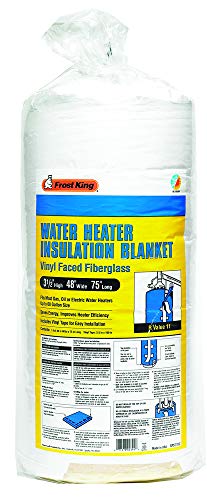
- BWP Score8.3
BWP Score is a ranking system developed by Bestwinterproducts.com. BWP score has no relationship or impact from any manufacturers or sales agent websites. Learn more
- BrandFrost King

- BWP Score8.2
BWP Score is a ranking system developed by Bestwinterproducts.com. BWP score has no relationship or impact from any manufacturers or sales agent websites. Learn more
- BrandAnglekai
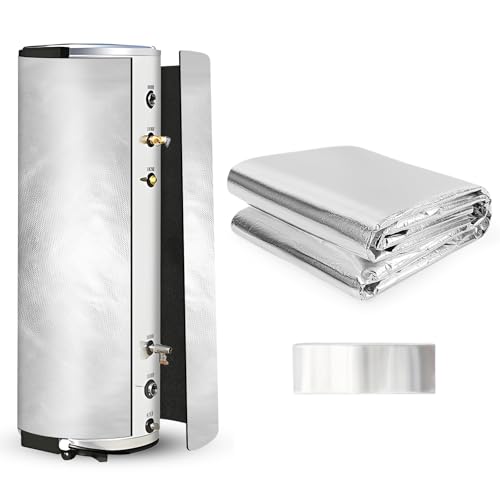
YIBOBO Upgraded Water Heater Insulation Blanket, 76"x48" Pre-Oxidized Fiber Technology
View on Amazon- BWP Score8.1
BWP Score is a ranking system developed by Bestwinterproducts.com. BWP score has no relationship or impact from any manufacturers or sales agent websites. Learn more
- BrandYIBOBO

- BWP Score7.5
BWP Score is a ranking system developed by Bestwinterproducts.com. BWP score has no relationship or impact from any manufacturers or sales agent websites. Learn more
- BrandYIBOBO

- BWP Score7.1
BWP Score is a ranking system developed by Bestwinterproducts.com. BWP score has no relationship or impact from any manufacturers or sales agent websites. Learn more
- BrandYIBOBO
Last update on 2026-10-10 / Affiliate links / Images, Product Titles, and Product Highlights from Amazon Product Advertising API
FAQs
Can an insulation blanket cause a water heater fire?
An insulation blanket will not cause a fire when installed correctly, but wrapping a gas water heater improperly creates a genuine fire hazard. If you cover the burner access door, air intake, or the flue pipe at the top, trapped heat or stray flames can ignite the blanket. Always keep gas burner openings and exhaust pipes completely clear of insulation.
Should I insulate the water pipes connected to the tank?
Yes, insulating the first three to six feet of the hot and cold water pipes connected to your tank provides extra energy savings. Slip-on foam pipe sleeves keep hot water from cooling as it travels into your home and reduce pipe sweating on cold lines. If you have a gas water heater, keep foam pipe sleeves at least six inches away from the flue pipe to prevent the foam from melting.
Do tankless water heaters need an insulation blanket?
No, tankless water heaters do not store hot water, so they do not experience standby heat loss. These compact units only heat water on demand as it flows through the internal heat exchanger. Wrapping a tankless unit with an insulation blanket is unnecessary, blocks vital cabinet vents, and can cause internal electronic components to overheat.


Best Warm Winter Scarves 2026 For Cozy Comfort

Best Green Ski Goggles 2026 For Clear Vision On Slopes

12 Best Corner Electric Fireplace 2026: My Ultimate Guide To Pick One

Best Battery Powered Snow Blower 2026 For Effortless Snow Clearing

Best Ski Goggles Under 30 Inches For Crisp Vision And Comfort

Best Cooling Scarf 2026 For Instant Relief And Comfort

Fake Snow for Grass: Create a Realistic Winter Lawn Display

Dimplex Prism Wall Mount Fireplace: Sleek Heat With Modern Flame Style





