
Does a Tankless Water Heater Need an Expansion Tank?

A homeowner unboxes a compact wall-hung heater and spots an extra metal canister added to the plumber's parts list. In most situations, a tankless unit does not need an expansion tank unless the house sits on a closed plumbing system. Because these units heat water on demand rather than keeping gallons constantly hot, pressure rarely builds up enough to cause damage in standard open pipes.
The rules change if something stops water from pushing back out toward the street. Homes with a pressure reducing valve (a brass fixture that tames street pressure) or a one-way backflow valve trap swelling water inside your walls. Local plumbing codes, warranty guidelines, and hot-water recirculation loops also tip the scales toward adding one. A quick check of your main water pipe will tell you which setup you have.
Why Heated Water Needs Room to Grow in Your Plumbing
Most homeowners assume an expansion tank only belongs next to a giant fifty-gallon metal cylinder. A traditional storage heater keeps dozens of gallons of water hot day and night. When that massive volume warms up, it naturally swells and takes up more physical space. A tankless water heater operates differently by flash-heating cold water through a small copper or stainless steel heat exchanger (a metal coil that transfers heat directly to flowing water) only when you open a faucet. Because a tankless unit does not store standing hot water, it feels logical to think that thermal expansion simply cannot happen in your home. That assumption causes many homeowners to skip an expansion tank during installation, only to run into mysterious leaks later.
The basic physics of water do not change just because your water heater is compact. Water experiences thermal expansion (water swelling as it heats up) whenever its temperature rises. When cold water at fifty degrees Fahrenheit enters your pipes and warms to one hundred and twenty degrees, that water expands in volume by roughly two to three percent. While two percent sounds tiny, water is a dense liquid that cannot be squished or compressed into a smaller space. If that expanding water is trapped inside rigid copper, brass, or plastic pipes, it acts like a hydraulic ram. Every degree of added warmth pushes outward against the pipe walls and fixture seals with tremendous mechanical force.
The critical factor is what happens right after you turn off your hot water tap. While the tap is running, expanding water simply exits through the faucet or showerhead. But the moment you shut the handle, heated water stays trapped inside the heat exchanger and your distribution lines. The metal burner or electric elements remain extremely hot for several minutes after the flame cuts out. This residual heat transfers into the stationary water trapped inside the unit. The water swells immediately, but because all your faucets are closed, that growing liquid needs somewhere to push.
Whether this swelling water damages your plumbing depends entirely on how your house connects to the street or your water source. In an open plumbing system, expanding water simply flows backward out of your home. It pushes against the incoming city water supply and slips harmlessly back toward the public municipal main buried under your street. The public water grid acts as an infinite cushion. But in a closed system (plumbing where water cannot push back out toward the city main), a physical one-way valve blocks that escape path completely. When water swells inside a closed home, the pressure has zero room to grow, causing internal plumbing pressure to skyrocket in seconds.
Recirculation loops make this pressure spike even more frequent. Many tankless installations include a dedicated recirculation pump or a crossover bridge under a distant bathroom sink. These loops circulate warm water continuously so you never have to wait a minute for hot water at the shower. Because hot water is constantly circulating and reheating through your pipes even when no faucet is open, thermal expansion happens around the clock. Without an expansion tank acting as an air-cushioned shock absorber, that trapped energy pounds your plumbing day and night.
How to Check Your Home for a Closed Plumbing System
Deciding if your tankless setup requires an expansion tank comes down to one question: is your plumbing open or closed? You do not need professional plumbing tools or complex hydraulic calculations to find out. You can verify your system setup in a few minutes by tracing the main cold-water line where it first enters your house. Grab a flashlight and head down to your basement, crawlspace, utility room, or garage.
Locate the primary water shutoff valve, which is usually a brass ball valve with a lever handle near your foundation wall. From that shutoff valve, follow the pipe as it travels toward your water heater and the rest of your home. You are looking for specific one-way devices that prevent water from flowing backward into the street. The most common device is a PRV (pressure reducing valve that tames street water pressure). City street mains often deliver water at eighty to over one hundred pounds per square inch to feed fire hydrants. Because household appliances are designed for fifty to sixty pounds per square inch, municipal codes often require a PRV at the home entrance. This valve contains an internal spring and a one-way rubber diaphragm that stops backflow dead in its tracks.
To confirm whether your plumbing system is closed, inspect your main supply line for these four telltale signs:
- A brass bell-shaped valve (PRV): Look for a cone-shaped brass fitting sitting directly on the main water line, usually featuring an adjustment bolt and locknut on top. If you see this device, your system is completely closed to the street.
- A backflow preventer or check valve: Look for a brass valve stamped with a directional flow arrow (a check valve that stops backward water flow) installed right after your water meter. These are common in neighborhoods that mandate cross-connection control.
- A modern digital water meter with an internal check valve: Many utility providers now install radio-read meters equipped with built-in internal check valves inside the meter body, turning an open system into a closed one without extra valves on your walls.
- A dedicated hot-water recirculation line: Trace the pipes directly under your tankless heater. If you see a third water pipe connected to a small circulator pump that loops back into the cold-water inlet, your system continuously traps heated water.
If you get your water from a private well rather than a municipal city supply, your situation is slightly different. A well system relies on a large well pressure tank that already has an internal rubber bladder and an air cushion. In many straightforward well configurations, that existing well tank absorbs thermal expansion naturally. However, if your well system includes a dedicated check valve or an iron filter with a one-way bypass right before your household plumbing branches off, your indoor lines are isolated. In that scenario, your indoor pipes form a closed loop that cannot vent back into the well tank.
Plumbing layouts can also become isolated when you remodel or add heating systems in separate zones. For example, if you run secondary plumbing out to an attached workshop where you maintain freeze protection using an electric heater for garage with thermostat setups, you might find secondary check valves installed on those specific branch lines. Whenever a one-way valve stands between your water heater and the main supply line, you are operating a closed system that legally and mechanically requires an expansion tank.
What Happens When Pressure Has Nowhere to Go
Operating a tankless water heater inside a closed plumbing system without an expansion tank creates hidden damage that worsens over time. When water warms up and cannot push backward into the municipal water main, household water pressure spikes dramatically. A normal municipal water pressure reading hovers comfortably between forty-five and sixty pounds per square inch. When thermal expansion takes place in a closed house without an expansion cushion, pressure can instantly shoot past eighty, one hundred, or even one hundred and forty pounds per square inch.
The first sign of excess pressure is usually a mysterious puddle directly underneath your tankless heater. Every water heater features a T&P valve (safety relief valve that drips when pressure gets dangerous). This brass safety valve is designed to pop open automatically if water pressure climbs to one hundred and fifty pounds per square inch or if water temperature exceeds two hundred and ten degrees Fahrenheit. It is the final emergency escape hatch that prevents pipes from bursting. When thermal expansion spikes your water pressure past that limit, the relief valve cracks open and drips water onto your floor through its discharge pipe.
Homeowners often misdiagnose this puddle as a broken relief valve. They buy a replacement valve, screw it into the heater, and find that the brand new valve begins dripping a few days later. The valve is not defective at all. It is simply doing its job by keeping your house from rupturing under severe hydraulic pressure. If you notice persistent puddles or steady dripping from that relief tube, high pressure is actively straining your system.
That high pressure does not just affect the heater. It attacks every plumbing component in your home. Trapped pressure pushes against toilet fill valves, causing them to hiss, run constantly, or leak around their internal seals. It weakens flexible braided steel hoses running to your washing machine and sinks, increasing the risk of a catastrophic flood. It also ruins delicate faucet cartridges, causing expensive kitchen and bathroom fixtures to develop persistent drips.
Inside the tankless unit itself, repeated pressure spikes take a severe toll on the heat exchanger. The thin-walled copper or stainless steel coils inside a tankless unit are engineered for rapid heat transfer, not for enduring violent pressure swings. Each time the water heats up, the metal coils flex outward under the strain. Over thousands of heating cycles, this constant flexing causes metal fatigue, weld failure, and pinhole ruptures inside the heater core. A ruptured heat exchanger generally cannot be repaired and requires replacing the entire unit.
Skipping an expansion tank also creates major legal and financial headaches. Most tankless equipment manufacturers state clearly in their warranty guidelines that operating the appliance on a closed system without a functioning expansion tank voids the factory warranty on the heat exchanger. On top of that, modern residential plumbing codes, including both the International Plumbing Code and the Uniform Plumbing Code, legally mandate thermal expansion control whenever a backflow preventer or pressure regulating valve is present. If you install a tankless unit without an expansion tank in a closed system, your installation will fail city inspection, and an unpermitted leak could complicate future homeowners insurance claims.
Choosing the Right Expansion Tank for a Tankless Setup
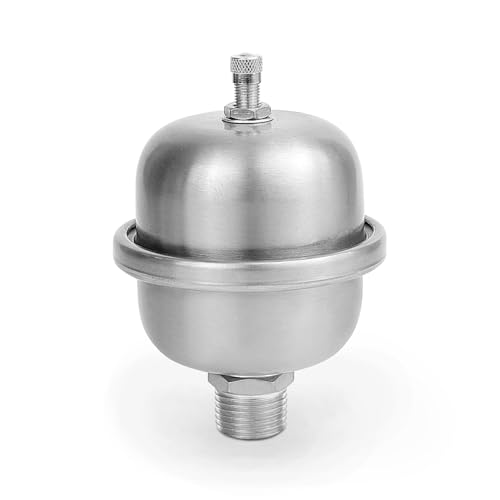
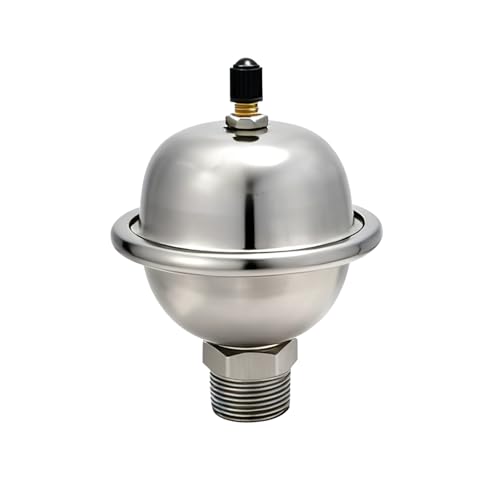
Because tankless water heaters do not store fifty gallons of standing water, you do not need the massive expansion tanks typically seen beside old-fashioned boilers. Instead, you can protect your plumbing with a compact mini thermal expansion tank designed specifically for point-of-use and tankless systems. These smaller tanks perform the exact same safety job while fitting neatly inside tight mechanical closets or under vanity cabinets.
A thermal expansion tank is a sealed metal vessel divided in half by a flexible internal rubber bladder. One side of the bladder connects directly to your home water supply, while the other side contains sealed, pressurized air. When heated water swells inside your closed pipes, it gently pushes against this rubber bladder. The pocket of air compresses smoothly, absorbing the extra liquid volume like a soft pillow. When you turn on a faucet and pressure drops, the air pocket expands again, pushing the water back into circulation. This simple mechanical design keeps your system pressure steady at all times.
When selecting an expansion tank to protect your tankless unit, verify these essential details before buying:
- Overall capacity: Most residential tankless heaters without large storage reservoirs only require a compact two-gallon or two-point-one-gallon mini expansion tank. This provides more than enough expansion volume for the water trapped inside the heater core and household supply pipes.
- Shell construction: Choose a tank built with high-grade 304 stainless steel or powder-coated steel. Stainless steel shells handle damp basements, humid utility closets, and outdoor water heater cabinets without rusting.
- Connection port size: Check the thread size on your cold-water supply pipes. Most tankless units feed from either half-inch or three-quarter-inch water lines. Selecting a tank with matching half-inch or three-quarter-inch national pipe threads eliminates the need for messy adapter fittings.
- Potable water rating: Ensure the internal rubber bladder uses food-grade butyl rubber certified safe for drinking water lines.
- Pre-charge air pressure: Mini expansion tanks come pre-charged from the factory, typically set around fifty pounds per square inch. You must check this air pressure using a standard tire pressure gauge on the tank Schrader valve before installation. The air pressure inside the dry tank must match your incoming household water pressure exactly.
Proper physical placement is just as important as choosing the right size. An expansion tank must always be installed on the incoming cold-water supply line feeding into the tankless heater. Never install the tank on the hot-water outlet line. Hot water degrades the internal rubber bladder rapidly, cutting the life of the tank short. Secure the tank between the cold-water shutoff valve and the water heater inlet, ensuring there are no check valves blocking the path between the heater and the expansion cushion.
If you are retrofitting plumbing in tight quarters, such as replacing mechanical utilities while searching for the best heater for mobile home utility closets, space is often at a premium. Mini expansion tanks are lightweight enough to be supported directly by rigid copper or brass piping, provided the pipes are well-anchored to wall studs. Once installed and pressurized correctly, a quality mini thermal expansion tank runs silently in the background, keeping your heat exchanger safe and your relief valves bone dry.
- BWP Score8.8
BWP Score is a ranking system developed by Bestwinterproducts.com. BWP score has no relationship or impact from any manufacturers or sales agent websites. Learn more
- BrandSUPPLYGIANT

- BWP Score8.3
BWP Score is a ranking system developed by Bestwinterproducts.com. BWP score has no relationship or impact from any manufacturers or sales agent websites. Learn more
- BrandEastman
- BWP Score8.7
BWP Score is a ranking system developed by Bestwinterproducts.com. BWP score has no relationship or impact from any manufacturers or sales agent websites. Learn more
- BrandTT FLEX

- BWP Score7.5
BWP Score is a ranking system developed by Bestwinterproducts.com. BWP score has no relationship or impact from any manufacturers or sales agent websites. Learn more
- BrandSeelink

- BWP Score8.1
BWP Score is a ranking system developed by Bestwinterproducts.com. BWP score has no relationship or impact from any manufacturers or sales agent websites. Learn more
- BrandSolimeta

- BWP Score7.6
BWP Score is a ranking system developed by Bestwinterproducts.com. BWP score has no relationship or impact from any manufacturers or sales agent websites. Learn more
- BrandEastman
Last update on 2026-10-11 / Affiliate links / Images, Product Titles, and Product Highlights from Amazon Product Advertising API
FAQs
Can a water hammer arrestor replace an expansion tank?
No, a water hammer arrestor cannot replace a thermal expansion tank because they solve two completely different plumbing problems. A hammer arrestor absorbs the brief, violent shock wave created when an electric valve snaps shut instantly, such as inside a dishwasher or washing machine. An expansion tank absorbs the slow, steady rise in volume that occurs over several minutes as water warms up inside closed pipes. A hammer arrestor lacks the internal air volume needed to manage sustained thermal expansion.
Where should the expansion tank be installed on a tankless heater?
The expansion tank must always be installed on the cold-water supply line that leads directly into the heater inlet. It should be positioned downstream from your main shutoff valve and pressure regulator, but before the water enters the heater heat exchanger. Never install an expansion tank on the hot-water side of the unit, because continuous exposure to high-temperature water will quickly destroy the internal rubber diaphragm.
Does my tankless warranty require an expansion tank?
Most major tankless water heater manufacturers explicitly require thermal expansion control in their installation manuals whenever the unit operates on a closed plumbing system. If your home has a pressure reducing valve, check valve, or backflow preventer, failing to install an expansion tank can void the warranty on your heat exchanger. If pressure spikes crack the internal coils and the technician finds a closed system without a tank, the manufacturer can deny your replacement claim.


Best Warm Winter Scarves 2026 For Cozy Comfort

Best Green Ski Goggles 2026 For Clear Vision On Slopes

12 Best Corner Electric Fireplace 2026: My Ultimate Guide To Pick One

Best Battery Powered Snow Blower 2026 For Effortless Snow Clearing

Best Ski Goggles Under 30 Inches For Crisp Vision And Comfort

Best Cooling Scarf 2026 For Instant Relief And Comfort

Fake Snow for Grass: Create a Realistic Winter Lawn Display

Dimplex Prism Wall Mount Fireplace: Sleek Heat With Modern Flame Style





