
Does an Instant Water Heater Use More Electricity?

Standing in a quiet basement while an old storage tank hums to keep water hot at midnight, anyone would wonder if a tankless unit might send the electric bill through the roof. The reassuring truth is that an instant heater usually uses less total electricity over the course of a month. It draws a heavy surge of power during the exact minutes a tap is running, but it shuts off completely the moment the water stops.
A few real-world conditions will change just how much power the unit needs. Frigid winter tap water forces the heating coils to work significantly harder, and running two showers at once pulls a much larger electrical load. Heavy daily hot water habits can also trim down those savings. Looking closely at the difference between sudden power spikes and actual monthly energy use shows how this swap affects your bottom line.
Separate Peak Wattage From Monthly Electricity Use
Seeing the electrical label on an instant water heater can make any homeowner hesitate. A whole-house instant heater might carry a rating of 18,000 or 27,000 watts. In contrast, a standard storage tank heater usually features an element rated around 4,500 watts. On paper, it looks like the instant heater consumes four to six times more power.
That comparison confuses momentary electrical power with total energy consumption. Wattage is the amount of electrical power pulled at a single moment. It measures how fast an appliance draws energy right now, much like a car speedometer shows your speed at this exact second. Total electricity used over time is measured in kilowatt-hours, which is the figure that forms your monthly utility bill. One kilowatt-hour equals using 1,000 watts of power continuously for one full hour.
Think of an instant heater as a sprinter and a tank heater as a steady walker. A sprinter dashes at top speed for thirty seconds, while a walker strolls for twenty-four hours without a break. The sprinter pulls intense power for half a minute, but the walker uses far more total energy over the entire day.
An instant water heater draws electricity only during the exact minutes a hot water faucet runs. When you open the tap, a sensor activates the internal heating elements. The moment you close the handle, power drops back to zero. A tank heater, by comparison, turns on and off constantly to keep water hot while you sleep or work.
Cut Out Standby Heat Loss to Lower Your Power Consumption
The main reason an instant heater usually lowers your electric bill is that it eliminates standby heat loss. Standby heat loss is the energy wasted keeping stored water hot 24 hours a day, 7 days a week. A conventional tank heater stores 40 to 50 gallons of water at roughly 120 to 140 degrees Fahrenheit. That metal cylinder sits in an unheated garage, basement, or utility closet where the room air is cooler than the water inside.
Heat naturally moves toward cooler areas. Even with insulation inside the tank walls, heat constantly escapes into the room, and the water cools off. Whenever the water temperature dips below the thermostat setpoint, the heating elements switch on. The unit reheats the water, shuts off, and repeats the cycle later.
This cycle never stops, even when your house is empty. If your house sits empty all day, the tank continues burning electricity to warm water nobody touches. A large portion of the electricity consumed by a storage tank simply pays for this continuous, wasted reheating cycle.
Instant heaters avoid this waste entirely because they hold no stored water. Cold water passes directly over a rapid heating element, warms up within seconds, and flows straight out of your tap. When the tap is off, the heater sits idle. Removing standby loss is why most households see lower monthly electric bills after making the switch.
Watch for Household Demands That Can Push Your Bill Higher
While instant heaters use less power under normal conditions, specific household habits and local conditions can push your electricity consumption higher.
Shower habits play the biggest role. A traditional tank acts as a natural timer because the hot water eventually runs out, forcing family members to wrap up their showers. An instant heater provides continuous hot water that never runs dry. If people in your home double their shower times, the heating elements run twice as long. That added runtime can quickly wipe out the savings you gained from cutting standby loss.
Incoming water temperature also influences electrical draw throughout the year. Tap water entering your home changes temperature with the seasons. During summer months, underground water might enter your house at 65 or 70 degrees Fahrenheit. In the middle of winter, that incoming water can plunge to 40 degrees Fahrenheit. Warming 40-degree water up to a comfortable 115-degree shower requires a steep temperature rise of 75 degrees. The heater must draw its maximum power to handle that climb, which means winter water heating uses noticeably more electricity than summer use.
High water flow rate is another factor to watch. Flow rate is how fast water runs from your faucet, measured in gallons per minute. If you run multiple hot water fixtures simultaneously, the heater must run all heating elements at full capacity. Older, unrestricted showerheads will pull substantially more electrical power than water-saving fixtures.
Check Your Breaker Panel and Circuit Wiring Before Installing
The most challenging part of installing an electric instant heater is not the monthly operating cost, but the electrical demand placed on your home wiring. Because instant units warm water in seconds, they pull intense electrical current during operation.
Every home has a main electrical panel rated for a specific capacity, often 100, 150, or 200 amps. A whole-house electric tankless heater can demand 80 to 120 amps at full output. If your panel provides only 100 amps, running the heater alongside an air conditioner or stove will trip the main breaker, requiring a costly service upgrade.
Instant heaters also need a dedicated circuit. A dedicated circuit is an electrical line powering only this single appliance, running straight from the breaker box without sharing outlets or lights. A standard storage heater typically needs one 30-amp breaker. In contrast, a whole-house instant unit often requires three or four separate 40-amp double-pole breakers.
Smaller dwellings face particularly tight electrical limits. For example, homes with specialized wiring like a manufactured home setup (see our guide on the best heater for mobile home heating) must balance breaker space carefully. Recreational travel builds like those covered in our guide on the best heater for van life have strict power budgets where heavy instant water heating is impossible.
Before choosing a unit, verify these electrical details:
- Check the main breaker switch to confirm if your panel service is 100, 150, or 200 amps.
- Count empty breaker slots to ensure you have room for the required dedicated lines.
- Check the voltage and amperage requirements on the heater specification label.
- Confirm that the copper wire gauge matches the heater breaker rating.
- If you notice flickering lights or buzzing sounds from your panel, call a licensed electrician.
Practice Everyday Hot Water Habits That Keep Bills Down
Adopting simple daily practices helps you get the lowest possible energy bill from an instant water heater. These small changes keep power draw low without sacrificing comfort.
Follow these straightforward steps to keep your electricity consumption down:
- Install low-flow aerators on all sink faucets. Aerators mix air into the flowing stream, reducing the gallons per minute by roughly a third while keeping water pressure feeling firm. Lower flow means the heater draws less power to warm the water.
- Lower the temperature setting on your heater display. Many households set heaters to 130 or 140 degrees Fahrenheit, only to mix in cold water at the tap to avoid burns. Lowering the setting to 115 or 120 degrees Fahrenheit saves electricity and protects family members from scalding.
- Stagger your household hot water chores. Avoid running the dishwasher or washing machine while someone is taking a shower. Spacing out water use keeps the heater from running at maximum wattage across multiple heating chambers.
- Wash everyday laundry loads in cold water. Modern laundry detergents clean clothing thoroughly in cold tap water. Keeping hot water cycles strictly for heavily soiled items reduces how often your heater activates.
- Repair dripping faucets and showerheads immediately. A persistent drip on the hot water side can trigger the sensitive flow switch inside an instant heater, quietly inflating your monthly electric bill.
Pick a Compact Point-of-Use Heater to Avoid Heavy Wiring Upgrades
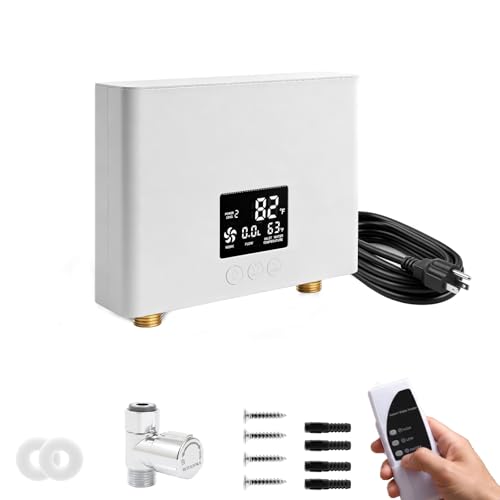
If a whole-house instant heater demands more breaker capacity than your electrical panel can provide, a compact point-of-use electric water heater offers a smart alternative. These small units mount under a kitchen sink, bathroom vanity, or garage workbench to heat water directly at a single faucet. Instead of relying on a massive appliance that pulls heavy current across the entire home, a point-of-use model delivers fast hot water right where you need it.
Because these compact units only supply one tap at a time, their power requirements are far more manageable for standard residential wiring. Many operate on standard household circuits without requiring an overhaul of your main breaker box. Before you pick a point-of-use heater, check the physical space inside your cabinet to ensure the unit fits cleanly alongside your drain pipes. Confirm that you have a dedicated wall outlet nearby that does not share power with other heavy appliances. Make sure the unit carries a water resistance rating, such as an IPX4 splash-proof mark, to protect internal parts from accidental plumbing leaks. Finally, look for straightforward safety protections like automatic dry-boil shutoffs, leakage protection, and a clear digital display that makes setting your desired water temperature simple.

- BWP Score9.6
BWP Score is a ranking system developed by Bestwinterproducts.com. BWP score has no relationship or impact from any manufacturers or sales agent websites. Learn more
- Brandxwdzswgs
- BWP Score9.4
BWP Score is a ranking system developed by Bestwinterproducts.com. BWP score has no relationship or impact from any manufacturers or sales agent websites. Learn more
- BrandKENUOS

- BWP Score9.0
BWP Score is a ranking system developed by Bestwinterproducts.com. BWP score has no relationship or impact from any manufacturers or sales agent websites. Learn more
- BrandLECLOC

- BWP Score8.2
BWP Score is a ranking system developed by Bestwinterproducts.com. BWP score has no relationship or impact from any manufacturers or sales agent websites. Learn more
- BrandEjoyous

- BWP Score8.1
BWP Score is a ranking system developed by Bestwinterproducts.com. BWP score has no relationship or impact from any manufacturers or sales agent websites. Learn more
- BrandVISLONE

- BWP Score7.8
BWP Score is a ranking system developed by Bestwinterproducts.com. BWP score has no relationship or impact from any manufacturers or sales agent websites. Learn more
- BrandLFEVTZ

- BWP Score7.5
BWP Score is a ranking system developed by Bestwinterproducts.com. BWP score has no relationship or impact from any manufacturers or sales agent websites. Learn more
- Brandxwdzswgs
Last update on 2026-10-09 / Affiliate links / Images, Product Titles, and Product Highlights from Amazon Product Advertising API
FAQs
Why does an instant water heater need such a large breaker if it saves energy?
An instant water heater must heat fast-moving water in seconds. That requires high electrical power, meaning the unit pulls heavy amperage while the faucet runs. The breaker must handle that brief surge safely without tripping, even though total monthly energy consumption stays low.
Will cold winter weather cause an instant water heater to consume more electricity?
Yes, colder weather makes an instant water heater use more power because incoming groundwater is colder. The heater works harder to lift 40-degree winter water to shower temperature than 70-degree summer water. This wider temperature gap forces the elements to draw peak wattage for every gallon used.
Can an instant water heater run safely on an extension cord?
Never plug an electric instant water heater into an extension cord, power strip, or surge protector. Instant heaters draw intense current that can quickly overheat standard cords, melt insulation, and spark a fire. Always connect the unit directly to a dedicated wall outlet or hardwire it to its own breaker.
How can I verify if my electric bill will drop after switching?
Check the kilowatt-hour usage on your monthly utility bill rather than the dollar total, which changes with utility rate shifts. Compare your monthly kilowatt-hours against the same months from the previous year. If your water habits stay consistent, eliminating standby heat loss should lower your total kilowatt-hour usage.


Best Warm Winter Scarves 2026 For Cozy Comfort

Best Green Ski Goggles 2026 For Clear Vision On Slopes

12 Best Corner Electric Fireplace 2026: My Ultimate Guide To Pick One

Best Battery Powered Snow Blower 2026 For Effortless Snow Clearing

Best Ski Goggles Under 30 Inches For Crisp Vision And Comfort

Best Cooling Scarf 2026 For Instant Relief And Comfort

Fake Snow for Grass: Create a Realistic Winter Lawn Display

Dimplex Prism Wall Mount Fireplace: Sleek Heat With Modern Flame Style





