
How Do Outdoor Cats Survive the Winter?

Outdoor cats survive freezing weather by growing a dense winter undercoat, burning more body fuel for heat, and curling into tight, dry nooks away from the wind. That natural defense only goes so far, because wet snow, bitter drafts, and subzero temperatures can quickly overwhelm even the toughest stray. In deep winter, their odds drop fast unless they find safe spaces to rest and enough calories to keep their core temperature up.
Real protection comes down to having dry shelter packed with straw instead of moisture-trapping blankets, along with daily access to unfrozen drinking water. A cat's age, weight, and general health also decide how well it handles the stress of sub-freezing nights. Here is how their bodies handle the cold on their own, and the exact steps you can take to keep neighborhood cats warm, fed, and safe until spring.
The Short Version
- Outdoor cats rely on physical changes to handle early winter chill, growing a dense undercoat (the dense, soft fur layer against the skin) and curling tightly to preserve their internal core heat.
- Once outside temperatures dip below freezing, cats burn calories rapidly and face severe risks of frostbite and hypothermia (dangerously low body temperature) without a dry, windproof space.
- Dry straw is the safest bedding for outdoor cat shelters because its hollow plant stalks repel moisture and trap warm air, while cotton towels, blankets, and hay soak up wetness and freeze solid.
- Caregivers can protect community cats by offering extra dry food, providing unfrozen drinking water daily, and checking car hoods before starting engines.
Natural Defenses: How Cats Adapt to Freezing Cold
Feral cats and outdoor pets possess natural instincts that help them endure cold weather. Long before the first freeze, declining daylight triggers their bodies to grow a winter undercoat (the dense, soft fur layer against the skin). This secondary layer sits beneath the longer guard hairs on top. The fine hairs of the undercoat mesh closely together, forming a thermal barrier that traps warm body air close to the skin and keeps icy drafts away.
Behavioral habits also shift as winter arrives. Cats spend significantly less time roaming, hunting, or patrolling their territory in sub-freezing weather. Instead, they seek tight hiding spots protected from wind drafts. You will often see an outdoor cat tuck its paws completely under its chest, wrap its tail snugly across its face, and flatten its ears. This compact tuck minimizes the surface area exposed to freezing air.
Their bodies also burn fuel at a rapid rate to maintain a normal internal temperature between 100.5°F and 102.5°F. Just as people practice how to keep warm in winter outdoors by layering up and conserving energy, cats rely on shivering to generate quick bursts of heat. However, shivering drains energy fast. Without calorie-dense food, an outdoor cat cannot maintain this internal furnace through an extended cold snap.
When Cold Turns Dangerous: Temperature Limits and Health Risks
A cat's natural coat has definite limits. Healthy outdoor cats manage reasonably well when temperatures remain above 45°F. Once the ambient temperature dips below 32°F, their bodies must work overtime to prevent heat loss. When the thermometer drops below 20°F, or when biting winter winds push wind chill values into single digits, outdoor cats face serious physical danger.
Hypothermia (dangerously low body temperature) is the primary winter threat for outdoor felines. When a cat loses body heat faster than its metabolism can replace it, vital organs slow down. Mild hypothermia causes violent shivering, listlessness, and slow movement. If the cat cannot escape the cold, severe hypothermia sets in: muscles turn stiff, breathing becomes shallow, and the animal can slip into a coma.
Frostbite is another severe risk that strikes in sub-freezing air. To protect vital internal organs, the cat's circulatory system pulls blood inward, leaving extremities starved of circulation. Ear tips, paw pads, and the tail freeze first. Frostbitten skin looks pale or grayish white, turning swollen, red, and painful as it thaws, which often leads to permanent tissue damage.
Moisture multiplies every cold hazard. If an outdoor cat gets caught in freezing rain, sleet, or melting snow, its undercoat mats down flat. Wet fur cannot trap air pockets, stripping away its insulating barrier. A wet cat exposed to wind can develop fatal hypothermia even in temperatures well above freezing.
Safe Winter Shelters: How to Set Up an Outdoor Den
Outdoor cats survive harsh winter weather by finding small spaces where their own body heat warms the surrounding air. You can protect neighborhood cats by setting up an insulated den using these straightforward steps:
- Pick a wind-sheltered spot. Place the shelter against a building wall, beneath a covered deck, or inside an open shed. Face the doorway toward the south or east, away from prevailing winter winds and drifting snow, keeping it hidden from wandering dogs so cats feel secure.
- Elevate the shelter off frozen ground. Cold earth pulls heat directly away from the floor of any outdoor box. Raise the shelter two to four inches by resting it on a wooden pallet, flat bricks, or scrap lumber. This gap stops cold transfer and keeps melting snow from seeping inside.
- Keep the interior small and snug. Avoid using large dog houses or spacious sheds that hold too much empty space. An ideal winter cat shelter measures roughly 14 to 18 inches wide and 12 to 14 inches tall. A compact shelter traps and concentrates the cat's natural body heat quickly.
- Cut a small, protected doorway. The entrance opening should measure about six inches by six inches. This size lets an adult cat slip through while blocking predators and drafts. Place the opening a few inches above ground level to keep snow out, and hang a flexible plastic flap over the door.
Bedding Rules: Why Straw Insulates and Blankets Freeze
Providing the right bedding inside a winter shelter often decides whether an outdoor cat survives the night. Many caring people place folded wool blankets, bath towels, cotton shirts, or folded newspaper inside cat houses. While these fabrics feel warm indoors, using them in outdoor winter shelters creates a deadly trap.
Cotton fabrics, fleece, wool, and paper are moisture magnets. When a cat steps inside with damp paws, water transfers directly into the fibers. The cat's breath also condenses on fabric surfaces in freezing temperatures. Because fabric absorbs and holds water, the damp bedding quickly freezes into a solid slab of ice. Instead of warming the cat, the frozen fabric pulls body heat away from the animal, accelerating hypothermia.
Dry straw is the safest cold-weather bedding. Straw consists of the dry, golden, hollow plant stalks left behind after grain harvests. Because each stalk is hollow, straw traps pockets of warm air within its structure while repelling moisture. Cats can burrow deep into loose straw, creating a dry, insulated nest that traps body heat naturally.
Do not confuse straw with hay. Hay consists of green, dried grass or alfalfa grown to feed livestock. Hay stalks are solid, sweet-smelling, and packed with moisture-absorbing plant matter. When placed in an outdoor shelter, hay soaks up humidity, molds quickly, rots, and freezes into a hard block. Remember the simple rule: straw is for bedding, hay is for food.
Winter Feeding and Water: Fueling the Body's Furnace
Staying warm in freezing weather demands substantial physical energy. An outdoor cat burns up to 30 percent more daily calories during winter just to keep its core temperature steady. Follow this feeding checklist to supply the fuel community cats need:
- Feed calorie-dense dry kibble. Canned wet food contains great moisture, but it freezes into an inedible block within twenty minutes in sub-freezing air. Feed high-protein dry kibble as the daily staple because it stays crunchy in any weather. If you serve wet food, offer it only when the cat is present to eat right away.
- Choose deep plastic water bowls. Never use metal water bowls outdoors during winter. Wet tongues can stick instantly to cold steel, causing painful tears and severe bleeding. Deep plastic bowls resist cracking, slow down ice formation, and avoid sticking to sensitive tongues.
- Keep drinking water unfrozen. Dehydration poses a severe winter risk because cats cannot eat enough snow to stay hydrated without dropping their body temperature. Refill unheated water bowls twice daily with warm tap water, or plug in a pet-safe heated water bowl designed for outdoor cold.
Car Engine Safety: Preventing Tragic Winter Accidents
A parked car radiates residual warmth long after the engine shuts off. Outdoor cats frequently climb inside warm engine compartments or curl up above tires beneath wheel wells to escape freezing winds. If someone starts the car the following morning, moving fan belts and engine parts can cause fatal injuries.
Practice this quick morning safety routine before turning the key in cold weather:
- Bang firmly on the vehicle hood two or three times with an open hand to startle resting cats awake.
- Tap the car horn once. The sharp noise encourages hidden cats to bolt out from the engine bay.
- Check the wheel wells above each tire. Wait thirty seconds after making noise before turning the key so cold, stiff cats have time to escape safely.
Choosing a Weatherproof Outdoor Cat Shelter
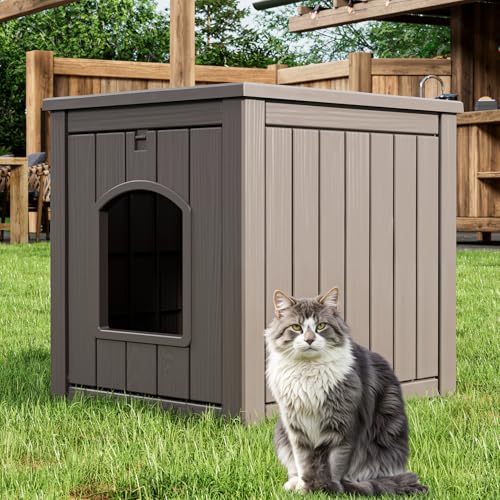
If you prefer not to build an outdoor den by hand, commercial outdoor cat shelters provide reliable winter shelter. Look for houses built with tough, weather-resistant materials like thick resin plastics, waterproof coated fabrics, or treated wood. These rigid materials block freezing drafts, stop driving rain, and hold up under heavy snow without collapsing.
Check the structural design and insulation before selecting a model. The best winter shelters feature insulated sandwich walls, raised legs that lift the base above icy ground, and a waterproof roof that sheds melting snow. Look for a unit with a removable roof or zippered top so you can easily clean out old bedding and pack fresh straw inside. Make sure the entrance includes an awning or plastic door flap that keeps cold winds outside while letting cats enter easily.

- BWP Score-
BWP Score is a ranking system developed by Bestwinterproducts.com. BWP score has no relationship or impact from any manufacturers or sales agent websites. Learn more
- BrandRest-Eazzzy
- BWP Score-
BWP Score is a ranking system developed by Bestwinterproducts.com. BWP score has no relationship or impact from any manufacturers or sales agent websites. Learn more
- BrandLHBcraft

- BWP Score-
BWP Score is a ranking system developed by Bestwinterproducts.com. BWP score has no relationship or impact from any manufacturers or sales agent websites. Learn more
- BrandDoubleFill

- BWP Score-
BWP Score is a ranking system developed by Bestwinterproducts.com. BWP score has no relationship or impact from any manufacturers or sales agent websites. Learn more
- BrandN/A

- BWP Score-
BWP Score is a ranking system developed by Bestwinterproducts.com. BWP score has no relationship or impact from any manufacturers or sales agent websites. Learn more
- BrandN/A

- BWP Score-
BWP Score is a ranking system developed by Bestwinterproducts.com. BWP score has no relationship or impact from any manufacturers or sales agent websites. Learn more
- BrandN/A

- BWP Score-
BWP Score is a ranking system developed by Bestwinterproducts.com. BWP score has no relationship or impact from any manufacturers or sales agent websites. Learn more
- BrandN/A
Last update on 2026-10-02 / Affiliate links / Images, Product Titles, and Product Highlights from Amazon Product Advertising API
FAQs
How cold is too cold for an outdoor cat to survive?
Most healthy outdoor cats can handle temperatures down to 32°F if they have dry, windproof shelter. When temperatures drop below 20°F, the danger of frostbite and hypothermia rises dramatically. Young kittens, senior cats, and sick felines cannot manage these temperatures and need warm indoor spaces.
Is it safe to put a heat lamp or space heater in an outdoor cat shelter?
Never place clamp-style heat lamps or space heaters inside an outdoor cat shelter. These heaters create severe fire risks when placed near dry straw bedding, wooden walls, or active animals. Use safe alternatives instead, such as outdoor-rated pet heating pads with chew-proof cords or self-warming thermal pet mats.
What should you do if you find an outdoor cat stiff from the cold?
Wrap the cat gently in a dry towel and bring it indoors right away. Rewarm cold skin slowly with room-temperature air or lukewarm water, avoiding hot water, heating pads, or rough rubbing, which can damage frozen tissue and trigger shock. Contact a veterinarian immediately for emergency treatment.
How often should you replace the straw in an outdoor cat shelter?
Check the straw inside the shelter every week or two during winter. If cats track in snow or if rain blows through the doorway, remove the damp straw right away and add a dry batch. Even in dry weather, replacing the straw once a month keeps the bedding fresh, clean, and warm.


Best Warm Winter Scarves 2026 For Cozy Comfort

Best Green Ski Goggles 2026 For Clear Vision On Slopes

12 Best Corner Electric Fireplace 2026: My Ultimate Guide To Pick One

Best Battery Powered Snow Blower 2026 For Effortless Snow Clearing

Best Ski Goggles Under 30 Inches For Crisp Vision And Comfort

Best Cooling Scarf 2026 For Instant Relief And Comfort

Fake Snow for Grass: Create a Realistic Winter Lawn Display

Dimplex Prism Wall Mount Fireplace: Sleek Heat With Modern Flame Style





