
How Does a Portable Infrared Heater Work?

It warms people instead of empty air. Think of stepping into bright afternoon sunshine. A portable infrared heater creates invisible heat waves that warm you directly the moment they touch your skin, clothes, and nearby furniture. Instead of slowly cooking the floating room air, this direct approach delivers gentle, steady comfort right where you sit.
How well it works in your space depends on a few practical details. Some units use glowing quartz glass tubes for pure, silent heat, while hybrid models include a quiet fan to nudge warm air across the floor. Drafty rooms also change the experience, though direct rays easily cut through chilly breezes that would blow regular heated air away. Here is how these heaters create their warmth and how to choose the right style for your home.
The Short Version
- Portable infrared heaters emit invisible heat waves that warm your body, clothing, and nearby furniture directly, rather than heating the floating room air first.
- You feel noticeable warmth across your skin within seconds of switching the unit on, just like stepping from a chilly shadow into bright sunlight.
- Because these waves travel directly to solid objects, open drafts, breezy doorways, and tall ceilings will not blow your warmth away.
- Many portable models combine a glass heat tube that glows with an internal fan to gently spread warmth while keeping the outside cabinet cool to the touch.
How Infrared Heat Warms: The Sunlight Sensation
To understand an infrared portable heater, think about how you feel on a brisk fall morning. If you stand in the shade behind a building, the morning air feels chilly. Step out into direct sunlight, and your face and dark coat immediately feel warm, even though the outdoor air temperature has not changed at all. That instant warmth comes from solar thermal rays traveling through space and sinking directly into your body.
An infrared portable heater recreates that exact experience inside your home. Instead of using electricity to churn out volumes of hot air, it sends out infrared radiation, which simply means invisible heat waves of light. You cannot see these waves with your eyes, but your skin absorbs them immediately. As these waves travel outward from the heater, they pass straight through the surrounding air without warming the empty space between you and the unit.
Air molecules are spread thin and do not easily trap light energy. Solid objects, on the other hand, are dense. When the heat waves strike your sweater, your slippers, a wooden tabletop, or a pet lying on a rug, those objects absorb the energy and become warm. Those warm objects then slowly release gentle warmth back into the immediate area, helping the surrounding space feel cozier over time.
This direct approach makes a big difference if you spend time in spaces that never seem to stay warm. If you are trying to heat an open basement or searching for a practical heater for an enclosed porch, standard space heaters struggle because breezy drafts sweep hot air away before you can feel it. Direct heat waves travel through drafts without losing their energy, delivering steady warmth straight to your chair.
Inside the Cabinet: What Actually Produces the Heat
When you look at a portable infrared heater, it usually looks like a compact box, a wooden end table on wheels, or a sleek metal tower. Inside that protective cabinet sits a simple group of parts working together to generate and steer warmth toward you.
The core of the unit is the heating element. Most portable units use either quartz tubes, which are glass heat tubes that glow soft orange when energized, or carbon fiber lamps. Inside each glass tube runs a tightly coiled metal wire. When you plug the heater in and turn it on, electrical current runs through the wire. The wire meets strong electrical resistance, heats up rapidly, and causes the glass tube to emit invisible heat waves along with a mild, comforting orange glow.
Right behind these glowing tubes sits a reflector, which is a shiny metal plate that bounces heat forward. Without a reflector, half of the heat waves would shoot backward into the rear wall of the heater cabinet. The polished reflector acts just like the curved mirror inside a flashlight, catching the waves and angling them outward into the room where you are sitting.
Surrounding all of this is the exterior cabinet. Manufacturers build the outer case from molded plastic, powder-coated metal, or finished wood. A durable front metal grill protects people and pets from touching the glowing glass tubes. Quality cabinets are designed with internal air pockets and heat barriers so the outside surfaces stay relatively cool, allowing you to reposition the heater using built-in handles or caster wheels without burning your fingers.
Infrared Versus Regular Space Heaters: Beams Versus Hot Air
Most traditional portable heaters rely on convection, which means heating the floating room air. A common coil heater or silent oil radiator warms the air directly touching its metal surface. Because warm air is lighter than cold air, that pocket of heated air floats up toward the ceiling. Cold air drops down to the floor, gets sucked into the heater, warms up, and rises again. Over 30 to 60 minutes, this circular airflow eventually warms the entire room from the ceiling down.
Convection works well in tightly sealed, well-insulated rooms with low ceilings. But it has real drawbacks in daily life. You have to wait a long time before your feet feel warm. If you open a door to walk to the kitchen, a rush of cold air sweeps across the floor and restarts the process. If you have tall ceilings, you pay to heat unused space near the roof while your couch remains freezing.
An infrared heater completely flips this equation. Instead of waiting for the heater to cook hundreds of cubic feet of air, you point the front grill toward your desk, armchair, or bed. Within 10 to 15 seconds, your skin and clothes absorb the direct rays. You feel comfortable almost immediately, even if the air on the opposite side of the room is still 62 degrees Fahrenheit.
This difference shows up in your energy usage. In standard American homes, portable electric heaters draw up to 1,500 watts of power on their highest setting. While 1,500 watts of electricity produces the same total amount of heat regardless of the heater design, an infrared heater focuses that thermal energy right where you sit. You do not have to run the heater for two hours just to take the chill off your hands and feet while working at a desk.
Radiant Heaters Versus Fan Hybrids: Why Some Blow Air
As you shop for an infrared heater, you will notice two main styles: pure radiant models that sit completely silent, and hybrid models that hum softly because they have an internal fan. Understanding why that fan exists helps you pick the right design for your daily habits.
A pure radiant heater has no moving mechanical parts. It houses glowing glass or carbon tubes and a reflector plate. When turned on, it is completely silent. These units are popular for quiet bedrooms, late-night reading nooks, or home offices where microphone noise is a concern. The limitation is that they only warm what sits directly in front of them. The second you step around a corner or out of the beam, the direct warmth disappears.
Hybrid heaters solve this issue by pairing infrared glass tubes with a ceramic heating block, which is a small ceramic heating element that warms up in seconds. An internal squirrel-cage fan pulls cool room air in through the back filter, blows it across the hot ceramic block and around the quartz tubes, and pushes warm air across the room through the front louvers.
This hybrid setup gives you the best of both worlds. You get the immediate, sun-like warmth hitting your body the moment you turn it on, while the fan gently circulates air to raise the ambient temperature of the entire 150-square-foot room. Hybrid units also allow the heater to use a digital temperature dial that clicks on and off to hold your set warmth, cycling the elements to save power once the room air reaches your target comfort level.
Daily Safe Use: Clearances, Outlets, and Built-In Protections
Portable infrared heaters provide clean, fume-free warmth, but like any appliance that draws heavy electrical power, they require common-sense safety habits to prevent fire hazards or tripped breakers.
The most important rule in any room is maintaining the standard 3-foot safety buffer. Keep all sides of the heater, especially the front grill where the heat waves project, at least 3 feet (36 inches) away from flammable items. This includes bedding, throw blankets, curtains, upholstered chairs, cardboard boxes, and pet beds. The heat rays are powerful enough to dry out and ignite fabrics over extended exposure if placed too close.
Follow these safe setup and operating steps every time you use the unit:
- Place the heater on a flat, level, hard surface such as hardwood, tile, or a short-pile rug. Avoid setting portable heaters on soft, deep shag carpet where the unit could wobble or sink.
- Plug the power cord directly into a dedicated 120-volt wall outlet. A 1,500-watt heater draws roughly 12.5 amps, which occupies most of the capacity on a standard 15-amp household circuit. Never plug a space heater into an extension cord, power strip, or surge protector, as these accessories can overheat, melt, and trigger an electrical fire.
- Look for a recognized safety certification mark, such as UL, ETL, or CSA, on the manufacturer label on the back or bottom of the case. These marks confirm that the design meets standard electrical fire safety benchmarks.
- Verify that the built-in tip-over safety switch that cuts power instantly if the unit is knocked over or tilted works properly by setting the heater upright on the floor before turning it on.
- Ensure the automatic overheat sensor that shuts the unit off if internal parts get dangerously hot has clear airflow by keeping the back intake vent free of dust bunnies and pet fur.
- When you are finished using the heater, turn the power switch off first, allow the internal components to cool down, and unplug the cord from the wall if you plan to leave the house or go to sleep.
If you ever touch the wall outlet cover and find it feels hot, or if the cord prongs look discolored, immediately turn the heater off and unplug it. Stop using that outlet and contact a licensed electrician to inspect the receptacle for loose internal wiring.
Choosing the Right Type of Infrared Heater for Your Space
Finding the right portable infrared heater comes down to the layout of your room, your noise tolerance, and how drafty your environment is. Matching the heater style to your living space ensures you stay comfortable without wasting electricity.
For standard living rooms, home offices, and master bedrooms, hybrid cabinet models are usually the most convenient option. These units typically feature smooth caster wheels, making it easy to roll 15 to 18 pounds of warmth from your desk during the day to your bedside at night. Look for models with digital controls, remote operation, and an adjustable thermostat so the unit can maintain a steady temperature automatically without your constant attention.
If you need heat for an uninsulated workshop, shed, or garage where open concrete draws away warmth, look toward rugged metal utility heaters. Installing an electric heater for a garage with durable steel casing and targeted radiant elements allows you to work at your workbench in comfort without trying to heat the entire cold building.
For open patios, decks, or partially open outdoor rooms, slim carbon-element heaters with high weather ratings provide direct, wind-resistant warmth. Before buying any unit, check the total wattage options, confirm that your chosen room has a dedicated wall outlet nearby, and verify that the physical dimensions fit comfortably while preserving your 3-foot clearance buffer.

- BWP Score8.2
BWP Score is a ranking system developed by Bestwinterproducts.com. BWP score has no relationship or impact from any manufacturers or sales agent websites. Learn more
- BrandDR. INFRARED HEATER

- BWP Score8.5
BWP Score is a ranking system developed by Bestwinterproducts.com. BWP score has no relationship or impact from any manufacturers or sales agent websites. Learn more
- BrandDR. INFRARED HEATER
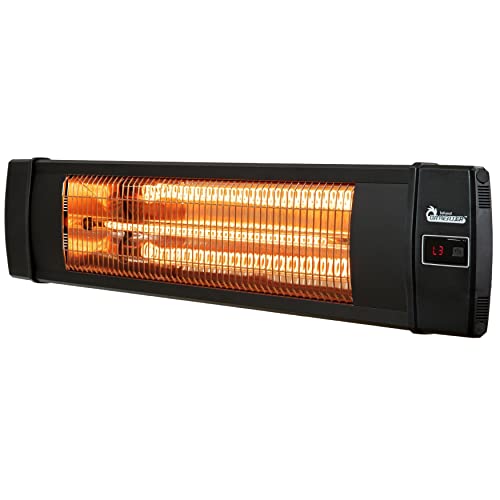
- BWP Score8.0
BWP Score is a ranking system developed by Bestwinterproducts.com. BWP score has no relationship or impact from any manufacturers or sales agent websites. Learn more
- BrandDR. INFRARED HEATER
Last update on 2026-11-01 / Affiliate links / Images, Product Titles, and Product Highlights from Amazon Product Advertising API
FAQs
Does an infrared heater warm the air or just my body?
An infrared heater primarily warms your body, clothing, and surrounding solid objects first. However, as those objects absorb the invisible heat waves, they gradually radiate gentle warmth back into the air. If the heater includes an internal blower fan, it will actively circulate warm air to raise the general room temperature as well.
Is infrared heat safe for people and pets to sit near?
Infrared heat is completely safe for household use because it emits thermal light waves without producing any harmful ultraviolet rays. Many pets naturally gravitate toward the warm glow on cold days. Just make sure dogs and cats stay at least 3 feet away from the front grill so their fur does not overheat, and ensure the unit sits on a level floor so it cannot be knocked over.
Does the room stay warm once I turn the heater off?
The direct sun-like sensation stops the moment you switch the heater off. However, the wooden furniture, walls, and flooring that absorbed the heat waves will slowly release their stored warmth over the next 20 to 30 minutes. In a well-insulated room, this residual heat helps keep the chill away for a short while after shutdown.
How close can furniture or bedding sit to the front grill?
You must keep all furniture, drapes, bedding, pet beds, and loose papers at least 3 feet (36 inches) away from the front grill of the heater. Infrared heat waves transfer thermal energy directly into surfaces, and placing flammable items too close can cause materials to scorch, melt, or catch fire over time.
Related guides: how does infrared technology work in a portable heater.


Top 12 best white electric fireplace 2026

Best Clear Ski Goggles Men 2026 For Sharp Vision On Slopes

Top Best Cordless Electric Snowblower 2026 - (Latest)

Best Warm Winter Scarves 2026 For Cozy Comfort

Best Green Ski Goggles 2026 For Clear Vision On Slopes

12 Best Corner Electric Fireplace 2026: My Ultimate Guide To Pick One

Best Battery Powered Snow Blower 2026 For Effortless Snow Clearing

Best Ski Goggles Under 30 Inches For Crisp Vision And Comfort





