
How Does Infrared Technology Work in a Portable Heater?

There is nothing complicated or dangerous behind the high-tech name. An infrared heater works by sending out invisible heat rays that warm skin and clothes directly, much like stepping into a patch of sunlight on a crisp morning. Instead of spending energy heating all the empty air in the room first, it creates direct warmth on contact with whatever sits in front of it.
How well this warmth works in daily use depends on where the unit sits. These heat rays travel in straight lines, so a coffee table or desk can block the comfort completely. Distance matters just as much, because the cozy feeling fades as someone steps farther away from the glowing element. Some portable designs also add a small fan to push gentle air into the surrounding space. Understanding these mechanics makes it easy to see if this style of heat fits your chilly room.
How Infrared Rays Warm You Like Direct Sunlight
Think about walking outside on a clear, brisk October morning. The air might feel cold against your face, but as soon as you step out of the shadow of a building and into direct sunshine, your skin and clothes feel instantly warm. If a cloud drifts across the sky, that warmth vanishes in a split second, even though the air temperature around you did not change at all.
That exact physical effect is how infrared technology works inside a portable heater. Instead of spending electricity trying to heat up all the cold air in a room, an infrared heater releases invisible heat rays. In technical manuals, this process is called infrared radiation, but it is simply a safe, invisible form of light energy that warms you directly.
These light waves travel silently through the room without interacting much with the air molecules. The energy moves forward in a straight line until it strikes a solid surface. When those waves run into your body, a thick blanket, a wooden table, or the living room sofa, the molecules inside those objects absorb the energy. That absorption causes the molecules to vibrate faster, which produces real, immediate warmth.
Because of how this energy moves, line of sight (a clear, unblocked path to the heater) is essential. If you sit directly in front of the heater, you feel toasty within seconds of turning the power dial. But if you slide a solid coffee table or an ottoman between yourself and the unit, that furniture absorbs the rays instead, leaving your legs shivering in the cold shadow.
Inside the Cabinet: Quartz Tubes, Ceramic Elements, and Airflow
To see how a portable heater creates this radiant warmth, you only need to look at what happens when you plug the cord into the wall. In standard US homes, a portable space heater draws up to 1,500 watts of power, which pulls roughly 12.5 amps along a standard 120-volt household circuit.
Once electricity enters the machine, it flows directly into a specialized heating core. In most portable infrared units, this core consists of either a quartz tube (a glass rod that throws radiant heat with a coiled metal filament sealed inside) or a ceramic heating element that warms up in seconds. Both materials offer high resistance to electric current. As electricity forces its way through the dense material, the filament or ceramic plate reaches high temperatures, glowing with a soft red or orange hue.
That visible glow is only a small part of the output. The real heating power comes from the invisible radiant waves pouring off the superheated elements. To keep all that energy from soaking into the heater's own internal frame, engineers mount a curved reflector dish or a polished metal panel directly behind the heating rods. This shiny metal mirror acts just like a flashlight reflector, bouncing the radiant waves forward and throwing a wide beam of heat out into your living space.
Because pulling 1,500 watts uses most of the capacity on a standard 15-amp household circuit, proper electrical habits are critical. Always plug your portable heater directly into a dedicated wall outlet. Never plug it into an extension cord, a power strip, or a surge protector. Those auxiliary cords often feature thinner internal wiring that can easily overheat, melt its plastic casing, and cause an electrical fire before your home breaker even trips.
Infrared Versus Convection: Why the Warmth Feels Completely Different
Understanding why an infrared heater feels so unique comes down to comparing it with convection (circulating warm air). Most traditional space heaters, such as compact ceramic fan cubes, baseboard units, or oil-filled radiators, rely strictly on convection.
A convection heater works like a warm-air pump. It pulls cold air off the floor, passes it over an internal heating coil, and pushes the warmed air back out into the room. Because warm air naturally expands and rises, that heated air drifts straight to the ceiling. In a home with high ceilings, an ordinary fan heater can run for hours, filling the top four feet of the room with hot air while your feet down on the rug stay icy cold.
Convection heat also struggles whenever air is moving. If you have drafty window sills, older exterior doors, or an uninsulated living space, every bit of heated air gets sucked outside or diluted by incoming cold breezes. This is why standard space heaters fail in drafty environments, where an infrared model or a specialized heater for an enclosed porch is needed to keep you comfortable. Because infrared waves travel as light rather than hot air, cold drafts cannot blow the heat away. The warmth passes straight through the breezy air and lands directly on your sweater.
The trade-off comes down to room coverage. A pure infrared heater does not fill the entire volume of a room with ambient warmth quickly. Solid objects in the room will eventually soak up the radiant rays and slowly release that warmth back into the air, but that process takes hours. If you step five feet to the left and out of the heater's beam, the air around you will feel just as cold as it did before you turned the machine on. Expecting a small radiant box to warm a whole drafty room like a central furnace will only lead to disappointment and high utility bills.
Safe Placement and Best Locations for Radiant Warmth
Because infrared heat works best across short distances with an open line of sight, it solves very specific home heating problems. It is the ideal tool for personal spot heating where warming an entire building would be an expensive waste of electricity.
For example, if you spend your weekends working on projects in an unheated workshop, an infrared setup or an electric heater for a garage with a thermostat lets you aim heat directly at your workbench. You stay comfortably warm while the open rafters and distant corners of the garage remain cold. The same logic applies to a home office desk: pointing a low-wattage radiant heater at your chair keeps you cozy all day without forcing your central heating system to bake the rest of the empty house.
To get the best results while keeping your household completely safe, follow this practical checklist for setup and daily operation:
- Clear the path: Ensure there is a completely unblocked path between the front grille and your body, removing any laundry baskets, footstools, or low tables that block the radiant beam.
- Find the distance sweet spot: Position the unit between 3 and 6 feet away from where you are sitting, since radiant heat intensity drops off rapidly the further away you move.
- Maintain the 3-foot safety buffer: Keep all space heaters at least 3 feet (36 inches) away from bedding, drapes, upholstered furniture, clothing, papers, and pets.
- Set the unit on a flat, level floor: Never place a portable heater on a soft rug, a bed, or a tabletop where it could tip over or have its bottom air intake restricted.
- Check the wall outlet by touch: After the unit has run for thirty minutes, touch the wall plug; if the outlet plate or cord feels hot to the touch, turn the unit off, unplug it, and consult a licensed electrician to inspect the receptacle.
Safety also brings up the question of infrared radiation itself. Despite the scary-sounding name, infrared radiation is non-ionizing light. It sits at the exact same safe frequency as the gentle heat that warms people and furniture directly like sunlight, or the glow of red embers in a wood stove. It contains no hazardous ultraviolet rays, produces no carbon monoxide, and causes no cellular damage. Built-in safeguards make modern units even safer, including a tip-over safety switch that cuts power instantly if the unit is knocked over or tilted, and an automatic overheat sensor that shuts the unit off if internal parts get dangerously hot.
Choosing the Right Design to Balance Direct Heat and Room Air
If you love the idea of instant radiant heat on your skin but still want the surrounding room air to feel comfortable, you do not have to settle for a basic single-purpose unit. The most practical solution for everyday living spaces is a hybrid heating design.
A hybrid heater combines the best qualities of radiant technology and warm-air circulation. Inside these cabinets, infrared quartz tubes or ceramic plates generate immediate warmth that targets your body right away. At the same time, an internal fan that pushes warm air across the room gently draws cool air past those same hot elements and circulates that warmed air evenly into the surrounding room.
When looking for a hybrid heater to warm your space, check the manufacturer label for key design elements rather than relying on vague marketing promises. Look for models that pair a ceramic heating element that warms up in seconds with a quiet, high-volume blower fan. Verify that the unit carries recognized US safety certification marks, such as UL, ETL, or CSA, on the back identification plate. Finally, check for multiple heat settings, such as a low 750-watt power level for quiet personal use and a high 1,500-watt power level for warming a closed 150-square-foot room.
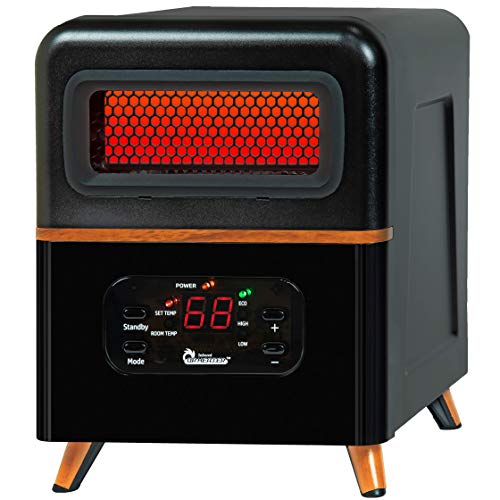
- BWP Score7.9
BWP Score is a ranking system developed by Bestwinterproducts.com. BWP score has no relationship or impact from any manufacturers or sales agent websites. Learn more
- BrandDR. INFRARED HEATER
Last update on 2026-10-12 / Affiliate links / Images, Product Titles, and Product Highlights from Amazon Product Advertising API
FAQs
Does an infrared heater warm the air or just solid objects?
An infrared heater primarily warms solid objects and people rather than the air itself. The invisible light waves travel straight through the air until they strike a dense surface, such as your skin, clothing, or furniture. Over time, those warm objects release gentle heat back into the surrounding environment, but the heater does not blow large volumes of hot air like a traditional furnace.
Do portable infrared heaters use less electricity than other space heaters?
Almost all electric space heaters in the United States draw a maximum of 1,500 watts on their highest setting, meaning they consume the exact same amount of electricity per hour. However, an infrared heater often feels more economical because it delivers immediate warmth directly to your body. You can turn the unit on only while sitting in its direct beam, allowing you to turn down your central thermostat and save money on whole-house heating.
Can you leave an infrared space heater running unattended in an empty room?
You should never leave a portable space heater running unattended in an empty room or while you are asleep. Because infrared heaters warm objects directly, running one in an empty space wastes electricity warming empty furniture. More importantly, leaving any high-wattage heating appliance running without supervision creates an unnecessary fire risk if an object falls against the front grille or an electrical fault occurs.


Best Warm Winter Scarves 2026 For Cozy Comfort

Best Green Ski Goggles 2026 For Clear Vision On Slopes

12 Best Corner Electric Fireplace 2026: My Ultimate Guide To Pick One

Best Battery Powered Snow Blower 2026 For Effortless Snow Clearing

Best Ski Goggles Under 30 Inches For Crisp Vision And Comfort

Best Cooling Scarf 2026 For Instant Relief And Comfort

Fake Snow for Grass: Create a Realistic Winter Lawn Display

Dimplex Prism Wall Mount Fireplace: Sleek Heat With Modern Flame Style





