
How Long Does a Rinnai Tankless Water Heater Last?

Most units run for 15 to 20 years. That is roughly double the lifespan of a traditional storage tank. Because water warms up on demand inside a compact metal chamber rather than sitting in a giant drum, there is no large tank waiting to rust through and leak. With basic care, these systems quietly deliver hot water across two decades.
Reaching that 20-year milestone depends on how you treat the machine. Hard water poses the greatest threat. Over time, dissolved minerals leave behind a chalky crust that clings to hot metal, making the heater work much harder until you flush it clean. Correct installation, steady gas flow, and clear venting also keep internal parts from straining. Here is what helps protect your setup and prevent an early breakdown.
The Short Version
- A Rinnai tankless water heater typically lasts 15 to 20 years, about double the lifespan of an ordinary tank heater.
- Hard water scale is the primary threat, as mineral crust coats internal metal and traps heat until the metal cracks.
- Flushing the unit once a year with distilled white vinegar removes mineral crust and keeps internal parts working properly.
- Factory warranties cover the main heating chamber for up to 15 years, but damage from neglected scale is excluded.
Typical Lifespan: How Rinnai Compares to Tank Water Heaters
Traditional water heaters store 40 to 50 gallons of standing water constantly. That standing water slowly corrodes the inner steel tank lining. Even with a sacrificial anode rod inside, rust eventually wins. Most storage tanks fail between 8 and 12 years when rust eats through the bottom weld. Once a tank leaks, it cannot be patched, and the entire unit must be replaced.
A Rinnai tankless water heater works differently because it does not store water. Cold water flows through copper or stainless steel pipes only when you turn on a hot water tap. Because water never sits stagnant inside a large steel vessel, bottom-tank rust never happens. With basic routine care, a Rinnai unit easily runs for 15 to 20 years.
Serviceability also extends tankless lifespan. Storage tanks are sealed vessels that must be thrown out once the tank body rusts. A Rinnai heater uses modular components. If a water flow sensor, control board, or fan motor fails after several years, a technician can replace just that single part. This keeps the main appliance running for two full decades.
Where the heater is installed also matters. Indoor units in conditioned spaces face less moisture and fewer temperature swings than unheated setups. If your heater sits in a cold garage where winter drafts threaten bare plumbing, running an electric heater for garage with thermostat can maintain safe ambient warmth and protect nearby supply lines from sudden freezing weather.
The Primary Threat: How Hard Water and Mineral Scale Shorten Lifespan
While Rinnai heaters avoid tank rust, they face an entirely different threat: hard water. In most areas, tap water contains dissolved minerals such as calcium and magnesium. When the water is cold, these minerals remain invisible and harmlessly suspended.
Trouble begins when hot water is demanded. The heater fires its gas burners instantly to warm the water. This sudden heat causes dissolved minerals to separate from the water and stick to hot metal surfaces. Over months of use, these minerals harden into scale (mineral crust left behind by hard water).
Scale collects inside the heat exchanger (the metal chamber inside that warms the water). This mineral crust acts like an unwanted insulating blanket. Copper and stainless steel are designed to transfer burner heat directly into moving water in seconds. Mineral crust blocks that transfer, trapping intense heat directly inside the chamber walls.
Trapped heat causes the metal chamber to overheat. The burner must fire longer to heat your water, wasting energy. More critically, trapped heat creates thermal stress. The metal expands unevenly, warps, and develops microscopic cracks. Once the chamber cracks, water leaks into the burner assembly, causing permanent failure. Without routine care, heavy mineral scale can destroy a Rinnai unit in 5 to 7 years.
How to Flush Your Rinnai: Step-by-Step Descaling Guide
To reach the 20-year mark, you need an annual flush (pumping cleaning liquid through the unit to clear mineral crust). Flushing dissolves chalky mineral buildup before it hardens into thick rock. You can do this job yourself in about an hour with basic supplies.
You need a five-gallon bucket, a small submersible utility pump, two garden hoses, and four gallons of food-grade distilled white vinegar. Never use harsh chemical drain cleaners or pool acids, which can corrode copper tubing and dissolve rubber seals.
Follow these steps to flush your heater safely:
- Disconnect power and turn off gas: Unplug the electrical cord or switch off the dedicated circuit breaker. Turn the manual gas shutoff lever beside the heater one quarter turn so it sits perpendicular to the pipe.
- Close the water valves: Locate the blue cold water and red hot water isolation valves under the heater. Turn both main handles so they sit crosswise to the pipe, blocking fresh water from entering the unit.
- Connect the hoses: Remove the brass caps from the purge ports on the side of each valve. Screw one garden hose onto the cold purge port and attach the other end to your submersible pump in the bucket. Screw the second hose onto the hot purge port and direct its loose end into the bucket.
- Pump the vinegar: Pour four gallons of undiluted white vinegar into the bucket so the pump is submerged. Open both small purge port valves. Plug in the pump so it circulates vinegar through the heat exchanger and back into the bucket. Let the pump run for 45 to 60 minutes. The vinegar will turn cloudy or bluish as it breaks down mineral crust.
- Clean the filter screen: Turn off the pump. Place a rag under the cold inlet pipe and locate the small filter plug. Unscrew the plug, remove the wire mesh basket, rinse away trapped sediment in a sink, and screw it back in hand-tight.
- Rinse and restart: Dump the spent vinegar. Close the cold purge port, but leave the hot hose in the bucket. Open the main cold valve slightly so fresh water flushes out leftover vinegar. Once the water runs clear, close the hot purge valve, remove the hoses, tighten the brass caps, reopen both main isolation valves, turn on the gas, and plug in the power cord.
Understanding Rinnai Factory Warranty Coverage
Rinnai provides dependable factory warranties, but coverage depends on proper care and installation. Knowing these terms helps you protect your investment if a component fails early.
Standard residential warranties cover three main areas:
- Heat exchanger: Covered for 12 to 15 years against factory defects or metal rupture under normal residential use.
- Internal parts: Covered for 5 years, protecting the control board, sensors, water valves, and ignition assembly.
- Labor support: Covered for 1 year from installation, though Rinnai often extends this to 5 years if you register the product online within 90 days.
Watch out for conditions that can void your warranty:
- Scale damage is excluded: Warranties do not cover damage caused by neglected mineral scale. If an inspection shows that mineral crust caused the metal chamber to overheat and crack, the claim will be denied.
- Professional installation requirements: Heaters must be installed according to local plumbing and gas codes. Improper gas supply lines, incorrect venting, or poor electrical wiring can void coverage.
- Water hardness limits: Rinnai lists maximum mineral limits in the manual. If your water exceeds these levels, installing an upstream water softener or filter is required to keep warranty coverage valid.
Warning Signs Your Rinnai Needs Service or Replacement
Tankless heaters rarely fail without giving early warning signs. Paying attention to everyday performance clues helps you fix small problems before they turn into complete system breakdowns.
Inconsistent shower temperatures often appear first. If water starts hot, turns cool for half a minute, and then warms back up, scale may be coating the temperature sensors. It can also mean the gas control valve or flame sensor is struggling to maintain steady heat.
Unusual noises during heating cycles also signal trouble. A clean heater runs with a quiet gas hum and the gentle whir of the exhaust fan. If you hear popping, rumbling, or whistling noises like a boiling kettle, mineral scale is trapping pockets of boiling water against the metal chamber walls. This steam expansion strains internal solder joints.
Check the digital display for error codes. Rinnai heaters monitor operations and show two-digit fault codes when issues arise. For example, Code 11 indicates ignition failure, Code 10 points to a blocked exhaust vent, and Code LC warns that the heat exchanger is choked with scale and needs immediate descaling.
Finally, inspect the cabinet for water leaks. A leaking valve fitting can be tightened with a wrench. But if water drips directly from inside the sealed metal casing, the heat exchanger has likely cracked. If your heater is over 15 years old and suffers a cracked heat exchanger, buying a replacement unit is usually more economical than paying for costly repairs.
What to Look for When Choosing a Replacement Tankless Heater
When an existing water heater reaches the end of its useful lifespan, choosing the right replacement ensures reliable hot water for the next two decades. Start by sizing the unit to match your household flow rate, measured in gallons per minute. A lower flow rate model handles one or two fixtures at a time, while a higher capacity model easily supplies two hot showers, a washing machine, and a kitchen sink at once without losing water pressure.
Next, verify your fuel supply and installation location. Tankless heaters run on either natural gas or propane, and each model is configured for one specific fuel type. You must also choose between indoor and outdoor models. Indoor models vent exhaust gases through your roof or exterior wall, while outdoor models mount directly on an exterior wall and require zero interior venting pipes.
Finally, compare condensing and non-condensing designs. Condensing models capture extra heat from exhaust fumes, delivering higher fuel efficiency and venting through budget-friendly plastic pipes. Non-condensing options cost less initially but exhaust hotter air, requiring specialized metal venting pipes.
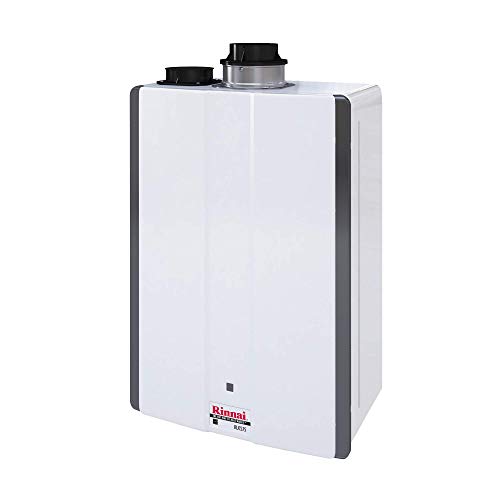
- BWP Score8.0
BWP Score is a ranking system developed by Bestwinterproducts.com. BWP score has no relationship or impact from any manufacturers or sales agent websites. Learn more
- BrandRinnai

- BWP Score9.6
BWP Score is a ranking system developed by Bestwinterproducts.com. BWP score has no relationship or impact from any manufacturers or sales agent websites. Learn more
- BrandRinnai

- BWP Score7.3
BWP Score is a ranking system developed by Bestwinterproducts.com. BWP score has no relationship or impact from any manufacturers or sales agent websites. Learn more
- BrandRinnai

- BWP Score9.6
BWP Score is a ranking system developed by Bestwinterproducts.com. BWP score has no relationship or impact from any manufacturers or sales agent websites. Learn more
- BrandRinnai

- BWP Score8.8
BWP Score is a ranking system developed by Bestwinterproducts.com. BWP score has no relationship or impact from any manufacturers or sales agent websites. Learn more
- BrandRinnai
- BWP Score8.5
BWP Score is a ranking system developed by Bestwinterproducts.com. BWP score has no relationship or impact from any manufacturers or sales agent websites. Learn more
- BrandRinnai
Last update on 2026-10-12 / Affiliate links / Images, Product Titles, and Product Highlights from Amazon Product Advertising API
FAQs
Can a Rinnai tankless water heater last 25 years?
Some Rinnai units reach 25 years under ideal conditions with soft water and regular maintenance. Reaching that lifespan requires flushing the system annually to keep the heating chamber free of mineral crust. In contrast, heaters running on hard, untreated well water rarely last past ten years without serious issues.
How often does a Rinnai tankless water heater need maintenance?
Most homes should flush their tankless heater once every twelve months to clear out mineral crust. If your home has hard water, descaling every six months offers better protection. Cleaning the small cold water inlet filter screen should also be done once a year during the regular flush.
Do I need a water softener to make my tankless heater last?
A water softener is not strictly required, but it helps your heater reach the 20-year mark in hard water regions. Softening systems remove calcium and magnesium before water reaches the heating chamber, preventing scale from forming. If you do not have a softener, sticking to a strict annual vinegar flushing routine is essential.
How do I know if my Rinnai should be repaired or replaced?
If your heater is under 12 years old and needs a simple part like an ignition sensor or water valve, repairing it makes financial sense. If the heater is over 15 years old and suffers a cracked heat exchanger or major circuit board failure, replacement is the better choice. A new unit provides fresh warranty coverage and reliable daily operation.


Best Warm Winter Scarves 2026 For Cozy Comfort

Best Green Ski Goggles 2026 For Clear Vision On Slopes

12 Best Corner Electric Fireplace 2026: My Ultimate Guide To Pick One

Best Battery Powered Snow Blower 2026 For Effortless Snow Clearing

Best Ski Goggles Under 30 Inches For Crisp Vision And Comfort

Best Cooling Scarf 2026 For Instant Relief And Comfort

Fake Snow for Grass: Create a Realistic Winter Lawn Display

Dimplex Prism Wall Mount Fireplace: Sleek Heat With Modern Flame Style





