
How Many BTUs Does a Tankless Water Heater Use?

A homeowner staring at the yellow rating sticker on an old basement tank often stops short when looking at replacement numbers. Most whole-home gas tankless models burn between 140,000 and 199,000 BTUs per hour to heat water on demand. Smaller units built for a single sink or half-bath use 100,000 to 120,000 BTUs. That sudden spike in heating power can make anyone wonder if their gas supply is up to the task.
The exact number of BTUs your home requires depends on how many taps run at once and how cold the incoming water is in midwinter. Warming freezing underground water for two morning showers demands far more heat than running a single kitchen faucet in July. Fuel type plays a part too, since propane delivers heat slightly differently than natural gas. Here is how to calculate what your household actually needs and confirm your pipes can handle the load.
Typical BTU Ranges by Household Size
A gas tankless water heater is rated by its maximum heating capacity, measured in British Thermal Units (BTU) per hour. A BTU is simply a way to measure heat power per hour. The higher the BTU rating, the more heat energy the burner can deliver to running water in a single moment.
Traditional water heaters store 40 or 50 gallons of water in a big metal cylinder, keeping that water warm around the clock with a small burner rated around 35,000 to 40,000 BTUs. A tankless unit does not store any hot water at all. Instead, it must grab freezing street water and instantly heat it to shower temperature in the five seconds it takes to travel through a copper coil. Because of that sudden, on-demand workload, tankless burners are significantly more powerful than tank burners.
For most single-family houses, whole-home gas tankless water heaters fall into three common size categories:
- Small homes and point-of-use setups (100,000 to 120,000 BTUs): These compact units handle one major fixture at a time, such as a single shower or a kitchen sink. They work well for small apartments, detached backyard suites, or warm southern regions where incoming water never gets truly cold.
- Average two-bathroom homes (140,000 to 160,000 BTUs): This is the standard sweet spot for a typical household. It produces enough heating power to run two showers at the same time without the water turning cool or the shower pressure dropping.
- Large homes with high demand (180,000 to 199,000 BTUs): These heavy-duty residential units can feed three showers at once, or run two showers while the washing machine and dishwasher fill up simultaneously.
You will notice that residential gas tankless heaters almost never exceed 199,000 BTUs. That cap is deliberate. In the United States, building codes classify any gas water heating appliance rated at 200,000 BTUs or higher as commercial equipment. Crossing that line triggers stricter installation permits, larger venting requirements, and specialized gas utility approvals. Staying right at 190,000 to 199,000 BTUs gives you the maximum possible heating muscle while keeping the installation classified under standard residential plumbing rules.
How Water Flow and Winter Temperatures Drive Heating Power
Choosing the right BTU rating is not just about counting the bathrooms in your house. It depends on two physical factors: your water flow rate and your required temperature rise.
Flow rate is measured in gallons per minute (GPM). This is the amount of water flowing through your pipes every 60 seconds. A standard modern showerhead flows at about 1.5 to 2.0 gallons per minute. A kitchen sink runs at roughly 1.5 gallons per minute, and a standard washing machine fills at 2.0 gallons per minute. If two people shower at the same time on a weekday morning, your water heater must supply at least 4.0 gallons per minute of hot water.
Temperature rise means the number of degrees the heater must add to cold street water to reach your desired faucet temperature. Most people prefer their bath and shower water around 105°F to 115°F. However, the water entering your house from municipal underground pipes changes drastically depending on where you live and what time of year it is.
In warm southern areas like Florida or southern Texas, groundwater in the dead of winter might stay around 65°F. To get a comfortable 110°F shower, the heater only needs to add 45°F of warmth. In northern states like Wisconsin, Ohio, or Maine, winter groundwater frequently plunges to 35°F or 40°F. In that colder climate, the heater must boost that ice-cold water by 70°F to 75°F just to deliver the same shower warmth.
This temperature gap completely changes how many BTUs your home requires. Heating 4.0 gallons per minute by 45°F requires roughly 100,000 to 120,000 BTUs of burner power. Heating that exact same 4.0 gallons per minute by 75°F requires between 170,000 and 190,000 BTUs. If you install a smaller 120,000 BTU unit in a cold climate, the heater will quickly reach its physical limit. When that happens, the unit automatically restricts water flow to prevent delivering cold water, causing your strong shower stream to slow down to a disappointing trickle.
Gas Pipe Sizing and Supply Checks
The single most common mistake homeowners make when switching to a tankless heater is assuming their existing gas pipe can handle the new appliance. Because a traditional tank heater only burns around 35,000 to 40,000 BTUs, it normally runs on a small half-inch gas pipe. When you replace that tank with a tankless model demanding 150,000 to 190,000 BTUs, you are asking for nearly four to five times more gas in the exact same second.
Think of fuel delivery like drinking liquid through a straw. You can sip water through a narrow coffee stirrer without much effort, but trying to pull a thick milkshake through that same tiny stirrer leaves you starved for air. Gas pipes work on the same principle of volume and friction. If a powerful tankless burner cannot draw enough fuel, it will suffer from flame failure, produce loud banging noises, or shut down entirely.
Pipe length is just as important as pipe diameter. As gas travels through a pipe, friction against the pipe walls reduces the pressure. A half-inch pipe might carry enough gas to supply a 150,000 BTU unit if the pipe is only 10 feet long. If that pipe has to run 40 or 50 feet from the gas meter to a basement utility closet, the pressure drops too low, requiring you to upgrade to a 3/4-inch or even a 1-inch pipe.
Gas Supply Checklist Before Buying
Walk through these five physical checks around your home before ordering a tankless water heater:
- Check your outdoor gas meter badge: Look at the stamped metal badge on the front of your gas meter. It lists a capacity rating, commonly marked as 250 CFH (cubic feet per hour). One cubic foot of natural gas equals roughly 1,000 BTUs. A 250 CFH meter delivers about 250,000 total BTUs to your home.
- Add up all existing gas appliances: Check the data plates on your central furnace (often 60,000 to 100,000 BTUs), your gas kitchen range (around 30,000 to 60,000 BTUs), and your gas clothes dryer (around 20,000 BTUs). If your furnace uses 80,000 BTUs and your new tankless heater wants 190,000 BTUs, their combined draw is 270,000 BTUs. That exceeds a standard 250 CFH meter, meaning your local gas utility must swap your meter for a larger model, which they often do for a small fee or even for free.
- Measure the supply pipe diameter: Look at the black iron pipe connected to your current water heater. If it measures half an inch across, check how far it travels back to the main manifold. Units rated above 160,000 BTUs usually need a 3/4-inch line unless the run is unusually short.
- Note the physical distance to the meter: A heater mounted on the inside of the wall directly opposite your gas meter is simple and inexpensive to plumb with a short 3/4-inch branch. A heater located on the opposite side of the house requires running a long, heavy pipe across the floor joists.
- Verify your fuel source: Natural gas from the city street flows at very low pressure, while liquid propane stored in an outdoor yard tank runs at slightly higher pressure through dedicated regulators. Make sure you select a heater built specifically for your fuel type. Fuel clearances and pipe configurations can be uniquely tight in prefabricated spaces, similar to the specialized requirements you encounter when planning a heater for a mobile home where vent pathways and fuel lines must match strict safety guidelines.
If you have any doubt about pipe sizing, hire a licensed plumber or gas fitter. A technician will hook up a manometer (a pressure measuring tool) to verify that your gas pressure stays rock solid while all your home appliances run at the same time.
Why High BTU Power Does Not Mean Huge Gas Bills
When homeowners hear that a tankless unit burns up to 190,000 BTUs per hour while their old tank only burned 40,000 BTUs, their immediate fear is that their monthly gas bill will jump dramatically. That worry makes sense on the surface, but utility bills depend on total gas consumed over time, not peak burner size.
A storage water heater suffers from continuous standby heat loss. After you heat 50 gallons of water to 120°F, that heat slowly bleeds off into the basement or garage air through the tank walls. Every couple of hours, the tank burner kicks on to reheat the water, even when you are asleep or away at work. Over a full day, an ordinary storage tank might run its 40,000 BTU burner for three to four hours just keeping water hot that nobody is using.
A tankless water heater operates strictly on demand. When you turn on a shower, the electronic spark ignition lights the burner instantly. When you shut the faucet off fifteen minutes later, the gas valve closes completely. If your household uses hot water for 45 minutes across an entire day, that 190,000 BTU burner only fires for 45 minutes. It uses zero gas for the other 23 hours and 15 minutes of the day.
Modern tankless models also capture fuel energy far more effectively thanks to condensing technology. A condensing system has a secondary heat exchanger (a metal coil that absorbs heat from exhaust gases before they leave the vent). Standard non-condensing heaters vent hot exhaust directly outside, wasting about 18 percent of the fuel energy. A condensing unit pulls that escaping heat back into the water, boosting efficiency to 93 percent or higher. Because less gas is wasted up the flue pipe, most households see their monthly gas consumption drop by 20 to 30 percent after switching from an old storage tank.
What to Look for When Choosing a Tankless Unit
Finding the right balance comes down to pairing your home's fixture count with your regional groundwater temperature. Start by determining the maximum number of hot water taps your family opens at the exact same moment during peak morning or evening hours. If you regularly run two showers while doing laundry, calculate your total flow requirement around 5.0 to 6.0 gallons per minute.
Next, look at the temperature rise capability. If you live in a cold northern climate, prioritize models with high maximum BTU ratings between 160,000 and 199,000 so the burner can overpower freezing winter inlet water without throttling your flow. In warmer southern climates, a unit rated around 120,000 to 140,000 BTUs easily delivers all the hot water a multi-bathroom home needs.
Pay close attention to venting style and material requirements. Non-condensing units produce extremely hot exhaust fumes that require specialized, expensive stainless steel venting through the roof. Condensing units cool the exhaust gases enough that you can safely vent them through inexpensive plastic PVC pipe straight out of a side wall. This side venting can save hundreds of dollars during installation and makes finding a suitable mounting location much simpler.
Finally, inspect the safety features listed on the manufacturer label. Look for official safety marks from recognized standards bodies like CSA or UL. A reliable unit should feature automatic overheat sensors that shut the fuel off if temperatures climb too high, freeze protection coils that warm the internal pipes during winter freezes, and flame-out detectors that shut off the gas valve instantly if the burner extinguishes.

- BWP Score8.9
BWP Score is a ranking system developed by Bestwinterproducts.com. BWP score has no relationship or impact from any manufacturers or sales agent websites. Learn more
- BrandRheem
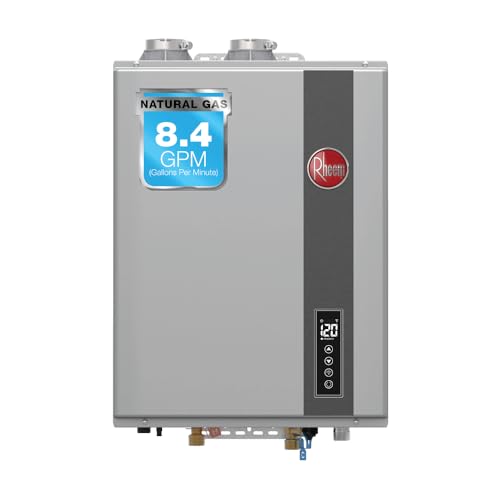
- BWP Score8.4
BWP Score is a ranking system developed by Bestwinterproducts.com. BWP score has no relationship or impact from any manufacturers or sales agent websites. Learn more
- BrandRheem

- BWP Score8.3
BWP Score is a ranking system developed by Bestwinterproducts.com. BWP score has no relationship or impact from any manufacturers or sales agent websites. Learn more
- Brandthermomate

- BWP Score8.2
BWP Score is a ranking system developed by Bestwinterproducts.com. BWP score has no relationship or impact from any manufacturers or sales agent websites. Learn more
- BrandRanein
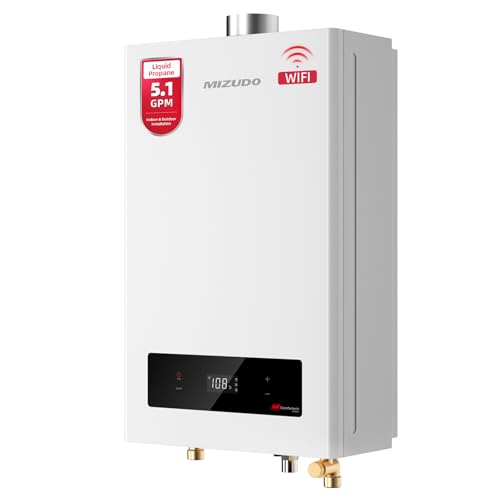
- BWP Score8.0
BWP Score is a ranking system developed by Bestwinterproducts.com. BWP score has no relationship or impact from any manufacturers or sales agent websites. Learn more
- BrandMIZUDO
- BWP Score7.8
BWP Score is a ranking system developed by Bestwinterproducts.com. BWP score has no relationship or impact from any manufacturers or sales agent websites. Learn more
- BrandRanein

- BWP Score7.4
BWP Score is a ranking system developed by Bestwinterproducts.com. BWP score has no relationship or impact from any manufacturers or sales agent websites. Learn more
- BrandBaococo
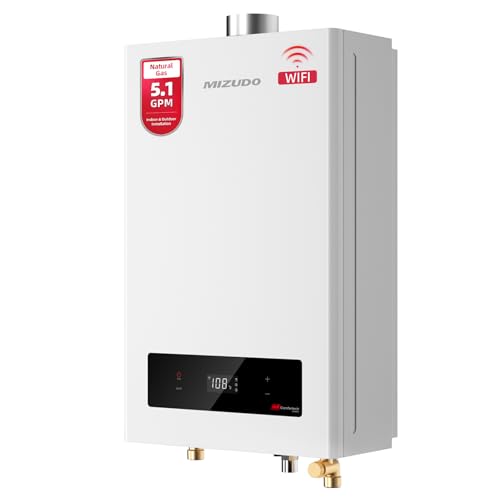
MIZUDO MIZUDO Natural Gas Tankless Water Heater Indoor&Outdoor Convertible Installation
View on Amazon- BWP Score7.2
BWP Score is a ranking system developed by Bestwinterproducts.com. BWP score has no relationship or impact from any manufacturers or sales agent websites. Learn more
- BrandMIZUDO
Last update on 2026-10-12 / Affiliate links / Images, Product Titles, and Product Highlights from Amazon Product Advertising API
FAQs
Can a tankless water heater run on an existing 1/2-inch gas pipe?
Some modern high-efficiency tankless models can run on a 1/2-inch gas pipe, but only if the total pipe run from the meter is short and your home maintains strong gas pressure. Most units rated above 150,000 BTUs or installations located more than 20 feet from the gas meter require upgrading to a 3/4-inch pipe. Always check the manufacturer pipe-sizing chart before mounting the unit.
What happens if a tankless water heater does not get enough gas?
If the gas supply is too small for the burner demand, the unit will struggle to heat the water and will frequently fluctuate between hot and cold. The burner may sputter, trip an internal flame sensor, or display an error code on the control screen. Running a gas appliance with insufficient fuel can also cause soot to build up inside the heat exchanger, leading to premature wear.
How do I calculate the exact BTU rating needed for my house?
Multiply the peak gallons per minute of water you plan to run at once by your required temperature rise, then multiply by 500 and divide by the unit efficiency rating. For example, running two showers at 4.0 gallons per minute needing a 60°F temperature boost requires roughly 145,000 to 160,000 BTUs. A licensed plumber can confirm your exact groundwater temperatures and verify your gas pressure before installation.


Best Warm Winter Scarves 2026 For Cozy Comfort

Best Green Ski Goggles 2026 For Clear Vision On Slopes

12 Best Corner Electric Fireplace 2026: My Ultimate Guide To Pick One

Best Battery Powered Snow Blower 2026 For Effortless Snow Clearing

Best Ski Goggles Under 30 Inches For Crisp Vision And Comfort

Best Cooling Scarf 2026 For Instant Relief And Comfort

Fake Snow for Grass: Create a Realistic Winter Lawn Display

Dimplex Prism Wall Mount Fireplace: Sleek Heat With Modern Flame Style





