
How Many Watts Does an Instant Hot Water Heater Use?

Cold water flows over chilled hands while someone waits minutes at a distant sink for the pipes to warm up. A small under-sink instant water heater generally needs between 1,500 and 6,000 watts, while a whole-house system draws 18,000 to 36,000 watts. Tiny plug-in units designed just for washing hands can get by on 750 to 1,500 watts.
The exact wattage you need depends on your water flow and where you live. Warming a gentle trickle for a bathroom faucet takes far less power than running a hot shower. Winter temperatures also matter, since heating ice-cold tap water in January demands significantly more electricity than warming mild summer water. Checking your household wiring first ensures you get reliable warmth without tripping a breaker.
Match Your Water Needs to the Right Wattage Range
Electric instant water heaters cover a massive range of electrical power. A small boiling-water dispenser under a kitchen sink might draw only 750 watts, while a whole-house tankless system can draw up to 36,000 watts. To know what you need, you have to understand the specific job the heater will perform and where it sits in your home.
Instant heaters generally fall into three clear wattage brackets based on their location and water volume:
- Sinktop dispensers (750 to 1,500 watts): These compact setups sit under the counter to provide near-boiling water (around 200 degrees Fahrenheit) through a dedicated small faucet. They pull about the same electrical power as a standard kitchen toaster and work well for brewing hot tea or quickly loosening stuck food from pans.
- Point-of-use sink heaters (3,000 to 6,000 watts): Installed right at a single sink (often called a point-of-use heater), these units warm water instantly for handwashing, shaving, or washing dishes. A 3,000-watt unit handles low-flow handwashing in warmer climates, while a 4,500-watt or 6,000-watt model can provide a steady 1.0 gallon per minute (GPM) of warm water even when cold tap water needs a significant temperature boost.
- Whole-house systems (18,000 to 36,000 watts): These large units heat water for multiple fixtures at once, such as two showers and a washing machine running together. Because they must instantly heat 3 to 6 gallons of water every minute, they require an enormous amount of power, often drawing more electricity than everything else in the house combined while running.
Two main factors decide where your heater lands within these wattage ranges: flow rate and groundwater temperature. Flow rate is measured in gallons per minute (GPM), which is simply how many gallons of water exit the faucet every sixty seconds. A bathroom faucet aerator might restrict flow to 0.5 or 1.0 GPM, while a standard showerhead flows at 1.5 to 2.0 GPM. The higher the flow rate, the more heat energy the unit must produce every second.
Groundwater temperature creates the second big hurdle. In southern states, water entering your home from municipal pipes or a well might sit at a mild 65 degrees Fahrenheit. In northern states during winter, that same ground pipe might deliver water at 40 degrees Fahrenheit. Heating 40-degree water up to a comfortable 105-degree handwashing temperature requires a 65-degree temperature rise. That huge jump demands far higher wattage than warming 65-degree southern water, which only needs a 40-degree rise.
Check Your Wall Outlets Before Assuming a Standard Plug Will Work
One of the most common mistakes people make is buying an instant water heater and expecting to plug it into any open wall outlet. In standard American homes, normal wall outlets run on 120 volts and connect to a 15-amp or 20-amp safety switch in your electrical panel, commonly known as a circuit breaker. Standard electrical safety codes limit a 15-amp, 120-volt circuit to 1,800 watts total, and no continuous heating appliance should draw more than 80 percent of that limit (1,440 watts).
Because of these electrical limits, pure tankless heaters that deliver true instant hot water almost never work on a standard 120-volt household plug. Even a small 3,000-watt tankless unit pulls roughly 25 to 27 amps on a 120-volt line, which will trip a standard 15-amp breaker in a fraction of a second. If you attempt to plug a high-wattage appliance into a normal outlet, the wires inside the wall can overheat, melt their plastic shielding, and create an immediate fire hazard.
Most instant tankless units above 3,000 watts require a 240-volt circuit, the same type of heavy-duty power line used by an electric clothes dryer or a central air conditioner. Units in the 4,500-watt to 6,000-watt range run on 240 volts and must be hardwired, which means connected directly to house wires inside a sealed junction box without using a regular wall plug. If you are outfitting a tight space, an RV, or a camper, you must pay close attention to your electrical supply. Many small living setups rely on limited 15-amp or 30-amp shore connections, making high-draw tankless units impractical. In those compact setups, picking the right gear for tiny footprints requires careful planning, similar to how travelers pick the best heater for van life to match their battery and shore power limits.
If you only have a standard 120-volt, 15-amp outlet available under your sink and cannot run new wires to the breaker box, an instant tankless heater will not work. In that situation, your only safe electric options are a 750-watt instant dispenser or a small plug-in mini-tank that draws 1,500 watts or less on its own dedicated circuit.
Inspect Your Main Electrical Panel for Available Amps and Space
Before ordering an instant water heater, open your home electrical panel and look at the main switch at the top. This main breaker displays a number that tells you the total electrical service entering your home, usually 100, 150, or 200 amps. Older homes and smaller properties often have 100-amp service, while newer homes generally have 200-amp service. In smaller homes, manufactured homes, or mobile homes, service limits can be tight, so you need to evaluate your electrical capacity just as you would when selecting the best heater for mobile home setups.
To safely install a dedicated water heater, your panel must have both available electrical capacity (spare amps) and physical space for new circuit breakers. Follow this checklist to inspect your panel setup:
- Read the main service rating: Check the large breaker switch at the very top or bottom of your panel. If it says 100A, your home has 100 amps of total electrical capacity. Installing a large 18,000-watt to 27,000-watt whole-house tankless heater is impossible on a 100-amp panel, because the heater alone would demand 75 to 112 amps of power, instantly overloading the entire house.
- Count empty breaker slots: A 240-volt heater requires a double-pole breaker, which takes up two vertical slots in your panel box. If your panel is completely full of switches with no open metal knockouts, an electrician will need to install a subpanel or combine existing circuits to create physical room.
- Confirm breaker and wire thickness: Electric current generates heat as it travels. High-wattage heaters require heavy copper wiring to safely carry current without overheating. For example, a 6,000-watt heater at 240 volts pulls 25 amps of continuous current and requires a 30-amp breaker wired with thick 10-gauge copper wire. A 4,500-watt heater pulls about 18.75 amps and requires a dedicated 25-amp or 30-amp breaker.
- Check for dedicated lines: High-draw water heaters must never share a circuit breaker with lights, garbage disposals, or wall outlets. Sharing a breaker will cause the switch to trip every time you run the water while another appliance is turned on.
If you plan to add a utility sink in an unheated workspace, you must calculate whether your subpanel can handle both the water heater and your space heating at the same time. Running a high-wattage water heater alongside the best electric heater for garage with thermostat control on the same subpanel can quickly trigger a breaker trip if the total electrical load exceeds the feeder line.
Compare Mini-Tank Warmth to Pure Tankless Energy Spikes
Many homeowners looking for instant hot water confuse mini-tank water heaters with pure tankless water heaters. While both fit under a standard counter, they handle electrical wattage and water heating in completely different ways.
A pure tankless heater contains no storage tank. Water enters cold, flows past a bare heating element, and exits hot within three to five seconds. Because water moves quickly past the element, the heater must flash-heat that stream with an intense surge of power. A point-of-use tankless heater pulls 3,000 to 6,000 watts the second you open the hot water tap. Modern units use self-modulating controls, meaning an internal sensor monitors the incoming water temperature and flow rate, adjusting power up to 99.8 percent efficiency so it only draws the exact wattage needed at that moment. When you turn the faucet off, power consumption drops instantly back to zero.
A mini-tank water heater works like a traditional water heater shrunk down to fit inside a kitchen cabinet. It holds a small volume of water, typically 2.5 to 4 gallons, inside a stainless steel or lined tank. Instead of flashing cold water to hot in three seconds, it uses a modest 1,500-watt heating element on a standard 120-volt line to warm the stored water over fifteen to twenty minutes. An internal thermostat monitors the water temperature and turns the heating element on periodically to maintain warmth.
The practical difference comes down to your home wiring and your hot water habits:
- Power demand: Mini-tanks pull a steady, low 1,500 watts, which can plug directly into a dedicated 120-volt wall outlet. Pure tankless units pull high wattage (3,000 to 6,000 watts) in short bursts and require heavy 240-volt wiring.
- Water supply limits: A 2.5-gallon or 4-gallon mini-tank provides hot water immediately, but once you use up those few gallons, you must wait for the unit to reheat the incoming cold water. A pure tankless heater never runs out of warm water, providing an endless supply as long as you stay within its flow rate limit.
- Standby energy loss: Mini-tanks slowly lose heat through their insulated jackets, turning on occasionally throughout the day even when no one turns on the faucet. Tankless heaters have zero standby loss because they sit completely idle until water starts flowing.
Stop and Call a Licensed Electrician When Handling Hardwired Circuits
Water and high-voltage electricity are a dangerous combination. While plugging a 1,500-watt mini-tank into a grounded under-sink outlet is a straightforward homeowner task, hardwiring a 240-volt tankless heater requires specialized knowledge and strict adherence to local building codes.
You should stop immediately and call a licensed electrician in any of the following situations:
- Your panel requires a new 240-volt breaker: Installing a double-pole breaker requires removing the main panel cover, exposing bare metal bus bars that carry fatal levels of electric current even when individual branch breakers are switched off.
- You need to run new wire through walls: Sizing the proper wire gauge (such as 10-gauge, 8-gauge, or 6-gauge) depends on the breaker size and the distance of the wire run. Using wire that is too thin for the heater wattage creates hidden fire risks inside your walls.
- Your home has an older 100-amp main service: An electrician must perform a formal load calculation to determine whether your service can support an extra 30-amp, 40-amp, or 50-amp heating load without triggering an expensive service panel upgrade.
- Outlets or switches feel hot to the touch: If any outlet, plug, or panel switch feels warm, smells like heated plastic, or makes a buzzing sound when water runs, shut off the power at the panel immediately and have a professional inspect the wiring.
A licensed professional ensures the circuit includes proper grounding, correct breaker sizing, watertight conduit fittings near plumbing pipes, and appropriate safety disconnect switches required by your local municipal codes.
Select the Right Type of Heater for Your Wiring and Space
Finding the right instant water heater comes down to balancing your available electrical power with your hot water expectations. Start by looking under the sink where the unit will live. Measure the height, width, and depth of the cabinet space, leaving at least a few inches around the unit for water shutoff valves and flexible plumbing lines.
Next, confirm your plumbing connections. Most under-sink models use standard half-inch national pipe thread (NPT) water fittings. Make sure your existing supply shutoff valves match the fittings on the heater, or plan to buy flexible brass adapters during installation.
If your electrical panel has no room for a new 240-volt double-pole breaker, focus your search on small 120-volt plug-in mini-tanks. These provide hot water right at the tap without requiring major electrical work, provided you have a dedicated 15-amp or 20-amp outlet available under the counter. If you have the panel capacity and want endless hot water without waiting for a tank to recover, look for a compact, wall-mounted 240-volt tankless heater with digital controls and self-modulating power elements. Always verify the manufacturer specifications on the product box, checking the exact voltage, required breaker amperage, and minimum flow rate before making your purchase.
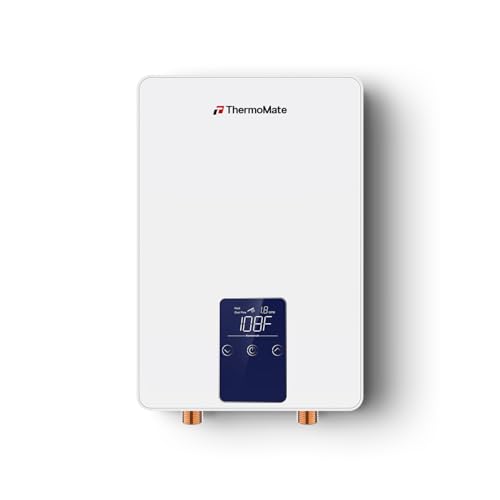
- BWP Score9.7
BWP Score is a ranking system developed by Bestwinterproducts.com. BWP score has no relationship or impact from any manufacturers or sales agent websites. Learn more
- Brandthermomate

- BWP Score9.6
BWP Score is a ranking system developed by Bestwinterproducts.com. BWP score has no relationship or impact from any manufacturers or sales agent websites. Learn more
- Brandxwdzswgs

- BWP Score8.7
BWP Score is a ranking system developed by Bestwinterproducts.com. BWP score has no relationship or impact from any manufacturers or sales agent websites. Learn more
- BrandKENUOS

- BWP Score7.9
BWP Score is a ranking system developed by Bestwinterproducts.com. BWP score has no relationship or impact from any manufacturers or sales agent websites. Learn more
- BrandInSinkErator
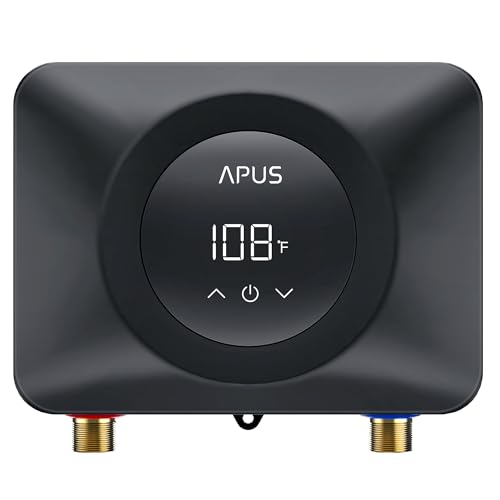
- BWP Score7.6
BWP Score is a ranking system developed by Bestwinterproducts.com. BWP score has no relationship or impact from any manufacturers or sales agent websites. Learn more
- BrandAPUS

- BWP Score7.6
BWP Score is a ranking system developed by Bestwinterproducts.com. BWP score has no relationship or impact from any manufacturers or sales agent websites. Learn more
- BrandKENUOS
Last update on 2026-10-15 / Affiliate links / Images, Product Titles, and Product Highlights from Amazon Product Advertising API
Frequently Asked Questions About Instant Water Heater Wattage
Can I plug an instant water heater into a standard wall outlet?
You can only plug small mini-tank water heaters (usually 1,500 watts or less) or boiling water dispensers (around 750 watts) into a standard 120-volt household outlet. Pure tankless water heaters require 3,000 to 6,000 watts for a single sink, which exceeds the safe capacity of a normal outlet. These higher-wattage models require dedicated 240-volt circuits and must be hardwired directly into your home wiring.
What breaker size do I need for a 6,000-watt tankless water heater?
A 6,000-watt water heater running on a 240-volt electrical supply draws 25 amps of electrical current. Under standard electrical safety rules, heating appliances require an extra safety margin, meaning the circuit breaker must be rated for at least 125 percent of the continuous load. This setup requires a dedicated 30-amp double-pole breaker wired with 10-gauge copper wire.
Why do tankless water heaters pull so much more wattage than storage tank heaters?
Traditional water heaters store 40 to 50 gallons of water and warm it slowly over an hour or more using a modest 4,500-watt heating element. Tankless heaters have no storage tank, so they must heat cold incoming water in real time as it rushes through the pipe. Raising cold water to a comfortable temperature in three seconds flat requires an immediate, massive burst of electrical power.
Will an instant hot water heater increase my monthly electric bill?
An instant point-of-use tankless heater often lowers your electric bill compared to keeping a large tank hot all day. Although tankless units draw high wattage while running, they only run for the exact number of seconds you have the faucet open. Because they eliminate standby heat loss (energy lost while hot water sits unused in a tank), they waste very little electrical energy.


Best Warm Winter Scarves 2026 For Cozy Comfort

Best Green Ski Goggles 2026 For Clear Vision On Slopes

12 Best Corner Electric Fireplace 2026: My Ultimate Guide To Pick One

Best Battery Powered Snow Blower 2026 For Effortless Snow Clearing

Best Ski Goggles Under 30 Inches For Crisp Vision And Comfort

Best Cooling Scarf 2026 For Instant Relief And Comfort

Fake Snow for Grass: Create a Realistic Winter Lawn Display

Dimplex Prism Wall Mount Fireplace: Sleek Heat With Modern Flame Style





