How Much Does It Cost to Run an Electric Fireplace?

Check the switch on the unit to see if the heater is actively running. That single button decides your bill, because running just the flame effect costs less than a penny an hour, while turning the heat on high brings the cost to between fifteen and thirty cents an hour. Leaving the heat off lets you enjoy the warm glow all evening without worrying about an unexpected spike on your electric statement.
Three everyday factors change what you will actually pay. The rate your electric company charges per kilowatt-hour, which is the billing unit on your monthly statement, sets your baseline. Running the heater on a lower power mode also cuts that draw in half. Finally, a built-in thermostat trims the total by shutting the heat off once the room reaches a comfortable temperature. Here is how those numbers break down and how to figure out your exact total.
Compare Your Flame Settings Before You Turn On The Heat
Understanding what an electric fireplace costs to run starts with knowing which features are turned on. Every electric fireplace operates in two completely different ways: visual flame mode and active heating mode. The cost difference between the two is enormous.
When you run your fireplace in flame-only mode, you are only powering a set of small LED light bulbs and a quiet little motor that rotates a mirrored spindle to create realistic flickering effects. This mode draws very little electricity, usually between 10 and 20 watts. In plain terms, wattage is simply the amount of electric power the unit draws from your wall. Running just the flames costs practically nothing. In most American homes, running an LED flame display costs under one cent per hour, often as little as a fraction of a penny. You could leave the flame visuals turned on all day and night, and it would only add a few pennies to your utility statement at the end of the month.
The cost changes the moment you turn on the built-in heater. When heat is active, electric current flows through heating coils or an infrared element, while a small fan blows warm air through the blower grille into your room. Most fireplaces give you two heat levels: low heat and high heat.
On the low heat setting, the fireplace typically draws about 750 watts of electricity. Plugged into a standard 120-volt wall outlet, this draws around 6.25 amps of current. At typical residential electric rates across the country, running the heater on low costs roughly 8 to 15 cents per hour. This setting is ideal for taking the morning chill out of a small bedroom or home office without pulling maximum power from your breaker panel.
On the high heat setting, the heating coils draw 1,500 watts, which pulls approximately 12.5 amps. This is the maximum power allowed for plug-in appliances running on standard 15-amp household circuits in the United States. When running continuously on high, an electric fireplace produces about 5,000 BTUs of heat and costs between 15 and 30 cents per hour, depending on what your local utility company charges. Running the heater on high for three hours during a cold winter evening will usually cost you between 45 and 90 cents. That is far less than many homeowners expect when they first bring an electric fireplace home.
Follow These Three Simple Steps To Find Your Exact Cost
You do not need to guess what your fireplace costs to run. You can calculate your exact hourly and daily expenses in just a couple of minutes using numbers straight from your own utility bill. Grab your most recent power bill and follow these three simple steps.
- Find your local electricity rate on your power bill. Look closely at the breakdown on your monthly electric bill. You want to find your cost per kilowatt-hour, which is the billing unit your electric company charges you for. A kilowatt-hour represents using 1,000 watts of electricity steadily for one full hour. In the United States, utility rates vary widely. Some states enjoy rates around 12 to 14 cents per kilowatt-hour, while other areas with higher energy costs pay 25 cents or more. If your bill lists separate delivery and supply charges, add those two rates together to get your true total cost per kilowatt-hour.
- Convert your fireplace wattage into kilowatts. Check the user manual or the metal safety label attached to the back or bottom of your unit. Look for the listed wattage. High heat is almost always 1,500 watts, and low heat is usually 750 watts. To convert watts into kilowatts, simply divide that number by 1,000. For high heat, 1,500 divided by 1,000 equals 1.5 kilowatts. For low heat, 750 divided by 1,000 equals 0.75 kilowatts. If you are only running the flame effect, 15 watts divided by 1,000 equals 0.015 kilowatts.
- Multiply the kilowatts by your electricity rate. Take the kilowatt number from step two and multiply it by your electricity rate from step one. The result is your exact cost to run the fireplace for one hour. For example, if your power company charges 18 cents per kilowatt-hour and you run your fireplace on high heat, multiply 1.5 by $0.18. Your cost is $0.27 per hour. If you run the fireplace on low heat at that same electric rate, multiply 0.75 by $0.18 to get roughly $0.14 per hour. If you run the heater for four hours every evening, multiply that hourly figure by four to see your exact daily cost.
Estimate Your Monthly Power Bill Based On Your Daily Routines
Seeing the hourly cost gives you peace of mind, but what does that look like on your monthly electric statement? Your final bill depends heavily on how often you run the unit and whether your fireplace has an adjustable thermostat.
Under light winter use, you might turn on the flickering flame display every night for ambiance while reading or watching television, but only switch on the 1,500-watt heat for an hour in the morning to shake off the morning chill. If your electricity costs 20 cents per kilowatt-hour, running the heater for one hour a day costs 30 cents. Over a 30-day month, that adds just $9.00 to your bill. The flame display, running four hours every evening, will only add around 30 to 40 cents for the entire month.
Under moderate winter use, you might run the fireplace in your living room for four hours each evening. If the heater ran nonstop on high, that would cost about $1.20 a day, adding roughly $36 to your monthly bill. However, most modern fireplaces do not run nonstop. They use an adjustable thermostat that manages cycling, which is the heater clicking off automatically once the room reaches your set temperature. Once the room is warm, the heating element shuts down while the flame display keeps flickering. The heating coil might only stay active for 20 or 30 minutes out of every hour. Because of this natural cycling, your real monthly cost under moderate use usually drops to somewhere between $18 and $22.
Under heavy winter use, such as heating a cold basement or a drafty home office for eight hours a day, the heater works much harder. If the unit runs continuously for eight hours a day at an average rate of 20 cents per kilowatt-hour, your daily cost is around $2.40. That will add roughly $72 to your monthly statement. While $72 is a noticeable bump on your bill, it is still much less expensive than turning up the central heat for the entire house all day long.
Lower Your Main Thermostat And Warm Only The Room You Are In
An electric fireplace can actually lower your overall winter utility bills if you practice zone heating. Zone heating simply means warming only the single room you are currently using while letting the rest of your home stay cooler.
Most central furnaces and heat pumps push warm air through ductwork into every room, empty guest bedroom, and hallway in the house. Heating thousands of square feet of unused space takes an enormous amount of natural gas, heating oil, or electricity. Instead of keeping your central thermostat set at 72 degrees Fahrenheit around the clock, you can lower it down to 65 or 66 degrees. When you gather in the living room, turn on your electric fireplace to warm that specific room to a comfortable 70 degrees.
Because you are only heating 300 to 500 square feet where you are sitting, your large central furnace turns on much less frequently. The money you save on your primary gas or heating bill often easily outpaces the small amount of electricity your fireplace uses. If you are converting an old wood hearth into an electric setup, learning how to close your fireplace damper is an essential first step. A damper that stays open lets cold chimney drafts pour into your living space while sucking your expensive heated air right out the top of the roof.
If you have an open living room or vaulted ceilings, selecting the best electric fireplace insert for a large room will give you a fan-forced blower capable of circulating warmth across wide seating areas. By directing the heat exactly where your family spends time, you keep everyone cozy without paying to heat empty bedrooms.
Adopt Simple Daily Habits To Keep Your Power Draw Low
You can keep your electric fireplace running efficiently without sacrificing comfort. A few basic adjustments to your setup and habits will prevent wasted energy and protect your household budget.
- Set the automatic shutoff timer before you relax. Most electric fireplaces come equipped with a built-in timer that you can set from 30 minutes up to 8 or 12 hours. Setting the timer for two hours whenever you sit down ensures the heater will not run all night if you fall asleep on the sofa.
- Start on high heat and switch to low. When you first walk into a chilly room, turn the fireplace to 1,500 watts to take the bite out of the air quickly. Once the space feels comfortable, drop the setting down to 750 watts. The lower wattage easily maintains room temperature while cutting your power draw in half.
- Close interior doors to trap the heat. Electric fireplaces rely on fan-forced air to warm rooms up to 400 square feet. If you leave hallway and bedroom doors wide open, that warm air will disperse into cooler parts of the house. Keeping interior doors shut traps the heat right around you, allowing the thermostat to cycle off much sooner.
- Keep the air intake and blower grille clean. Dust, lint, and pet fur naturally drift toward the intake vents over time. When dust coats the vent openings, the internal heating coil cannot breathe properly. This makes the motor work harder, reduces heating efficiency, and can trip the internal overheat safety shutoff. Vacuum the vents gently with a soft brush attachment once a month.
- Plug the heavy power cord directly into a wall outlet. Always plug your fireplace directly into a standard 120-volt wall outlet on a dedicated circuit, which is an outlet that does not share its breaker with other power-hungry appliances like microwaves or space heaters. Never use light household extension cords or multi-plug power strips. A continuous 1,500-watt load can cause extension cords and surge protectors to overheat, melt, or create serious fire hazards.
- Maintain a three-foot clearance around the heat discharge. Keep curtains, blankets, area rugs, and furniture at least three feet away from the front heating vent. While the cool-touch glass stays safe to touch for kids and pets, the metal discharge grille gets quite hot. Keeping this area clear lets the warm air circulate freely across your flooring.
Select A Model With Built-In Power Controls Before You Buy
If you are planning to purchase a new fireplace, choosing a model with the right control features will make managing your electric bill simple and predictable. Avoid bare-bones models that only offer an on-and-off heat switch with no temperature control.
Look for an electric fireplace that provides dual heat modes, specifically giving you both a 750-watt low setting and a 1,500-watt high setting. Having direct control over wattage allows you to tailor your energy use to the weather outside, running on low during mild autumn days and saving high heat for deep winter freezes.
An adjustable digital thermostat is another essential feature to look for. Thermostats allow you to choose an exact temperature target, such as 68 or 72 degrees Fahrenheit. Once the room hits that mark, the heating element clicks off automatically, cutting your running costs immediately while keeping the room comfortable. Models that feature programmable shutoff timers and independent flame controls also ensure that you only pay for heat when you actively need it.
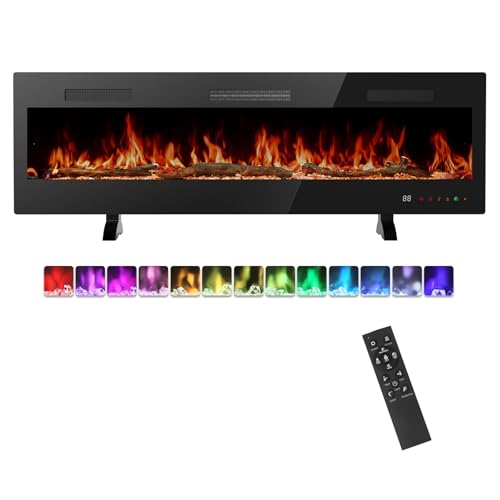
- BWP Score10.0
BWP Score is a ranking system developed by Bestwinterproducts.com. BWP score has no relationship or impact from any manufacturers or sales agent websites. Learn more
- BrandAidoly

- BWP Score10.0
BWP Score is a ranking system developed by Bestwinterproducts.com. BWP score has no relationship or impact from any manufacturers or sales agent websites. Learn more
- BrandEliteEdge

- BWP Score9.4
BWP Score is a ranking system developed by Bestwinterproducts.com. BWP score has no relationship or impact from any manufacturers or sales agent websites. Learn more
- BrandEUHOMY
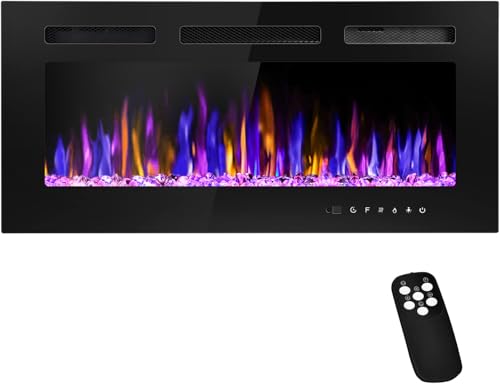
- BWP Score9.2
BWP Score is a ranking system developed by Bestwinterproducts.com. BWP score has no relationship or impact from any manufacturers or sales agent websites. Learn more
- BrandBETELNUT

- BWP Score9.0
BWP Score is a ranking system developed by Bestwinterproducts.com. BWP score has no relationship or impact from any manufacturers or sales agent websites. Learn more
- BrandOKD
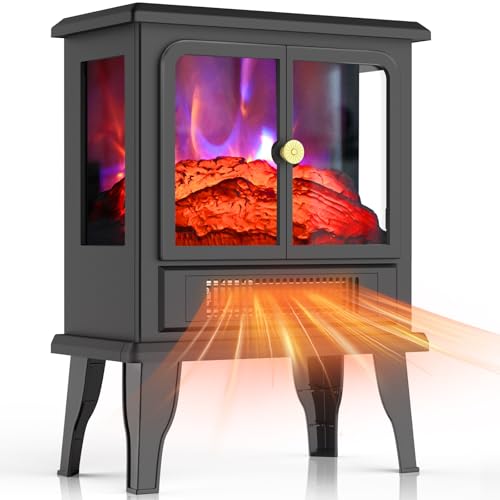
- BWP Score9.0
BWP Score is a ranking system developed by Bestwinterproducts.com. BWP score has no relationship or impact from any manufacturers or sales agent websites. Learn more
- BrandOYLUS

- BWP Score8.6
BWP Score is a ranking system developed by Bestwinterproducts.com. BWP score has no relationship or impact from any manufacturers or sales agent websites. Learn more
- BrandHOMCOM

- BWP Score8.6
BWP Score is a ranking system developed by Bestwinterproducts.com. BWP score has no relationship or impact from any manufacturers or sales agent websites. Learn more
- BrandZAFRO

- BWP Score7.0
BWP Score is a ranking system developed by Bestwinterproducts.com. BWP score has no relationship or impact from any manufacturers or sales agent websites. Learn more
- BrandBOWERY HILL
Last update on 2026-10-02 / Affiliate links / Images, Product Titles, and Product Highlights from Amazon Product Advertising API
FAQs
Does an electric fireplace cost more to run than a standard space heater?
No. Both electric fireplaces and portable plug-in space heaters are limited to a maximum draw of 1,500 watts on high heat. Both draw roughly 12.5 amps on a standard household outlet and produce around 5,000 BTUs of heat. The only difference is that the fireplace runs a low-wattage LED flame display, which adds less than half a cent per hour to the total operating cost.
Can I leave an electric fireplace heater running all night safely?
While modern fireplaces feature an internal overheat safety shutoff that cuts power if the unit gets too hot, running high-draw heating elements unattended all night is not recommended. Running the heater continuously for eight hours drives up your monthly electric bill. If you want warmth while drifting off to sleep, set the built-in timer for one or two hours, or switch the unit into flame-only mode so you can enjoy the cozy visual glow safely without drawing any heat.
Why does turning on my electric fireplace heat trip the circuit breaker?
On high heat, a 1,500-watt electric fireplace draws around 12.5 amps of electricity. Most residential room circuits are wired with 15-amp breakers. If your fireplace shares that circuit with another appliance that pulls power, such as a television, desktop computer, vacuum, or coffee maker, the total electrical draw will push past 15 amps and trip the breaker. To prevent this, plug the fireplace into an outlet on a dedicated circuit that does not share heavy electrical loads with other devices.
Why does my electric fireplace blow cool air while the flames are still glowing?
This usually happens when the built-in thermostat is set lower than the current temperature in the room. When the room reaches the target setting, the unit automatically shuts down the heating coil while keeping the fan running briefly to cool down the internal parts. It can also happen if dust buildup on the air intake vents tripped the internal overheat cut-off. Unplug the fireplace for 10 to 15 minutes to reset the switch, clean any lint off the vents, adjust the thermostat higher, and plug it back in.


12 Best Corner Electric Fireplace 2026: My Ultimate Guide To Pick One

Dimplex Prism Wall Mount Fireplace: Sleek Heat With Modern Flame Style
Best Electric Fireplace Insert for Large Room Heating and Style

Best 40 Inch Electric Fireplace Insert 2026 - Cozy Ambiance with Modern Power
Top 12 Best Quality Electric Fireplace 2026 - Buying Guides

Best Wall Mount Electric Fireplace 2026 for Ultimate Comfort and Style

How to Start Monessen Fireplace: A Step-by-Step Guide

How to Whitewash Rock Fireplace: Simple Steps to Refresh Your Space