
How Much Water Pressure Does a Tankless Water Heater Need?

Screw a simple pressure gauge onto an outside faucet to check incoming water push before blaming the appliance. Most whole-house tankless heaters need 30 to 50 PSI to run comfortably, though they require a minimum threshold of 15 to 25 PSI just to fire up. Dropping below that startup line causes the internal sensor to shut down the flame immediately, creating sudden blasts of cold water.
Exact pressure needs depend heavily on the setup. Small portable heaters designed for cabins or camping can ignite on as little as 2.5 PSI, while full-size indoor units demand far more push to satisfy multiple fixtures. Private well pumps also introduce natural pressure swings that municipal city lines rarely see. Understanding how water force interacts with flow makes it simple to pinpoint why a system struggles and restore a steady, warm flow.
Startup Pressure Versus Sustained Push Force: What Your System Needs
Every tankless water heater relies on incoming water pressure to decide when to turn on and how hard to burn. When you open a hot water tap, water rushes through the unit, pushing against an internal sensor. If that push is strong enough, the burners or electric elements fire up immediately. If the push is too weak, the unit sits completely silent, leaving you with cold water.
To understand what your plumbing needs, you have to separate two different numbers: startup pressure and sustained operating pressure. Startup pressure is the absolute minimum push force required to wake the heater up from standby mode. For most standard whole-house tankless units, that activation threshold falls between 15 and 25 PSI (pounds per square inch, which measures water push force). If your plumbing cannot deliver at least that much force the instant you turn on the faucet, the heater will not ignite at all.
Sustained operating pressure is the continuous force your plumbing needs to supply a steady stream of hot water across multiple fixtures. While a whole-house unit might wake up at 20 PSI, it really needs between 30 and 50 PSI to run comfortably. At this level, you can run a shower and a kitchen sink at the same time without the water dribbling down to a trickle. Most residential plumbing codes consider 40 to 60 PSI the sweet spot for comfort and appliance longevity. The upper safe limit for almost all residential heaters is 80 PSI. Anything above 80 PSI can stress the internal piping, damage seals, and trigger relief valves.
Compact outdoor and camping units play by different rules. Portable propane tankless heaters designed for off-grid cabins, horse washes, or recreational vehicles often feature extra-sensitive switches. Some of these portable outdoor models can ignite on as little as 2.5 PSI of water push force. That allows them to run directly from an elevated bucket, a small submersible 12-volt pump, or a gentle gravity feed.
The problem for most homeowners on a private well or a weak municipal connection is not the steady daytime pressure, but sudden drops. If your well pump turns on at 30 PSI and shuts off at 50 PSI, your water force swings constantly. When the force drops toward the bottom of that cycle while someone runs a washing machine downstairs, the push force inside the heater can slip below that 15 to 25 PSI cutoff. The heater immediately shuts off its flame to protect itself, sending a sudden burst of ice water straight to your showerhead.
Water Push Force (PSI) Versus Flow Rate (GPM): How Both Trigger Heat
Many homeowners use the terms water pressure and water flow as if they are the exact same thing, but they do completely different jobs. Knowing the difference between them is the fastest way to figure out why your tankless heater is misbehaving.
Water push force (measured in PSI) is the raw energy pushing water through your pipes, even when all the faucets are closed. Water flow rate (measured in gallons per minute, or GPM) is the physical volume of water that actually pours out of a faucet during a 60-second window. You can think of it like a garden hose with an adjustable spray nozzle. If you leave the hose open with no nozzle, water spills out in high volume (high GPM), but it has very little push force (low PSI). If you place your thumb tightly over the opening, the water shoots across the lawn with fierce push force (high PSI), but the total volume of water leaving the hose drops to a trickle (low GPM).
A tankless water heater requires both factors to line up before it produces hot water. Inside the cold water intake sits a flow sensor (a switch that turns the heat on when water moves). This switch has a tiny turbine or magnetic paddle. It needs a specific water push force to open up the internal passages, but it also requires a minimum volume of moving water, usually around 0.5 to 0.75 gallons per minute, to spin the paddle fast enough to hold the electrical contacts closed.
This dual requirement explains a very common household mystery: why a tankless heater works perfectly when you fill a bathtub, but cuts off when you wash your hands at a bathroom vanity. Modern bathroom faucets often have water-saving aerators that restrict flow to 0.5 GPM or less. Even if your street pressure is a strong 50 PSI, that tiny trickle through an eco-friendly faucet might not push enough volume per minute to keep the flow sensor spinning. The heater assumes you turned off the tap, shuts down the flame, and leaves you with cold water until you open the faucet wider.
How to Check Your Household Pressure and Spot Warning Signs
You do not need an expensive service visit to determine whether your water lines are giving your heater enough push force. You can verify your home water pressure in five minutes using a standard water pressure gauge from any hardware store. These gauges have an analog dial and a female threaded brass collar that screws directly onto a standard hose spigot.
- Pick an outdoor hose spigot or laundry bib: Choose a threaded spigot that sits as close as possible to your main water shutoff valve or well pressure tank. This gives you the cleanest reading before the water travels through bends and smaller interior lines.
- Shut off all indoor water fixtures: Walk through the house and make sure the washing machine, dishwasher, ice maker, and all sinks are completely off. If a toilet is slowly running, flush it and wait for it to fill completely.
- Attach the gauge hand-tight: Thread the gauge collar onto the spigot until it sits snug against the rubber washer. Tighten it firmly by hand to avoid leaks that could distort the reading.
- Open the spigot all the way: Turn the faucet handle counterclockwise until it stops. Look at the needle on the dial. This number is your static push force, which is the baseline pressure of your system at rest. It should ideally sit between 45 and 65 PSI.
- Check dynamic push force: Keep the spigot open with the gauge attached. Now have someone go inside and turn on a hot water faucet in a bathroom. Watch the gauge needle. The number will drop as water begins to flow. If the needle plunges by more than 15 or 20 PSI, or drops below 25 PSI while water is running, your supply lines cannot maintain adequate working force.
When low pressure is actively starving your tankless water heater, your plumbing system will usually give you clear hints before the unit refuses to turn on entirely. Keep an eye out for these everyday warning signs:
- The shower starts comfortably warm, turns freezing cold for a minute, and then warms back up without anyone touching the temperature handle.
- Hot water vanishes instantly whenever someone flushes a toilet, starts a load of laundry, or turns on an outdoor hose.
- Your shower stream feels noticeably weaker and thinner when turned to full hot compared to full cold.
- The digital display on your water heater flashes error codes related to ignition failure, low flow, or burner flameout.
- The heater refuses to activate for low-flow fixtures like bathroom hand sinks, but works normally for the garden tub or kitchen sprayer.
- You hear the heater clicking repeatedly to ignite, but the flame never catches because the flow switch is fluttering open and closed.
Practical Ways to Restore Water Pressure and Stop Cold Showers
If your checks show that water push force is sagging below the activation threshold, you do not necessarily have to replace your heater or replumb your entire home. Several targeted adjustments and maintenance steps can bring your push force back into the safe working zone.
Start with the simplest fix: cleaning the cold water inlet filter screen. Every tankless water heater has a small removable mesh thimble located right where the cold water supply pipe threads into the bottom of the cabinet. Over months of use, tiny flakes of rust, sand from well water, and hard water mineral flakes collect against this screen. As debris piles up, it chokes both push force and water volume entering the heating chamber. Shut off the cold water isolation valve below the heater, place a small bucket beneath the connection, unscrew the filter plug, and rinse the mesh screen under a faucet with an old toothbrush. Reinserting a clean filter often restores 10 to 15 PSI of lost force inside the machine.
Next, inspect your home pressure regulator valve (a bell-shaped brass valve on the main water line that tones down high street pressure). If you receive city water, this valve sits near your water meter or where the main line enters your basement. Over time, the internal spring inside the regulator can weaken or seize, artificially starving your house of pressure. You can adjust this valve yourself by loosening the lock nut on top and turning the central adjustment bolt clockwise with a wrench. Turn it one full rotation, then check your spigot gauge again. Aim for a stable 50 to 55 PSI. If turning the bolt produces no change on your pressure gauge, the internal diaphragm has likely failed, and a licensed plumber will need to replace the valve.
If you live on a rural property with a private well, low pressure is often caused by an outdated well pump pressure switch. Well switches usually run on a 30/50 PSI cycle, meaning the pump kicks on when home push force drops to 30 PSI and cuts off when it hits 50 PSI. As pressure dips close to 30 PSI, a tankless heater can easily struggle. A well technician can adjust or replace that switch with a 40/60 PSI model and adjust the air bladder inside your expansion tank. That ten-pound lift keeps the lowest dip well above the heater's shutdown limit.
When the municipal supply itself is simply too weak to run modern fixtures, installing an electric water booster pump directly on the main water line is the most reliable permanent fix. A booster pump senses incoming water movement and kicks on an internal impeller to instantly boost line push force by 20 to 30 PSI. For those setting up alternative heating systems or off-grid cabins, plumbing configurations often share space with specialized setups, much like selecting the best heater for van life where space and supply lines must match tight operational boundaries.
Keep in mind that older homes may have hidden restrictions inside the walls. If your house still has original galvanized steel pipes, decades of mineral buildup can narrow a three-quarter-inch pipe down to the width of a pencil. In that scenario, your static push force might look fine on a gauge, but dynamic pressure collapses the second you open a tap. Replacing choked supply runs with smooth copper or PEX tubing restores the uninterrupted volume modern tankless systems demand. Always shut off your main water valve and disconnect electrical power to the heater before unscrewing filter plugs or touching plumbing fittings.
Finding a Heater That Matches Your Home Water Supply
When shopping for a tankless water heater, matching the unit to your plumbing push force is just as important as matching its physical dimensions or fuel supply. Choosing the wrong activation rating will lead to constant frustration, regardless of how much heating capacity the unit promises on paper.
If your home has low or fluctuating water pressure that cannot be easily raised, prioritize units designed with ultra-low activation thresholds. Standard whole-home units often demand 0.6 to 0.8 gallons per minute and at least 20 PSI to strike an arc and fire the burners. Specialized low-pressure models, however, incorporate high-sensitivity magnetic flow meters that trigger ignition with as little as 0.3 GPM and low single-digit push force. These low-demand systems ensure that taking a gentle shower or rinsing a single coffee cup will not cause the heater to drop offline.
For rural properties, detached workshops, or mobile layouts, heating equipment must always match the physical constraints of the structure. Choosing appliances for manufactured housing requires careful attention to vent routes and line pressures, very similar to vetting the best heater for mobile home installations where structural clearances and utility demands differ from traditional builds. Before buying any heater, verify the minimum activation flow rate, the minimum operating push force, and the maximum rated pressure listed on the manufacturer specification label to make sure your plumbing can comfortably feed it.

- BWP Score9.0
BWP Score is a ranking system developed by Bestwinterproducts.com. BWP score has no relationship or impact from any manufacturers or sales agent websites. Learn more
- BrandRUINOPAR
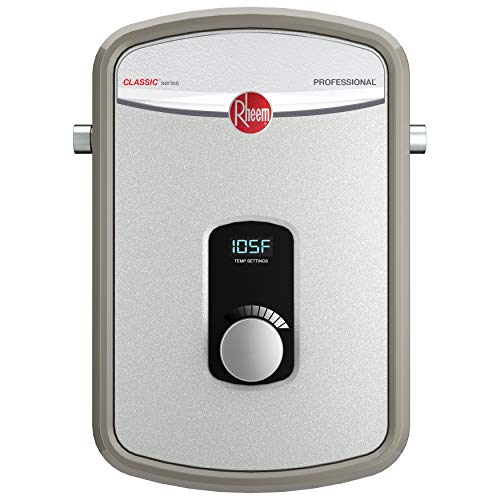
- BWP Score7.5
BWP Score is a ranking system developed by Bestwinterproducts.com. BWP score has no relationship or impact from any manufacturers or sales agent websites. Learn more
- BrandRheem
Last update on 2026-10-12 / Affiliate links / Images, Product Titles, and Product Highlights from Amazon Product Advertising API
FAQs
Can a tankless water heater work on a gravity-fed water system?
Most whole-house tankless heaters cannot operate on a standard gravity feed because a water tank elevated ten or fifteen feet only creates around 4 to 6 PSI of push force. Whole-home units need at least 15 to 25 PSI to open their internal flow switches and ignite. However, compact portable outdoor propane heaters can run on gravity systems, as many of those smaller units only need 2.5 PSI to light the burners.
Will installing a tankless water heater reduce my home's water pressure?
A tankless water heater does not reduce the static push force inside your plumbing, but it will restrict the dynamic flow rate to some degree. Cold water must travel through tightly coiled heat exchanger tubes to absorb heat quickly, which creates friction. If you switch from an open tank heater to a tankless model, you may notice a slight drop in shower volume if your supply lines are narrow.
What happens if my water pressure is too high for a tankless heater?
Water push force that consistently exceeds 80 PSI can stretch internal copper heat pipes, damage delicate O-rings, and cause water hammer rattles when valves shut quickly. High pressure also forces water through the heating chamber too rapidly, which can prevent the burner from heating the water to your desired temperature. If your street pressure exceeds 80 PSI, install a pressure regulator valve on the main supply line to keep incoming force safe.
.jpg)

Best Warm Winter Scarves 2026 For Cozy Comfort

Best Green Ski Goggles 2026 For Clear Vision On Slopes

12 Best Corner Electric Fireplace 2026: My Ultimate Guide To Pick One

Best Battery Powered Snow Blower 2026 For Effortless Snow Clearing

Best Ski Goggles Under 30 Inches For Crisp Vision And Comfort

Best Cooling Scarf 2026 For Instant Relief And Comfort

Fake Snow for Grass: Create a Realistic Winter Lawn Display

Dimplex Prism Wall Mount Fireplace: Sleek Heat With Modern Flame Style





