
How Do Oil-Filled Radiator Heaters Work?

A homeowner clicks the switch on a chilly morning, expecting the sudden roar of a blower or the smell of burning fuel, but the metal unit stays completely silent. Instead of burning anything, an internal electric rod warms fluid permanently sealed inside the metal fins. That liquid circulates through the closed channels without escaping, heating the outer steel so it can cast off steady surface warmth and push gentle air into the room.
How quickly and thoroughly the space warms up depends on a few simple factors. A radiator takes longer to start heating than a standard fan unit because the heavy steel body must warm up first. Room size, drafty windows, and the wattage setting you select also dictate how much heat fills the room. Once you see what happens inside those sealed steel columns, running one safely and comfortably becomes second nature.
What happens inside the fins when you turn it on?
When you plug an oil-filled radiator into a standard 120-volt wall outlet, electric current flows into an internal electric warming rod submerged near the bottom of the casing. This rod works through electrical resistance. Much like a kitchen toaster element, the rod resists electrical current, transforming that power directly into steady heat.
Surrounding this rod is a reservoir of specialized, sealed heat-storing fluid. Many people assume this liquid acts as fuel, like kerosene or furnace oil. In reality, the fluid never burns, ignites, or touches an open flame. It sits safely inside the heavy steel casing as a thermal sponge. As the electric rod warms up, it transfers heat straight into the surrounding fluid.
As the fluid warms, it expands slightly and becomes lighter than the cooler liquid above it. This causes the heated liquid to rise naturally toward the top of each fin channel. Meanwhile, the cooler fluid near the top sinks toward the bottom where the warming rod sits, creating a continuous circulation loop inside every fin.
The steel fins absorb this heat directly from the circulating liquid. Because steel conducts heat effectively, the entire exterior metal surface turns into a gentle heating panel. There are no pumps or moving parts. The internal flow happens entirely through this simple cycle of heating, rising, cooling, and sinking.
How does heat move into your room without a fan?
Once the outer steel fins heat up, the radiator warms your living space using two silent methods: direct surface warmth and the natural rising of warm air.
Direct surface warmth works just like sunshine through a window on a cold morning. The hot metal fins radiate invisible thermal waves outward in all directions. When these waves strike your skin, a blanket, or nearby furniture, those solid objects absorb the warmth directly. This provides steady, comforting heat even before the ambient room air fully warms up.
The second method relies on the natural rising of warm air. Cooler air in any room is heavier, so it settles near the floor. Radiators feature open vertical channels between their individual metal fins. As cool floor air is drawn into the bottom of these channels, it contacts the hot metal surfaces and heats up quickly.
Because warm air is lighter than cold air, it rises out of the top of the fins toward the ceiling. As it rises, it gently pushes cooler air back down toward the floor, where it enters the base of the radiator again.
Unlike a fan that pushes warm air across the room and stirs up dust, this silent radiator heater circulates steady, lasting warmth without moving parts. If you are heating drafty spaces, like shopping for a heater to warm drafty spaces, this natural airflow cycle explains why closing doors and blocking floor drafts helps the radiator warm the entire room evenly.
Do you ever have to refill or change the oil?
You will never need to refill, top off, or replace the liquid inside an oil-filled radiator.
The fluid inside is a specialized, sealed heat-storing fluid permanently locked inside the steel casing during manufacturing. Because the heater uses an electric rod rather than combustion, the fluid is never burned, consumed, or converted into fumes. The same liquid sealed into the fins at the factory stays inside the unit for its entire working lifespan.
Attempting to open the metal reservoir ruins the heater and poses a safety risk. Here is what to check regarding the sealed fluid and safe operation:
- No maintenance ports: The metal casing is welded and pressed shut. There are no fill caps, drain plugs, or dipsticks.
- Zero evaporation: The reservoir is airtight, so the liquid cannot evaporate into your home air. You never need to add fresh fluid.
- Inspect for visible leaks: Before using a radiator taken out of storage, check the base and floor beneath it. If you see oily residue or greasy pooling, the internal seal has failed. Unplug the heater and stop using it immediately.
- Check after hard drops: If the unit is knocked over hard or dropped, inspect the welded seams along the fins. Damaged seams can weep fluid when hot.
- Never patch a leak: If you ever discover a leak, do not attempt to seal it with glue, caulk, or tape. The fluid expands under heat and will breach temporary patches. Discard the unit according to local appliance guidelines.
Why does it warm up slower than a ceramic heater?
When you switch on an oil radiator, you will notice a brief delay before you feel noticeable warmth. That delay comes down to thermal mass, which is stored heat that stays warm inside a dense material.
A ceramic space heater uses a ceramic heating element that warms up in seconds, paired with a small electric fan that blows hot air directly across the room. It delivers instant heat, but the moment the thermostat turns off, the room cools down quickly because air holds very little heat on its own.
An oil-filled radiator works the opposite way. Before it can heat your room, the internal warming rod must first heat several quarts of sealed fluid, and that fluid must transfer its warmth into heavy steel fins. This warmup period takes fifteen to twenty minutes before reaching full operating temperature.
The benefit happens once the metal body gets hot. Heavy steel and heat-storing fluid hold onto thermal energy for a long time. When the digital temperature dial that clicks on and off to hold your set warmth reaches your target temperature and cuts electric power, the radiator continues releasing steady warmth for thirty to forty-five minutes on stored heat alone.
Most portable models feature selectable power settings, such as 600W Low, 900W Medium, and 1500W High. On standard 120-volt circuits, running at 1500W draws about 12.5 amps. Starting on high to heat the fluid, then dropping to a lower wattage, maintains comfort while saving energy. If you need steady warmth in a workshop, using an electric heater for a garage with a thermostat lets you maintain an even baseline temperature without sharp cold dips.
What sounds and safety features should you expect?
Oil radiators are among the quietest heating appliances available, but they are not completely soundless. Knowing what sounds are normal will keep you from worrying about safety.
During the first ten to fifteen minutes of operation, you may hear faint clicking, tapping, or soft ticking sounds. These noises are normal. They occur as the steel fins expand slightly from the heat. You might also hear a faint click from the internal thermostat as it cycles power, or faint bubbling as the liquid begins to circulate. Once the radiator reaches an even temperature, these sounds fade away into near-total silence.
Radiators also include built-in safety controls designed to protect your home:
- Tip-over safety switch: An internal tip-over safety switch that cuts power instantly if the unit is knocked over or tilted stops the heater from operating on its side, where fluid cannot circulate properly.
- Automatic overheat sensor: An automatic overheat sensor that shuts the unit off if internal parts get dangerously hot protects against blocked airflow if clothing or blankets fall over the fins.
- Surface temperature awareness: While there are no red-hot exposed coils that ignite fabric on contact, the steel fins still get hot to the touch. Keep small children and pets from touching the fins during high-power use.
- The 3-foot safety buffer: Always keep at least 3 feet (36 inches) of clearance between the radiator and any bedding, drapes, furniture, or paper.
- Dedicated wall outlet: Because a 1500W heater draws roughly 12.5 amps on a standard 15-amp circuit, always plug it directly into a dedicated wall outlet. Never use an extension cord or power strip, which can overheat, melt, and cause an electrical fire.
What should you look for when shopping for one?
When choosing an oil-filled radiator heater, focus on fin design, controls, and everyday portability. Because portable electric space heaters in the United States max out at 1500 watts, overall heating capacity is very similar across models. The differences come down to how well the unit distributes that warmth and how easy it is to manage.
First, examine the fin design and surface area. Models with wider fins, curved fin profiles, or a higher fin count provide more outer surface area for air to contact. A larger metal surface area helps the radiator release its stored warmth into the room more quickly and evenly.
Second, check the controls. Basic models use simple rotary dials to select your heat setting and adjust a mechanical thermostat. If you prefer exact comfort settings, choose a model with a digital temperature dial, multiple power levels, and a programmable auto-off timer so you do not leave the heater running when you leave the room.
Finally, verify that the heater carries a recognized safety certification mark, such as UL or ETL, on its label. Built-in cord wraps, smooth caster wheels, and a sturdy carrying handle make these relatively heavy metal heaters easy to move between rooms without straining your back.
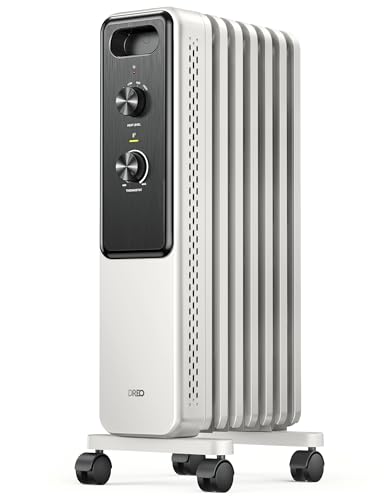
- BWP Score9.5
BWP Score is a ranking system developed by Bestwinterproducts.com. BWP score has no relationship or impact from any manufacturers or sales agent websites. Learn more
- BrandDREO

- BWP Score9.4
BWP Score is a ranking system developed by Bestwinterproducts.com. BWP score has no relationship or impact from any manufacturers or sales agent websites. Learn more
- BrandDREO

- BWP Score9.4
BWP Score is a ranking system developed by Bestwinterproducts.com. BWP score has no relationship or impact from any manufacturers or sales agent websites. Learn more
- BrandDREO

- BWP Score7.4
BWP Score is a ranking system developed by Bestwinterproducts.com. BWP score has no relationship or impact from any manufacturers or sales agent websites. Learn more
- BrandG-Ocean
Last update on 2026-10-23 / Affiliate links / Images, Product Titles, and Product Highlights from Amazon Product Advertising API
FAQs
Can an oil-filled radiator heater catch fire or explode?
Oil-filled radiators do not explode under normal home conditions. The specialized heat-storing fluid has a high boiling point that prevents excessive pressure from building up inside the steel body. Because the electric warming rod is sealed completely inside the liquid reservoir, there are no exposed glowing elements to ignite dust or nearby fabrics, making them safer than open-coil heaters when kept three feet away from furniture.
Can you leave an oil-filled radiator on all night?
Yes, oil-filled radiators are widely considered one of the safest portable electric heating options for overnight bedroom use due to their sealed design and quiet operation. You must maintain the 3-foot safety buffer from all bedding, curtains, and furniture, and plug the unit directly into a wall outlet rather than an extension cord. Using a model with an automatic overheat sensor and setting a moderate thermostat level ensures comfortable, worry-free warmth while you sleep.
Why does an oil heater smell when you first turn it on?
A faint chemical or burning oil smell is normal during the first few hours of using a brand-new radiator. This odor comes from harmless protective oils, coatings, and paint curing on the metal exterior as it gets hot for the first time. To clear this scent quickly, plug the new heater into a dedicated wall outlet in an open garage or well-ventilated room, and let it run on high for two to three hours before using it in a bedroom.
How much electricity does an oil heater actually use?
An oil-filled radiator draws power based on your chosen heat setting, typically 600W on low, 900W on medium, and 1500W on high. However, because the fluid stores heat and continues warming the room long after the thermostat clicks off, the heater does not draw power continuously once the room is warm. This thermal storage makes it more energy-efficient for long, continuous heating sessions than a fan heater that must run constantly to maintain warmth.


Best Warm Winter Scarves 2026 For Cozy Comfort

Best Green Ski Goggles 2026 For Clear Vision On Slopes

12 Best Corner Electric Fireplace 2026: My Ultimate Guide To Pick One

Best Battery Powered Snow Blower 2026 For Effortless Snow Clearing

Best Ski Goggles Under 30 Inches For Crisp Vision And Comfort

Best Cooling Scarf 2026 For Instant Relief And Comfort

Fake Snow for Grass: Create a Realistic Winter Lawn Display

Dimplex Prism Wall Mount Fireplace: Sleek Heat With Modern Flame Style





