
How to Choose the Right Portable Oil Heater for Your Room

Most shoppers assume that any portable oil radiator will easily warm up an entire room. In reality, these units provide slow, steady, and silent heat rather than an instant blast of hot air, so the right choice comes down to matching the heater wattage to your room size. A full-size 1500-watt model works best for bedrooms up to 150 square feet, while a compact 700-watt unit is built strictly for personal warmth at a desk.
The right choice also depends on ceiling height, caster wheels for moving between rooms, and home electrical capacity. Running a full-power radiator on a shared bedroom line can quickly trip a circuit breaker if other electronics share that same power. Checking room measurements and available wall outlets first ensures steady, safe comfort without unexpected power shutoffs.
Oil Radiators Warm Rooms Slowly but Hold Heat Longer
Oil-filled space heaters work differently from typical fan-forced ceramic heaters. Instead of blowing hot air across the room with a motorized fan, an oil radiator warms your space through silent, steady heat distribution. Inside the steel fins sits a heat-storing fluid called diathermic oil. When you plug the heater in and turn it on, an internal electric element at the bottom warms this fluid. The warmed fluid rises naturally through the hollow fins, transferring heat into the metal exterior.
Once the metal fins get warm, they heat the surrounding air through natural convection, which is the natural rising of warm air toward the ceiling while cooler air sinks toward the floor. As warm air rises from the fins, it draws cooler floor-level air across the bottom of the heater. This creates a gentle, continuous air loop that gradually brings the entire room up to an even temperature. Because there is no internal fan pushing air, the heating process is completely silent. You will not hear rushing air, motor hums, or vibrating grilles. The only sound you might notice is an occasional soft click as the metal expands and contracts.
A common doubt among first-time buyers is whether the oil inside ever needs refilling. You never need to add, refill, or change the oil. The fluid is permanently sealed inside the radiator at the factory. It does not burn as fuel, it does not evaporate, and it never breaks down over time. It serves solely as a heat reservoir to hold and release warmth. Never attempt to loosen plugs on the fins. If fluid ever leaks, the unit is damaged and must be replaced immediately.
The main trade-off for this silent heat is warm-up speed. An oil heater will not blast instant warmth into a freezing room. It takes fifteen to twenty minutes for the fluid to warm up and spread heat across all the fins. But once the radiator reaches its target temperature, it holds that heat far better than a wire heater. Even after the thermostat shuts off power, the warm fluid continues releasing heat for thirty to forty-five minutes.
Match Your Room Square Footage Directly to Heater Wattage
Choosing the right heater size starts with knowing the floor space of the room you want to heat. Heating power in portable electric space heaters is measured in watts. For rooms with standard eight-foot ceilings, plan for approximately 10 watts of heating power per square foot of floor space. Following this basic formula ensures your heater warms the space without running continuously on maximum power.
A full-size portable oil radiator rated at 1500 watts is engineered to warm closed rooms up to 150 square feet. This size corresponds closely to a typical 10-foot by 15-foot master bedroom, a nursery, or a home office. If you place a 1500-watt radiator in a closed room of this size, it will easily raise the room temperature and cycle off periodically to maintain comfort. In larger areas, like an open living room of 250 square feet, a 1500-watt unit provides supplemental warmth near your chair rather than heating the entire space.
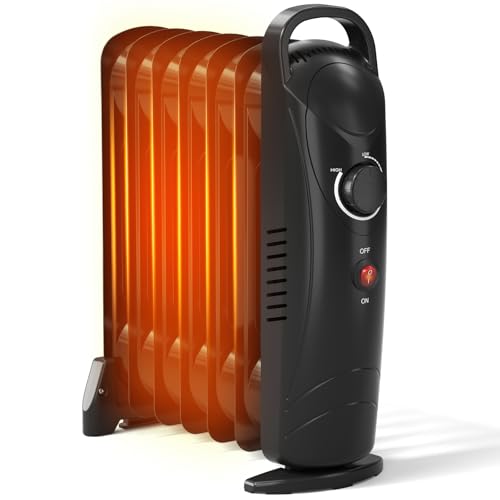
Compact personal oil heaters typically draw between 600 and 700 watts and feature a much smaller footprint. Many remote workers ask if a mini oil heater is enough to warm a home office. If your office is a closed room of 120 square feet, a 700-watt mini heater will struggle to bring the whole room up to temperature during freezing winter days. However, a mini heater excels as a personal desk warmer. Placed right beside your chair, a compact unit keeps your feet warm while drawing less than half the electricity of a full-size radiator.
If you are trying to heat an area with poor insulation or chronic drafts, remember that oil radiators depend on closed spaces. In drafty, unsealed areas, warm air escapes before it can circulate. For drafty outbuildings or open porches, a specialized heater to warm drafty spaces using direct radiant warmth is more practical than a slow-circulating oil radiator.
Check Your Wall Outlets to Prevent Tripped Breakers
Before bringing an oil heater home, check how your home electrical wiring handles high-powered appliances. In standard American homes, bedrooms and living areas run on 120-volt circuits protected by a 15-amp circuit breaker, which is a home electrical switch that shuts off if overloaded. This safety shutoff prevents electrical wiring from overheating inside your walls.
Operating a heater on high at 1500 watts draws about 12.5 amps of continuous electricity. Standard electrical safety guidelines recommend that continuous loads stay below 80 percent of circuit capacity. For a 15-amp breaker, that continuous limit is 12 amps. Running a 1500-watt heater on high pushes that line to its absolute maximum limit.
This explains why a 1500-watt heater often trips a bedroom circuit breaker. In many homes, multiple wall outlets in a bedroom share a single 15-amp breaker. If you run a computer, monitor, television, or desk lamps on that same circuit while running a heater on 1500 watts, the total draw exceeds 15 amps. Within minutes, the breaker clicks off to prevent overheating.
Use this short checklist to prevent electrical problems before running your heater:
- Identify shared outlets. Turn on room lights, flip the breaker off at the main panel, and see which outlets lose power.
- Plug the heater directly into an unused wall outlet. Never plug heaters into power strips, extension cords, or surge protectors. Those cords cannot handle 12.5 continuous amps and can melt or catch fire.
- Drop the power setting on shared lines. Switch your radiator to its medium setting (around 900 watts) or low setting (around 600 watts). At 600 watts, the heater draws only 5 amps, leaving ample room on the circuit for your computer or television.
- Touch the wall outlet plate after thirty minutes of use. A faint hint of warmth is normal. If the wall plate or plug feels hot to the touch, turn off the heater, unplug it, and call a licensed electrician. For heavy-duty locations like workshops, consider an electric heater for a garage with a thermostat wired directly to a dedicated line.
Verify Safety Switches Before Running Radiators Overnight
Safety is the primary reason many people choose oil-filled radiators for bedrooms and nurseries. Because the heating element is sealed inside fluid-filled fins, there are no glowing coils to ignite dust and no fans to dry out your air. These units produce no fumes or open flames.
Many shoppers ask if an oil radiator can safely run overnight while sleeping. Yes, you can safely run an oil heater through the night, provided you confirm that the unit has built-in safety devices and you place it correctly. Follow these steps to verify your safety setup:
- Verify the tip-over safety switch. A tip-over switch is an internal sensor that cuts power instantly if the unit is knocked over or tilted. Oil radiators are tall and narrow, which makes them vulnerable to active pets or children. With the unit unplugged, tilt it slightly to hear the internal sensor click. If knocked over while running, this switch cuts power immediately.
- Confirm the automatic overheat sensor. An automatic overheat sensor shuts the unit off if internal parts get dangerously hot. If curtains or bedding accidentally fall against the fins and block airflow, this sensor shuts down power before temperatures reach hazardous levels.
- Look for independent safety certification marks. Check the silver data label on the heater for recognized marks such as UL or ETL. This confirms the heater meets standard electrical safety requirements for North American homes.
- Maintain the 3-foot safety buffer. Keep all sides of the radiator at least 3 feet (36 inches) away from bedding, drapes, furniture, and laundry baskets. Never place a radiator against drywall or behind an open door where air circulation is blocked.
- Check the wheels and handles. Full-size oil radiators weigh between 13 and 18 pounds. Look for smooth caster wheels that allow you to roll the heavy unit across rugs without straining your back. For smaller personal units without wheels, verify there is a molded handle that stays cool to the touch.
Choose Controls That Match Your Daily Heating Habits
When shopping for an oil heater, you will find two primary control styles: manual dials and digital displays. Both options keep rooms warm, but manage temperature and power draw differently.
Manual dial controls use mechanical switches. One dial adjusts the heat setting (such as 600W Low, 900W Medium, or 1500W High), and a second dial controls the thermostat. The thermostat uses an internal sensor that clicks on and off as the room temperature shifts. Manual dials are durable and easy to use. If power flickers during a storm, the heater resumes warming right where you left it. However, manual dials lack exact temperature numbers, so you must adjust by feel over a day or two.
Digital thermostats feature a display screen and push buttons. They allow you to set an exact temperature, such as 68 or 72 degrees Fahrenheit. The digital thermostat continuously reads room air and cycles the heater automatically. Many digital models include an automatic shutoff timer and a handheld remote control. Digital controls give you precise warmth, but the illuminated screens can be bright in a dark bedroom, and brief power blinks usually reset the heater to an off state.
Whichever style you prefer, choose a unit with multiple heat settings. Having distinct settings like 600 watts and 1500 watts lets you warm a cold room quickly, then drop down to low wattage to maintain steady warmth without overloading your electrical circuit.
Selecting the Right Oil Heater for Your Home
Finding a suitable portable oil heater comes down to matching your room size, electrical circuit limits, and control preferences. For standard closed bedrooms, look for a full-size multi-fin radiator equipped with rolling caster wheels, multiple wattage settings, and a reliable thermostat. If you only need targeted heat to warm your feet under a desk, a compact low-wattage unit with a carry handle will keep you comfortable without overloading shared office circuits. Always confirm the unit includes automatic tip-over and overheat shutoff switches, verify that you have space for the three-foot safety clearance, and choose controls that make daily temperature adjustments simple.

- BWP Score9.3
BWP Score is a ranking system developed by Bestwinterproducts.com. BWP score has no relationship or impact from any manufacturers or sales agent websites. Learn more
- BrandROVSUN

- BWP Score7.8
BWP Score is a ranking system developed by Bestwinterproducts.com. BWP score has no relationship or impact from any manufacturers or sales agent websites. Learn more
- BrandAmazon Basics

- BWP Score8.4
BWP Score is a ranking system developed by Bestwinterproducts.com. BWP score has no relationship or impact from any manufacturers or sales agent websites. Learn more
- BrandAmazon Basics

- BWP Score8.1
BWP Score is a ranking system developed by Bestwinterproducts.com. BWP score has no relationship or impact from any manufacturers or sales agent websites. Learn more
- BrandAmazon Basics

- BWP Score8.0
BWP Score is a ranking system developed by Bestwinterproducts.com. BWP score has no relationship or impact from any manufacturers or sales agent websites. Learn more
- BrandDUMOS
- BWP Score7.4
BWP Score is a ranking system developed by Bestwinterproducts.com. BWP score has no relationship or impact from any manufacturers or sales agent websites. Learn more
- BrandLifePlus
Last update on 2026-10-16 / Affiliate links / Images, Product Titles, and Product Highlights from Amazon Product Advertising API


Best Warm Winter Scarves 2026 For Cozy Comfort

Best Green Ski Goggles 2026 For Clear Vision On Slopes

12 Best Corner Electric Fireplace 2026: My Ultimate Guide To Pick One

Best Battery Powered Snow Blower 2026 For Effortless Snow Clearing

Best Ski Goggles Under 30 Inches For Crisp Vision And Comfort

Best Cooling Scarf 2026 For Instant Relief And Comfort

Fake Snow for Grass: Create a Realistic Winter Lawn Display

Dimplex Prism Wall Mount Fireplace: Sleek Heat With Modern Flame Style





