
How to Choose an Energy Efficient Portable Infrared Heater

Frost creeps along the bottom of the home office window while cold air pools around chilly ankles. Finding real efficiency comes down to choosing a unit with an accurate digital thermostat and an automatic eco mode that dials down wattage once you feel comfortable. Unlike standard fan heaters that waste electricity warming empty ceiling space, radiant infrared heat warms your body, clothes, and nearby surfaces directly like gentle sunshine.
Your actual energy savings will depend on how you set up the room. Drafty window frames and high ceilings let radiant warmth escape quickly, which can force a heater to run longer. Keeping the unit pointed straight at your chair and closing the door lets you warm just the space you occupy without cranking up the central furnace. A few specific settings keep the unit from running full blast all day.
How Infrared Heat Cuts Power Costs in Chilly Rooms
Most portable space heaters warm a room by blowing hot air toward the ceiling. Because warm air naturally rises, traditional fan heaters spend most of their time warming the empty space above your head before you feel any relief at your desk or on your sofa. That cycle wastes substantial electricity while your central furnace or baseboards fight off drafts around cold window frames and doorways.
An infrared heater operates on a completely different principle. Instead of heating the air itself, it produces gentle heat that warms people and furniture directly like sunlight. When you step into the beam of an infrared unit, your skin and clothes absorb that warmth within seconds. The surrounding objects, such as your rug, armchair, and wooden desk, soak up that thermal energy and slowly release it back into the living space.
This direct absorption makes radiant heat far more practical for zone heating, which means warming only the specific room you are using instead of heating your entire home. When you spend your evening in the living room or your workday in a home office, you can set your main household thermostat several degrees lower. Heating a single 150-square-foot room with a portable unit takes far less power than forcing a central HVAC furnace to keep five empty rooms at 72 degrees Fahrenheit.
Radiant warmth also holds up better in spaces with regular airflow. In drafty basements or older homes, blown hot air quickly leaks out through loose window seals or drafty floorboards. Because infrared energy locks directly into physical objects, the warmth stays right where you sit even if cool air circulates through the room. If you are dealing with uninsulated spaces, reviewing practical options like a heater for an enclosed porch will show how directional radiant energy handles persistent drafts without wasting power.
Essential Features That Prevent Wasted Electricity
Every electric space heater rated at 1500 watts uses the exact same amount of electrical current when running at full blast: 1.5 kilowatt-hours of power for every hour it stays on. An infrared unit cannot create bonus heat out of thin air. Real energy efficiency comes entirely from the internal controls that prevent the machine from pulling maximum power when you do not need it.
A digital temperature dial that clicks on and off to hold your set warmth is the single most important component to look for. Basic portable heaters often feature an uncalibrated turn dial with simple minimum and maximum lines. Those analog dials force you to guess, which often leads to overheating the room to 78 degrees and wasting expensive kilowatts. A calibrated digital thermostat with a dedicated thermal probe monitors the ambient temperature continuously, shutting down the heating elements the moment your room reaches your target comfort level.
Multi-stage power levels give you direct control over your hourly energy draw. Look for models that provide a low heat setting of 750 or 1000 watts alongside the maximum 1500-watt mode. A lower heat setting allows the unit to sustain a cozy room temperature while drawing significantly fewer amps from your household wiring. Many modern units feature an automatic eco mode that begins on high to warm the room rapidly, then steps down to low wattage once the target temperature is reached rather than cycling on and off abruptly.
Internal heating elements also influence how quickly you feel comfortable. Advanced portable units combine quartz tubes, which are glass heating bulbs that emit instant direct warmth, with a ceramic heating element that warms up in seconds to balance the temperature. This hybrid setup gives you immediate radiant warmth on your body while gently circulating background heat through a quiet internal blower. When shopping for portable units, use this quick checklist to confirm the machine has genuine power-saving controls:
- Digital thermostat control: A clear display that lets you set a specific temperature in degrees Fahrenheit so the elements switch off automatically.
- Multi-stage wattage settings: A unit offering 1000-watt low and 1500-watt high power levels, or a dedicated eco mode that steps down wattage automatically.
- Hybrid heating elements: Dual systems pairing quartz glass bulbs with ceramic stones for immediate direct heat and steady background warmth.
- Programmable shut-off timer: An integrated timer that allows you to set the machine to switch off after 1 to 12 hours so it never runs in an empty room.
Selecting an electric heater with a built-in thermostat ensures your heating element only draws power when the room dips below your preferred setting, keeping your monthly electric bill predictable.
Sizing Your Space and Protecting Household Circuits
Matching a portable heater to the size of your room prevents the machine from running continuously at maximum capacity. The standard sizing guideline for indoor residential electric heat is roughly 10 watts of power per square foot of living space. Following this baseline ensures you select a unit that reaches your desired temperature quickly without overworking its internal elements.
A standard 1500-watt portable infrared heater serves as an effective primary heat source for a closed room measuring up to 150 square feet, such as a home office, small bedroom, or nursery with standard eight-foot ceilings. In larger areas, such as an open living room measuring 300 to 500 square feet, that same 1500-watt unit functions as a supplemental zone heater. You will not warm the entire perimeter of a large open room, but you will feel comfortably warm as long as the front grille faces your seating area.
Understanding your home wiring is just as critical as sizing your square footage. In standard North American homes, household wall outlets operate on 120-volt circuits protected by a 15-amp or 20-amp circuit breaker. A 1500-watt heater draws approximately 12.5 amps (amperage is the electrical draw moving through your wall outlet circuit). Electrical safety guidelines state that a continuous appliance should not exceed 80 percent of a circuit's total capacity, which equals 12 amps on a standard 15-amp bedroom breaker.
Because a 1500-watt heater runs right at the edge of that limit, running any other appliance on the same circuit will trip the breaker. If you plug a desktop computer, gaming console, television, or vacuum cleaner into an outlet on that same electrical line, the breaker will switch off to protect your home wiring from overheating. For tighter living quarters with limited electrical capacity, learning about proper heating for a mobile home helps prevent tripped breakers and damaged panels.
Always plug your portable heater directly into a dedicated wall outlet. Never plug a space heater into an extension cord, power strip, surge protector, or multi-outlet tap. Standard household extension cords and power strips are rarely rated to handle a continuous 12.5-amp electrical draw. Using them can cause the cord insulation to melt, scorching your wall outlet and creating a serious fire hazard. If the plug or the outlet cover feels noticeably hot to the touch during operation, turn the heater off immediately, unplug it, and have a licensed electrician inspect your wall wiring.
Everyday Habits and Safety Checks for Efficient Zone Heating
Where you place your portable infrared heater determines how much warmth you actually enjoy. Radiant waves travel in straight, unobstructed lines, very much like the beam from a flashlight. If you tuck the unit behind a high-backed office chair, position it behind a wooden coffee table, or set it under a cluttered desk, those furniture pieces will absorb all the heat before it ever reaches you.
Set the heater between four and six feet away from where you are sitting, pointing the front grille directly toward your upper body and legs. Keep the 3-foot safety buffer in mind at all times: maintain at least three feet (36 inches) of open clearance between the heater and any combustible materials, including curtains, throw blankets, upholstered sofas, bedding, and stacks of paper. Place the heater on a flat, level, hard surface such as hardwood, tile, or a tight-weave rug, avoiding thick shag carpets that can trap heat underneath the base.
To maximize efficiency, manage the airflow in your living area. Close the door to the room you are occupying so the warmth stays contained. If your central heating system uses forced air, close the supply register in that specific room or drop your central furnace thermostat down to 64 or 65 degrees. You will stay comfortably warm at your desk or on the couch while the rest of your house rests at an energy-saving temperature that slashes your overall heating fuel costs.
Because portable heaters move from room to room, reliable safety hardware is mandatory. Never operate a portable heater that lacks an automatic tip-over safety switch that cuts power instantly if the unit is knocked over or tilted by a child or passing pet. The unit must also feature an automatic overheat sensor that shuts the unit off if internal parts get dangerously hot due to blocked airflow. Look for sturdy composite or wooden cabinet designs that remain cool to the touch on the outside, ensuring safe handling even after hours of steady operation.
What to Look for When Choosing an Energy-Saving Portable Model
When selecting a portable infrared heater, look for a balanced combination of solid thermal construction, responsive digital controls, and smooth portability. Heavy-duty composite or wooden exterior cabinets do an exceptional job of protecting internal heating tubes while providing safe, cool-touch surfaces for busy households with young children or active pets. Units equipped with heavy-duty caster wheels allow you to glide the machine effortlessly between your bedroom, living room, and home office without straining your back.
Focus closely on the control interface before making a purchase. The most energy-efficient units feature bright digital displays with push-button controls or remote controls that let you adjust the temperature in single-degree increments without getting up from your desk. Verify that the heater carries an official electrical certification mark from a recognized testing organization, such as UL or ETL, on its rear rating plate. Models featuring dual heating chambers, washable intake air filters, and integrated humidifiers provide the greatest day-to-day comfort by warming your space without stripping natural moisture from dry winter air.

- BWP Score9.6
BWP Score is a ranking system developed by Bestwinterproducts.com. BWP score has no relationship or impact from any manufacturers or sales agent websites. Learn more
- BrandDR. INFRARED HEATER

- BWP Score9.1
BWP Score is a ranking system developed by Bestwinterproducts.com. BWP score has no relationship or impact from any manufacturers or sales agent websites. Learn more
- BrandDR. INFRARED HEATER

- BWP Score9.0
BWP Score is a ranking system developed by Bestwinterproducts.com. BWP score has no relationship or impact from any manufacturers or sales agent websites. Learn more
- BrandDR. INFRARED HEATER
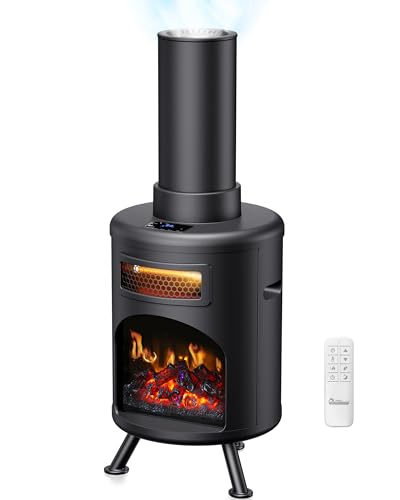
- BWP Score8.4
BWP Score is a ranking system developed by Bestwinterproducts.com. BWP score has no relationship or impact from any manufacturers or sales agent websites. Learn more
- BrandDR. INFRARED HEATER

- BWP Score8.2
BWP Score is a ranking system developed by Bestwinterproducts.com. BWP score has no relationship or impact from any manufacturers or sales agent websites. Learn more
- BrandDR. INFRARED HEATER

- BWP Score7.9
BWP Score is a ranking system developed by Bestwinterproducts.com. BWP score has no relationship or impact from any manufacturers or sales agent websites. Learn more
- BrandEdenPURE
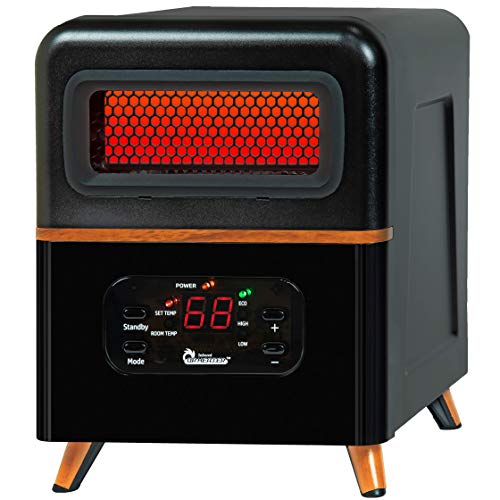
- BWP Score7.9
BWP Score is a ranking system developed by Bestwinterproducts.com. BWP score has no relationship or impact from any manufacturers or sales agent websites. Learn more
- BrandDR. INFRARED HEATER
Last update on 2026-10-31 / Affiliate links / Images, Product Titles, and Product Highlights from Amazon Product Advertising API
FAQs
Does an infrared heater actually use less electricity than a regular space heater?
An infrared heater draws the same amount of electricity as any other space heater when operating at the same 1500-watt level. The efficiency advantage comes from how it delivers heat to your body. Because radiant warmth heats you directly instead of blowing hot air up to the ceiling, you feel comfortable much faster, allowing you to use lower wattage settings and shorter run cycles.
Can I leave a portable infrared heater running overnight while I sleep?
You can safely run a portable infrared heater overnight only if it has an automatic digital thermostat, tip-over cutoff switches, and an internal overheat shutoff sensor. Set the digital thermostat to a modest sleeping temperature such as 66 degrees so the unit cycles off periodically. Always maintain a clear three-foot perimeter around the unit, keep blankets away from the grille, and plug it directly into a wall outlet.
What should I do if my heater trips the circuit breaker in my room?
First, turn off the heater, unplug it from the wall, and reset the tripped breaker at your main electrical panel. A tripped breaker almost always means your 15-amp circuit is overloaded because other electronics are sharing the same wiring. Move other appliances to a different circuit, plug the heater directly into an outlet with nothing else running on that line, or switch the heater to its 1000-watt low setting to reduce electrical draw.
Related guides: how to choose an energy efficient heater and how to choose a portable infrared heater for outdoor use and how to choose an efficient portable heater.


Top 12 best white electric fireplace 2026

Best Clear Ski Goggles Men 2026 For Sharp Vision On Slopes

Top Best Cordless Electric Snowblower 2026 - (Latest)

Best Warm Winter Scarves 2026 For Cozy Comfort

Best Green Ski Goggles 2026 For Clear Vision On Slopes

12 Best Corner Electric Fireplace 2026: My Ultimate Guide To Pick One

Best Battery Powered Snow Blower 2026 For Effortless Snow Clearing

Best Ski Goggles Under 30 Inches For Crisp Vision And Comfort





