
How to Choose the Right Size Propane Space Heater

Most shoppers assume that buying the biggest heater on the shelf is the safest bet to stay warm. That instinct usually backfires by burning through fuel too fast and creating stuffy air or damp walls. The reliable starting point is to multiply your square footage by 20 BTUs for a finished room, or aim for 30 to 45 BTUs per square foot if your space lacks insulation.
That baseline changes depending on how well your walls block drafts, how far the ceiling sits above the standard eight feet, and how bitter the winter weather gets outside. Enclosed rooms also require specific safety features like low-oxygen shutoff valves to run safely. Getting the heat rating right keeps your space cozy without running up fuel costs or creating hazards. Here is how to dial in the exact size for your setup.
The Short Version: Sizing Your Propane Heater
Selecting the right heat output rating keeps your space warm without wasting fuel or creating safety hazards. Here is the quick breakdown:
- Base room formula: Multiply your room square footage by 20 for well-insulated rooms, or by 30 to 45 for drafty shops, uninsulated garages, and pole barns.
- Ceiling and cold adjustments: Increase your heating calculation by 25 percent if your ceiling rises above 8 feet, and add another 10 to 20 percent for freezing winter climates or bare concrete floors.
- Indoor safety verification: Only run heaters indoors if the manufacturer label explicitly rates them for indoor use, and verify the unit has an automatic low-oxygen shutoff valve.
- Fuel tank compatibility: Portable 4,000 to 9,000 BTU heaters run well on 1-pound bottles, but heaters pushing 18,000 to 30,000 BTUs require a 20-pound tank to avoid fuel freeze-ups.
How to Calculate Your BTU Needs Step by Step
A BTU (British Thermal Unit) is a heat output rating that measures how much warmth a heater pushes into a room. One BTU provides roughly the same warmth as burning a single wooden kitchen match. Follow these steps to find your target rating:
- Measure your floor area: Measure the length and width of your room in feet. Multiply those two numbers together to find your square footage. A standard two-car garage measuring 20 feet by 20 feet gives you 400 square feet.
- Select your insulation multiplier: Finished, well-insulated rooms with sealed sheetrock require 20 BTUs per square foot. Average rooms with standard finished walls need 30 BTUs per square foot. Uninsulated garages, metal outbuildings, and drafty workshops require 40 to 45 BTUs per square foot.
- Multiply area by your rating: Multiply your square footage by your insulation multiplier. For a 400-square-foot uninsulated garage, multiplying 400 by 40 gives you a baseline target of 16,000 BTUs per hour.
- Factor in your winter climate: If winter temperatures in your area regularly drop below freezing, increase your total by 10 to 15 percent. This ensures your heater can raise indoor warmth to 65 degrees Fahrenheit during deep freezes.
Adjusting for Cold Concrete, Drafty Garages, and High Ceilings
Standard sizing formulas assume an ordinary eight-foot flat ceiling and sealed drywall. Real garages, workshops, and cabins rarely match those conditions. If your building has bare framing, metal siding, or tall peaks, adjust your target upward.
Start with your ceiling height. Warm air floats upward toward the rafters before you feel any warmth down at floor level. If your garage ceiling rises to 10 or 12 feet, your heater must warm a substantially larger volume of air. Divide your actual ceiling height by eight, then multiply that result by your base square footage to find your effective room size before calculating your heat output rating.
Drafts and building materials make an even larger difference. A thin sheet of metal siding provides almost zero thermal resistance against freezing winds. Bare concrete floor slabs also act like giant sponges, pulling warmth straight out of the room. If you are heating a breezy outbuilding or trying to find a reliable heater for an enclosed porch with older windows, always stick to the higher 40 to 45 BTU multiplier.
Think about how you plan to use the area. If you want to warm an entire two-car garage to comfortable room temperature, size the heater for the full space. If you only need warmth at your workbench, a smaller portable unit directed right at your body keeps you warm without heating empty rafters overhead.
Indoor Safety Rules, Oxygen Sensors, and Clearance Checks
Burning propane consumes oxygen and produces moisture and exhaust gases, making safety verification mandatory before lighting any heater indoors. Never bring an outdoor patio heater into an enclosed room. Follow this checklist to ensure safe indoor operation:
- Confirm indoor certification: Check the metal specification plate riveted to the heater body. The label must explicitly state that the unit is listed and certified for indoor use.
- Check for an Oxygen Depletion Sensor: Only buy an indoor unit that includes an Oxygen Depletion Sensor (a low-oxygen automatic shutoff valve that cuts the gas supply if room oxygen drops below safe levels).
- Confirm tip-over protection: Verify the heater includes a tip-over safety switch that cuts fuel instantly if the unit is knocked over or tilted off balance.
- Maintain a three-foot safety buffer: Keep all sides of the heater at least three feet away from drapes, bedding, wood shavings, flammable liquids, and cardboard boxes.
- Provide fresh air ventilation: Even a vent-free heater (a heater that operates without a chimney or exhaust pipe) needs fresh air. Crack a window or door by one-quarter to one-half inch to maintain continuous airflow.
- Install a carbon monoxide alarm: Place a battery-powered carbon monoxide detector at eye level in the room. If the alarm sounds, immediately turn off the heater, step outside into fresh air, and ventilate the building.
If you are heating a tiny mobile setup, space and air volume are even more restricted. People in those tight quarters often choose a specialized heater for van life designed specifically for compact footprints and strict venting requirements.
Fuel Runtime: What to Expect from 1-Pound and 20-Pound Tanks
The physical size of your heater directly controls how fast you burn through your fuel supply. A disposable green 1-pound propane bottle contains roughly 21,500 BTUs of total heating energy. A standard 20-pound barbecue grill tank holds about 430,000 BTUs when filled to the standard 80 percent safety limit.
Here is what real runtime looks like across common heater ratings:
- 4,000 BTUs (Low personal setting): Consumes roughly 0.18 pounds of fuel per hour. A 1-pound bottle lasts approximately 5 hours, while a 20-pound tank delivers roughly 100 hours of continuous heat.
- 9,000 BTUs (Standard portable room heater): Consumes about 0.42 pounds of fuel per hour. A 1-pound cylinder empties in roughly 2 to 2.5 hours, while a 20-pound tank provides about 45 to 48 hours of run time.
- 18,000 BTUs (Mid-size workshop heater): Consumes approximately 0.83 pounds of propane per hour. A 20-pound tank provides roughly 23 to 24 hours of heating.
- 30,000 BTUs (Large room or whole-garage unit): Consumes roughly 1.38 pounds of fuel per hour. A full 20-pound tank lasts about 14 hours of continuous operation.
Liquid propane requires warmth from the ambient air to boil into gas inside the tank. If you attempt to draw 18,000 or 30,000 BTUs from a small 1-pound cylinder, the bottle freezes over almost instantly, dropping internal pressure and extinguishing the burner. High-output heaters require the larger surface area of a 20-pound tank to maintain steady gas pressure in cold weather.
What Goes Wrong When You Oversize a Propane Space Heater
It is tempting to buy the highest BTU rating available under the assumption that bigger is always better. In enclosed spaces, buying an oversized propane heater creates annoying comfort issues and real safety risks.
The biggest hidden issue is excess moisture. A natural chemical byproduct of burning propane is water vapor. For every single gallon of liquid propane your heater burns, it releases roughly one gallon of moisture directly into the room air. A properly sized heater running steadily allows normal ventilation to carry that humidity away. An oversized burner floods the space with damp air, causing condensation on windows, mold growth on drywall, and rust on expensive workshop tools.
Oversized units also cause severe short-cycling. A massive 30,000 BTU burner placed in a small room pushes temperatures to 80 degrees in five minutes. The burner shuts down, but the cold floor and walls never had time to warm up. The air temperature crashes immediately, forcing the unit to turn on and off constantly. This rapid cycling wastes propane and leaves the room feeling alternately scorching and chilly.
Finally, oversized heaters deplete room oxygen much faster. In smaller spaces, high fuel consumption can trigger the low-oxygen automatic shutoff valve repeatedly, causing the heater to shut down before the room feels evenly warm.
Choosing the Right Type of Propane Heater for Your Setup
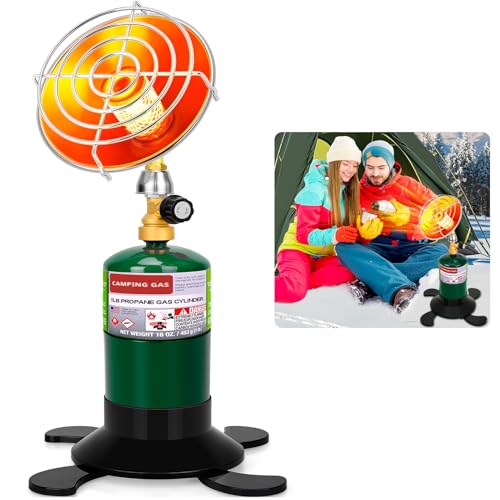
Matching your physical space to the correct style of propane heater ensures reliable warmth without wasted fuel. For small spaces, ice fishing shelters, or temporary job sites, look for portable radiant heaters. Radiant models produce gentle heat that warms people and furniture directly like sunlight, making them very effective in drafty spots where heated air quickly escapes.
For larger workshops, multi-car garages, or enclosed living areas, look for freestanding cabinet heaters or wall-mounted vent-free units. These heaters circulate warmth throughout the entire air volume of the room. If you prefer steady, hands-off warmth without managing refillable gas tanks, you might also compare these setups against an electric heater for a garage with a thermostat before making your final investment.
Before purchasing any propane model, inspect the product label for third-party safety certification marks from recognized testing laboratories such as UL, ETL, or CSA. Confirm that the heater comes equipped with an internal low-oxygen automatic shutoff valve and a tip-over safety switch that cuts fuel instantly if tilted. Finally, check whether the heater connects directly to disposable bottles, includes a hose for bulk tanks, or requires an external gas regulator.
- BWP Score9.2
BWP Score is a ranking system developed by Bestwinterproducts.com. BWP score has no relationship or impact from any manufacturers or sales agent websites. Learn more
- BrandHEYDUOTON

- BWP Score7.9
BWP Score is a ranking system developed by Bestwinterproducts.com. BWP score has no relationship or impact from any manufacturers or sales agent websites. Learn more
- BrandMr. Heater

- BWP Score8.7
BWP Score is a ranking system developed by Bestwinterproducts.com. BWP score has no relationship or impact from any manufacturers or sales agent websites. Learn more
- BrandMr. Heater
Last update on 2026-10-12 / Affiliate links / Images, Product Titles, and Product Highlights from Amazon Product Advertising API
Frequently Asked Questions
Can I safely run a propane space heater overnight while sleeping?
Never leave a portable vent-free propane space heater running unattended while sleeping in an enclosed room. Even with an automatic low-oxygen shutoff valve, the risk of oxygen depletion, moisture accumulation, or unexpected fuel leaks makes unattended nighttime operation unsafe. Turn the heater off, close the propane cylinder valve, and rely on heavy blankets or an approved vented heating system while asleep.
Why does frost form on my propane tank while the heater is running?
Frost forms because liquid propane must absorb heat from the surrounding air to boil into a gas. When you draw fuel quickly on high heat settings, the liquid chills the steel cylinder walls, freezing moisture in the surrounding air. If the frost persists and the flame begins to sputter, switch to a larger 20-pound fuel cylinder to handle the draw.
How much ventilation does a vent-free propane heater need?
You must provide a continuous path for fresh outdoor air whenever running a vent-free appliance indoors. Cracking a window or garage side door by one-quarter to one-half inch provides adequate airflow to replenish consumed oxygen. Always check your heater instruction manual for the exact required square inches of ventilation opening.
Why do my windows sweat when I run my propane heater in the garage?
Windows sweat because water vapor is a natural chemical byproduct of burning propane gas. An unvented burner puts approximately one gallon of water into the air for every single gallon of fuel consumed. If condensation coats your windows or tools, crack a door for fresh air or reduce the heater run time to keep humidity under control.


Best Warm Winter Scarves 2026 For Cozy Comfort

Best Green Ski Goggles 2026 For Clear Vision On Slopes

12 Best Corner Electric Fireplace 2026: My Ultimate Guide To Pick One

Best Battery Powered Snow Blower 2026 For Effortless Snow Clearing

Best Ski Goggles Under 30 Inches For Crisp Vision And Comfort

Best Cooling Scarf 2026 For Instant Relief And Comfort

Fake Snow for Grass: Create a Realistic Winter Lawn Display

Dimplex Prism Wall Mount Fireplace: Sleek Heat With Modern Flame Style





