
How to Flush and Clean a Noritz Tankless Water Heater

A morning shower suddenly turns lukewarm, or a steady stream from the faucet slows down to a frustrating trickle. The direct fix is to circulate white vinegar or a descaling solution through the heater for about 45 minutes using a small utility pump. This simple flush dissolves hard water minerals coating the internal pipes, clears out trapped buildup, and quickly restores steady water pressure without a costly plumber visit.
How the job goes depends on your setup and local water supply. Units with dedicated service valves right underneath connect to hoses in minutes, but setups lacking them require adding those valves first. Everyday white grocery vinegar works well, though heavier mineral buildup clears faster with a powdered descaler. Homes with hard tap water also need this flush every year rather than every few years. Here is the straightforward process to clear the lines safely.
Gather your bucket, pump, and cleaning solution before starting
A tankless water heater warms water on demand by pushing it through narrow internal metal tubing. Over months of use, dissolved minerals in your household tap water stick to those hot surfaces, forming a crusty scale layer. Dissolving that buildup requires circulating a mild acid through the heater in a closed loop. Because your home water supply stays off during maintenance, a small portable pump creates the needed water flow.
Set these supplies next to your heater before you begin:
- A 5-gallon bucket: Holds your cleaning liquid and catches returning fluid.
- A submersible utility pump: A compact 1/6-horsepower pump from any hardware store connects easily to standard garden hoses.
- Two short hoses: Standard 5-foot or 6-foot rubber hoses or washing machine supply lines with female threaded fittings on both ends.
- Cleaning solution: Four gallons of virgin white vinegar, or a dedicated tankless descaling cleaner mixed with tap water.
- Pliers and an old towel: Loosens tight caps and catches stray drips when opening drain ports.
Shut off the gas, power, and household water lines to isolate the unit
Safety comes first whenever you service heating equipment. Your Noritz unit must remain completely powered down during this process. If the burners ignite while cleaning acid sits inside without normal water flow, trapped heat can bake the scale directly to the metal and ruin internal parts.
- Cut electrical power: Unplug the heater power cord from the wall outlet beneath the cabinet. If the unit is hardwired, switch off the dedicated circuit breaker in your electrical panel. Confirm the digital controller screen on the front panel is dark.
- Shut off the gas supply: Find the manual gas shutoff valve on the gas line entering the bottom of the heater. Turn the handle one-quarter turn so it sits crosswise to the pipe. When the handle sits crosswise, gas flow is closed.
- Close the isolation valves: Look directly under the unit for the isolation valves (shutoff valves with hose drain ports). Turn the blue handle on the cold pipe and the red handle on the hot pipe 90 degrees to block water flow to and from the house. Both handles should now sit crosswise to the pipes.
- Remove the service port caps: Place your towel or bucket under the small brass spouts. Slowly unscrew the brass caps on the cold and hot service ports. A cup of trapped water will drain out.
Connect the hoses and circulate your cleaning solution through the heat exchanger
Now you are ready to pump cleaning liquid through the heat exchanger (the internal metal coil that warms the water). Descaling (dissolving hard water mineral buildup) requires steady fluid circulation so the mild acid breaks down calcium without damaging the metal tubing.
- Prepare the cleaning bath: Place your 5-gallon bucket beneath the heater. Pour in four gallons of undiluted white vinegar, or mix your descaling cleaner with water according to package directions.
- Hook up the cold feed hose: Place the submersible pump at the bottom of the bucket. Thread one hose from the pump discharge outlet to the cold water service port beneath the blue shutoff handle.
- Hook up the hot return hose: Thread the second hose onto the hot water service port beneath the red shutoff handle. Drop the open end into the bucket. Keep the hose firmly inside the bucket so it cannot splash.
- Open the service valves: Open both small service port valves by turning their handles parallel to the hose spouts. This opens the path into the internal coil while keeping household plumbing blocked.
- Run the pump: Plug in the pump. Cleaning solution will flow into the cold inlet, through the heat exchanger, and out the hot hose back into the bucket. Let it circulate for 45 to 60 minutes.
You may see white foam, cloudy debris, or pale blue-green water in the bucket. That color simply shows the acid is breaking down surface copper oxidation along with chalky calcium stone.
Pull and clean the cold water inlet filter screen
While the pump circulates, clean the cold water inlet screen (a small mesh filter that catches sand and grit). Loose sediment, rust flakes, and sand collect here and restrict water flow before it enters the burners.
- Locate the filter plug: Look at the cold water line entering the bottom of the Noritz cabinet for a small plug with raised ridges or a hex head.
- Unscrew the fitting: Put an old towel under the plug. Turn it counterclockwise by hand or use pliers with gentle pressure. A small splash of water will drain out.
- Inspect and rinse the mesh: Pull the cylindrical screen from the housing. Rinse it thoroughly under a running sink faucet, brushing away trapped sand or mineral flakes with an old toothbrush.
- Reinstall the screen: Check that the rubber O-ring seal is smooth and uncracked. Slide the screen back into the cold inlet port and tighten the plug firmly by hand. Avoid over-tightening with metal pliers, which can crack plastic threads and cause slow leaks.
Flush the system with fresh water and restore normal operation
Once descaling finishes, you must flush every trace of acid out of the internal metal coil before using hot water in your home. Leaving acidic residue behind can cause lingering odors at the tap and degrade internal metals over time.
- Empty the bucket: Unplug the pump and remove it from the bucket. Empty the dirty cleaning liquid down a utility drain or toilet.
- Prep the rinse line: Disconnect the hose from the cold service port. Leave the hot hose connected, with its open end pointed into the empty bucket.
- Close the cold service port: Turn the cold service port valve 90 degrees to shut it.
- Rinse with fresh water: Slowly open the main blue cold water handle parallel to the pipe. Fresh water will rush through the coil and dump out the hot hose into the bucket. Run this rinse for three to five minutes until the water runs clear and odor-free, emptying the bucket as it fills.
- Close the hot service port: Close the hot service valve, remove the hose, and screw both brass caps tightly back onto the service ports.
- Reopen main lines: Turn the main red hot water handle parallel to the pipe.
- Restore utilities: Turn the gas valve parallel to the gas pipe. Plug the heater power cord back into the wall outlet.
- Purge air pockets: Open a hot water faucet inside your home for two minutes. The faucet will sputter as trapped air clears, then flow smoothly.
Track your local water hardness to set a regular maintenance schedule
How often your Noritz heater needs descaling depends on your local water hardness. In moderate water conditions (under 7 grains per gallon), cleaning once every year keeps internal pipes clear. With hard water (over 7 to 10 grains per gallon), minerals build twice as fast, requiring a flush every 6 months.
Watch for these common warning signs that your unit needs attention:
- Hot water pressure drops noticeably compared to cold water pressure.
- Water temperature fluctuates from warm to lukewarm during a shower.
- You hear a rumbling or tea-kettle whistling sound from the cabinet while water runs.
- The digital controller displays error codes such as 11 or 90, which signal that trapped scale is preventing normal heat transfer.
Cold indoor drafts can also stress your plumbing. If your heater sits in a drafty garage, pairing space protection like a garage heater with a thermostat shields exposed valves from freezing. If you live in a manufactured home with specific layout limits, you might also compare clearance rules to equipment like a heater for mobile homes with downflow ducts to keep all utility areas operating safely.
Pick a specialized descaling cleaner if you deal with severe mineral buildup
Household white vinegar is cheap, safe, and easily available for routine maintenance. If you flush your unit every year and have moderate water hardness, vinegar gets the job done. But if your water has heavy mineral content, or if several years have passed since the last flush, standard vinegar may work too slowly to dissolve dense calcium rock.
A dedicated tankless water heater cleaner provides faster mineral breakdown. High-grade descalers are formulated specifically for tankless units in residential and commercial settings. Many come as dry crystals that dissolve quickly in water without strong, lingering fumes or harsh splashing. When picking a descaling product, check the label to confirm it is safe for potable drinking water systems and approved for copper heat exchangers.
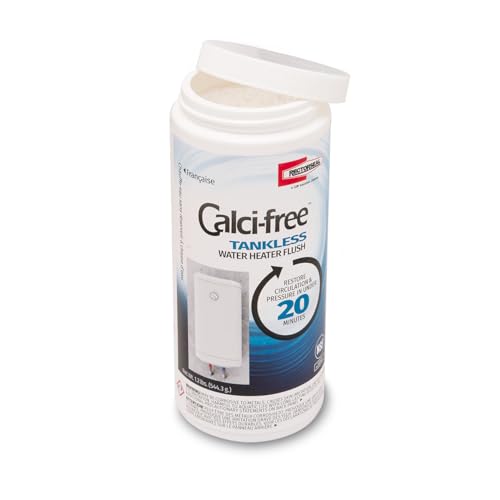
- BWP Score9.0
BWP Score is a ranking system developed by Bestwinterproducts.com. BWP score has no relationship or impact from any manufacturers or sales agent websites. Learn more
- BrandRectorseal
Last update on 2026-10-12 / Affiliate links / Images, Product Titles, and Product Highlights from Amazon Product Advertising API
FAQs
Can I use muriatic acid to flush my Noritz tankless water heater?
Never use muriatic acid or harsh chemicals in a tankless water heater. Muriatic acid eats quickly through the thin copper tubing of the heat exchanger, creating pinhole leaks and permanently ruining the unit. Always stick to food-grade white vinegar or a cleaner formulated specifically for tankless water heaters.
How do I know if my Noritz heater has isolation valves?
Check the water lines directly beneath the metal cabinet. Isolation valves are brass fittings featuring a main shutoff handle and a smaller secondary drain port with a threaded cap. If your pipes run straight into the heater without these service ports, a licensed plumber must install an isolation valve kit before you can flush the unit.
Why did the water in my bucket turn blue or green during the flush?
A slight blue or green tint is completely normal during the cleaning process. Copper tubing naturally develops a thin layer of surface oxidation over time. When the acidic cleaning solution circulates through the heater, it safely dissolves that surface patina alongside calcium scale, turning the bucket water pale blue or green.
What happens if I never clean my Noritz tankless water heater?
Skipping maintenance allows minerals to form a thick crust over the heating pipes. The burners must work harder to heat your water, driving up energy bills and triggering shutdown error codes. Over time, trapped heat creates hot spots that can crack the internal metal coil, causing leaks that require a total heater replacement.


Best Warm Winter Scarves 2026 For Cozy Comfort

Best Green Ski Goggles 2026 For Clear Vision On Slopes

12 Best Corner Electric Fireplace 2026: My Ultimate Guide To Pick One

Best Battery Powered Snow Blower 2026 For Effortless Snow Clearing

Best Ski Goggles Under 30 Inches For Crisp Vision And Comfort

Best Cooling Scarf 2026 For Instant Relief And Comfort

Fake Snow for Grass: Create a Realistic Winter Lawn Display

Dimplex Prism Wall Mount Fireplace: Sleek Heat With Modern Flame Style





