How to Clean a Gas Fireplace Thermocouple So It Stays Lit

Cleaning a gas fireplace thermocouple involves turning off the gas, waiting for the firebox to cool, and gently buffing the metal sensor rod with fine steel wool until clean metal shines through. That quick fix restores operation only when black carbon soot is blocking the heat, rather than the part failing completely. Wiping away the loose grit with a dry rag finishes the job without any chemical cleaners.
A few details change what needs to happen inside your hearth. Thinner single sensor rods bend easily compared to thicker multi-wire sensors, and a small starter flame that misses the top third of the metal will cut the gas even after a good polish. Deep pitting in the metal also means the piece is worn out for good. Here is how to safely find the sensor, rub off the buildup, and get your fireplace burning warm again.
The Short Version
- Turn off the gas supply: Turn the fireplace control knob to OFF, close the manual gas shut-off valve, and let all metal parts cool for at least thirty minutes.
- Scrub with fine abrasives: Gently buff the metal heat sensor rod with very fine steel wool (grade 0000) or emery cloth until you clear away all black carbon film and reveal shiny bare metal.
- Wipe away loose dust: Clean the area with a dry, lint-free cloth or a soft vacuum brush to remove loose soot particles without using any liquids or sprays.
- Relight and check flame contact: Restore the gas supply, relight the pilot flame, and confirm that the steady blue flame wraps around the top third of the clean rod.
Finding the Thermocouple Rod Next to the Pilot Burner
The thermocouple sits inside the firebox, positioned directly beside the pilot burner assembly. To locate it, look past the front screen and ceramic logs down near the firebox floor. You will spot a small metal bracket where the pilot light, which is the small standing starter flame, normally burns.
Inside this bracket, you will see one or two metal pegs pointing straight up. The thermocouple is the slender metal heat sensor rod, roughly the thickness of a pencil lead. A thin copper tube connects the base of this rod to the main gas control valve beneath the fireplace floor.
Many fireplaces feature two sensors side by side. The thinner rod is the thermocouple, while the thicker cylinder is the thermopile, which is a thick multi-wire sensor that powers wall switches and remotes. Both sit directly in the flame path and suffer from carbon buildup.
Over time, combustion coats the metal in soot, which is a black carbon film. Because carbon acts as an insulator, it blocks heat from penetrating the metal. Even with a burning flame, the cool sensor cannot produce the electrical signal that tells the gas valve to stay open. The valve snaps shut, and the flame dies the moment you release the knob.
Shutting Off Gas Valves and Letting Components Cool
Working around a gas hearth requires careful attention to basic safety. Before placing your hands or tools inside the firebox, complete this preparation checklist:
- Turn off electrical controls: Flip your fireplace wall switch, remote, or thermostat to OFF so the main burner cannot ignite while you work.
- Switch the control knob to OFF: Push in the main control knob beneath the fireplace floor and turn it clockwise until it points to OFF.
- Close the manual shut-off valve: Locate the manual valve on the incoming pipe. Turn the lever crosswise so it sits perpendicular to the pipe, stopping all gas flow.
- Allow full cooling: Wait at least thirty to forty minutes. Pilot brackets, ceramic logs, and metal grates hold heat long after the flame goes out.
- Remove protective barriers: Unlatch the safety screen or glass door assembly. Set the glass aside on a soft rug where it cannot get scratched or damaged.
Step-by-Step Cleaning With Fine Steel Wool or Emery Cloth
Once the firebox is cold and the gas is isolated, you can safely clean the sensor rod. Follow these steps to restore the metal surface:
- Clear access to the pilot assembly: Carefully lift away any ceramic logs blocking the pilot bracket. Take a quick photo first so you can return every log to its original spot later.
- Inspect the metal rod: Look closely at the heat sensor rod. A serviceable sensor has a powdery dark carbon film on its tip. If the rod looks cracked or split, cleaning will not solve the issue.
- Choose a gentle abrasive: Use very fine steel wool (grade 0000) or a small piece of emery cloth, which is a fine polishing paper made for metal. Avoid coarse sandpapers that cut into metal.
- Buff the sensor tip: Wrap the abrasive around the top inch of the sensor rod. Gently twist it back and forth around the circumference. Support the bracket with your other hand so you do not bend the mounting post.
- Scrub until bare metal shines: Buff with light, even pressure until the dark film disappears. You should see bright, shiny bare metal on all sides where the flame makes contact.
- Clear away loose dust: Wipe down the sensor with a clean, dry microfiber cloth. Use a vacuum hose with a brush attachment to lift away any loose metal fibers from the burner floor.
Common Cleaning Tools That Ruin the Sensor
Using improper tools or household cleaners can permanently damage your fireplace sensor or create hazardous fumes. Keep these items away from your pilot assembly:
- Liquid glass cleaners and chemical sprays: Never spray window cleaners, degreasers, or log cleaners onto the pilot bracket. Liquid seeps into the tiny gas orifice, clogging fuel delivery and baking into unpleasant fumes when heated.
- Coarse sandpaper or metal files: Rough sandpaper and files strip away the protective outer shell of the sensor rod. Deep scratches cause rapid oxidation, which destroys the heat sensor within weeks.
- Pliers and heavy wrenches: Clamping down on the sensor rod with pliers can crush the hollow tube or pinch internal wires. Handle the sensor only with your fingers, soft cloths, and fine polishing paper.
- Water or wet rags: Adding moisture into the burner pan corrodes spark igniters and grounds electrical connections. Keep your cleaning process completely dry.
Relighting the Pilot and Checking the Flame Contact
With the sensor rod clean and the area clear of dust, you can restore gas flow. Open the manual gas shut-off valve on the supply pipe so the lever sits parallel with the line. Push and turn the main control knob to PILOT.
Press the control knob down firmly to start fuel flow, then click the igniter button until the flame catches. Hold the knob down for thirty to forty seconds. This gives the starter flame enough time to heat the clean metal rod and generate an electrical current. Release the knob slowly. If the flame stays lit, your cleaning succeeded.
Observe the flame shape and color. A healthy pilot flame burns steady and blue, with only a slight touch of yellow at the tip. The flame must wrap directly around the upper third of the metal rod, covering roughly three-eighths of an inch. If the flame flickers or blows away from the sensor, dirt inside the pilot orifice may be restricting gas pressure.
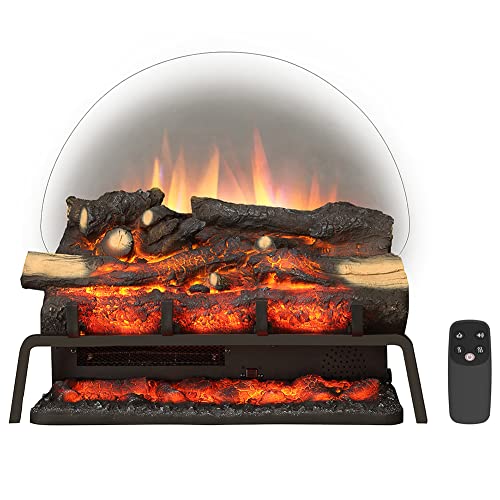
Persistent pilot dropouts can also occur if strong chimney drafts chill the sensor. If keeping a gas pilot lit feels frustrating and your flue lets in cold drafts, learning how to close a fireplace damper helps seal out cold air. Some homeowners decide to bypass gas pilot maintenance altogether by switching to a firebox insert for large room heating, which produces reliable warmth without gas lines or standing flames.
How to Tell If the Sensor Must Be Replaced
Cleaning fixes most pilot problems, but heat sensors eventually wear out. Knowing whether your part only needs maintenance or a full replacement prevents repeated troubleshooting.
A salvageable sensor has a smooth, solid surface under the powdery layer of black soot. Once you buff away that layer, the metal looks uniform and straight. In contrast, a failed sensor shows obvious structural breakdown. Deep pits, peeling metal layers, a split tip, or severe distortion mean the internal junction has burned out from years of exposure to high heat.
Inside the tip of the rod, two dissimilar metals join together. When heated, this junction produces a low-voltage electrical signal. Over thousands of heating cycles, the metals expand and contract until the bond separates internally. Once that bond breaks, no amount of scrubbing will restore function.
You can verify this condition with a standard multimeter set to millivolts while the flame burns. A healthy thermocouple should generate between 25 and 30 millivolts when heated directly by the pilot flame. If your multimeter reads below 20 millivolts while the flame envelops the rod, the sensor is worn out. For systems using a thermopile, the thicker sensor should generate between 500 and 750 millivolts. Any reading below that range means the part cannot operate the gas valve.
Choosing a Replacement Part If Cleaning Fails
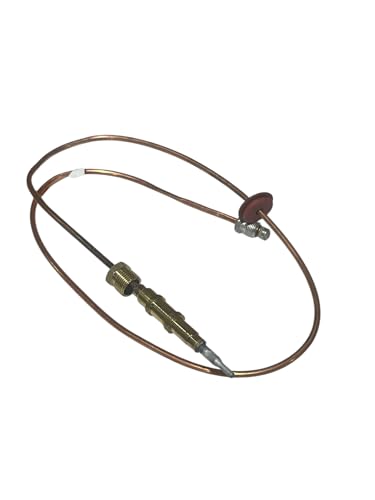
If scrubbing away the carbon buildup does not keep your pilot lit, installing an inexpensive replacement thermocouple kit will resolve the problem without replacing your entire gas valve. When shopping for a replacement sensor, check these key factors to ensure compatibility:
- Sensor type: Verify whether your fireplace uses a standalone single thermocouple, a multi-wire thermopile, or a combined cluster assembly.
- Lead wire length: Measure the copper lead from the pilot bracket down to the control valve. Replacement leads must be long enough to reach without sharp bends or kinks.
- Valve connection fittings: Check how the lead attaches to the valve. Many kits use standard threaded connection nuts, while others require push-in or clip-style adaptors.
- Fuel compatibility: Ensure the pilot component is compatible with your fuel supply, whether your fireplace runs on natural gas or liquid propane.

- BWP Score10.0
BWP Score is a ranking system developed by Bestwinterproducts.com. BWP score has no relationship or impact from any manufacturers or sales agent websites. Learn more
- BrandDKSGG

- BWP Score9.0
BWP Score is a ranking system developed by Bestwinterproducts.com. BWP score has no relationship or impact from any manufacturers or sales agent websites. Learn more
- BrandMETER STAR

- BWP Score9.0
BWP Score is a ranking system developed by Bestwinterproducts.com. BWP score has no relationship or impact from any manufacturers or sales agent websites. Learn more
- BrandUCI

- BWP Score9.0
BWP Score is a ranking system developed by Bestwinterproducts.com. BWP score has no relationship or impact from any manufacturers or sales agent websites. Learn more
- BrandLenox

- BWP Score9.0
BWP Score is a ranking system developed by Bestwinterproducts.com. BWP score has no relationship or impact from any manufacturers or sales agent websites. Learn more
- BrandCO-MATE
- BWP Score8.6
BWP Score is a ranking system developed by Bestwinterproducts.com. BWP score has no relationship or impact from any manufacturers or sales agent websites. Learn more
- BrandFixitshop
- BWP Score8.0
BWP Score is a ranking system developed by Bestwinterproducts.com. BWP score has no relationship or impact from any manufacturers or sales agent websites. Learn more
- BrandQuick 'n Brite

- BWP Score6.8
BWP Score is a ranking system developed by Bestwinterproducts.com. BWP score has no relationship or impact from any manufacturers or sales agent websites. Learn more
- BrandMEECO'S RED DEVIL
Last update on 2026-10-01 / Affiliate links / Images, Product Titles, and Product Highlights from Amazon Product Advertising API
FAQs
How often should I clean the thermocouple on my gas fireplace?
Cleaning the sensor once a year before the winter heating season starts is usually enough for most homes. If you run your fireplace daily or notice the pilot flame sputtering, inspect the rod for carbon buildup more often. Regular maintenance prevents soot from hardening into a crust that is difficult to polish away.
Can I use rubbing alcohol to wipe soot off the sensor?
You can use a tiny drop of rubbing alcohol on a clean microfiber cloth to lift greasy film, but let it evaporate completely before lighting the pilot. Never use flammable liquids while the gas supply is active or when metal parts are warm. Dry cleaning with fine steel wool or emery cloth remains the safest method.
Why does my pilot light go out as soon as I release the control knob?
The control knob overrides the internal safety valve while you hold it down manually. Once you release the knob, the valve depends entirely on the electrical current from the hot thermocouple to stay open. If the sensor is coated in soot, misaligned, or internally broken, the valve snaps shut instantly to stop gas flow.
What should I do if I smell gas while working around the fireplace?
If you smell the rotten-egg odor of gas, stop working immediately and step away from the hearth. Do not flip light switches, use phones, or operate electrical devices in the room. Shut off the main gas supply valve if accessible, leave the house immediately, and call your gas utility or fire department from outside.


12 Best Corner Electric Fireplace 2026: My Ultimate Guide To Pick One

Dimplex Prism Wall Mount Fireplace: Sleek Heat With Modern Flame Style
Best Electric Fireplace Insert for Large Room Heating and Style

Best 40 Inch Electric Fireplace Insert 2026 - Cozy Ambiance with Modern Power
Top 12 Best Quality Electric Fireplace 2026 - Buying Guides

Best Wall Mount Electric Fireplace 2026 for Ultimate Comfort and Style

How to Start Monessen Fireplace: A Step-by-Step Guide

How to Whitewash Rock Fireplace: Simple Steps to Refresh Your Space