
How to Protect a Fig Tree During the Winter

Freezing weather can sound scary for backyard fruit growers, but keeping a fig tree safe through the cold is surprisingly straightforward. To prevent winter dieback, move potted figs into a cool garage or shed once they drop their leaves, or wrap in-ground trees with breathable fabric and mulch before local temperatures plunge below 20 degrees Fahrenheit.
The right approach mainly depends on whether your tree lives in a container or in the garden soil, along with how cold your neighborhood gets each year. In-ground trees need wind protection and heavy ground insulation to survive bitter snaps, whereas potted roots only need shelter from sub-freezing drafts. Timing also matters, since the plant must finish dropping its leaves and go to sleep for the season before you cover it. Following a few simple steps will keep the wood alive and set you up for a heavy fruit harvest next summer.
Watch Your Thermometer and Wait for Total Leaf Drop
Do not rush out to cover your fig tree on the first cool afternoon of autumn. Fig trees need to become dormant, which simply means sleeping for the winter after shedding all leaves, before you bundle them up. If you wrap a tree while its leaves are green and the weather is warm, moisture gets trapped inside the covering. That trapped dampness causes mold to grow and can rot the branches before real winter weather even arrives.
A light frost or two is actually good for your fig tree. When the temperature dips into the low thirties, the tree receives a natural signal to stop sending sap into its branches. The green leaves will turn yellow, brown, and drop to the ground on their own. Once the branches are completely bare and the sap has drained toward the roots, the wood hardens and can handle cold temperatures much better.
Your local hardiness zone, which is the standard map area showing how cold a winter gets in your region, dictates how much cold your tree will face. In general, mature in-ground fig trees can easily handle temperatures down to 20 degrees Fahrenheit without any protection. The danger zone begins when the thermometer drops between 15 and 20 degrees Fahrenheit. Below 15 degrees, tender branches freeze solid, wood splits, and next summer's early fruit buds die.
Use this quick checklist to decide if it is time to protect your tree:
- Every single leaf has dropped from the branches naturally.
- The tree has experienced at least two light frosts below 32 degrees Fahrenheit.
- Your local forecast shows sustained nighttime temperatures dipping into the low twenties or teens within the next week.
- The soil around the base is slightly moist, but you have stopped all weekly watering routines.
Wheel Potted Figs into a Dark, Unheated Space
Potted fig trees face far more winter danger than trees growing directly in garden soil. Soil in the ground holds warmth from the earth, but the thin walls of a planter allow freezing air to surround the roots from all directions. The root system of a fig tree will die if the potting soil freezes below 20 degrees Fahrenheit. Fortunately, moving a container is much easier than wrapping a full-sized outdoor tree.
- Wait for natural leaf drop outside. Leave your potted container out in the yard through the first autumn chills. Once all the leaves drop off and the branches are bare, the tree is dormant and ready to move.
- Clean off the topsoil. Pick up every fallen leaf and dropped fruit from the surface of the soil inside the pot. Decaying plant matter left on damp soil creates gray mold during dark winter storage.
- Move the pot into a cold, sheltered space. Wheel or carry the pot into an unheated garage, garden shed, or cold basement. The ideal winter storage temperature stays between 30 and 45 degrees Fahrenheit. A dark room is completely fine because dormant trees have no leaves and do not need sunlight.
- Water the pot once every three to four weeks. Fig roots can dry out and die if the soil turns into powdery dust over the winter. Give the container about one cup to a quart of water once a month, just enough so the root ball feels like a wrung-out sponge. Never soak the soil, as wet soil in cold storage causes root rot.
- Keep the pot away from indoor heaters. Do not place the tree near a home furnace, water heater, or sunny south-facing window. Warm indoor air tricks the tree into thinking spring has arrived, causing it to push out pale, weak shoots in January that will wither and fail.
Prune Lightly, Bundle the Limbs, and Mound Deep Mulch
If your fig tree is planted permanently in the ground and you live where winters dip into the teens or single digits, you must protect it in place. Preparing the tree takes three simple steps before you ever put a cover on it: light trimming, grouping the branches, and insulating the base. Proper prep makes the tree compact enough to shelter and protects the critical trunk base from killing freezes.
- Trim only wild or awkward branches. Do not cut your fig tree back severely right before winter. Heavy pruning stimulates the tree and leaves open wounds that freeze and dry out in harsh winds. Only snip off dead tips, crossing limbs, or long side branches that refuse to bend inward.
- Tie the main branches into a tight upright column. Stand next to the tree and gently gather the main stems toward the center trunk. Wrap a soft cotton rope, thick twine, or strips of burlap around the bundled limbs, starting at the bottom and working upward. Pull the branches snug, but do not force thick wood so hard that it cracks. Tying the limbs together keeps them from catching wind and makes the profile narrow enough to cover easily.
- Install a wire barrier around the lower trunk. Mice, voles, and other small rodents love to burrow into warm winter bedding, where they chew on soft fig bark and kill the tree. Form a loose ring of quarter-inch metal hardware cloth or wire mesh around the trunk base before adding any bedding material.
- Mound a thick pile of mulch over the base. Mulch is a loose pile of straw, wood chips, or shredded leaves. Pile this material 8 to 12 inches high over the base of the trunk and out across the root zone. This deep layer locks in soil warmth. Even if an extreme polar vortex freezes your top branches to the ground, this insulated base ensures the root crown survives and pushes up healthy new growth in spring.
Wrap the Branches in Breathable Layers Instead of Plastic
Once you have tied the branches and mulched the root crown, the limbs need an insulating barrier against freezing wind. Cold winter winds pull moisture out of exposed wood faster than frozen roots can replace it, causing branch dieback. When you work on this step, learning how to keep warm in winter outdoors will make handling cords and tying knots in the cold breeze much more comfortable.
Never wrap your fig tree with clear plastic sheets, clear tarps, or bubble wrap directly against the wood. Clear plastic creates a greenhouse effect on bright, sunny winter days. The temperature under clear plastic can spike to 60 degrees Fahrenheit during the day, then plunge to 10 degrees Fahrenheit that night. That brutal swing in temperature causes bark to split, wakes buds up too early, and rots damp wood.
- Add an inner buffer around the trunk. Wrap the trunk and the lower parts of the bundled branches with a roll of breathable fabric tree wrap or thick burlap. This initial layer cushions the bark against friction from outer covers and adds a first pocket of dead-air insulation.
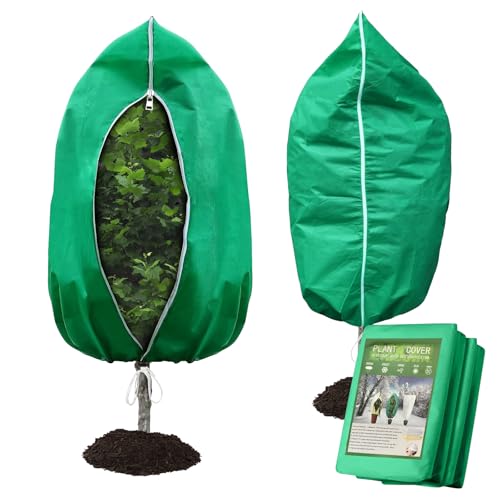
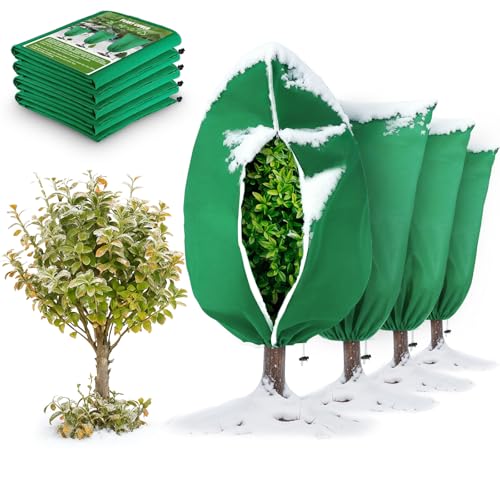
- Slide on a breathable outer cover. Pull a heavy frost cloth, which is a breathable fabric made to shield plants from freezing wind, over the entire bundled tree. You can also use a specialized zippered plant jacket designed for outdoor trees. The breathable weave allows excess humidity to escape while stopping icy wind drafts from stealing heat.
- Secure the base tightly to block drafts. Pull the bottom drawstring of your plant jacket tight around the trunk right above your mulch pile. If you are using flat fabric blankets, gather the loose ends at the ground and pin them down with landscape staples, bricks, or heavy stones. Wind must not get underneath the fabric, or it will act like a parachute and blow the cover away.
- Cap the top to shed snow and rain. If you built an open wire cage filled with dry straw around your tree, top it with an upside-down plastic bucket or a small dark tarp tied over the very peak. This acts like a roof, shedding wet winter rain and heavy snow so the dry straw inside does not become a frozen, soaking wet sponge.
Unwrap Gradually in Spring to Protect Tender Green Buds
Removing winter protection requires just as much patience as putting it on. The biggest mistake gardeners make is stripping off the covers during the first warm weekend in late winter. A mild week in March often tricks wrapped fig trees into swelling their buds early. If you uncover the tree completely and an April freeze arrives, those tender green buds will blacken and die overnight.
Loss of early spring buds destroys your breba crop, which is the early summer fruit crop that grows directly on last year's wood. If those buds freeze, you must wait until late autumn for the tree to produce fruit on brand-new green stems. In northern zones with short summers, that late crop may never have enough warm weeks to ripen before frost returns.
Watch your local 10-day weather forecast closely in early spring. Wait until the nighttime lows consistently stay above 28 to 32 degrees Fahrenheit before you touch the tree. If you used a zippered plant cover, unzip the top slightly on mild, sunny days to let fresh air circulate and prevent excess heat from building up. Zip the cover closed whenever the evening forecast predicts a freeze.
When the danger of deep freezes has passed, choose an overcast, calm day to remove the outer fabric wraps. Untie the branch bundles and let the limbs gently relax back into their natural shape. Leave the mulch pile around the base for an extra week or two. That mulch keeps the soil cool and stops the roots from rushing into spring growth before the weather has truly stabilized. Once frost danger is completely gone, pull the mulch away from the trunk and spread it out across the garden bed.
Choose Breathable Fabrics and Heavy-Duty Tree Covers for Protection
Protecting an outdoor fig tree through severe winter weather requires materials that stop freezing drafts without trapping wet condensation. While old bedsheets or layers of burlap can work in mild climates, dedicated plant frost blankets and winter tree wraps provide far better defense in regions where temperatures drop into the teens.
When selecting a winter cover for your tree, look for heavy-duty, non-woven fabric. Non-woven polypropylene or polyester materials create microscopic air pockets that insulate wood against sudden cold snaps. The fabric must be breathable so natural moisture vapor can escape, keeping your dormant branches dry and mold-free all winter long.
Look for covers with built-in hardware that makes installation simple on cold fall days. Features like full-length side zippers allow you to slip a large cover over tied limbs without snapping delicate branch tips. Bottom drawstrings with cord locks let you cinch the base snugly around the trunk, sealing out ground drafts and preventing winter gusts from tearing the blanket loose.
Before purchasing any wrap or jacket, bundle your tree's branches loosely with a piece of twine and measure both its total height and its widest point. Always choose a cover with several inches of extra room. A cover that fits too tightly presses directly against the wood, which eliminates the dead-air insulation layer and risks breaking the outer buds that hold next summer's sweetest fruit.

- BWP Score10.0
BWP Score is a ranking system developed by Bestwinterproducts.com. BWP score has no relationship or impact from any manufacturers or sales agent websites. Learn more
- BrandIniscape

- BWP Score9.0
BWP Score is a ranking system developed by Bestwinterproducts.com. BWP score has no relationship or impact from any manufacturers or sales agent websites. Learn more
- BrandSCRUBIT

- BWP Score8.6
BWP Score is a ranking system developed by Bestwinterproducts.com. BWP score has no relationship or impact from any manufacturers or sales agent websites. Learn more
- BrandPasidener

- BWP Score8.6
BWP Score is a ranking system developed by Bestwinterproducts.com. BWP score has no relationship or impact from any manufacturers or sales agent websites. Learn more
- BrandSDLDEER

- BWP Score8.4
BWP Score is a ranking system developed by Bestwinterproducts.com. BWP score has no relationship or impact from any manufacturers or sales agent websites. Learn more
- BrandPURPLE STAR 1N

- BWP Score8.2
BWP Score is a ranking system developed by Bestwinterproducts.com. BWP score has no relationship or impact from any manufacturers or sales agent websites. Learn more
- BrandWesnoy
- BWP Score8.2
BWP Score is a ranking system developed by Bestwinterproducts.com. BWP score has no relationship or impact from any manufacturers or sales agent websites. Learn more
- BrandHEKIWAY

- BWP Score8.2
BWP Score is a ranking system developed by Bestwinterproducts.com. BWP score has no relationship or impact from any manufacturers or sales agent websites. Learn more
- BrandInsoma
- BWP Score8.0
BWP Score is a ranking system developed by Bestwinterproducts.com. BWP score has no relationship or impact from any manufacturers or sales agent websites. Learn more
- BrandClebay
Last update on 2026-10-03 / Affiliate links / Images, Product Titles, and Product Highlights from Amazon Product Advertising API
FAQs
Can I use a clear plastic sheet or tarp to wrap my fig tree?
No, you should never wrap a fig tree with clear plastic sheets or tarps. Clear plastic acts like a mini greenhouse on bright winter days, heating up the air around the branches and causing moisture to build up. When temperatures plummet after sunset, the trapped condensation freezes on the bark, which causes wood to split and rot.
Will my fig tree produce fruit if the branches freeze to the ground?
Yes, your tree can still produce fruit, but you will lose the early summer crop. Fig roots usually survive under thick mulch and will send up vigorous green stems in the spring. However, these new shoots produce fruit later in the season, and northern gardeners may run out of warm summer weeks before those late figs have time to ripen.
Do I need to fertilize my fig tree before putting it away for winter?
No, you should never fertilize a fig tree in late summer or autumn. Fertilizer encourages the tree to produce soft, green shoots that cannot harden before winter arrives. Any new growth pushed out late in the season will quickly freeze, blacken, and create open wounds that invite disease into the main trunk.
How cold can an unprotected fig tree get before it suffers damage?
Most mature, dormant fig trees planted in the ground can tolerate temperatures down to roughly 15 or 20 degrees Fahrenheit without major damage. Below 15 degrees Fahrenheit, branch tips begin to die, and temperatures near single digits will kill unprotected branches down to the ground. Potted trees are much more sensitive, suffering root death when temperatures drop below 20 degrees Fahrenheit.


Best Warm Winter Scarves 2026 For Cozy Comfort

Best Green Ski Goggles 2026 For Clear Vision On Slopes

12 Best Corner Electric Fireplace 2026: My Ultimate Guide To Pick One

Best Battery Powered Snow Blower 2026 For Effortless Snow Clearing

Best Ski Goggles Under 30 Inches For Crisp Vision And Comfort

Best Cooling Scarf 2026 For Instant Relief And Comfort

Fake Snow for Grass: Create a Realistic Winter Lawn Display

Dimplex Prism Wall Mount Fireplace: Sleek Heat With Modern Flame Style





