
How to Choose an Energy Efficient Space Heater in 2026

Every electric space heater turns electricity into warmth at the exact same rate, so finding an efficient one comes down to matching the heat style to your space. The one factor that changes your electric bill is how well you control when and where that heat flows.
Your best option depends on whether you want immediate personal warmth at a desk or steady air temperature across an entire closed bedroom. Ceiling height and room size also decide how much wattage you actually need, while an accurate digital thermostat shuts off wasted power the moment the room gets cozy. Understanding these few details makes it easy to stay warm without paying for heat you never feel.
Electric heaters turn all power into heat equally
Every plug-in electric space heater turns electricity into heat with roughly 100 percent efficiency. A basic portable heater and an expensive console both convert 1,500 watts of electrical power into approximately 5,120 British Thermal Units (BTUs) of heat. There is no special heating element or secret coil design that squeezes extra heat out of a single watt of power.
Real efficiency comes down to where that heat goes, how fast it reaches you, and how well the machine regulates its run time. When advertisements claim a heater cuts electric bills in half, they are usually referring to zone heating rather than internal engineering. Zone heating means you turn down the central furnace thermostat for your entire house to 62°F or 65°F, and use a small heater to warm only the specific room you are occupying to 68°F.
Wasted electricity happens when a heater runs longer than needed or throws warmth into empty spaces. If a fan heater blows warm air up toward a high ceiling while you sit shivering, that electricity is wasted. If a unit lacks an accurate shutoff sensor and keeps running at full power after the room is comfortable, your power bill climbs. Lowering heating costs requires choosing a machine that directs warmth right where you sit and shuts off the moment your target temperature is reached.
Infrared warms people while ceramic warms closed rooms
Choosing the right heating style for your room layout prevents wasted electricity. Space heaters spread warmth through different methods, and picking the wrong type forces the unit to run constantly without keeping you comfortable.
Infrared heaters produce gentle heat that warms people and furniture directly like sunlight. Instead of trying to warm the ambient air, infrared quartz tubes emit heat waves that warm solid objects on contact. This makes infrared the best choice for large spaces, open floor plans, and drafty areas. If you want to warm a desk area in a big living room, an infrared heater keeps your body warm without wasting electricity on thousands of cubic feet of cold air. If you need supplemental heat for a drafty sunroom, a specialized heater for an enclosed porch directs radiant energy right to the chairs where you sit, rather than losing heated air through leaky window frames.
Ceramic heaters use a ceramic heating element that warms up in seconds, paired with an internal fan that pushes warm air across the room. These fan-forced units warm the air itself, which circulates to raise the ambient room temperature. Ceramic fan heaters are ideal for small to medium spaces with closed doors, such as a home office or bedroom. But using a ceramic fan heater in a large open layout causes warm air to dissipate, leaving the heater running on high power indefinitely.
Oil-filled heaters offer a third option. A silent radiator heater that circulates steady, lasting warmth uses electricity to warm an internal reservoir of diathermic oil, which then flows through metal fins to radiate heat into the room without a fan. These units take longer to warm up, but the oil holds heat for a long time. Once the oil reaches full temperature, the heating element can cycle off while the hot fins continue warming the room. Oil radiators are completely silent and work well for steady, overnight bedroom warmth.
Count on ten watts for every square foot
Buying the wrong size heater leads directly to wasted power. An undersized heater will run at full power all day without ever reaching your desired temperature, driving up your electric bill. An oversized heater can blast a small room with excessive heat, causing the machine to cycle on and off constantly, which wears out internal components and creates uneven temperatures.
The standard guideline for residential electric heating is roughly 10 watts of heating power for every square foot of living space. This rule of thumb assumes an eight-foot ceiling, average window insulation, and normal winter conditions:
- Under-desk and personal spots (50 square feet): A compact personal heater drawing 400 to 500 watts provides direct warmth for your feet without heating unused space.
- Small bedrooms and nurseries (100 square feet): A heater set to 1,000 watts can comfortably bring a ten-foot by ten-foot room to a cozy temperature.
- Standard bedrooms and home offices (150 square feet): A standard 1,500-watt heater provides the right amount of thermal output to heat a twelve-foot by twelve-foot room.
- Large living areas (over 200 square feet): A single 1,500-watt heater cannot warm the air in an entire large room. In these spaces, use an infrared model to create a personal warm zone.
Ceiling height and room insulation can change these calculations. In rooms with high ceilings, warm air rises above head height. In those rooms, add twenty percent more wattage to compensate for the extra air volume, or switch to an infrared unit that keeps warmth near the floor. Cold utility spaces require extra power as well. If you are heating a drafty workspace or detached garage with uninsulated exterior walls, choosing a dedicated garage heater with a built-in thermostat ensures the unit can handle heavy thermal loss without burning out.
Thermostats and eco modes stop heaters from running constantly
The control panel on your heater determines whether it keeps your electric bill lean or causes it to spike. A heater without proper controls behaves like an on-off switch, drawing full power whenever it is turned on.
Look for a digital temperature dial that clicks on and off to hold your set warmth. Basic budget heaters usually feature an analog knob marked with vague lines. These dials rely on mechanical switches that respond poorly to room air, forcing you to guess where comfort lies. This often leads to overheating the room to 75°F before you notice, wasting power. A digital thermostat lets you choose an exact temperature, such as 68°F. An internal electronic sensor monitors the room air, cutting power to the heating element as soon as that target is hit and turning it back on only when the room cools slightly.
An automatic ECO mode provides another major cost advantage. In standard operation, a heater runs at maximum power (usually 1,500 watts) until the thermostat cuts out. An ECO mode acts as a smart power-stepping feature. It starts on high power to knock the chill out of the room. As the sensor detects the room temperature approaching your target, the internal circuitry automatically drops the power level down to 1,000 watts, and then down to 750 watts. By cruising on a lower heat setting to maintain the temperature, the heater prevents high electrical spikes and uses less energy over the day.
Programmable timers and oscillation features also protect your wallet. An automatic 12-hour shutoff timer prevents leaving a heater running in an empty room after you leave for work. Meanwhile, motorized oscillation sweeps warm air through a wide angle, preventing a hot air pocket from forming directly in front of the sensor so the unit reads the room accurately.
Plug into wall outlets to prevent tripped breakers
Operating a space heater safely is directly tied to managing its electrical draw. In the United States, portable electric heaters draw up to 1,500 watts on their highest setting. Operating on a standard 120-volt household circuit, a 1,500-watt load draws approximately 12.5 amps of electrical current.
Most residential bedroom and living room circuits are protected by 15-amp circuit breakers. The continuous load limit for a 15-amp circuit is 80 percent of its capacity, which equals 12 amps. A 1,500-watt heater running on high draws 12.5 amps, which pushes that circuit to its safe limit. If you plug a space heater into the same branch circuit as a computer, television, or lamps, the combined electrical draw will exceed 15 amps and trip the breaker.
To run your heater safely and avoid tripped breakers, follow these electrical precautions:
- Plug directly into a dedicated wall outlet: Never plug a space heater into an extension cord, power strip, or surge protector. They are rarely built to handle a continuous 12.5-amp current, and the extra resistance can melt plastic and spark an electrical fire.
- Use lower heat settings on shared circuits: If you work in a home office where electronics share the breaker, switch your heater to its low power level (typically 750 watts) or medium power level (typically 1,000 watts). Running at 750 watts cuts draw to about 6.25 amps, leaving capacity on the breaker for your equipment.
- Maintain a 3-foot safety buffer: Position the heater on a firm, level floor at least 3 feet (36 inches) away from curtains, bedding, upholstered chairs, blankets, and papers. Keeping this safety buffer clear ensures that airflow into the intake grille is never blocked, preventing internal overheating.
- Confirm safety certifications: Check the rating label on the heater for an independent certification mark, such as ETL, UL, or CSA. These certifications verify that the unit includes an automatic overheat sensor that shuts the unit off if internal parts get dangerously hot, as well as a tip-over safety switch that cuts power instantly if the unit is knocked over or tilted.
- Feel the wall outlet plate periodically: After running your heater on high for twenty minutes, turn the unit off and feel the wall plate. The plug prongs may feel slightly warm, which is normal under heavy draw. But if the wall plate feels hot to the touch, or if the breaker trips repeatedly, stop using the outlet immediately and consult a licensed electrician to inspect the wiring.
Look for digital controls and multiple power settings
When shopping for an energy-conscious space heater, choose a model that gives you direct physical control over its power draw and run time. Because all electric heaters produce heat at the same basic rate, the most efficient unit is the one that avoids wasting run time once your living space is warm.
Look for a model with at least two or three selectable power levels, such as 750 watts, 1,000 watts, and 1,500 watts, rather than a unit with a simple on-off switch. Having multiple heat settings allows you to run the heater on low wattage during mild weather or while sharing a circuit with other home electronics. Pair those wattage options with an accurate digital thermostat that lets you select a specific degree setting, and choose a unit with a built-in ECO mode that steps down wattage automatically as your room reaches temperature.
Finally, match the physical design of the heater to your room setup. Compact ceramic heaters with sturdy handles are great for direct personal warmth under a home office desk, while tall oscillating tower units distribute warm air across medium-sized bedrooms quietly and efficiently. Check the manufacturer label to confirm recognized safety certifications, verify that the unit includes both tip-over and overheat shutoff protection, and always measure your room square footage before choosing your heater.
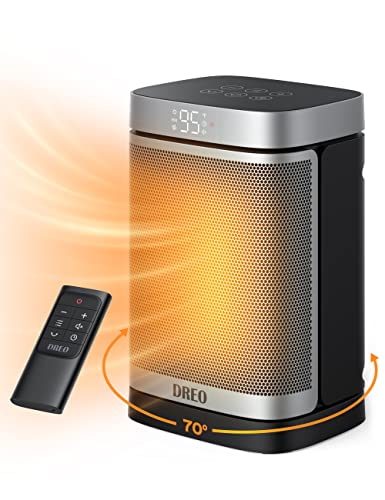
- BWP Score9.5
BWP Score is a ranking system developed by Bestwinterproducts.com. BWP score has no relationship or impact from any manufacturers or sales agent websites. Learn more
- BrandDREO

- BWP Score8.5
BWP Score is a ranking system developed by Bestwinterproducts.com. BWP score has no relationship or impact from any manufacturers or sales agent websites. Learn more
- BrandWEWARM

- BWP Score9.1
BWP Score is a ranking system developed by Bestwinterproducts.com. BWP score has no relationship or impact from any manufacturers or sales agent websites. Learn more
- BrandDR. INFRARED HEATER

- BWP Score9.0
BWP Score is a ranking system developed by Bestwinterproducts.com. BWP score has no relationship or impact from any manufacturers or sales agent websites. Learn more
- BrandQQT

- BWP Score8.2
BWP Score is a ranking system developed by Bestwinterproducts.com. BWP score has no relationship or impact from any manufacturers or sales agent websites. Learn more
- BrandDREO
Last update on 2026-10-12 / Affiliate links / Images, Product Titles, and Product Highlights from Amazon Product Advertising API


Best Warm Winter Scarves 2026 For Cozy Comfort

Best Green Ski Goggles 2026 For Clear Vision On Slopes

12 Best Corner Electric Fireplace 2026: My Ultimate Guide To Pick One

Best Battery Powered Snow Blower 2026 For Effortless Snow Clearing

Best Ski Goggles Under 30 Inches For Crisp Vision And Comfort

Best Cooling Scarf 2026 For Instant Relief And Comfort

Fake Snow for Grass: Create a Realistic Winter Lawn Display

Dimplex Prism Wall Mount Fireplace: Sleek Heat With Modern Flame Style





