
Is the Costway 1500W Oil Radiator Heater Worth It in 2026?

A sealed oil radiator is well worth the money if the goal is gentle, silent warmth that keeps a bedroom comfortable all night long. Expecting an instant blast of hot air will lead to disappointment, because internal heating oil takes fifteen to twenty minutes to build up a steady temperature.
Getting good results depends on your room and your daily routine. Natural air movement works best behind closed doors, meaning drafty hallways will quickly thin out the warmth. Control preferences also play a role, since turning a manual dial ahead of time feels very different from programming a digital screen with a remote. A few practical details will help you decide if this quiet heater fits your space and your nightly schedule.
Who the Costway 1500W Oil Radiator Is Best For (and Who Should Skip It)
The Costway 1500W oil-filled radiator is built for anyone who wants silent, steady warmth in an enclosed space without a noisy blower running all night. In a typical home, 1500 watts of heating power easily handles a closed bedroom, nursery, or home office up to 150 square feet as a primary heat source, or up to 300 square feet as supplemental warmth. If your central system leaves a corner room chilly or you want to lower the main thermostat while working at your desk, this heater keeps your personal space comfortable.
It is especially well suited for light sleepers. Because there is no internal fan, the unit operates in complete silence. You will not hear motor hums or plastic grilles rattling as the room temperature shifts. If dry winter air irritates your sinuses, eyes, or throat, an oil radiator is far gentler than fan-forced heaters because it does not blow hot air across the floor or kick up settled dust and pet dander.
But you should skip this heater if you need fast heat the moment you walk through the door. Oil radiators warm up slowly. If you come inside from freezing weather and want hot air blowing directly onto your hands, a compact ceramic fan heater works much faster.
You should also skip this heater if you want to heat a drafty or open-plan space. In rooms with high ceilings or drafty windows, the gentle radiant heat drifts away before the space can build up warmth. If you need heat in a breezy, unsealed area, consider a heater for an enclosed porch instead. The same applies to uninsulated workspaces; an electric heater for a garage with a thermostat pushes heat through cold drafts far better than a sealed oil radiator can.
How an Oil Radiator Warms a Room Compared to a Ceramic Fan Heater
To decide if an oil radiator fits your daily routine, it helps to understand how it creates warmth. A ceramic fan heater relies on a ceramic heating element that warms up in seconds, paired with a small electric fan that pushes warm air across the room. That provides fast, direct warmth. But the second the thermostat cycles off, the fan stops and the room turns chilly again.
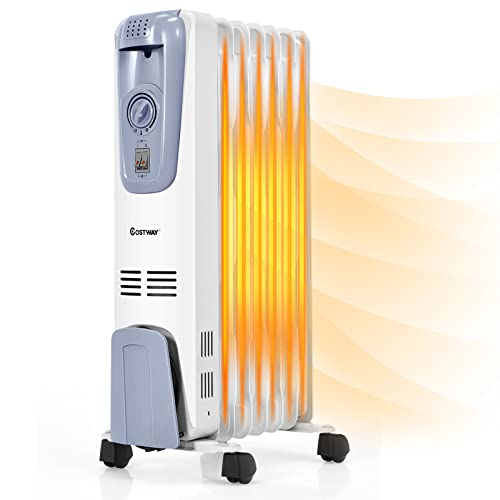
An oil radiator works through gentle, steady thermal mass. Inside the steel body is a factory-sealed reservoir of diathermic oil surrounding an electric element. When powered on, the element warms the oil, which circulates through 7 thermal fins (metal ridges that spread warmth). As the metal heats up, it creates convection heat (natural warm air movement without a fan). Cool room air enters at the floor, warms as it glides past the fins, and gently rises toward the ceiling.
This cycle takes 15 to 25 minutes before you feel rich heat radiating into the room. But oil holds heat exceptionally well. When the room reaches your target temperature and the thermostat clicks off, the hot metal fins continue radiating warmth for another 30 to 45 minutes without drawing any power from the wall.
That heat retention creates a steady, lingering blanket of warmth rather than the sharp temperature swings of a fan heater. It also protects indoor air quality. Without a red-hot electric wire scorching dust particles, you avoid the dry air and burnt odors that often cause nighttime coughing fits.
Five Safe Steps to Set Up and Run an Oil Radiator Overnight
Leaving any high-wattage appliance running while you sleep requires good habits. Oil radiators are among the safest space heaters because their heating elements are sealed inside steel fins, but proper placement is still vital. Follow these five steps to set up your heater for safe, restful overnight warmth:
-
Plug directly into a dedicated 120-volt wall outlet.
In standard US homes, a 1500-watt heater draws about 12.5 amps of electricity. Most residential bedroom circuits are rated for 15 amps total, meaning the heater uses almost all available capacity. Never plug into an extension cord or a power strip, as those connections can overheat, melt, and cause an electrical fire. -
Maintain a strict 3-foot safety buffer around all fins.
Place the unit at least 36 inches away from bedding, drapes, upholstery, and furniture. Thermal fins (metal ridges that spread warmth) need open space to circulate air naturally and prevent heat from getting trapped against combustible fabrics. -
Position the wheels on a firm, level floor instead of thick carpet.
The built-in tip-over safety switch (a tilt cutoff that kills power if knocked over past 45 degrees) needs a flat surface to stay upright. Deep carpet pile can cause the heater to lean, which might trigger the shutoff switch unexpectedly or leave the unit unstable around pets. -
Warm the room on high before bed, then turn the heat level down.
Run the unit on its 1500W setting with the door closed for thirty minutes before you go to sleep. When you turn in, switch down to the 600W or 900W setting. This holds your room temperature steady all night while cutting power use and reducing load on your electrical panel. -
Feel the wall plug after thirty minutes of continuous operation.
Touch the plastic faceplate and the plug head with your fingers. The plug may feel slightly warm, which is normal for 12.5 amps of continuous power, but it should never feel hot or smell like hot plastic. If the wall plate feels hot, shut the unit off and have an electrician inspect the outlet.
Choosing Between Manual Dials and Digital Touchscreens
Costway produces this 1500-watt platform in two main styles: a simple manual dial design and a digital touchscreen setup with a remote. Both share the same core safety hardware, including a 45-degree tip-over safety switch, an automatic overheat sensor that shuts the unit off if internal parts reach 302 degrees Fahrenheit, and three heat settings (600W, 900W, and 1500W). Choosing between them depends on how you like to control your bedroom climate.
The manual dial version uses two physical rocker switches and a turn knob. You turn the dial until the heater switches on, wait until the room reaches your preferred warmth, and turn the dial back until it clicks. The mechanical thermostat will hold that temperature by cycling on and off. This setup is simple, durable, and immune to brief power flickers. If your home loses power for a moment, the manual unit resumes heating immediately once power returns without losing its setting.
The digital touchscreen version offers greater convenience for nighttime adjustments. It features an LED control panel, a 24-hour timer, and a wireless remote so you can change settings without getting out of bed. You can program the heater to shut off after four hours or set it to run until dawn.
However, the digital version has two minor drawbacks in a dark bedroom. The digital display stays lit, which can bother people who need total darkness to sleep. The touch panel also emits an audible beep with every button press, which can disturb a sleeping partner or baby.
Both versions weigh between 17 and 19.3 pounds, measure roughly 24 to 25 inches high, and include smooth caster wheels with carry handles. That makes moving either unit between a home office and a bedroom quick and hassle-free.
What to Look for When Choosing an Oil-Filled Space Heater
When choosing an oil-filled radiator for supplemental room warmth, focus on solid safety marks and everyday convenience. Look for verified safety certifications like ETL or UL on the product label to ensure the tilt shutoff and thermal sensors meet strict electrical standards. Permanent factory seals on the metal fins are essential so you never face messy oil changes or leaks.
Look for models with multiple heat settings rather than a single fixed wattage. Having lower power levels lets you maintain comfortable overnight warmth while protecting your electric bill and avoiding tripped bedroom breakers. Sturdy caster wheels, a molded cord wrap, and a secure carry handle make the heater much easier to move around your home. Finally, check your bedroom wiring and outlet condition before plugging in any continuous 1500-watt heating appliance.

- BWP Score9.2
BWP Score is a ranking system developed by Bestwinterproducts.com. BWP score has no relationship or impact from any manufacturers or sales agent websites. Learn more
- BrandCOSTWAY
- BWP Score8.3
BWP Score is a ranking system developed by Bestwinterproducts.com. BWP score has no relationship or impact from any manufacturers or sales agent websites. Learn more
- BrandCOSTWAY

- BWP Score8.1
BWP Score is a ranking system developed by Bestwinterproducts.com. BWP score has no relationship or impact from any manufacturers or sales agent websites. Learn more
- BrandCOSTWAY
Last update on 2026-10-12 / Affiliate links / Images, Product Titles, and Product Highlights from Amazon Product Advertising API
Frequently Asked Questions
How long does a Costway oil radiator take to warm a cold room?
A 1500-watt oil radiator usually takes 15 to 25 minutes before you feel strong warmth rising from the metal ridges. Because the heating element must warm the internal oil before the outer fins heat the air, the process is gradual. For best results, close the room door and turn the heater on high about thirty minutes before bedtime.
Will running a 1500-watt oil heater trip my circuit breaker?
It will not trip a breaker as long as the circuit has enough spare capacity. In standard US homes, 1500 watts draws roughly 12.5 amps on a 120-volt line, leaving only 2.5 amps on a standard 15-amp bedroom breaker. If you run a hair dryer, a vacuum, or another heater on the same circuit simultaneously, the breaker will trip.
Does an oil-filled radiator make clicking or humming noises at night?
Oil-filled radiators are silent because they do not have a motor or fan blades. You will not hear hums, rattles, or blowing air while you rest. You may occasionally hear a soft click from the thermostat as it cycles the element on and off, along with an occasional faint metallic tick as the fins expand and contract with heat changes.
Do you ever need to refill or replace the oil inside the heater?
No, the heating oil never needs to be refilled or replaced. The specialized fluid is permanently sealed inside the steel fins during manufacturing and does not burn off or break down. If you ever notice an oil leak or smell hot fluid, turn the unit off, unplug it, and discard it, as a compromised reservoir cannot be safely repaired.
.jpg)

Best Warm Winter Scarves 2026 For Cozy Comfort

Best Green Ski Goggles 2026 For Clear Vision On Slopes

12 Best Corner Electric Fireplace 2026: My Ultimate Guide To Pick One

Best Battery Powered Snow Blower 2026 For Effortless Snow Clearing

Best Ski Goggles Under 30 Inches For Crisp Vision And Comfort

Best Cooling Scarf 2026 For Instant Relief And Comfort

Fake Snow for Grass: Create a Realistic Winter Lawn Display

Dimplex Prism Wall Mount Fireplace: Sleek Heat With Modern Flame Style





