
Is the DeLonghi TRD40615E the Right Oil Heater for You?

There is no need to worry about making the wrong heating choice for your space. The simple reality is that it is a great fit if you want gentle, completely silent warmth for an enclosed bedroom or home office. Because it warms the room through natural air circulation rather than a loud fan, the air stays steady and draft-free all night.
What changes the decision comes down to your patience and your floor plan. Liquid-filled fins need fifteen to twenty minutes to heat up, so it does not deliver instant hot air. The heavy steel body is also built to roll across a single level rather than travel up and down stairs. Here is a clear look at how it performs so you can see if it suits your daily routine.
The Rooms and Heating Routines That Match This Radiator
Space heaters do not work the same in every room, and an oil-filled radiator solves a specific heating challenge. This unit is built to warm enclosed rooms where you spend hours at a time, such as a bedroom, nursery, or home office. In American homes, heating sizing follows a standard guideline of ten watts of power per square foot of living space. Operating at 1500 watts on its highest setting, this radiator delivers enough steady heat for an enclosed room up to 150 square feet as a main heat source, or provides supplemental warmth in spaces up to 250 square feet.
Your daily routine matters just as much as room size. Oil radiators are built for long, continuous heating sessions rather than quick bursts of hot air. If your routine involves sitting at a desk for an eight-hour workday or sleeping through a cold winter night, this heater matches your lifestyle. It gently warms the surrounding air, heats furniture and walls, and maintains a stable baseline temperature without dramatic swings.
However, this radiator is a poor fit for drafty living rooms, high-ceiling hallways, or uninsulated spaces. When cold air constantly leaks in, an oil radiator cannot keep up because it releases warmth slowly through natural air movement rather than blowing hot air across the room. If you need to warm an uninsulated space, choosing a specialized heater to warm drafty spaces will give you much better results.
How the Heat Feels: Silent Warmth Versus Forced Hot Air
Understanding how this heater delivers warmth prevents the disappointment of expecting an instant blast of hot air. Inside the sealed metal body, an electric heating element warms a specialized thermal fluid called diathermic oil. That oil circulates internally, heating the metal exterior. As the exterior warms up, it heats the room through convection, which is the natural rising of warm air toward the ceiling as cooler room air is drawn underneath. At the same time, the metal body produces radiant heat, which is gentle warmth you feel directly on your skin and furniture like sunshine.
Because of this process, the warm-up timeline requires patience. When you turn it on, you will feel almost no heat for the first five minutes. By ten minutes, the metal housing feels warm. By fifteen to twenty minutes, warm air actively rises from the top vents. After thirty minutes, the entire room begins to settle into an even warmth. The reward for this wait is heat retention: even after the thermostat turns the heating element off or you unplug the unit, the warm fluid inside holds onto heat and continues warming your room for another thirty to forty-five minutes.
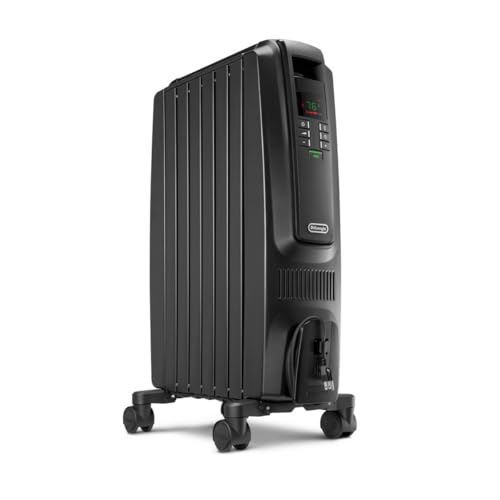
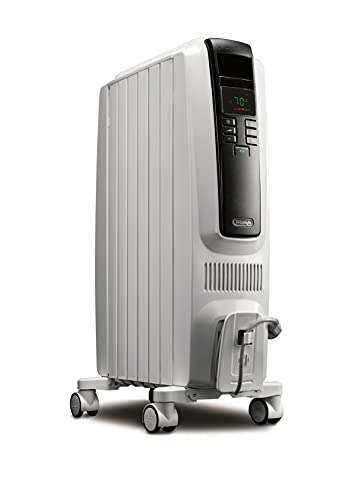
The DeLonghi TRD40615E uses an engineered chimney design that sets it apart from traditional radiators. Rather than exposing bare, open heating fins like older radiator styles, this model encloses the fins inside solid exterior steel walls. This structure creates a chimney effect that speeds up the upward flow of heated air while providing 75 percent more radiant surface area than the brand's standard RadiaS design. More surface area allows more radiant warmth to transfer directly to you without requiring an electric fan.
Skipping the blower fan creates a silent environment and protects your air quality. Traditional ceramic fan heaters use a noisy motor that hums, stirs up dust, and dries out your eyes, throat, and sinuses. This oil radiator operates with zero fan noise. You will hear no whirring and no rushing air, making it an ideal choice for light sleepers, quiet work calls, and allergy sufferers.
Overnight Safety, Circuit Limits, and Electrical Draw
Leaving a space heater running while you sleep can cause worry, but an oil-filled radiator is one of the safest portable electric heater styles you can operate overnight. The oil inside is permanently sealed inside thick metal fins at the factory and never serves as a combustion fuel. There are no open flames, no red-hot glowing electrical coils to ignite nearby fabrics, and no risk of carbon monoxide emissions. The exterior metal gets hot to the touch, but it will not instantly spark a fire on contact like an exposed glowing wire.
Even with sealed construction, you must respect household electrical limits. This heater draws 1500 watts on its high heat setting, which equals roughly 12.5 amps of continuous electrical current on a standard 120-volt household circuit. Most bedroom circuits in American homes are rated for 15 amps total. That leaves only 2.5 amps of buffer on the entire circuit. If you run a hair dryer, a vacuum, or a high-end computer on that same circuit while the heater is running, the breaker will trip.
Fire safety also requires strict outlet rules. You must always plug the three-prong power cord directly into a grounded wall outlet. Never plug this radiator into an extension cord, power strip, or surge protector. Light-duty cords are not rated for a continuous 12.5-amp electrical draw; they can overheat, melt their plastic casing, and cause an electrical fire. If your wall outlet faceplate ever feels hot or looks discolored, turn the heater off immediately, unplug the cord, and contact a licensed electrician to inspect the receptacle.
For larger utility zones like workshops or parking areas, household radiators are not built to fight uninsulated concrete chills, where an electric garage heater with a thermostat is better equipped to handle heavy-duty loads. In your bedroom or home office, run through this simple safety routine every evening before you climb into bed:
- Clear the safety buffer: Keep at least three feet of empty space around all sides of the heater, making sure blankets, bed skirts, curtains, and clothing cannot drape over the top.
- Check your outlet connection: Push the heavy three-prong plug firmly into the wall receptacle so that no metal prongs remain exposed to dust or pet hair.
- Verify flat floor placement: Set the heater on a solid, level surface so the internal tip-over safety switch that cuts power instantly if the unit is knocked over stays fully engaged.
- Avoid walking paths: Position the unit away from bedroom doorways and pathways so you will not bump into the hot metal exterior in the dark.
Living with the 26-Pound Weight and Digital Controls
Living comfortably with an oil heater means knowing how easy it is to move, position, and adjust during your daily routine. The DeLonghi TRD40615E measures 16.4 inches wide, 10.3 inches deep, and 26.1 inches high, with a total weight of 26.6 pounds. That heavy weight comes from the solid steel housing and the dense reservoir of internal fluid. While that mass is responsible for the heater's excellent heat retention, it also means this is not a lightweight portable unit that you casually pick up with one hand.
To make moving it easier, the base features pre-assembled folding caster wheels that snap into place without tools. On smooth hardwood, tile, or low-pile rugs, rolling the 26.6-pound radiator between your desk and your reading chair takes almost zero effort. But if your daily plan involves hauling the heater upstairs to the bedroom every night and back downstairs to the living area every morning, carrying over 26 pounds of metal up a flight of stairs will quickly become tiresome.
The front of the unit houses a digital control panel with an LED display, available on both the white TRD40615E and the black TRD40615EBK models. The digital interface replaces old-fashioned mechanical dials with clear push buttons, letting you select your exact target temperature and power level. The display clearly confirms your chosen settings, so you never have to guess what power mode the heater is running in.
A standout daily convenience is the built-in 24-hour programmable timer. Because oil radiators take fifteen to twenty minutes to begin warming a room, the timer eliminates the cold waiting period entirely. You can program the unit to start warming your home office thirty minutes before your workday starts so the room is comfortable when you sit down. You can also program it to shut off automatically after you fall asleep, or to turn on right before your evening bedtime routine.
What to Consider Before Choosing an Oil-Filled Space Heater
When you want quiet, consistent warmth for a closed living space, choosing an oil-filled radiator solves the problems of cold drafts, annoying motor buzz, and parched indoor air. Before you finalize your purchase, take a close look at your room layout and electrical setup to ensure an oil-filled heater will deliver the results you expect.
Verify that your chosen space has a clear, dedicated wall outlet located close to where you want the heat. Because these heaters cannot be used with extension cords, the cord must reach the wall easily while keeping the heater at least three feet away from furniture, drapery, and bedding. Check whether the unit features pre-mounted rolling wheels so you do not have to struggle with heavy lifting during seasonal storage or room cleaning.
Look for units with digital temperature controls and programmable timers rather than basic manual dials. A digital system allows you to set an exact comfort level and schedule warm-up cycles in advance, which completely eliminates the frustration of waiting for cold thermal oil to heat up. Finally, confirm that any model you consider includes recognized safety listings along with an automatic overheat shut-off sensor and an internal tip-over cut-off switch for reliable, worry-free operation.
- BWP Score8.8
BWP Score is a ranking system developed by Bestwinterproducts.com. BWP score has no relationship or impact from any manufacturers or sales agent websites. Learn more
- BrandDe'Longhi
- BWP Score8.4
BWP Score is a ranking system developed by Bestwinterproducts.com. BWP score has no relationship or impact from any manufacturers or sales agent websites. Learn more
- BrandDe'Longhi
Last update on 2026-10-13 / Affiliate links / Images, Product Titles, and Product Highlights from Amazon Product Advertising API
FAQs
Does an oil-filled radiator produce an odor when you first turn it on?
A new oil radiator often emits a faint metallic or warm paint smell during its first few hours of operation. This harmless odor happens as manufacturing oils and protective coatings cure on the heated metal exterior. To prevent this smell from lingering in your bedroom, plug the unit in near an open window or in a well-ventilated space on high heat for two hours before moving it into your sleeping area.
Does the internal oil inside the heater ever need to be changed or refilled?
The heating fluid inside an oil-filled radiator is permanently sealed inside the steel fins at the factory and never needs refilling or changing. Because the oil serves only as a heat-holding liquid rather than a consumable fuel, it does not burn away, break down, or evaporate over time. You never have to open the reservoir, add oil, or perform fluid maintenance during the life of the heater.
What should you do if an oil radiator begins to leak fluid?
If you see oily residue pooled beneath your radiator or running down the metal fins, immediately turn the unit off and unplug it from the wall outlet. An oil leak compromises the internal safety of the heating element and creates a potential slip and stain hazard on your floor. Never attempt to weld, seal, or patch a leaking oil radiator yourself; discard the damaged unit safely according to your local household appliance recycling rules.


Best Warm Winter Scarves 2026 For Cozy Comfort

Best Green Ski Goggles 2026 For Clear Vision On Slopes

12 Best Corner Electric Fireplace 2026: My Ultimate Guide To Pick One

Best Battery Powered Snow Blower 2026 For Effortless Snow Clearing

Best Ski Goggles Under 30 Inches For Crisp Vision And Comfort

Best Cooling Scarf 2026 For Instant Relief And Comfort

Fake Snow for Grass: Create a Realistic Winter Lawn Display

Dimplex Prism Wall Mount Fireplace: Sleek Heat With Modern Flame Style





