
Does the Dreo 16-Inch Heater Really Save Energy?

No space heater makes free heat. Every standard plug-in model pulls the exact same power on high to warm a room. A compact ceramic tower does not draw less electricity by default, but it can protect your wallet by preventing wasted runtime once the space feels comfortable.
Those savings depend entirely on how you use the machine. Setting the digital thermostat in a closed bedroom or home office cuts costs nicely, especially if you turn down your central heat at the same time. Blasting continuous high heat in an open living space, however, will only cause a shock on your next utility bill. Here is how these controls actually manage power and how to set them up for lower bills.
The Short Version
- Every 1500-watt electric heater draws the same power: The Dreo 16-inch model cannot create extra heat out of thin air. On high heat, it pulls about 1,500 watts of electric power draw, just like any standard portable electric heater on the market.
- Savings come from controls, not magic heat: Its energy-saving reputation comes from its digital temperature dial that clicks on and off to hold your set warmth, paired with an auto power-saving setting that drops the wattage when the room nears your target temperature.
- Zone heating is where your bill drops: You only save real money if you use this unit to warm the single closed room you are sitting in while turning down your central home thermostat by several degrees.
- It will not cut costs in large, open layouts: Running a compact tower heater non-stop in an open-concept living room or a drafty space with open doors will drive your electric bill up, not down.
The Plain Truth About 1500-Watt Electric Heat and Energy Savings
Electric space heaters have a simple physical reality that marketing buzzwords often hide. In standard American homes, portable electric heaters turn electrical energy into heat at essentially the exact same rate. When plugged into a standard 120-volt household wall outlet, a 1500-watt heater pulls about 12.5 amps of electricity. Whether a heater costs twenty dollars or a hundred dollars, running it on high power for one continuous hour consumes 1.5 kilowatt-hours of electricity. A 16-inch tower heater does not produce bonus warmth for free.
Why do so many people report lower power bills after switching to a modern ceramic tower? The difference lies in heat delivery and runtime. A traditional basic heater usually features a simple dial that runs constantly at maximum power until you manually turn it off. By contrast, a model equipped with a ceramic heating element that warms up in seconds begins pushing heat into the room almost immediately. You feel the heat right away instead of waiting twenty minutes for metal fins or radiator coils to slowly warm up.
When warm air reaches you faster, you feel comfortable sooner. That prompt comfort allows you to lower the heat level or shut the unit off much earlier in the day. True energy savings with an electric space heater never come from an engine that burns less electricity on full blast. They come entirely from zone heating: warming only the immediate space you occupy so your central furnace does not have to heat empty hallways, guest rooms, and unoccupied corners of the house.
If you keep your central thermostat at 72 degrees Fahrenheit while running a portable heater in the bedroom, your electric bill will rise every single time. But if you roll your main furnace back to 64 degrees and let a compact heater warm your occupied home office or bedroom to 68 degrees, you will see a genuine drop in your overall monthly heating expense.
How the Digital Thermostat and Auto Mode Curb Wasted Power
The single biggest reason space heaters run up massive electricity bills is room overheating. Basic space heaters rely on simple analog dials labeled from minimum to maximum. These dials are notoriously inaccurate. People turn them up high to warm up a chilly room, get focused on work or a movie, and only notice the heater when the room has climbed past 78 degrees. At that point, you have wasted kilowatt-hours creating heat you never actually wanted.
A digital temperature dial that clicks on and off to hold your set warmth solves that problem directly. When you set your target warmth to 68 or 70 degrees, the heater constantly monitors the surrounding air. The moment the room hits that number, the heating element shuts off. Instead of running wide open for four hours straight, the heater might only draw power for twenty minutes out of every hour to maintain your comfort level.
The auto power-saving setting on modern ceramic units takes this efficiency one step further. Rather than simply switching between 1500 watts and completely off, the internal sensor tracks how close the room is to your chosen temperature. When the room is cold, the unit engages full power to lift the chill quickly. As the room temperature approaches your target, the system steps down its electric power draw to a lower heat setting. Running at a lower power draw uses far less electricity than blasting high heat, smoothing out temperature spikes and keeping power draw steady.
Air circulation also plays a major role in curbing power waste. A fan that pushes warm air across the room combined with 70-degree side-to-side turning spreads warm air evenly across the floor and seating area. Without proper circulation, warm air rises straight to the ceiling, leaving your feet freezing and forcing the heater to run continuously. Even air distribution tricks your body into feeling warm at lower ambient temperatures, which helps keep the runtime short.
Built-in safety features also help prevent accidental power waste. A tip-over safety switch that cuts power instantly if the unit is knocked over or tilted ensures the heater will not run into carpet or furniture. Similarly, an automatic overheat sensor that shuts the unit off if internal parts get dangerously hot protects the motor while preventing damaged components from pulling excess current from your breaker panel.
Matching the 16-Inch Tower to Your Room Dimensions
A compact 16-inch tower heater has clear physical boundaries. For standard residential heating in the United States, a reliable rule of thumb is roughly 10 watts of heat per square foot of living space. A 1500-watt ceramic heater is capable of serving as the primary heat source for a closed room up to 150 square feet. That covers standard bedrooms, nursery rooms, and small home offices.
When used as supplemental heat alongside a baseline central heating system, a 16-inch unit can comfortably support spaces up to roughly 270 square feet. But that capability depends entirely on the layout of your space. Here is a practical checklist to verify whether a 16-inch tower will heat your room efficiently or waste energy trying to keep up:
- Ceiling Height: Standard 8-foot or 9-foot ceilings allow the circulating fan to keep warmth down near living height. If your room has 12-foot cathedral ceilings, warm air floats straight up, forcing the heater to stay on high power constantly.
- Closed Doors: A compact tower heater relies on building up a reservoir of warm air. It performs best in rooms where you can close the interior door. Leaving the door open to an unheated hallway lets warm air bleed away, causing the thermostat to run the heating element without stopping.
- Drafts and Insulation: Double-pane windows and finished drywall hold heat effectively. If you place a portable unit in an uninsulated space or an old sunroom, cold outdoor air will sap the warmth faster than the ceramic elements can release it. In those situations, you need heaters designed for drafty spaces rather than a compact indoor tower.
- Circuit Load: Standard bedroom and office circuits in American homes are rated for 15 amps, providing 1,800 watts before tripping the circuit breaker. A 1500-watt heater takes up over 80 percent of that circuit capacity. Make sure the outlet you choose does not share power with a gaming computer, laser printer, or hair dryer. Always plug the power cord directly into a wall outlet. Never plug a space heater into an extension cord, power strip, or surge protector, as those connections can overheat, melt, and trigger electrical fires.
Everyday Habits That Lower Your Heating Bill Without Losing Comfort
Owning a heater with smart controls is only half the battle. How you operate the machine day to day determines whether your monthly electric bill drops or spikes. Following a consistent routine keeps your living space cozy while eliminating wasted electricity.
- Lower your central home thermostat first: Zone heating only pays off when your central heating system does less work. Turn your whole-house thermostat down by 5 to 8 degrees Fahrenheit before switching on your personal heater. If your central system normally runs at 70 degrees, set it to 64 degrees. Let the portable unit warm the single room you are occupying.
- Seal the heating zone: Take the heater into your room, close the door behind you, and shut any open window shades. Blocking drafts prevents heat leakage and allows the room air to reach your chosen setting much faster.
- Aim for 68 degrees instead of 74: Setting your digital thermostat to a sensible level makes a massive difference in electrical consumption. A setting of 68 degrees provides pleasant indoor comfort, especially when wearing socks and a sweater, and lets the auto power-saving setting throttle down quickly. Setting the target to 74 degrees forces the heater into maximum draw for long stretches.
- Establish a 3-foot safety buffer: Position the unit on a flat, level floor at least 3 feet away from bedding, curtains, upholstered chairs, and paper baskets. This 3-foot buffer satisfies basic fire safety guidelines and ensures the rear air intake stays unobstructed, which keeps internal airflow efficient.
- Activate the auto-off timer for sleep and work blocks: If you use the heater to take the chill off your bedroom at night, program the built-in timer for two or three hours. Once you are asleep under heavy blankets, you do not need the heater drawing power until morning. You can check how similar programmable controls help manage runtime across different spaces by looking at electric heaters with built-in thermostats.
- Keep the intake grille free of lint: Every few weeks, turn the heater off, unplug it from the wall, and allow it to cool down completely. Inspect the rear air inlet for dust, pet hair, and lint. Gently vacuum or wipe the grille clean. A clogged intake forces the internal fan to work harder, slows down warm air release, and can trip the internal safety shutoff unnecessarily.
What to Look for in an Energy-Smart Space Heater
If you want a portable heater that keeps operating costs in check, you need features that eliminate unnecessary runtime and spread heat evenly. Focus on how the unit manages power draw rather than marketing promises of secret heating efficiency.
Look for a model with an onboard digital thermostat that lets you select a specific target temperature in degrees rather than a generic dial with numbered notches. Digital controls prevent the room from creeping into uncomfortable, power-wasting heat levels. An automatic power-saving setting that automatically switches between high and low power draw based on room temperature is equally important for avoiding continuous maximum power consumption.
Heat dispersion makes a measurable difference in how quickly your space feels comfortable. Look for models featuring side-to-side turning mechanisms and internal fans that push air outward in a broad pattern. Moving the air continuously eliminates cold spots in corners and keeps heat from lingering uselessly near the ceiling.
Finally, check the safety label on the back or bottom of the housing. Any heater brought into a home should carry an official mark from a recognized testing laboratory such as ETL, UL, or CSA. Confirm that the heater includes an internal tip-over switch and an automatic shutoff for overheating. These safety protections guarantee that if airflow is ever blocked or the unit is knocked over by a pet, power cuts off immediately without damaging your electrical wiring.

- BWP Score9.7
BWP Score is a ranking system developed by Bestwinterproducts.com. BWP score has no relationship or impact from any manufacturers or sales agent websites. Learn more
- BrandDREO

- BWP Score9.5
BWP Score is a ranking system developed by Bestwinterproducts.com. BWP score has no relationship or impact from any manufacturers or sales agent websites. Learn more
- BrandDREO
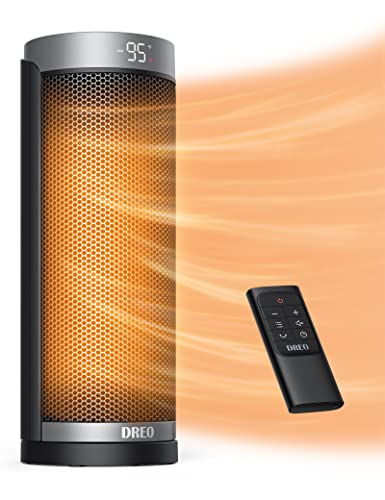
- BWP Score8.5
BWP Score is a ranking system developed by Bestwinterproducts.com. BWP score has no relationship or impact from any manufacturers or sales agent websites. Learn more
- BrandDREO
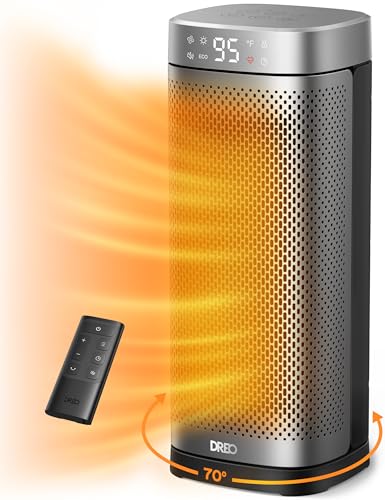
- BWP Score7.1
BWP Score is a ranking system developed by Bestwinterproducts.com. BWP score has no relationship or impact from any manufacturers or sales agent websites. Learn more
- BrandDREO
Last update on 2026-10-12 / Affiliate links / Images, Product Titles, and Product Highlights from Amazon Product Advertising API
FAQs
Can leaving a 16-inch electric heater on all night save money?
Leaving any electric heater running all night rarely saves money unless your central heating system is turned off completely. If you sleep under warm blankets, keeping a space heater active for eight straight hours simply burns electricity to warm an empty room. A far better strategy is using the programmable auto-off timer to run the unit for one or two hours while you fall asleep, letting your bedding keep you warm through the night.
Why does my wall outlet feel warm when running an electric heater?
A portable heater running on high draws around 12.5 amps, which pushes standard household wiring near its continuous limit. A faint warmth on the plastic cover plate is common during long heating cycles. But if the wall plate feels hot to the touch, shows discoloration, smells like burning plastic, or sparks when plugged in, turn the heater off and unplug it immediately. Stop using that outlet and have a licensed electrician inspect your wiring and receptacle before plugging any appliance in again.
Is a ceramic tower heater cheaper to run than an oil-filled radiator?
Both types draw the same 1,500 watts on high heat, but they deliver warmth differently. A ceramic tower with a fan provides rapid, targeted heat in seconds, making it cheaper for short heating sessions where you only need warmth for an hour or two. An oil-filled radiator takes longer to warm up but radiates gentle, lasting heat silently without a fan, making it more cost-effective for maintaining a steady temperature across a long workday in a closed room.
Will a 16-inch tower heater warm an open-concept living area?
A 16-inch tower heater cannot efficiently heat an open-concept living room or large family area. Because standard portable heaters are capped at 1,500 watts, placing one in a wide-open layout will cause the heating element to run on high non-stop without raising the overall room temperature. In large spaces, a small tower should only be used as a personal foot warmer placed near your chair, rather than an energy-saving replacement for your central furnace.


Best Warm Winter Scarves 2026 For Cozy Comfort

Best Green Ski Goggles 2026 For Clear Vision On Slopes

12 Best Corner Electric Fireplace 2026: My Ultimate Guide To Pick One

Best Battery Powered Snow Blower 2026 For Effortless Snow Clearing

Best Ski Goggles Under 30 Inches For Crisp Vision And Comfort

Best Cooling Scarf 2026 For Instant Relief And Comfort

Fake Snow for Grass: Create a Realistic Winter Lawn Display

Dimplex Prism Wall Mount Fireplace: Sleek Heat With Modern Flame Style





