
Is the Dreo 714 Whole Room Heater Worth It?

Most people assume compact space heaters only warm the small patch of floor directly in front of them. That doubt makes sense, but this model is well worth it for enclosed spaces because its two-way airflow spreads warmth across the entire room. Instead of scorching your shins while the corners stay freezing, the unit creates a steady, comfortable blanket of heat.
A few everyday details determine whether this setup solves your chill. The design works best in closed rooms up to 270 square feet, making it ideal for chilly bedrooms or home offices rather than open floor plans. It runs at a hushed hum that will not wake light sleepers, though its 1,500-watt draw means it must plug straight into a standard wall outlet. Here is how its heating reach, sound levels, and safety features hold up in daily use.
The Dreo 714 excels in closed bedrooms and offices
If you spend winter mornings shivering in a chilly bedroom or working in a drafty home office, you know the frustration of cold feet and uneven warmth. The Dreo 714 is designed specifically to solve that problem in enclosed rooms up to 270 square feet. It works best as supplemental zone heating, which means warming the exact room you are using rather than cranking up your central furnace for the whole house.
The compact design makes it easy to position where you need warmth most. Measuring 11.02 by 7.09 by 12.4 inches and weighing just 6.45 pounds, the unit is light enough to move from an office desk during the day to a bedside stand at night. It comes in black and grey finishes that blend cleanly into bedroom furniture without looking like an industrial utility heater.
Fast heat delivery is where this unit stands out. Its ceramic heating element that warms up in seconds relies on a 1500-watt system. When electricity flows into the ceramic stones, they absorb the energy and reach operating temperature almost immediately, delivering noticeable warm air within two seconds. An internal blower gives the unit a 92% boost in rapid airflow compared to basic stationary space heaters, providing quick comfort when you step out of bed onto cold floors.
This unit is not designed for open-concept floor plans, vaulted living rooms, or uninsulated basements. Ceramic space heaters need contained spaces where walls can capture and hold circulating warm air. Expecting a small portable unit to heat an entire ground floor will leave you with cold corners and higher electric bills.
Two-way oscillation spreads warm air across your living space
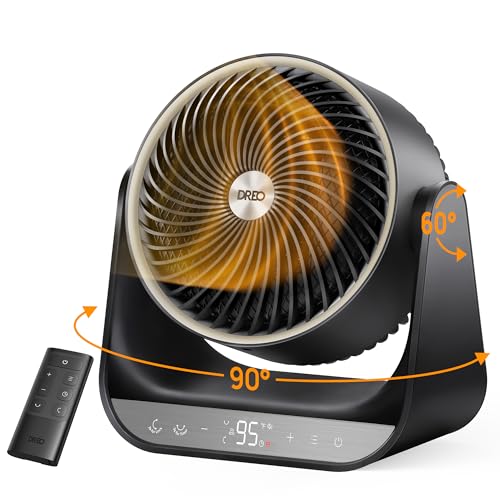
Most basic space heaters blast heat forward in a single narrow beam. This creates a hot zone directly in front of the grille while the rest of the room stays uncomfortably cold. The Dreo 714 avoids this problem by moving side-to-side and tilting up-and-down, combining horizontal and vertical motion into what the maker calls 3D oscillation.
The internal motorized track swings 90 degrees horizontally while tilting 60 degrees vertically. At the same time, the fan pushes warm air forward at 12 feet per second with an airflow volume of 120 cubic feet per minute. By continuously moving air across both the width and height of the room, the heater breaks up stagnant pockets of cold air that naturally settle near the floor.
Warm air naturally rises toward the ceiling. Because this unit tilts up and down while swinging side to side, it constantly mixes rising warm air with descending cooler air. Within fifteen minutes in an enclosed bedroom, the temperature between your bed, your desk, and the doorway begins to level out. You avoid the scorching breeze that dries out your skin when sitting directly beside a traditional stationary heater.
Room conditions still affect how well that circulation works. If your room has leaky single-pane windows or drafty exterior doors, warm air escapes quickly. In those situations, you might need a dedicated heater to warm drafty spaces that handles higher heat loss rather than relying purely on moderate fan circulation.
Quiet operation prevents sleep disruption and work distractions
Noise is a major reason people turn space heaters off at night, choosing to be cold rather than listen to a roaring fan. Cheap portable heaters often rely on vibrating plastic housings, buzzing transformers, or harsh fan blades that wake light sleepers. The Dreo 714 operates down to 34 decibels on its lower settings, producing a soft background hum similar to a quiet library or gentle rainfall.
You can choose between 3 heat settings and 3 fan settings to tailor the sound and airflow to your environment. When placed on a bedside table or the corner of an office desk, the sound stays smooth and even, without high-pitched whines or annoying motor groans. Normal conversation runs around 60 decibels, so a 34-decibel hum fades easily into normal room background noise.
Light disturbance can be just as disruptive as noise in a dark bedroom. Many space heaters feature bright digital screens that illuminate the entire ceiling all night. The Dreo 714 allows you to dim or shut off its display lights while the ceramic element continues to run. You get steady warmth without an annoying glare shining in your eyes while trying to rest.
The mechanical parts move smoothly over time. The oscillation motors glide side to side and tilt up and down without the loud clicks, pops, or gear rattles common in budget mechanical turntables. This quiet movement makes the heater practical for home offices where sudden mechanical noises can disrupt phone calls, virtual meetings, or focused study sessions.
Smart ECO settings balance room comfort and electricity costs
Worrying about power bills keeps many homeowners and renters from using portable heaters regularly. In standard US homes, portable electric heaters draw up to 1500 watts, which equals roughly 12.5 amps on a standard 120-volt household circuit. If you leave a heater running continuously on high heat, it consumes 1.5 kilowatt-hours of power every hour, which adds up quickly over a cold winter month.
The Dreo 714 addresses this with an ECO mode, which functions as an auto mode that lowers power at your set temperature. Instead of running at full blast continuously, you choose your preferred comfort target in degrees Fahrenheit. Internal temperature sensors monitor the surrounding air and adjust the power output automatically.
When the room is cold, the unit engages its full 1500-watt ceramic plate to raise the temperature quickly. Once your room reaches the set comfort level, the heater automatically dials down its wattage or pauses heating altogether. It then uses its low fan to sample the air, only re-engaging heat when the room temperature dips below your target.
This cycling prevents the heater from pulling maximum power when the space is already warm. To get the best efficiency, keep your bedroom or office door closed so warmth stays inside. Lower your central home thermostat a few degrees overnight and let the ECO mode keep only your occupied bedroom warm. If you manage larger work areas or outbuildings, looking into a heater for a garage with a thermostat shows how automated cycling saves electricity across different room sizes.
Safety features protect your home from fire and electrical risks
Space heaters cause thousands of residential fires every year, making safety the most important consideration before buying one. Leaving a heater running while you sleep or work requires dependable built-in protections against tip-overs, blocked grilles, and electrical overloads.
The Dreo 714 includes three essential safety features:
- A tip-over safety switch that cuts power instantly if the unit is knocked over or tilted by a child, pet, or vacuum cord.
- An automatic overheat sensor that shuts the unit off if internal parts get dangerously hot due to blocked airflow.
- Clear safety certification indicating the unit is certified to meet electrical safety rules (ETL-listed mark on the label).
To keep your home safe, follow these placement and operating rules:
- Plug directly into a dedicated wall outlet. Never plug a space heater into an extension cord, power strip, or surge protector. These secondary cords are not built to handle sustained 12.5-amp loads and can overheat, melt, or spark a house fire.
- Maintain the three-foot safety buffer. Keep all sides of the heater at least 3 feet (36 inches) away from bedding, drapes, curtains, blankets, clothing, paper, and upholstered furniture.
- Set the heater on a flat, firm, level floor or sturdy table. Never place it on soft mattresses, plush sofa cushions, or thick shag carpets that can choke the bottom air intake.
- Keep pets at a safe distance. While the outer plastic casing stays cool enough to touch safely, the front metal grille gets very hot during operation and can burn curious noses or paws.
- Check the power cord and wall outlet regularly. If the wall outlet feels hot to the touch, if the plug shows discoloration, or if your 15-amp circuit breaker trips, turn the unit off, unplug it, and consult a licensed electrician immediately.
Choosing the right heater for larger or open floor plans
Understanding what kind of heater fits your specific room layout is the best way to avoid wasting money on the wrong equipment. Compact ceramic heaters with directional airflow excel in small to medium enclosed rooms because they move air rapidly within confined walls. But different spaces require completely different heating technologies.
If you need to heat an open-concept living room, high-ceiling den, or wide family room, ceramic fan heaters struggle because their warmth disperses before warming the entire air volume. For those expansive areas, look for silent radiator heaters that circulate steady, lasting warmth through oil-filled fins. These heaters take longer to warm up, but they create a durable thermal mass that radiates gentle, lasting heat throughout a wide room without drying out the air.
If your space is drafty, such as a garage, workshop, or poorly insulated entryway, air circulation heaters lose their warmth through window gaps and cold floors. In drafty environments, consider radiant or infrared heaters. Radiant heat warms people and furniture directly like sunlight rather than trying to warm the surrounding air, making it far more effective when cold air is constantly leaking in.
Before purchasing any whole room space heater, verify these critical points on the packaging or product label:
- Room square footage match: follow the standard US guideline of roughly 10 watts per square foot of enclosed living space to ensure adequate heating capacity.
- Electrical compatibility: verify that your intended room has an accessible, grounded wall outlet on a circuit that is not shared with other high-draw appliances like hair dryers or microwaves.
- Safety certification marks: check that the heater carries an official UL, ETL, or CSA safety mark confirming independent electrical safety verification.
- Thermostat controls: choose units with digital temperature dials that click on and off, programmable timers, and auto shutoff sensors to ensure both comfort and energy efficiency.
- BWP Score9.6
BWP Score is a ranking system developed by Bestwinterproducts.com. BWP score has no relationship or impact from any manufacturers or sales agent websites. Learn more
- BrandDREO

- BWP Score8.2
BWP Score is a ranking system developed by Bestwinterproducts.com. BWP score has no relationship or impact from any manufacturers or sales agent websites. Learn more
- BrandDREO

- BWP Score7.1
BWP Score is a ranking system developed by Bestwinterproducts.com. BWP score has no relationship or impact from any manufacturers or sales agent websites. Learn more
- BrandDREO
Last update on 2026-10-12 / Affiliate links / Images, Product Titles, and Product Highlights from Amazon Product Advertising API


Best Warm Winter Scarves 2026 For Cozy Comfort

Best Green Ski Goggles 2026 For Clear Vision On Slopes

12 Best Corner Electric Fireplace 2026: My Ultimate Guide To Pick One

Best Battery Powered Snow Blower 2026 For Effortless Snow Clearing

Best Ski Goggles Under 30 Inches For Crisp Vision And Comfort

Best Cooling Scarf 2026 For Instant Relief And Comfort

Fake Snow for Grass: Create a Realistic Winter Lawn Display

Dimplex Prism Wall Mount Fireplace: Sleek Heat With Modern Flame Style





