
Can a Dreo Radiator Heater Warm a Large Space?

An oil radiator is rarely the best standalone choice for heating a wide, open living area. That answer only shifts if the space is fully enclosed and you prefer silent, background warmth over quick heat. These heaters do not blow air with a fan. Instead, the warm metal fins heat the nearby air slowly, letting it rise naturally toward the ceiling. In a large room, that gentle process takes hours to make a noticeable dent in the chill.
Several everyday factors will decide if this kind of heat works for you. High ceilings, open doorways, and drafty window frames pull warmth away faster than a single plug-in heater can replace it. A closed room with decent insulation, however, allows that steady comfort to build up and stay put. Here is what to expect so you can pick the right setup for your home.
How Dreo Radiator Heaters Warm a Room
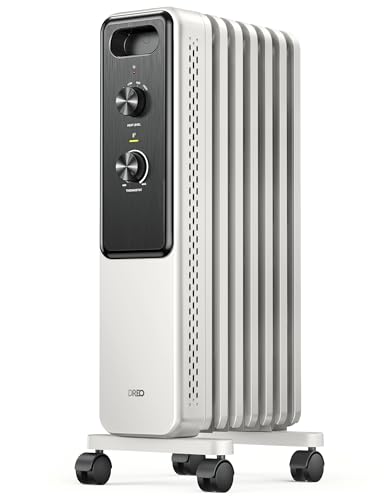
An oil radiator works very differently from a heater with a blowing fan. Inside the steel body of a Dreo radiator sits a reservoir of specially formulated thermal oil. When you turn the unit on, an electric heating element warms that oil. The heated liquid then circulates through hollow vertical columns called fins (the metal ridges that hold warm oil and release heat).
As those metal fins get hot, they warm the air immediately touching them. That heated air expands, becomes lighter, and gently floats up toward the ceiling. Cooler air near the floor gets drawn into the bottom of the heater to take its place. This continuous cycle is called convection (natural warm air movement without a blowing fan). It creates a smooth, gentle loop of warmth without any motorized blowing.
This heating method creates steady, lasting warmth in a closed bedroom or a private home office. But in a wide, open living room or a high-ceiling family room, natural convection faces a physics problem. Because there is no fan pushing the warm air across the floor, that heated air travels straight up to the ceiling. In a large open space, the heat spreads thin across the ceiling long before it ever reaches you sitting on the couch across the room.
Another factor is the heat-up time. An oil-filled radiator takes twenty to thirty minutes just to get its metal body and internal oil up to full operating temperature. In a compact 120-square-foot room, that delay is easy to manage because the air warms steadily once the metal is hot. In a large open layout, the heater spends hours trying to lift the room temperature, often losing heat through walls and windows faster than the oil can give it off.
Radiator Heat Versus Fan Heaters in Open Living Areas
Choosing between a radiator and a fan heater comes down to how quickly you need warmth and how your room is shaped. A ceramic heating element that warms up in seconds paired with a fan that pushes warm air across the room is built for speed. It projects a stream of hot air ten to fifteen feet across an open floor plan. You feel that direct warmth within sixty seconds of turning it on.
A silent radiator heater that circulates steady, lasting warmth has completely different strengths. It produces no fan motor buzz, makes no clicking noises, and will not stir up household dust, pet dander, or dry out your eyes. The heavy oil holds thermal energy for a long time, meaning the fins continue radiating warmth into the room for thirty to forty-five minutes after the thermostat clicks off.
When you place these two heater types in a large living room, their differences become obvious. A fan-forced heater acts like a spotlight, aiming warmth straight at your chair even if the rest of the 300-square-foot room stays cool. An oil radiator acts like a sponge, trying to soak the entire room in gentle ambient warmth from floor to ceiling. If that room is large, open, or drafty, the radiator simply cannot keep up.
Drafts make this contrast even sharper. If you have older double-hung windows, unsealed exterior doors, or an open stairwell, cold air constantly enters the space. While you might look for a specialized heater to warm drafty spaces when dealing with serious air leaks, an oil radiator in a drafty living room will struggle. The slow natural convection loop gets broken by drafts before the room ever feels cozy.
The 1500-Watt Limit and What It Means for Room Size
Many shoppers wonder why a larger Dreo radiator cannot simply be built with double the power. The answer comes down to wattage (the total electric power limit of a standard household plug). In the United States, standard wall outlets run on a 120-volt electrical system protected by a 15-amp circuit breaker. Under standard electrical safety guidelines, a continuous plug-in appliance cannot safely draw more than 1500 watts (about 12.5 amps) without risking an electrical fire or tripping the breaker.
Because of this hard electrical limit, every residential plug-in space heater sold in the United States maxes out at 1500 watts on its highest setting. A small portable desk heater, an oscillating tower heater, and a heavy 21-pound Dreo oil radiator all draw the exact same maximum power from your wall. No brand can bypass this rule on a standard household outlet.
Heating engineers use a simple, reliable rule of thumb for residential spaces: you need roughly 10 watts of electric heat for every single square foot of living space. That sizing baseline assumes standard eight-foot ceilings and average home insulation. When you apply this math to a 1500-watt heater, the maximum room size it can comfortably warm as a standalone heat source is around 150 square feet:
- 100 to 150 square feet (10x10 to 10x15 room): Ideal. A 1500-watt Dreo radiator warms this enclosed space completely and cycles down to save energy.
- 150 to 200 square feet (12x16 room): Capable, provided the room has closed doors, decent insulation, and eight-foot ceilings. The unit will take longer to reach your target temperature.
- 250 square feet and larger: Supplemental only. The heater cannot raise the whole room temperature on its own during freezing winter days.
If your room features vaulted ten-foot ceilings, you have significantly more cubic feet of air to warm. In spaces like uninsulated basements or detached shops, standard portable heaters fall behind quickly, which is why people often choose hardwired units for steady warmth in a workshop or garage instead of a standard portable radiator.
Dreo 7-Fin Versus 8-Fin Models for Bigger Rooms
Dreo builds oil-filled radiators in two primary body styles: compact 7-fin models and larger 8-fin models. While both designs cap their power draw at 1500 watts on high, their dimensions, surface areas, and controls differ in ways that affect how they perform in a spacious room.
The Dreo 7-fin radiators measure 12.83 inches long, 9.92 inches wide, and 26.14 inches high, weighing between 17.6 and 17.91 pounds. These heaters use 7 M-shaped fins that provide a listed 39.5 percent more heating area (or 39.49 percent heat dissipation) and a 92.3 percent heating boost compared to traditional flat fins. They come in manual dual-knob versions or digital configurations featuring a remote control, child lock, and 24-hour timer. They also carry ETL listed status, flame-resistant materials, tilt protection, and triple overheat protection.
The Dreo 8-fin radiators are noticeably larger units. They measure 19.37 inches long, 10.12 inches wide, and 26.06 inches high, with total weights between 20.59 and 21.1 pounds. These models feature 8 M-shaped fins that deliver a listed 59.5 percent higher dissipation area. They include four operating modes, a digital thermostat dial that clicks on and off to hold your set warmth, a remote control, and eight built-in safety protections.
In a larger room, the 8-fin version has an advantage in heat delivery. Because its frame is over six inches wider and holds an eighth fin, it has significantly more metal touching the room air. That 59.5 percent larger dissipation area allows the heater to transfer its warmth into the surrounding air faster than the 7-fin design. But keep in mind that the total heat energy produced is identical because both draw 1500 watts. The 8-fin unit spreads that energy into the room more quickly, but it still cannot turn a freezing 350-square-foot living room into a sauna on its own.
5 Practical Steps to Maximize Heat in a Larger Space
If you choose to use a Dreo radiator in a room that pushes past 150 square feet, careful setup makes a massive difference in how warm you feel. Follow these five checks to get the best performance from your heater:
- Plug the power cord directly into a dedicated wall outlet. A 1500-watt radiator pulls roughly 12.5 amps continuously, which can melt thin cords. Never plug the heater into an extension cord, power strip, or surge protector because those connections can overheat, spark, and cause a house fire. Direct wall plug connections also prevent unexpected breaker trips.
- Set up a three-foot safety buffer around the unit. Maintain at least 36 inches of clear floor space on every side of the heater, away from drapes, couches, blankets, and walls. This open buffer keeps combustible materials safe and allows cold room air to enter the lower fins without restriction.
- Position the radiator along an interior wall rather than right beside a cold window. Placing a slow-heating oil radiator directly under an uninsulated window allows cold glass to rob the fins of their heat before warmth ever circulates. Setting the unit a few feet inward lets the rising warm air establish a functional convection current throughout the living area.
- Shut interior doors to trap the rising heat. An oil radiator relies on heating an enclosed envelope of air over several hours. Leaving hallway, bathroom, or stairwell doors open allows that gentle warmth to drift away into unoccupied spaces, leaving your primary seating area cold.
- Run the heater on full power before turning on ECO mode. Dreo units include an ECO mode (smart setting that lowers power once the room reaches target heat). When warming a chilly room, run the unit on high 1500-watt power for the first 45 minutes so the oil gets hot, then switch to ECO mode to maintain your temperature efficiently.
What to Look for When Heating a Large or Open Space
Before buying a space heater for a spacious living area, match the appliance design to your daily routine. If you need fast, immediate warmth the moment you sit down to watch television, prioritize an electric tower heater equipped with an internal blower fan and wide oscillation. A fan-forced unit actively throws warm air into your seating zone rather than waiting for natural room airflow to circulate.
If you prefer silent operation and want steady background warmth that lasts all day, an oil-filled radiator is an outstanding choice for an enclosed room. When shopping for one, look for models with wider fin surfaces that maximize heat release into the room. Check for user-friendly digital temperature controls that let you select an exact target temperature, and verify that the heater includes an automatic tip-over safety switch that cuts power instantly if the unit is knocked over and an automatic overheat sensor that shuts the unit off if internal parts get dangerously hot.
- BWP Score9.5
BWP Score is a ranking system developed by Bestwinterproducts.com. BWP score has no relationship or impact from any manufacturers or sales agent websites. Learn more
- BrandDREO

- BWP Score9.4
BWP Score is a ranking system developed by Bestwinterproducts.com. BWP score has no relationship or impact from any manufacturers or sales agent websites. Learn more
- BrandDREO

- BWP Score9.4
BWP Score is a ranking system developed by Bestwinterproducts.com. BWP score has no relationship or impact from any manufacturers or sales agent websites. Learn more
- BrandDREO

- BWP Score8.3
BWP Score is a ranking system developed by Bestwinterproducts.com. BWP score has no relationship or impact from any manufacturers or sales agent websites. Learn more
- BrandDREO

- BWP Score8.0
BWP Score is a ranking system developed by Bestwinterproducts.com. BWP score has no relationship or impact from any manufacturers or sales agent websites. Learn more
- BrandDREO

- BWP Score7.7
BWP Score is a ranking system developed by Bestwinterproducts.com. BWP score has no relationship or impact from any manufacturers or sales agent websites. Learn more
- BrandDREO

- BWP Score7.6
BWP Score is a ranking system developed by Bestwinterproducts.com. BWP score has no relationship or impact from any manufacturers or sales agent websites. Learn more
- BrandDREO
Last update on 2026-10-13 / Affiliate links / Images, Product Titles, and Product Highlights from Amazon Product Advertising API
FAQs
Can a Dreo oil radiator heat a 300-square-foot room?
A Dreo oil radiator can take the chill off a 300-square-foot room, but it cannot serve as the sole heat source in cold winter weather. At 1500 watts, the heater produces enough thermal energy for roughly 150 square feet of living space under standard conditions. In a 300-square-foot room, you should use it as supplemental heat alongside your central heating system.
How long does a Dreo radiator take to warm up a space?
The radiator fins take fifteen to twenty minutes to become hot to the touch after turning the power on. In an enclosed bedroom under 150 square feet, you will notice a comfortable increase in room temperature after forty-five to sixty minutes. In a room larger than 200 square feet, warming the air can take several hours of continuous operation.
Is an oil radiator safer to run overnight than a fan heater?
Oil-filled radiators are generally considered one of the safest portable electric heater styles for overnight use. They operate without glowing red-hot heating elements, run completely silently, and feature sealed steel bodies that do not expose open coils to room dust. You must still maintain a three-foot clearance from bedding and plug the unit directly into a wall outlet.
Why does my Dreo heater feel hot to the touch while my room stays cool?
If the heater fins are hot but your room remains chilly, the room is losing heat faster than a 1500-watt heater can produce it. This commonly happens in spaces over 200 square feet, rooms with open doors, rooms with high ceilings, or areas with drafty windows. The heater is operating at full capacity, but the air volume is simply too large for natural convection to warm it.


Best Warm Winter Scarves 2026 For Cozy Comfort

Best Green Ski Goggles 2026 For Clear Vision On Slopes

12 Best Corner Electric Fireplace 2026: My Ultimate Guide To Pick One

Best Battery Powered Snow Blower 2026 For Effortless Snow Clearing

Best Ski Goggles Under 30 Inches For Crisp Vision And Comfort

Best Cooling Scarf 2026 For Instant Relief And Comfort

Fake Snow for Grass: Create a Realistic Winter Lawn Display

Dimplex Prism Wall Mount Fireplace: Sleek Heat With Modern Flame Style





