
Can the Dreo DR-HSH004 Space Heater Warm a Large Room?

There is no need to worry about making an expensive mistake before you buy. The simple answer is that a portable ceramic heater is not the best choice for warming a large room. Standard plug-in models lack the power to push enough warm air across an expansive open layout. While they do a fine job in an enclosed bedroom, oversized spaces leave them running constantly without chasing away the chill.
A few room details will change how much comfort you actually get. Spaces under 250 square feet usually stay cozy, but high ceilings and open doorways swallow heat faster than a small fan can blow it. Setting the heater right next to your chair provides great personal warmth, though asking it to heat an entire living area will only drive up your electric bill. Here is a look at what these heaters can realistically do and how to warm a bigger room effectively.
The Real Room Size Limits for 1500-Watt Ceramic Heaters
Many people buy a ceramic tower heater hoping it will warm a chilly open living room, vaulted family room, or drafty basement. The packaging may even state that it is designed for large rooms. But when you plug it in, you quickly run into the physical limits of standard household electricity. In the United States, portable plug-in heaters must follow strict electrical safety rules. A standard wall outlet runs on a 120-volt circuit, usually protected by a 15-amp breaker. Under national safety codes, a continuous electric load cannot exceed 80 percent of that breaker capacity, which caps power at 1,500 watts (about 12.5 amps). Because of this ceiling, every standard plug-in space heater creates roughly the same maximum heat output, no matter its brand or shape.
Heating guidelines rely on a simple rule of thumb: you need roughly 10 watts of heating power for every single square foot of living space. That means a 1,500-watt heater provides enough energy to warm an enclosed room of up to 150 square feet from a cold baseline. If your home has modern insulation, snug double-pane windows, and standard eight-foot ceilings, that same 1,500 watts can comfortably take the chill off an area up to 200 or 250 square feet.
Once your room stretches past 250 square feet, the math turns against you. In a 350-square-foot living room or a 500-square-foot open floor plan, a single 1500W heater cannot keep up with heat escaping through exterior walls, cold floors, and drafty windows. Dreo models feature fast-heating ceramic elements and strong internal fans, but they cannot bend the laws of physics. The unit blows hot air into the room, but it cannot produce enough thermal energy to lift the overall temperature of the entire space on its own.
When you expect a compact ceramic heater to warm an oversized room, three frustrating problems happen. The room never feels warm outside of a small pocket right in front of the heater grille. The digital thermostat (a temperature sensor that turns heat off when the room reaches your target) never registers your set temperature, causing the unit to run continuously at full blast. Running an electric heating element at maximum capacity for hours also creates a noticeable spike on your monthly electric bill without delivering the comfort you wanted.
Why Ceramic Fan Heaters Struggle in Big, Open Spaces
To understand why portable ceramic heaters struggle in open floor plans, you have to look at how they move heat. Dreo heaters use PTC ceramic parts, which are small ceramic stone elements that warm up quickly with electricity. An internal electric fan pushes air across those hot ceramic stones and blows warm air into your living area. This design creates quick, intense warmth within two or three seconds of turning the power on.
The problem comes down to heat distribution and room volume. Air is a poor heat holder compared to solid objects. When the fan blows warm air into a large room, that air expands, thins out, and immediately begins to rise toward the ceiling. In rooms with high ceilings, open staircases, or tall archways leading into adjacent spaces, rising warm air floats away from the floor where you sit. You end up paying to heat empty ceiling space while your ankles remain cold.
Drafts make this problem worse. Large living areas usually feature multiple exterior walls, wide windows, and patio doors. Even minor drafts strip heat out of the air faster than a 1500-watt fan can replace it. If you try to warm a drafty space or an uninsulated room addition, similar to using a heater for an enclosed porch, cold surfaces absorb the warmth rapidly. The fan-forced air cools down just a few feet from the heater, turning into a lukewarm draft before reaching the other side of the room.
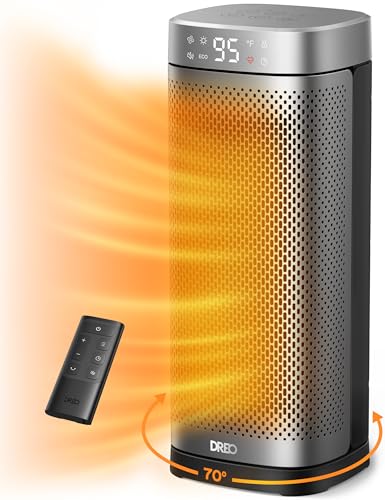
Many Dreo tower heaters include 70-degree oscillation, meaning the unit turns side to side to spread warm air over a wider path. While oscillation helps two or three people sharing a sofa, it does not create more heat. In a large room, sweeping the air simply spreads limited thermal energy across a bigger volume of cool air. That dilutes the warmth, allowing the surrounding air to swallow the heat before your furniture or rugs ever warm up.
How to Get the Most Warmth Using Targeted Spot Heating
Just because a portable ceramic heater cannot warm an entire great room does not mean it is useless in a large space. You simply need to treat it as a personal spot heater rather than a central heating replacement. Spot heating means delivering warmth directly to where you sit, leaving unused corners of the room cool.
Using a heater for spot heating allows you to keep your central thermostat lower during the day, saving money on your main fuel bill while staying cozy. Placing a tower heater four to six feet from your chair provides direct, soothing warmth almost immediately. The unit keeps you comfortable without needing to fight the entire room volume.
To get the safest and most effective warmth from a Dreo heater in a large room, follow this setup checklist:
- Maintain the 3-foot safety buffer: Keep at least three feet (36 inches) of clear space around the heater. Keep it away from throw blankets, drapes, sofa cushions, pet beds, and furniture.
- Plug directly into a dedicated wall outlet: Never use an extension cord, power strip, or surge protector. These cords cannot handle a continuous 12.5-amp load and can melt or spark fires.
- Place the base on a flat, hard floor: Set the heater on bare hardwood, tile, or firm flooring. Deep carpets can block the lower air intake or tilt the unit, triggering the tip-over safety switch that cuts power instantly if the unit is knocked over or tilted.
- Aim airflow across your seating area: Position the front grille four to six feet away, angled toward your legs and torso. Turn on the 70-degree oscillation so warm air moves across your body instead of blowing on one spot.
- Set the thermostat to a sensible target: Use the digital controls to set your warmth around 68°F to 70°F, or select an eco power mode. Setting the dial to the maximum temperature will not make the air blow hotter; it only forces the unit to run continuously.
- Check the wall outlet after thirty minutes: Turn the unit off, touch the plastic outlet faceplate, and confirm it is not hot. If the outlet or plug feels hot, stop using it immediately and consult a licensed electrician.
When used for spot warmth, a Dreo tower heater provides comfortable, focused heat right where you spend your time, even if the rest of your open living room stays cool.
Choosing the Right Supplemental Heater for Larger Spaces
If your room is larger than 250 square feet, picking the right supplemental heating style makes a big difference in daily comfort. No standard 120-volt space heater can warm a 500-square-foot room by itself, but different heater styles solve different problems.
Fan-forced ceramic tower heaters work best for rapid, directional heat when you sit down. Because ceramic stone elements warm up in seconds and tall grilles align with seating level, they provide fast personal relief in living rooms and home offices. Look for models with wide oscillation, multiple fan speeds, and built-in timers that turn the unit off after you fall asleep.
If you want steady, lasting warmth in a closed bedroom or family room, an oil-filled radiator is often a better match. These silent radiator heaters circulate steady, lasting warmth using an electric element sealed inside metal fins. They take twenty minutes to warm up, but they radiate gentle heat long after cycling off. Without fans, they make zero noise and maintain an even baseline temperature.
For large unheated spaces like workshops or detached structures, portable household units are simply underpowered. Heating these areas often requires a dedicated hardwired unit, such as an electric heater for a garage with a thermostat, which connects to a 240-volt circuit to produce far more heat than a standard wall outlet allows.
Before buying any supplemental heater for a large room, check the safety features on the box. Confirm it carries a recognized US safety listing, such as an ETL or UL mark. Look for an automatic overheat sensor that shuts the unit off if internal parts get dangerously hot, a tip-over switch, and a digital temperature dial that clicks on and off to hold your set warmth without running continuously.

- BWP Score8.2
BWP Score is a ranking system developed by Bestwinterproducts.com. BWP score has no relationship or impact from any manufacturers or sales agent websites. Learn more
- BrandDREO

- BWP Score9.7
BWP Score is a ranking system developed by Bestwinterproducts.com. BWP score has no relationship or impact from any manufacturers or sales agent websites. Learn more
- BrandDREO

- BWP Score8.2
BWP Score is a ranking system developed by Bestwinterproducts.com. BWP score has no relationship or impact from any manufacturers or sales agent websites. Learn more
- BrandDREO
- BWP Score7.1
BWP Score is a ranking system developed by Bestwinterproducts.com. BWP score has no relationship or impact from any manufacturers or sales agent websites. Learn more
- BrandDREO
Last update on 2026-10-12 / Affiliate links / Images, Product Titles, and Product Highlights from Amazon Product Advertising API
FAQs
Can a Dreo ceramic heater run safely overnight in a bedroom?
Yes, it includes built-in safety features like an automatic overheat sensor, a tip-over switch, and an auto-off timer to shut down if tilted or overheating. Always maintain a three-foot clearance from blankets and curtains, and plug the unit directly into a wall outlet. Setting a lower digital thermostat target or an auto-off timer prevents the unit from running continuously while you sleep.
Will running a 1500-watt space heater raise my electric bill in a large room?
Yes, running any 1500-watt heater on high in a large space can noticeably increase your electric bill. Because open rooms lose heat faster than a portable heater can supply it, the thermostat rarely shuts off, drawing roughly 1.5 kilowatt-hours of power each hour. To manage costs, use the heater only in your immediate seating area and switch to a lower power mode once you feel warm.
How far away should you sit from a ceramic tower heater?
Sitting four to six feet away from the front grille provides the most comfortable personal warmth while keeping a safe distance. You must always maintain at least three feet of open clearance between the heater and any furniture, clothing, or bedding to prevent fire hazards. Make sure the unit rests on a flat, level floor where it cannot be accidentally bumped or knocked over.


Best Warm Winter Scarves 2026 For Cozy Comfort

Best Green Ski Goggles 2026 For Clear Vision On Slopes

12 Best Corner Electric Fireplace 2026: My Ultimate Guide To Pick One

Best Battery Powered Snow Blower 2026 For Effortless Snow Clearing

Best Ski Goggles Under 30 Inches For Crisp Vision And Comfort

Best Cooling Scarf 2026 For Instant Relief And Comfort

Fake Snow for Grass: Create a Realistic Winter Lawn Display

Dimplex Prism Wall Mount Fireplace: Sleek Heat With Modern Flame Style





