
Is the Heat Storm HS-1500-PHX-WIFI Right for Your Room?

Yes, but only in specific rooms. This wall-mounted unit is an ideal choice if freeing up floor space and warming a closed bedroom or home office matters most. Its outer frame stays completely cool to the touch around kids or pets, and phone controls let people adjust temperatures without crossing a cold room. But it is permanently fixed to drywall, so anyone hoping to roll heat from the living room to the basement will feel let down immediately.
A few daily details quickly change the outcome. Drafty open layouts will easily swallow the warmth, leaving corners chilly. Electrical wiring matters just as much, because drawing maximum wattage can trip a breaker (cut power to the circuit) if lights or a television share that same line. Here is a clear look at where this heater shines and where another setup makes more sense.
The Short Version
- Best for saved floor space: This heater is an excellent choice if you want to mount your heat source directly to the wall, keep floor space completely clear, and control room temperatures from your phone.
- Not built for moving room to room: This specific Wi-Fi model is wall-mount only and does not come with floor feet, so it is the wrong pick if you need portable heat on carpet.
- Ideal for closed, small to mid-sized rooms: Its 5,200 BTU heat output comfortably handles primary heating in a closed room up to 150 square feet, or supplemental warmth in spaces up to 400 square feet.
- Heavy electrical pull: Running at its full 1,500-watt capacity draws about 12.5 amps, meaning it needs a dedicated wall outlet on a standard 15-amp household circuit to avoid tripping your breaker.
Where the Heat Storm HS-1500-PHX-WIFI Wins and Where It Falls Short
The Heat Storm HS-1500-PHX-WIFI solves a very specific problem that many space heaters fail to address. Most portable heaters sit directly on the floor where people can trip over them, pets can knock them over, and furniture blocks their warm air. Because this model attaches securely to the wall, it keeps floor space open in tight bedrooms, home offices, and hallways. The grill stays safe to the touch even while operating, which gives peace of mind if you have small children or curious pets wandering nearby.
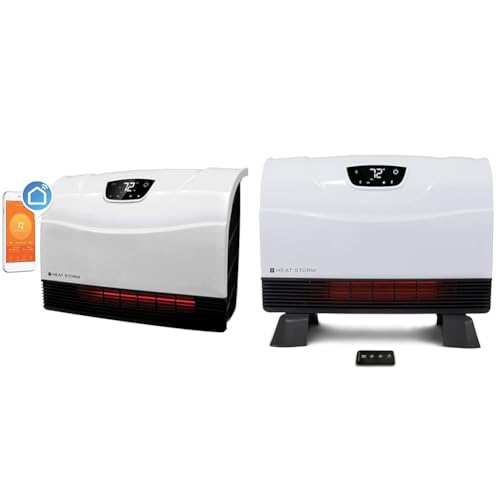
The built-in Wi-Fi and phone app connectivity give you genuine convenience. Instead of getting out of bed on a freezing morning to adjust a dial, you can adjust the digital thermostat from your phone or create automated daily heating schedules. Setting the heater to warm your bedroom thirty minutes before you wake up, and turning it down automatically when you leave for work, keeps your room comfortable without needlessly running power all day. It also includes a compact handheld remote control and a clean touch screen display right on the front face of the unit.
Where this heater falls short comes down to mobility and installation expectations. Many buyers see the Phoenix name and assume the package includes snap-on floor feet. This particular Wi-Fi unit is strictly a wall-mounted heater. If you rent an apartment that forbids screwing brackets into drywall, or if you want a unit you can roll from your desk to your living room couch, this model will frustrate you. It cannot sit flat on the floor safely without proper mounting.
The heater also cannot bypass the laws of residential electricity. At its maximum 1,500-watt setting, it pulls significant power. If your room already has a computer, a television, or lamps running on the same branch circuit, adding this heater on high can quickly trip your circuit breaker. It is built for targeted room heating, not for heating open-concept floor plans with vaulted ceilings.
Understanding the Heating Reach: What 5,200 BTUs Actually Feels Like
To understand whether this unit will keep you warm, you need to understand how infrared heat functions compared to traditional space heaters. Standard fan heaters blow hot air across the room. That air immediately rises toward the ceiling, leaving the floor and your feet cold. Infrared heat works like gentle sunlight, warming people, walls, and furniture directly. As those objects warm up, they release steady heat back into the surrounding air.
This heater pairs its infrared heating element with an internal heat exchanger using patented HMS technology. This internal design works alongside the natural humidity in your room to circulate soft warmth without burning up oxygen or drying out the air. If you often wake up with dry sinuses, a scratchy throat, or irritated eyes from electric space heaters, this gentler warming method is a noticeable improvement.
The heater produces 5,200 British Thermal Units (BTU), which is the standard heat output created by 1,500 watts of electrical power. In heating terms, a standard insulated room requires roughly 10 watts of heating power per square foot to act as the primary heat source. That means this 1,500-watt unit can comfortably serve as the sole source of warmth for a closed room up to 150 square feet, such as a nursery, home office, or spare bedroom.
When used as supplemental heat, meaning your central furnace keeps the house at 62 degrees and you simply want your living space warmer, it can handle up to 400 square feet. But drafts change everything. If your room has uninsulated exterior walls, single-pane glass, or loose window seals, heat escapes faster than the unit can produce it. For areas exposed to serious outdoor drafts, you may want to look into heaters built to warm drafty spaces that are engineered to counter heavy heat loss.
Mounting and Placement: Why Wall Space and Outlets Matter Most
Planning your wall layout before buying this heater prevents major headaches during setup. The unit measures 19 inches wide, 16 inches high, and only 4 inches deep, weighing around 9 pounds. Because it sits flush against the wall, it occupies very little visual or physical space. But you cannot simply hang it anywhere you find an empty nail.
Safe placement requires adhering to the 3-foot safety buffer. You must keep all combustible items, including long curtains, bedsheets, blankets, upholstered chairs, and stacks of paper, at least 3 feet away from the front and sides of the heater. Never mount the heater directly below a wall outlet. Heat rising out of the top vents can warm the electrical outlet faceplate and power cord over time, which creates an electrical fire hazard.
Instead, choose a location where the heater hangs adjacent to an electrical outlet so the power cord reaches easily without pulling tight. Never run the power cord under rugs, behind furniture, or through a wall cavity. The cord must hang freely where you can see it and check it for warmth. If you cannot place the unit near an outlet without crossing a doorway or stretching the cord taut, you will need to reconfigure your room layout.
Renting is another major factor. Installing the mounting bracket requires drilling holes and placing screws firmly into wall studs or heavy-duty drywall anchors to support its 9-pound frame. If your lease prohibits wall anchors, or if your walls are made of historic lath and plaster that cracks easily, mounting this unit safely becomes difficult. In that situation, a freestanding portable heater with wide floor feet is a much better choice.
Electrical and Safety Check: Running 1,500 Watts Without Tripping Breakers
Space heaters are among the most power-hungry plug-in appliances in any home. Before you install this heater, run through this quick electrical checklist to ensure your home wiring can handle the load safely.
- Check your circuit amperage: In standard U.S. homes, electrical circuits are wired for either 15 amps or 20 amps. On high, this 1,500-watt heater draws about 12.5 amps of electricity. That means it uses more than 80 percent of a 15-amp circuit's safe continuous capacity all by itself.
- Find out what else shares the line: A single circuit breaker in your electrical panel often controls the outlets in two adjacent bedrooms. If you run this heater on high while someone in the next room uses a hair dryer, a powerful desktop computer, or an iron, the breaker will trip to prevent the wires in your walls from overheating.
- Plug straight into the wall: Never plug this heater into an extension cord, power strip, or surge protector. Those accessories are rarely rated for continuous 12.5-amp power draws, which causes internal wiring to melt, spark, and catch fire.
- Use the 750-watt low mode when sharing power: This model offers two power modes: 1,500 watts and 750 watts. Switching the unit to 750 watts cuts the electrical draw down to roughly 6.25 amps. This lower mode provides steady supplemental heat while leaving plenty of circuit capacity for your lamps and laptop.
- Check the wall outlet temperature: After the unit has run on high for thirty minutes, lightly touch the plastic outlet faceplate and the plug prongs. They should feel mildly warm, never hot. If an outlet feels hot, smells like burning plastic, or shows discoloration, turn the heater off, unplug it, and hire a licensed electrician to inspect the outlet wiring.
The unit includes built-in safety protections to prevent accidents. It features an internal tip-over switch that immediately shuts off power if the unit is knocked off its bracket or tilted. It also uses an automatic digital thermostat that cycles heating elements off once your room reaches your target temperature, similar to how modern electric heaters with built-in thermostats maintain steady, efficient comfort without wasting electricity.
What to Look for When Choosing an Infrared Space Heater
If you are deciding what style of heater will best solve your cold-room problem, focus on how you move through your home and how your rooms are organized. Choosing the right heating setup comes down to three basic practical questions.
First, evaluate your available floor space versus your wall space. If your room has narrow walkways, small children playing on rugs, or pets that run around at night, a securely mounted wall heater keeps hot components out of the path of travel and prevents tripping accidents. If you spend your day moving between a home office, a living room, and a bedroom, a portable unit with wide, sturdy floor feet and a built-in carry handle will give you far more practical value.
Second, assess your heating goals. Infrared models excel at creating personal comfort and warming solid surfaces in sealed rooms without stripping moisture from the air. But if you are trying to heat a cavernous room with tall ceilings or open archways, radiant heat alone will feel inadequate once you walk away from the heater. For large open areas, a unit with a powerful convection fan is necessary to move warm air throughout the entire volume of the room.
Finally, check your wireless network before paying extra for smart features. Most app-enabled heaters require a standard 2.4 GHz Wi-Fi connection to pair properly with your smartphone. If your home uses a modern router that locks devices onto a 5 GHz band without an easy split, connecting the app can prove frustrating. Make sure you are comfortable setting up smart appliances, or be prepared to use the physical remote and touch screen buttons instead.
- BWP Score9.6
BWP Score is a ranking system developed by Bestwinterproducts.com. BWP score has no relationship or impact from any manufacturers or sales agent websites. Learn more
- BrandHeat Storm

- BWP Score8.3
BWP Score is a ranking system developed by Bestwinterproducts.com. BWP score has no relationship or impact from any manufacturers or sales agent websites. Learn more
- BrandHeat Storm

- BWP Score8.3
BWP Score is a ranking system developed by Bestwinterproducts.com. BWP score has no relationship or impact from any manufacturers or sales agent websites. Learn more
- BrandHeat Storm

- BWP Score7.8
BWP Score is a ranking system developed by Bestwinterproducts.com. BWP score has no relationship or impact from any manufacturers or sales agent websites. Learn more
- BrandHeat Storm

- BWP Score7.5
BWP Score is a ranking system developed by Bestwinterproducts.com. BWP score has no relationship or impact from any manufacturers or sales agent websites. Learn more
- BrandHeat Storm

- BWP Score7.4
BWP Score is a ranking system developed by Bestwinterproducts.com. BWP score has no relationship or impact from any manufacturers or sales agent websites. Learn more
- BrandHeat Storm
Last update on 2026-10-04 / Affiliate links / Images, Product Titles, and Product Highlights from Amazon Product Advertising API
FAQs
Can I set this specific Heat Storm model on the floor if I change my mind?
No, you should not set this specific Wi-Fi unit directly on the floor. It is manufactured strictly as a wall-mounted unit and does not include attachable feet. Placing it flat on carpet or hard flooring blocks bottom air intake vents, triggers safety shut-offs, and creates a fire hazard.
Does using the Wi-Fi feature actually help lower electric bills?
Yes, the Wi-Fi feature helps lower electric bills by letting you create precise heating schedules instead of leaving the unit running constantly. You can program the heater to warm the room right before you use it and drop the temperature when you leave or go to sleep. Cutting running hours directly reduces kilowatt consumption.
Will this 1,500-watt heater trip the circuit breaker in my bedroom?
It will not trip the breaker on its own, but it will trip the breaker if other high-draw devices share the same circuit. At 1,500 watts, it pulls about 12.5 amps, leaving very little spare capacity on a standard 15-amp bedroom line. Keep other appliances off that circuit or run the heater on its 750-watt low setting.
Does this infrared heater dry out your eyes and sinuses overnight?
No, it is specifically designed to prevent the dry air issues caused by red-hot coil heaters. The internal heat exchanger warms air gently while preserving natural room humidity and oxygen levels. This makes it significantly more comfortable for overnight use in bedrooms compared to standard electric blowers.


Best Warm Winter Scarves 2026 For Cozy Comfort

Best Green Ski Goggles 2026 For Clear Vision On Slopes

12 Best Corner Electric Fireplace 2026: My Ultimate Guide To Pick One

Best Battery Powered Snow Blower 2026 For Effortless Snow Clearing

Best Ski Goggles Under 30 Inches For Crisp Vision And Comfort

Best Cooling Scarf 2026 For Instant Relief And Comfort

Fake Snow for Grass: Create a Realistic Winter Lawn Display

Dimplex Prism Wall Mount Fireplace: Sleek Heat With Modern Flame Style





