
Is the Hykolity 50,000 BTU Propane Patio Heater Worth It?

A brisk evening breeze sweeps across the patio, forcing dinner guests to reach for jackets before dessert arrives. Setting up a tall umbrella-style gas heater quickly solves that chill, making it well worth buying for open spaces up to two hundred square feet. The wide top reflector bounces a thick circle of downward warmth right over seated chairs.
That value still depends on your specific setup. Standing over seven feet tall, the metal frame requires plenty of open air above it, far away from low porch roofs or deck awnings. Breezy yards also mean filling the hollow base with sand or water to stop gusts from tipping the post. Running at full heat will burn through a standard twenty-pound fuel tank in eight to ten hours, which adds up during long weekends. Here is how the heater actually performs, how it handles wind, and whether it fits your patio.
What do you actually get for your money?
Tall outdoor gas heaters often fall into two camps: expensive commercial heaters built for restaurant patios or flimsy bargain towers that dent if you look at them wrong. The Hykolity 50,000 BTU propane heater sits right in the sweet spot between those extremes. It gives you a serious amount of heat output without forcing you to pay professional hospitality prices.
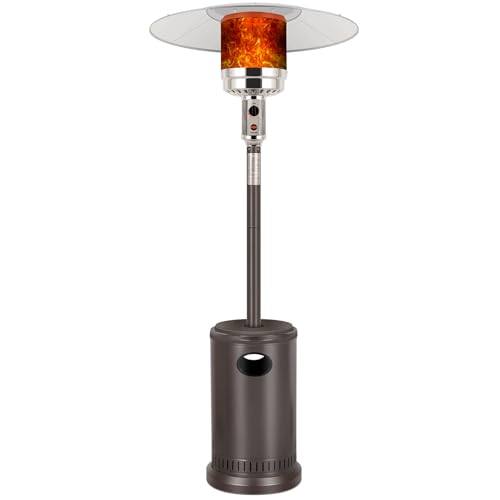
The core of this heater is its double-layer 304 stainless steel burner mesh. That heavy-duty mesh grid holds up against high flame temperatures much better than cheaper single-layer screens, which tend to warp or burn through after a few months of heavy use. You also get practical convenience features built into the frame, including a middle drink table tray and a set of rear wheels that let you roll the unit across your patio pavers.
To hit its accessible price point, the build cuts a few corners on the outer body panels. The metal casing on the pole and lower tank shroud is relatively thin stamped steel. The entire empty unit weighs between 32.5 and 39.71 pounds depending on the specific finish. That light weight makes the box easier to handle when it arrives on your porch, but it means the base requires extra ballast before you can trust it in a breeze. You also have to spend twenty minutes peeling off protective blue factory film before you turn a single screw.
If you want a handsome, heavy-heating tower that keeps your outdoor seating area usable during chilly autumn evenings, it delivers strong value. Just keep in mind that you are buying functional heating hardware, not an indestructible commercial tank.
Does 50,000 BTUs keep you warm on chilly nights?
A BTU (British Thermal Unit) is simply a heat output rating that measures how much thermal energy an appliance creates. A rating of 50,000 BTUs puts this heater at the top tier for home patio warmers. Most entry-level outdoor heaters top out around 40,000 to 44,000 BTUs, so that extra output makes a noticeable difference when the thermometer drops into the 40s or low 50s.
The heater pushes warmth downward using an umbrella reflector, which is the broad, dome-shaped metal hood sitting at the very top of the post. As the stainless steel burner glows cherry red, the reflector bounces that radiant heat downward toward your patio chairs. The manufacturer lists the heat coverage at up to 200 square feet. Under calm conditions, that creates a comfortable warm circle roughly 12 to 15 feet across, centered right around the pole.
The height of the heater directly shapes how that warmth feels on your skin. Because the post stands between 86.4 and 87.25 inches tall, the heat source sits just over seven feet in the air. When you and your guests are seated around the built-in table, the heat warms your head, neck, and shoulders first. Your upper body stays comfortably warm, but your feet and lower legs will feel noticeably cooler because rising warm air cannot fight its way down to ground level.
Brisk breezes also cut into your warmth. Outdoor gas heat does not warm the air itself like an indoor furnace. Instead, it warms objects directly. A steady wind carries rising heat away before the umbrella hood can direct it downward, shrinking your effective warm zone. On still nights, however, the 50,000 BTU burner throws off enough radiant heat that you can comfortably sit outside in a light sweater.
Will it blow over when the wind picks up?
Because these heaters stand over seven feet tall with a wide metal reflector hood on top, they catch gusts of wind just like a patio umbrella. A sudden squall can turn an unsecured heater into a dangerous falling hazard. Keeping it safely upright requires using every stability feature the unit includes.
- Fill the sand box base completely: The empty heater weighs only about 33 pounds. The included base chamber must be filled to the top with dry sand or water to plant the bottom firmly on the ground. Dry play sand works best because it never leaks, evaporates, or freezes during hard winter frosts.
- Rely on the propane tank as low ballast: A standard 20-pound propane cylinder weighs roughly 37 pounds when full. Sitting right inside the bottom door, that heavy tank lowers the center of gravity and works together with the weighted sandbox to resist tipping.
- Trust the built-in tilt switch: The heater features a tilt-over safety switch, which is an internal safety valve that cuts the gas supply instantly if the frame tilts past a safe angle. If a sudden gust or an accidental bump knocks the heater over, the flame cuts out before the burner can ignite nearby deck boards or patio furniture.
- Park the wheels on flat, level ground: The built-in wheels make it easy to tilt and roll the heater where you need it. But you must always set the base completely flat on solid pavers, concrete, or firm decking so it cannot roll or wobble during use.
- Shut it down in heavy winds: If wind speeds climb above 10 to 15 miles per hour, turn the gas control knob to Off. High wind blows the flame around inside the burner head, burns fuel inefficiently, and increases the risk of tipping regardless of base weight.
How fast does it burn through a propane tank?
That high 50,000 BTU heat rating requires plenty of fuel. A standard 20-pound barbecue propane tank holds roughly 430,000 BTUs of total potential heat energy when completely full. How quickly you burn through that fuel depends entirely on where you set the control dial.
When you crank the control knob all the way to High, the burner consumes fuel at its maximum rate. At 50,000 BTUs per hour, a full 20-pound tank lasts roughly 8 to 9 hours of continuous burning. If you host friends for two four-hour patio evenings on the weekend, you will need a fresh tank swap by the time you light up the following week.
Dialing the heat control down to Medium or Low stretches your fuel significantly. On a mild 55-degree evening, running the heater at roughly 30,000 to 35,000 BTUs provides plenty of warmth for a seated group while stretching tank life to 12 or even 14 hours. That gives you three to four relaxed evenings of warmth per cylinder.
Refilling or exchanging propane tanks represents the main ongoing cost of owning a tall patio heater. If you plan to run the heater four or five nights a week throughout late autumn, keep two propane tanks on hand so you never run out of heat midway through an outdoor dinner.
How hard is it to build and light up?
Assembling the heater takes roughly 45 to 60 minutes for one person using basic hand tools. You will need a standard Phillips screwdriver and an adjustable wrench. Taking your time during frame assembly ensures every bolt threads cleanly into the sheet metal without stripping.
- Peel off the protective plastic film: Unpack all parts and peel the blue protective coating off the umbrella reflector panels and base housing. Do this first while the panels are completely flat, because removing the film after assembly is nearly impossible.
- Weight and build the base: Bolt the wheel assembly to the base plate. Open the sandbox weight container, fill it completely with dry sand or water, seal it tight, and bolt it down securely into the lower housing.
- Assemble the main post and table tray: Bolt the lower post section to the weighted base. Slide the beverage table tray and its collar onto the middle post section, adjust it to your preferred height, tighten the set collar, and connect the upper post securely.
- Mount the burner head and hood: Place the double-layer stainless steel burner head onto the top of the pole and secure it with the mounting screws. Assemble the four curved reflector hood panels into a single round umbrella shape, then bolt the assembled dome to the top studs above the burner.
- Connect the gas line and check for leaks: Place a full 20-pound propane cylinder inside the base cabinet and hand-tighten the regulator hose onto the cylinder valve. Mix a few drops of liquid dish soap with water in a small cup, wipe the soapy water over every connection joint, and open the tank valve. If no growing soap bubbles appear, your gas line is completely sealed and safe.
- Ignite the burner with the push button: Push the gas control knob in and turn it halfway to the Pilot position. Press the piezoelectric ignition button, which is a push-button spark starter that needs no battery. You will hear a sharp click as it sparks. Hold the control knob in for 20 to 30 seconds after the pilot lights to warm up the flame sensor, then release the knob and turn it to your desired heat level.
Where can you safely put this patio heater?
Tall propane heaters produce an open flame and exhaust hot combustion gases directly out the top of the umbrella hood. That means proper placement is a critical safety requirement, not an afterthought.
- Check overhead ceiling height: The heater stands roughly 7.2 feet tall (up to 87.25 inches). You must have at least 2 to 3 feet of open clearance between the top of the metal reflector and any overhead structure. That means you need minimum ceiling or pergola heights of 9.5 to 10 feet. Never place it under low canvas awnings, plastic tarps, or hanging tree branches.
- Keep clear side margins: Maintain at least 3 feet of open space around the sides of the heater. Keep it safely away from outdoor curtains, vinyl siding, patio umbrella fabric, and lightweight patio furniture that could blow against the post.
- Never use it in enclosed spaces: Propane combustion produces carbon monoxide, an odorless and invisible gas that can be fatal in unventilated areas. This heater must only be run in open-air outdoor spaces with plenty of natural airflow. If you need steady warmth inside a closed room or three-season sunroom, look for a dedicated heater for an enclosed porch that is specifically listed for indoor residential use.
- Confirm firm, level footing: Place the heater on hard, level surfaces like poured concrete, stone pavers, or an open exterior wood deck. The heat radiates upward and outward, so the floor directly under the weighted base stays cool during operation. Just make sure the unit sits completely flat so the tilt safety mechanism stays happy.
What should you look for before buying a patio heater?
If you want to keep using your outdoor deck as temperatures cool down, a tall umbrella-style propane heater is the fastest way to add widespread heat without paying for professional gas plumbing or high-voltage electrical wiring. Before choosing a model for your yard, look closely at a few practical details.
Check the overall height against your patio roof or awning to ensure you have plenty of overhead breathing room. Look for models that include a dedicated sand or water ballast chamber at the bottom, because lightweight frames will tip over if they rely solely on the weight of the propane tank. A wide metal reflector hood is essential to bounce rising heat back down toward your chairs instead of letting it escape into the sky.
Finally, check the ignition hardware. Models with a mechanical push-button spark starter save you the hassle of replacing corroded alkaline batteries every spring. Combined with built-in rolling wheels and a sturdy burner head, a well-balanced patio heater lets you enjoy your backyard comfortably well past the end of summer.

- BWP Score9.2
BWP Score is a ranking system developed by Bestwinterproducts.com. BWP score has no relationship or impact from any manufacturers or sales agent websites. Learn more
- Brandhykolity

- BWP Score8.0
BWP Score is a ranking system developed by Bestwinterproducts.com. BWP score has no relationship or impact from any manufacturers or sales agent websites. Learn more
- Brandhykolity

- BWP Score7.7
BWP Score is a ranking system developed by Bestwinterproducts.com. BWP score has no relationship or impact from any manufacturers or sales agent websites. Learn more
- Brandhykolity
- BWP Score7.1
BWP Score is a ranking system developed by Bestwinterproducts.com. BWP score has no relationship or impact from any manufacturers or sales agent websites. Learn more
- Brandhykolity
Last update on 2026-10-13 / Affiliate links / Images, Product Titles, and Product Highlights from Amazon Product Advertising API
FAQs
Can you leave this propane patio heater out in the rain?
The heater uses powder-coated steel and stainless steel components that tolerate normal outdoor humidity. However, leaving it uncovered during heavy rain can allow water to pool inside the burner head or streak the metal finish. Putting a fitted, water-resistant patio heater cover over the unit when it cools down prevents rust and keeps spiders from nesting in the burner tubes.
Does the push button ignition need an electric battery?
The push-button starter on this heater uses a mechanical piezoelectric mechanism. When you press the button, an internal spring strikes a tiny crystal that generates a sharp electric spark across the burner gap. It operates entirely on mechanical pressure and never requires AA or AAA batteries to light the flame.
Is it safe to run this heater on a wooden deck?
Yes, you can safely operate it on an open exterior wooden deck as long as the base sits level and firm. The burner is located seven feet in the air, and the broad umbrella reflector bounces heat outward and downward across a wide radius. The bottom base and the floor directly beneath the heater remain completely cool to the touch throughout operation.
Why does the flame go out right after you release the control knob?
The heater uses an internal safety sensor called a thermocouple that sits right next to the burner flame. This sensor must get hot before it allows the main gas valve to stay open automatically. When lighting the heater, keep the control knob pressed inward for a full 20 to 30 seconds after the flame catches so the sensor warms up completely before you let go.


Best Warm Winter Scarves 2026 For Cozy Comfort

Best Green Ski Goggles 2026 For Clear Vision On Slopes

12 Best Corner Electric Fireplace 2026: My Ultimate Guide To Pick One

Best Battery Powered Snow Blower 2026 For Effortless Snow Clearing

Best Ski Goggles Under 30 Inches For Crisp Vision And Comfort

Best Cooling Scarf 2026 For Instant Relief And Comfort

Fake Snow for Grass: Create a Realistic Winter Lawn Display

Dimplex Prism Wall Mount Fireplace: Sleek Heat With Modern Flame Style





