
Is the Lifeplus Small Oil Heater Worth It for Small Spaces?

A cold draft creeps across the floorboards, turning early morning desk work into a battle with icy fingers. A compact oil radiator is worth buying for small, closed rooms where silent, gentle comfort matters much more than speed. It gradually warms the air without any clicking fans or harsh, drying breezes. Still, that soft heat will not suit every chilly space.
The choice depends on your daily schedule and the room itself. Because sealed oil takes fifteen to twenty minutes to heat up, anyone looking for an instant blast will feel let down. Open doorways and drafty windows also wipe out that slow warmth before the room catches up. On crowded electrical circuits, though, the low power draw will not trip a breaker. Here is how to tell if this gentle warmth matches your room.
Where does this small oil heater actually work best?
A compact oil heater works best in small, enclosed rooms where you can keep the door closed. Spaces like a dedicated home office, a nursery, or a bedroom under 100 square feet are ideal. When the door remains shut, the heater gradually builds a stable reservoir of warmth that stays trapped, creating an even, comfortable room temperature.
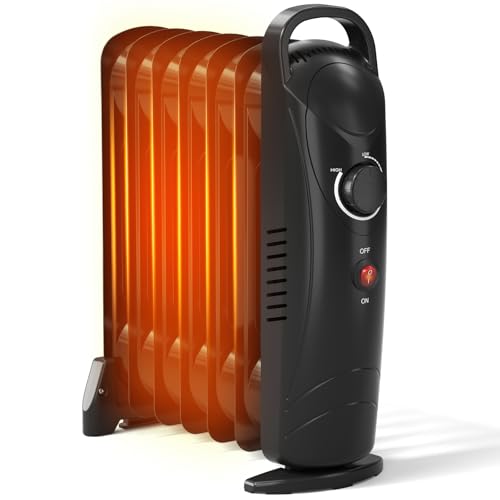
The compact footprint makes it especially practical for tight areas. At 16.5 inches long, 5.1 inches wide, and 13.8 inches high, this LifePlus model takes up very little floor space. Its built-in carry handle allows you to lift and move it easily between your desk during work hours and your bedside at night. Because it sits low to the floor, it stays neatly out of the way without blocking foot traffic.
This heater fails when placed in open-concept floor plans, rooms with high ceilings, or drafty hallways. If cold outdoor drafts constantly leak into the space, the gentle warmth disappears before you can feel it. If you need to heat an unsealed space or an open patio room, choosing a heater for an enclosed porch is a much better solution than relying on a mini radiator.
If you sit at a desk or in an armchair for long stretches, this heater provides focused comfort right where you need it. It keeps your legs warm without blowing papers around your desk or drying out your skin. For anyone working from home in a chilly room, it offers a simple way to stay comfortable all day.
Can a 700-watt heater actually warm your room?
A 700-watt heater can comfortably warm a small room, provided your expectations match its power rating. Wattage refers to electric power draw. Most standard space heaters in American homes run at 1,500 watts, which is the maximum safe load for a typical 15-amp circuit. At 700 watts, this LifePlus unit uses less than half the electrical power of a standard space heater.
A standard heating guideline is roughly 10 watts of power per square foot of living space. That rule applies to insulated indoor rooms with eight-foot ceilings. By this measure, a 700-watt heater produces enough heat to warm an enclosed space between 70 and 100 square feet. If your room fits those dimensions, the heater has enough output to raise the temperature and maintain it.
In a room larger than 100 square feet, the heater functions as a personal spot heater rather than a whole-room solution. It will not warm a 200-square-foot master bedroom on a freezing winter night. But placed within three or four feet of your desk or armchair, it creates a personal bubble of warmth that keeps you comfortable even if the rest of the room stays cool.
Keep in mind that poor insulation and cold drafts quickly overpower a low-wattage heater. If cold air seeps through old windows or uninsulated floors, 700 watts cannot replace the lost heat. For demanding spaces like unheated workshops, sheds, or chilly garages, an electric heater for a garage with a thermostat delivers the higher power needed to overcome heavy cold.
How does silent oil heat compare to a fan heater?
The difference between an oil radiator and a ceramic fan heater comes down to how they distribute heat. Oil-filled units rely on radiant heat, which is steady warmth spreading without a blowing fan. Inside the sealed metal fins, an electric element warms specialized oil. As the oil circulates, it heats the metal body, which then gently radiates warmth into the surrounding air and nearby objects.
Ceramic heaters work through forced air. They use a ceramic heating element that warms up in seconds paired with a fan that pushes hot air across the room. A fan heater delivers an immediate blast of heat within thirty seconds of turning it on. If you come inside shivering from the cold and want fast heat for your hands, a fan heater gives you that instant result.
However, fan heaters come with annoying trade-offs over long sessions. The whirring motor makes noise that can interrupt sleep or phone calls. The moving air also stirs up dust and pet dander while drying out your eyes and sinuses. Once the fan turns off, the room cools down quickly because warm air loses temperature rapidly without a lingering heat source.
An oil radiator trades speed for lasting comfort and silence. Because there is no fan, the LifePlus oil heater operates silently. It works so quietly that you can barely tell it is on. It takes 15 to 25 minutes for the oil to heat up, but the dense oil retains thermal energy. Even after the thermostat switches off the element, the metal fins continue radiating gentle heat into the room.
Is it safe to run this heater all night?
Oil-filled radiators are widely recognized as one of the safest portable heater types for overnight bedroom use. Because the heating element is sealed entirely inside steel fins, there are no exposed glowing wires or red-hot coils. This enclosed design drastically lowers the risk of igniting stray pet hair, dust, or bedding while you sleep.
Electrical safety is another big advantage. Drawing 700 watts means this heater pulls under 6 amps on a standard 120-volt household circuit. Most bedroom circuits are rated for 15 amps. Because this heater draws under 6 amps, it leaves plenty of room on the breaker for a lamp, phone charger, and clock without tripping the circuit in the middle of the night.
The unit also features an automatic overheat sensor, an internal switch that cuts power if the unit gets too hot. Even with solid safety features, you must follow clear precautions to run any portable heater safely while sleeping:
- Plug directly into the wall: Always plug the heater straight into a wall outlet. Never use an extension cord, power strip, or surge protector, as these accessories can overheat, melt, and cause a fire.
- Keep a 3-foot safety buffer: Keep the heater at least 3 feet (36 inches) away from bedding, blankets, curtains, clothing, and furniture.
- Place on a flat, hard surface: Set the radiator on a firm, level floor. Avoid thick rugs or plush carpets that could restrict airflow underneath or cause the unit to tilt.
- Inspect the plug and outlet: Touch the outlet faceplate after the heater has run for an hour. If the wall plate feels hot to the touch, shut the heater off, unplug it, and consult a licensed electrician.
- Never cover the heater: Do not place wet socks, towels, or clothes on the radiator fins to dry, as trapping heat inside creates a fire hazard.
What should you check before buying a compact radiator?
If a compact oil radiator fits your heating habits, choosing the right model comes down to matching its physical build and electrical draw to your room layout. These small heaters excel when you need gentle, steady background warmth that you can leave running for hours without noise or high electric bills. Before buying, check a few key details to make sure the unit matches your space.
Start by checking the dimensions and portability. Compact radiators are meant for small areas, so check your floor space to ensure the unit will not block walkways. Look for a model with a sturdy, built-in carry handle. A solid handle allows you to lift and relocate the heater safely without touching hot metal fins after the unit has been running.
Next, confirm the electrical power draw on the product label. For small rooms or older homes with sensitive electrical circuits, a unit drawing under 800 watts is an ideal choice. It provides sufficient heat for rooms under 100 square feet while drawing very little current, which prevents breaker trips. This low power draw also makes compact radiators a practical option for alternative living spaces like campers or small cabins.
Check the controls and safety marks before purchasing. Look for an adjustable mechanical thermostat dial that clicks cleanly, letting the heater cycle on and off to maintain your preferred comfort level without running constantly. Make sure the heater carries a recognized safety listing, such as UL or ETL, on its rating label. Finally, remember that oil radiators require patience. If you prefer silent, steady warmth over an instant gust of hot air, a small oil radiator is a dependable choice.
- BWP Score7.4
BWP Score is a ranking system developed by Bestwinterproducts.com. BWP score has no relationship or impact from any manufacturers or sales agent websites. Learn more
- BrandLifePlus
Last update on 2026-10-13 / Affiliate links / Images, Product Titles, and Product Highlights from Amazon Product Advertising API
FAQs
How long does a small oil heater take to warm up?
A compact oil heater usually takes between 15 and 25 minutes to start warming the room. The internal element must first warm the reservoir of oil, which then heats the metal fins before warmth spreads into the surrounding air. Once the unit reaches operating temperature, it provides steady, radiant heat that lingers even after the thermostat cycles off.
Will running a mini oil heater spike your electric bill?
A 700-watt heater consumes roughly 0.7 kilowatt-hours of electricity for every hour it runs continuously. Because it draws less than half the power of a standard 1,500-watt space heater, it is very economical for daily zone heating. You can lower your overall winter heating bill by turning down your central thermostat and warming only the small room you occupy.
Does the oil inside a radiator ever need to be refilled?
No, the oil sealed inside a portable radiator never needs to be refilled, drained, or serviced. The fluid is permanently enclosed inside the metal fins at the factory and acts purely as a heat-transfer liquid rather than a consumable fuel. As long as the metal casing is undamaged and does not leak, the original oil lasts for the lifetime of the heater.
Can you use an extension cord with this heater?
No, you should never connect a portable space heater to an extension cord or power strip. Even though a 700-watt unit draws less power than larger heaters, continuous electrical flow can cause light-duty extension cords to overheat and melt. Always plug the heater directly into a standard wall outlet to keep your home safe from electrical hazards.


Best Warm Winter Scarves 2026 For Cozy Comfort

Best Green Ski Goggles 2026 For Clear Vision On Slopes

12 Best Corner Electric Fireplace 2026: My Ultimate Guide To Pick One

Best Battery Powered Snow Blower 2026 For Effortless Snow Clearing

Best Ski Goggles Under 30 Inches For Crisp Vision And Comfort

Best Cooling Scarf 2026 For Instant Relief And Comfort

Fake Snow for Grass: Create a Realistic Winter Lawn Display

Dimplex Prism Wall Mount Fireplace: Sleek Heat With Modern Flame Style





