
Should You Replace the Elements or the Water Heater?

Morning showers turning lukewarm halfway through usually send someone straight down to the basement with a flashlight to stare at a silent electric tank. As a simple rule, replace the heating elements if the tank is under ten years old and bone dry on the outside. But you should replace the entire water heater if the metal shell shows rust streaks or puddles along the floor.
A few clear signs will help settle this choice right at the tank. First is age, because most tanks only last ten to twelve years before the inner lining wears thin. Next is moisture, since a cracked steel tank cannot be patched or welded safe again. Finally, thick sediment, which is mineral grit packed at the bottom, can burn out a fresh heating rod in just a few months. Here is how to inspect the unit and make the right call.
How Old Is Your Water Heater and Is It Leaking?
When hot water turns lukewarm or cold, choosing between a cheap part swap and a new appliance comes down to tank age and leaks. Electric water heaters are simple machines, but steel tanks have a strict lifespan.
Use this checklist to decide your next move:
- Under 8 years old with no leaks: Replace the heating elements. The steel vessel is likely sound. Swapping out a burned-out metal heating rod inside the tank restores hot water for a fraction of the replacement cost.
- Between 8 and 10 years old: Check the tank condition. If the outer jacket is dry and you have no heavy mineral buildup, changing the heating rods makes sense. If you see rust stains or hear rumbling, plan for a replacement.
- Over 10 to 12 years old: Replace the water heater. Most tanks last 8 to 12 years. Even if new elements work today, an internal leak is likely around the corner.
- Water pooling beneath the tank base: Replace the water heater right away. Tanks cannot be patched once rust eats through the metal shell. Putting new parts into a leaking tank wastes money.
- Dripping only around the element mount: A new rubber sealing ring (gasket) or replacement rod fixes the problem if the surrounding steel threads are intact.
To verify tank age, find the rating sticker on the side of the tank. The serial number shows the build date, which you can decode on the manufacturer website.
How Do You Know Which Part Has Actually Failed?
An electric water heater relies on two metal heating rods: an upper element and a lower element. Each works with a thermostat (temperature control switch) that cycles power on and off. Specific symptoms reveal whether an individual part or the entire tank is shot.
Element failure symptoms include:
- Hot water runs out in two minutes: The lower element burned out. It warms cold water entering the bottom. When it fails, only the top third of the tank gets warm, leaving you with just a couple minutes of heat.
- Water stays completely cold: The upper element burned out, or the upper control switch tripped. The upper rod has priority and heats first. If it fails, power never feeds downward, leaving the entire tank ice cold.
- The red reset button trips: The high-limit switch detected overheating or an electrical short. If it trips repeatedly, a rod or control switch needs replacement.
Tank failure symptoms look very different:
- Water puddling on the floor: Water weeping from the casing or seams means the steel vessel has rusted through, forcing water through the insulation onto your floor.
- Rusty water from hot taps: If reddish water flows only from hot faucets while cold water runs clear, the internal glass lining has cracked and the steel shell is corroding.
- Popping or banging noises: Mineral sand trapped at the base boils during heating cycles, signaling deep buildup that shortens tank life.
How Can You Safely Check for Rust and Leaks?
Water and 240-volt electricity make a hazardous mix. Always shut off the double-pole breaker labeled for the water heater first. Remove the side access covers and verify zero voltage across the wiring with a reliable detector before touching anything.
Once power is safely off, check these areas:
- Check top pipe connections: Loose fittings or corroded pipe nipples on top of the tank can drip water down the outer skin and pool near the base. Tightening connections fixes this issue without replacing the appliance.
- Inspect the relief valve: The brass temperature and pressure relief valve sits near the top. If moisture drips from its discharge pipe, the valve may be worn or water pressure is too high. A dripping valve does not mean the tank has failed.
- Check the insulation: Pull back the foam insulation behind the side metal covers. If it feels like a soaked sponge, water is leaking through an element opening or a hidden seam in the steel shell.
- Inspect the element mounting flange: Look at the hex head of each metal heating rod inside the tank. Green crust or rust trails mean water is slipping past the rubber sealing ring (gasket). If the steel around the screw opening is solid, a new gasket will seal. If the metal is flaking, the tank is finished.
- Check the bottom rim: Shine a flashlight along the bottom edge where the tank meets the floor. Rust blisters, wet seams, or standing water mean the inner shell has failed.
Drafty locations can also cause plumbing issues. If your unit sits in an unheated space, just as homeowners use an electric heater for a garage to maintain steady warmth, blocking cold drafts protects exposed pipes and stops condensation that looks like a leak.
Why Does Tank Sediment Ruin Brand-New Heating Rods?
Installing new parts into a tank packed with sediment leads to fast repeat failures. Hard water contains dissolved calcium and magnesium. Heating cycles cause these minerals to separate and settle at the bottom of the tank as chalky sand and flakes.
Over several years, sediment causes two major problems:
- It buries the lower element: The lower metal heating rod inside the tank sits just inches off the bottom. When sediment buries the rod, heat cannot escape into the water. The internal wire overheats and burns out in weeks or months.
- It traps boiling water: Thick mineral scale traps boiling water beneath it, creating knocking sounds and speeding up corrosion on the bottom steel plate.
Check your sediment level by connecting a garden hose to the bottom drain valve. Open the valve and flush several gallons into a bucket with the cold water supply valve slightly open.
- If the water runs clear after a brief burst of cloudy grit, sediment is light. A new element will work reliably.
- If the valve clogs with hard scale or trickles slowly, buildup is severe. In an older tank, heavy sediment makes element replacement impractical because new parts will burn out quickly.
What Are the Safe Steps to Fix or Replace?
If your tank is under ten years old, free of rust, and has manageable sediment, replacing the heating rods is an easy weekend job:
- Turn off electrical power: Switch the water heater breaker to OFF. Verify zero voltage at the unit.
- Shut off the water: Turn the cold water inlet valve clockwise until tight. Open a hot water faucet inside the house to break the vacuum.
- Drain below the element: Attach a garden hose to the drain valve and drain water until the level drops below the rod you are replacing.
- Remove the old element: Disconnect the two wires. Slide a 1-1/2-inch element socket wrench over the hex head, turn counterclockwise, and slide the old rod out.
- Install the new rod: Clean the opening and slide the new rubber sealing ring (gasket) onto the rod. Hand-thread it into place to avoid cross-threading, tighten with the wrench, and reconnect the wires.
- Fill the tank before restoring power: Close the drain valve and turn on the cold water. Keep a hot tap running until all air clears and water flows steadily.
Never restore power while the tank is empty. Turning the breaker on before the tank is completely full destroys the new metal heating rod inside the tank in seconds, a failure called dry firing.
If your tank is leaking or past its design life, buy a replacement water heater. Measure your space and doorways first. If you live in manufactured housing, plumbing codes require a unit approved as a heater for a mobile home with specific tie-downs and clearances. If you are uncomfortable handling 240-volt wiring or plumbing lines, call a licensed plumber.
What Should You Look for in a Replacement Kit?
If your water heater tank is sound and you decide to replace the heating rods yourself, buying the right parts ensures a fast and leak-free repair.
Look for a complete replacement kit made for dual-element electric water heaters. A good kit includes two screw-in heating rods, fresh rubber sealing rings (gaskets), and a heavy-duty element socket wrench. Before purchasing, verify the wattage and voltage ratings printed on your water heater's data plate, as most standard residential systems use 240-volt parts rated around 4500 watts.
Choose elements with durable copper sheaths that resist corrosion and transfer heat efficiently. Kits that include a water guide board make the job easier by funneling residual water away from the electrical controls and into a bucket during the swap.
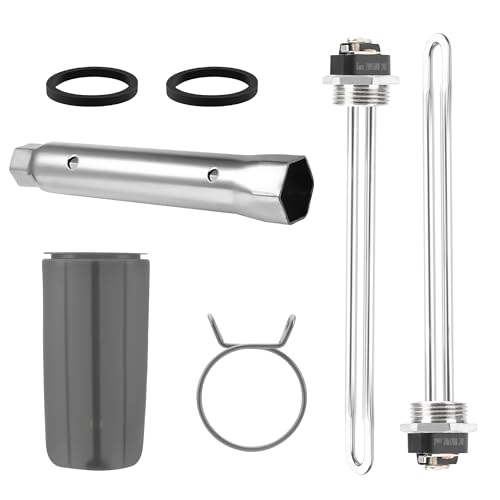
- BWP Score7.5
BWP Score is a ranking system developed by Bestwinterproducts.com. BWP score has no relationship or impact from any manufacturers or sales agent websites. Learn more
- BrandNISHCON
Last update on 2026-10-16 / Affiliate links / Images, Product Titles, and Product Highlights from Amazon Product Advertising API
FAQs
Can you stop a leak around heating element threads?
You can stop this leak if the steel tank wall is still sound. Turn off the breaker, drain the water below the element, and unscrew the rod. Clean the threads, install a fresh rubber sealing ring (gasket), and tighten firmly. If the tank metal around the threads is rusted thin, a new gasket cannot seal and you must replace the water heater.
Why is hot water running out twice as fast?
This issue almost always points to a burned-out lower metal heating rod inside the tank. The lower element heats the incoming cold water during showers. When it burns out, only the top third of the tank gets warm, giving you just two or three minutes of hot water before the shower turns cold.
Can you replace elements without draining the whole tank?
You can perform a quick swap without draining the entire tank by creating a vacuum. Turn off the breaker, close the cold water inlet valve, and keep all faucets closed. When you unscrew the old rod, very little water escapes because air cannot enter the sealed tank. Slide the new rod in quickly and tighten it.
How long should new heating rods last once installed?
New heating elements typically last five to eight years in average household conditions. In areas with soft water, they can last the remaining life of the tank. In homes with hard water, mineral buildup can shorten their lifespan unless you flush sediment from the bottom of the tank once a year.


Best Warm Winter Scarves 2026 For Cozy Comfort

Best Green Ski Goggles 2026 For Clear Vision On Slopes

12 Best Corner Electric Fireplace 2026: My Ultimate Guide To Pick One

Best Battery Powered Snow Blower 2026 For Effortless Snow Clearing

Best Ski Goggles Under 30 Inches For Crisp Vision And Comfort

Best Cooling Scarf 2026 For Instant Relief And Comfort

Fake Snow for Grass: Create a Realistic Winter Lawn Display

Dimplex Prism Wall Mount Fireplace: Sleek Heat With Modern Flame Style





