
Popular Gas Heater Brands for Homes and Garages

The most recognized gas heating companies divide cleanly between rugged utility warmers for uninsulated workspaces and permanent wall units designed for living rooms. The specific room you want to heat changes which maker fits your needs. A company that builds fantastic forced-air garage blowers usually does not make the right unit for a finished living space, because open workshops and enclosed bedrooms require completely different exhaust designs and safety controls.
Your choice comes down to your venting setup, fuel supply, and local safety rules. Some heaters run without an outside exhaust pipe, while others need a direct vent cut through an exterior wall to carry exhaust fumes outside. You must also match the heater directly to a natural gas line or a propane tank, since their burners work differently. Here is what each major group of manufacturers does best so you can warm your space safely.
Top brands focus on distinct spaces and venting styles
Picking a gas heater starts with knowing which manufacturers excel at heating your specific type of room. Gas heating equipment is not one-size-fits-all. Some companies focus entirely on rugged, heavy-duty workshop blowers, while others specialize in sleek, quiet living room consoles designed for permanent wall mounting.
Mr. Heater is one of the most widely recognized names in North America. The brand built its reputation on portable propane heaters, but it also produces a broad range of permanent vent-free indoor units and overhead garage heaters. When people need reliable warmth for utility spaces, job sites, or emergency heat during winter storms, this brand is often the first name they see on retail shelves.
World Marketing of America manufactures indoor supplemental heating equipment under established labels like Comfort Glow. Their focus centers on compact wall-hung heaters that work without household electricity. These heaters give homeowners a straightforward way to add auxiliary heat to cold basements, additions, and cabins without running expensive electrical circuits or ductwork.
Empire Comfort Systems and Williams Furnace Company represent the traditional side of residential gas heating. These companies build permanent direct-vent wall furnaces, console heaters, and floor units often found in older homes, vacation cabins, and rental properties. Their equipment is designed to serve as primary or secondary home heating for decades.
Rinnai specializes in modulated direct-vent wall heaters with electronic controls and internal circulation blowers. Their wall units automatically adjust burner size to maintain an exact room temperature. Understanding which lane each brand occupies prevents you from buying an industrial blower for a quiet living room or an underpowered decorative heater for a drafty workshop.
Fuel type is another critical distinction between models. Gas heaters are engineered specifically for either natural gas or liquid propane. Natural gas flows into homes through municipal utility pipes at relatively low pressure. Propane is stored under high pressure inside outdoor tanks or portable cylinders.
Most reputable brands stamp each appliance specifically as natural gas or propane right at the factory. Never assume a gas heater can switch fuels freely. While some brands sell official conversion kits with replacement brass burner jets and matched regulators, running propane through a natural gas orifice produces heavy soot, ruined burners, and dangerous carbon monoxide.
Garages need high output heaters with ceiling mounts
Heating a garage or detached workshop presents distinct challenges that ordinary indoor heaters cannot handle. Garages feature uninsulated concrete slab floors that pull heat downward, tall ceilings that trap rising warm air, and large overhead doors that leak cold drafts every time they open.
Ceiling-mounted forced-air unit heaters are the standard choice for workshops and garages. A fan that pushes warm air across the room forces heated air downward to your workbench level instead of letting heat stall uselessly near the rafters. Suspending the heater overhead also keeps valuable floor space open and protects the burner from sawdust, wood shavings, and accidental bumps from parked cars.
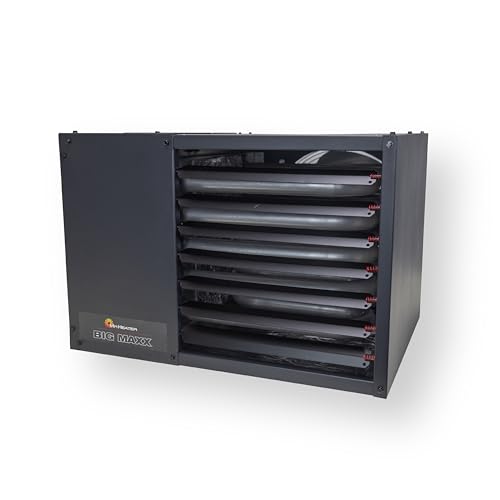
Mr. Heater dominates this space with its Big Maxx line of natural gas and propane unit heaters. These units come sized by BTU, which stands for British Thermal Unit and represents the heat output rating of the burner. A 50,000 BTU unit heater can warm up to 1,667 square feet, which roughly covers an insulated 3-car garage. For larger pole barns, detached workshops, or commercial spaces, an 80,000 BTU unit heater warms areas up to 2,667 square feet.
Before installing a forced-air unit in your workspace, consider how your heating needs behave during a winter electrical blackout. Ceiling-mounted forced-air heaters burn gas for heat, but they still require standard 120-volt household electricity to spin the exhaust blower and room circulation fan. If severe ice knocks out power lines, an overhead forced-air unit cannot run.
If you want quiet spot heating near a single workbench or prefer not running gas pipes out to an unattached building, compare these gas options against a dedicated electric heater for a garage with a thermostat. Electric heaters avoid venting requirements entirely, though gas models deliver higher heat output for big spaces in freezing climates.
Safety clearances are critical when hanging gas appliances around vehicles and machinery. Always mount overhead unit heaters high enough that raised truck hoods, elevated car lifts, or stored lumber cannot touch the housing. Gas burners draw surrounding air into the combustion chamber, so never spray aerosol cleaners, apply paint, or pour gasoline near an active garage heater.
Living rooms require direct vent or sealed flame cabinets
Heating finished living areas requires strict attention to indoor air quality, venting design, and noise levels. Inside your home, the most significant choice is between vent-free appliances and direct-vent systems. Each design manages combustion air and exhaust gases in fundamentally different ways.
A direct-vent heater draws outside combustion air through a sealed pipe in an exterior wall and vents all exhaust fumes back outside. Brands like Empire, Williams, and Rinnai build direct-vent consoles that keep the flame completely isolated from room air. This sealed setup prevents combustion byproducts, odors, and indoor moisture accumulation, making direct-vent models the safest choice for bedrooms and tightly insulated modern houses.
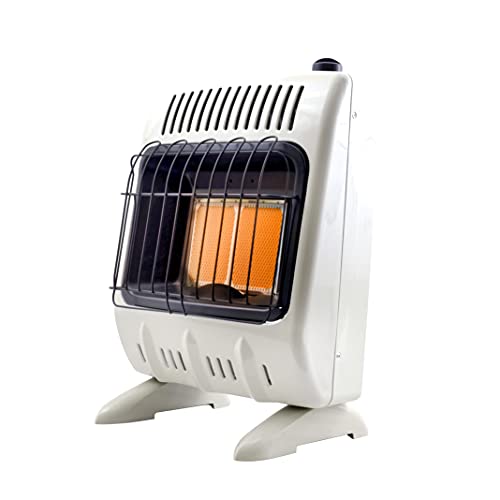
A vent-free heater heats without an exhaust pipe to the outside. Instead, it pulls air directly from the room, burns fuel across a clean-burning burner, and releases 100 percent of the produced heat straight into your living space. Brands like Mr. Heater and World Marketing of America produce popular vent-free wall units designed for supplementary warmth.
Vent-free models generally offer two different heat delivery methods: blue flame convection and radiant infrared heat. Understanding how each method works helps you choose the right style for your daily comfort:
- Blue flame convection heaters: These units warm the air directly, causing gentle heat to rise and circulate naturally through the room. A 30,000 BTU blue flame heater can warm up to 1,000 square feet, making it well suited for open living areas with standard ceilings where you want steady ambient temperature.
- Radiant infrared heaters: These units feature ceramic plaques that glow red hot, producing gentle heat that warms people and furniture directly like sunlight. A compact 10,000 BTU radiant natural gas heater warms up to 300 square feet, while a 12,000 BTU radiant wall heater provides focused, directional warmth that feels immediate when you sit near it.
Homeowners often mount these compact wall units when heating three-season rooms or drafty sun porches, similar to setting up a heater for an enclosed porch during colder months. However, vent-free heaters come with practical limitations you must manage carefully.
Burning gas naturally produces water vapor as a byproduct. When a vent-free heater runs for long stretches in a tightly sealed room, moisture can accumulate on window glass, soak into window sills, and encourage mold growth. Many municipal building codes restrict vent-free heaters entirely, and most local codes strictly ban vent-free units from bedrooms and bathrooms unless the heater is small, typically rated under 10,000 BTU, and equipped with specific safety shutoffs.
One major advantage of radiant and blue flame wall heaters from brands like World Marketing of America is off-grid operation. Many of these units require no electricity whatsoever. They feature a piezo ignition, which is a manual push-button spark that works without electricity, and utilize a millivolt gas valve powered by the heat of the standing pilot light. When severe winter storms knock out neighborhood power lines, these silent wall units continue to heat your home safely.
Essential safety valves prevent gas leaks and carbon monoxide
Gas heating appliances carry real risks of fire, fuel leaks, and carbon monoxide poisoning if equipment fails or burns fuel incompletely. Established heating brands earn their standing by engineering multiple redundant safety controls into every burner assembly. Never purchase an off-brand, uncertified gas heater that cuts corners on these automatic shutoffs.
Every reliable indoor gas heater must include the following safety mechanisms to protect your home and family:
- Oxygen depletion sensor: An oxygen depletion sensor, commonly abbreviated as an ODS, is an emergency shutoff that stops gas flow if room oxygen drops below safe levels. Standard room air contains roughly 20.9 percent oxygen. If poor ventilation causes room oxygen to drop toward 18 percent, the specialized pilot flame destabilizes and lifts away from the sensor, snapping the main gas valve shut before dangerous carbon monoxide can form.
- Thermocouple flame failure valve: A thermocouple is a small metal probe that sits directly inside the pilot flame. As long as the flame burns steadily, the thermocouple generates a minute electrical current that holds internal gas seals open. If a draft blows the pilot light out, the probe cools within seconds and snaps the gas line closed, preventing unburned raw gas from filling the room.
- Automatic overheat sensor: An automatic overheat sensor shuts the unit off if internal parts get dangerously hot. If an intake grille gets blocked by fallen blankets, dust buildup, or pet hair, this thermal switch cuts the fuel supply before the heater cabinet reaches temperatures capable of scorching drywall or blistering paint.
- Tip-over safety switch: On portable or floor-standing gas models, a tip-over switch instantly cuts the gas supply if someone knocks the unit over or tilts it past a safe operating angle.
Always inspect the manufacturer data plate on the rear or side of the heater cabinet before buying. Look for recognized North American safety marks such as CSA (Canadian Standards Association), UL (Underwriters Laboratories), or ETL (Intertek). These marks confirm that an independent testing agency inspected the design against national safety standards.
Even when using an appliance from a top manufacturer with every safety sensor intact, install a battery-backed carbon monoxide detector in the same room. Place another detector outside nearby sleeping areas. Carbon monoxide is completely invisible and odorless, making working detectors your ultimate line of defense.
Professional gas fitters ensure correct venting and pipe pressure
Securing a wall bracket or bolting ceiling hangers to overhead rafters is simple carpentry, but connecting gas lines is work that requires professional training. Safe gas heater operation depends entirely on proper pipe sizing, correct manifold pressure, and leak-free joint seals.
Natural gas and propane systems operate under precise pressures measured in inches of water column, which is a standard measurement of gas pressure inside household piping. If a supply pipe has an inside diameter that is too narrow, or if a branch line runs too far from the main meter, the heater will starve for fuel when firing up. Fuel starvation causes incomplete combustion, yellow sooty flames, burner roaring, and elevated carbon monoxide output.
A licensed gas fitter or professional plumber calculates the total gas demand across your entire home. They verify that your existing gas meter and piping headers can feed your water heater, kitchen range, central furnace, and new room heater simultaneously without dropping pressure. They also install the proper rigid black iron pipe, manual shutoff valves, and sediment traps required by local plumbing codes.
Venting geometry requires equal precision for direct-vent and ceiling unit heaters. Exhaust pipes must clear exterior wall thimbles with proper fire-rated spacing, maintain strict clearance from opening windows and roof overhangs, and follow an upward pitch so corrosive condensation cannot drain back onto the burner assembly.
If you ever smell rotten eggs, which is the mercaptan odorant added to natural gas and propane to signal leaks, treat it as an emergency. Do not flip light switches, do not touch electrical outlets, do not pick up a landline telephone, and do not try to adjust the heater valves. Evacuate everyone from the building immediately, leave the entrance door open behind you, and call your local gas utility or fire department from a safe distance outdoors.
Choose your gas heater based on venting and fuel
Finding the right gas heater comes down to matching the equipment format to your room layout, available fuel supply, and venting possibilities. Start by identifying the primary job of the space. Large utility garages with high ceilings benefit most from overhead forced-air units that push heat downward while keeping floor working areas clear.
For supplemental living room warmth or backup emergency heat, look at wall-mounted consoles. If you need warmth that works completely independent of the power grid during severe winter weather, select a unit with manual push-button ignition and millivolt controls that operate without an electrical plug. If you prioritize sealed air quality in tightly insulated rooms or bedrooms, choose a direct-vent system that exhausts combustion air outside.
Double-check your fuel line before making a final selection. Confirm whether your home connects to natural gas utility lines or uses outdoor propane tanks, and verify that the heater model you purchase is factory-configured for that exact fuel. Finally, check your local building codes to confirm venting rules, and ensure you have at least 3 feet of clear space around the heater location away from furniture, draperies, and flammable materials.
- BWP Score8.8
BWP Score is a ranking system developed by Bestwinterproducts.com. BWP score has no relationship or impact from any manufacturers or sales agent websites. Learn more
- BrandMr. Heater

- BWP Score8.6
BWP Score is a ranking system developed by Bestwinterproducts.com. BWP score has no relationship or impact from any manufacturers or sales agent websites. Learn more
- BrandComfort Glow
- BWP Score8.5
BWP Score is a ranking system developed by Bestwinterproducts.com. BWP score has no relationship or impact from any manufacturers or sales agent websites. Learn more
- BrandMr. Heater

- BWP Score8.0
BWP Score is a ranking system developed by Bestwinterproducts.com. BWP score has no relationship or impact from any manufacturers or sales agent websites. Learn more
- BrandMr. Heater

- BWP Score8.0
BWP Score is a ranking system developed by Bestwinterproducts.com. BWP score has no relationship or impact from any manufacturers or sales agent websites. Learn more
- BrandMr. Heater
Last update on 2026-10-10 / Affiliate links / Images, Product Titles, and Product Highlights from Amazon Product Advertising API


Best Warm Winter Scarves 2026 For Cozy Comfort

Best Green Ski Goggles 2026 For Clear Vision On Slopes

12 Best Corner Electric Fireplace 2026: My Ultimate Guide To Pick One

Best Battery Powered Snow Blower 2026 For Effortless Snow Clearing

Best Ski Goggles Under 30 Inches For Crisp Vision And Comfort

Best Cooling Scarf 2026 For Instant Relief And Comfort

Fake Snow for Grass: Create a Realistic Winter Lawn Display

Dimplex Prism Wall Mount Fireplace: Sleek Heat With Modern Flame Style





